Teaching a Cockapoo to Give a Foot for Nails
Getting your sweet Cockapoo to willingly offer a paw for a nail trim can feel like an Olympic sport, fraught with wrestling matches, frustrated sighs, and the constant worry of nicking a quick. It’s a common struggle for so many dog parents, transforming a simple grooming task into a source of dread for both you and your furry friend. This guide is here to break down the process, offering empathetic, step-by-step advice to transform nail time from a battle into a calm, cooperative experience for your beloved Cockapoo.
Understanding Why Your Cockapoo Resists Nail Trims
It’s easy to feel like your Cockapoo is being stubborn or just doesn't want to cooperate when it comes to nail trims. But for most dogs, especially those with sensitive temperaments like many Cockapoos, resistance often stems from a place of fear, discomfort, or past negative experiences. Understanding these root causes is the first step toward building trust and making nail care a peaceful routine.
The Fear Factor: Painful Past Experiences
Imagine someone trying to trim your fingernails, but sometimes it hurts, or the tool makes a scary noise, or you're held down while it happens. That's often what a dog experiences. Many Cockapoos have had a nail trimmed too short in the past, hitting the "quick" – the sensitive blood vessel and nerve inside the nail. This is incredibly painful and can lead to a lasting aversion to clippers and having their paws handled. Even if it was an accident, your dog remembers that sensation and associates the entire process with discomfort. For some, the mere sight of the clippers can trigger a full-blown panic response. They're not being naughty; they're genuinely trying to protect themselves from something they perceive as threatening.
The Handler's Anxiety: A Mirror for Your Dog
Dogs are incredibly attuned to our emotions, almost like furry little sponges. If you dread nail trims, your Cockapoo will pick up on that anxiety. Your tight grip, your rushed movements, your sighs of exasperation – these all communicate to your dog that something bad is about to happen. It creates a vicious cycle: you're anxious, so your dog becomes anxious, making the process harder, which makes you even more anxious. It’s a completely understandable human reaction, but recognizing how your own stress impacts your dog is crucial for breaking this pattern. Our Cockapoos often mirror our internal state, so finding ways to calm yourself first can profoundly affect their response.
Lack of Early Conditioning
For many Cockapoo puppies, the idea of having their paws handled and nails touched isn’t introduced early or consistently enough. Breeders and new owners might focus on house training and basic commands, which are incredibly important, but often overlook the critical window for desensitization to grooming. If a dog isn't gradually introduced to paw touches, clippers, and the general grooming environment from a young age, it's perfectly natural for them to find it unsettling later on. Think of it like a child who has never been to the dentist suddenly needing a filling – it would be terrifying! Early, positive exposure, even if it's just gentle paw massages, can make a world of difference. This is a topic that ties into Handling a Cockapoo Puppy Before Its First Groom, which is so important for setting them up for success.
Building a Foundation: Positive Reinforcement and Desensitization
The key to successful nail care with your Cockapoo isn’t brute force or quick fixes; it's about systematically changing their emotional association with the process. We want them to view nail trims as a positive, rewarding experience, not a scary one. This involves a lot of patience, high-value treats, and breaking down the task into tiny, achievable steps.
Starting with Touch: Making Paws a Positive Zone
Before you even think about clippers, focus on making paw handling a universally pleasant experience. This is pure desensitization and counter-conditioning.
- Gentle Touches: Start by simply touching your Cockapoo's leg and immediately giving a super high-value treat (think tiny pieces of cheese, cooked chicken, or liver paste). Do this a few times, then stop. Keep sessions short, positive, and always end on a good note. You’re building a positive association: touch = treat!
- Gradually Increase Duration: Over days or weeks, slowly increase how long you touch their leg before giving the treat. Then, progress to gently touching their paw. Again, touch = treat. The goal is for them to feel no apprehension when you reach for their paws.
- Individual Toes: Once they're comfortable with general paw handling, start touching individual toes and the nail itself. Touch one toe, treat. Touch another, treat. Make it a game! If your Cockapoo pulls away or shows discomfort, you've gone too fast. Go back a step and work at their comfort level. Remember, patience here pays dividends in the long run.
Introducing Tools: Clippers and Grinders as Neutral Objects
The tools themselves can be intimidating. Clippers look sharp, and grinders make a buzzing noise and vibrate. The trick is to introduce them without doing anything to your dog’s nails initially.
- Sight Association: Place the clippers or grinder (turned off) near your Cockapoo while they are doing something pleasant, like eating their meal or getting belly rubs. Let them sniff it. When they notice it, offer a treat. The tool becomes a predictor of good things. You can find a wide variety of quiet grinders and ergonomic clippers on Amazon that might make this step easier.
- Sound Association: If you're using a grinder, turn it on away from your dog, let it buzz for a second, then immediately turn it off and give a treat. Repeat this many times, gradually moving the running grinder closer to them (but not touching them). The sound of the grinder should become a cue for treats, not fear. For clippers, make the clipping sound (snip the air or a piece of dry pasta) and immediately offer a treat. This helps with Getting a Cockapoo Used to the Clipper Noise.
- Touching with the Tool (No Clipping/Grinding): Once your dog is comfortable with the sight and sound, gently touch the back of the clippers or the turned-off grinder to their paw, then treat. This desensitizes them to the physical sensation of the tool against their paw without the perceived threat of a trim. You're simply teaching them that the tool touching their paw means more good stuff.
The "Give Paw" Command: A Gateway to Cooperation
Teaching a "give paw" or "shake" command isn't just a cute trick; it's a fantastic way to build a positive association with paw handling and encourages voluntary cooperation.
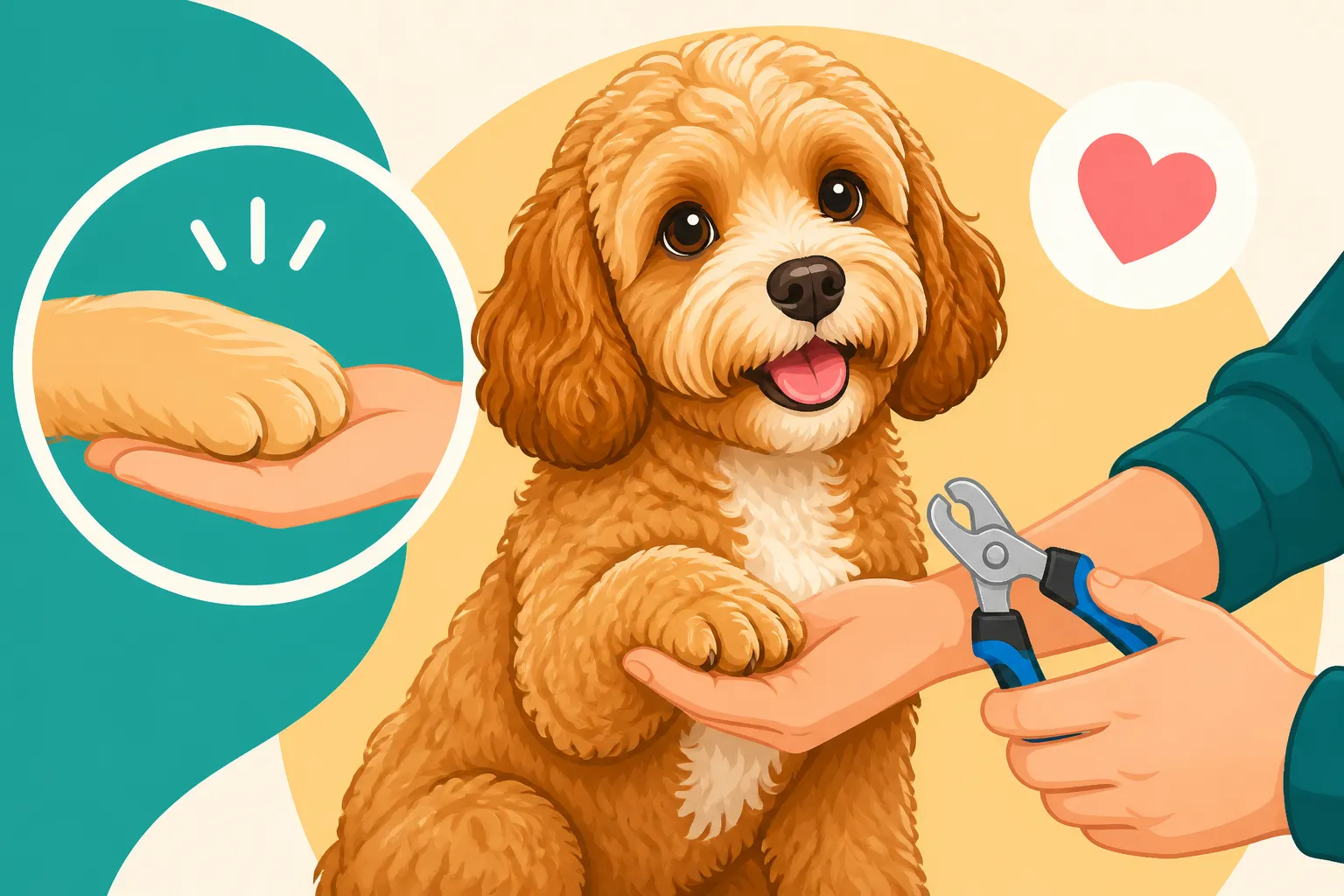
- Lure and Reward: Hold a treat in your closed fist. When your Cockapoo paws at your hand to get the treat, say "paw" and immediately open your hand to give the treat. Repeat this a few times.
- Elevate the Paw: Once they're consistently pawing at your hand, start to lightly cup their paw as they offer it, then give the treat. The goal is for them to offer their paw willingly into your hand.
- Hold and Reward: Gradually extend the duration you hold their paw before releasing it and rewarding them. This is where you can start to mimic the position you’d hold their paw for a nail trim. Many online training programs, like those offered by BAXTER & Bella, include detailed steps for teaching these foundational commands and handling exercises. A strong "paw" command makes the next steps so much smoother. What a Cockapoo Puppy Should Learn First often includes these types of foundational behaviors.
Step-by-Step: Teaching the "Give Foot" for Nail Care
Now that your Cockapoo is more comfortable with paw handling and the presence of tools, you can start to integrate actual nail care, still using the principles of positive reinforcement and gradual desensitization. Remember, this is about tiny steps.
The Initial Request and Reward
This stage is about getting your Cockapoo to voluntarily present their paw and allowing a brief, non-threatening interaction with the nail.
- Ask for the Paw: Ask for the "paw" command that you've already taught. As they offer it, gently take their paw in your hand.
- One Nail Touch: While holding their paw, gently touch one nail with the clippers (or turned-off grinder). Do not clip or grind yet. Immediately release the paw and give a high-value treat.
- Repeat and Vary: Do this a few times, then take a break. In subsequent sessions, vary which nail you touch. The goal is for them to associate giving the paw and a brief nail touch with a fantastic reward. If they pull away, go back to just touching the paw without the tool, rewarding heavily.
Gradually Increasing Duration and Handling
Once your Cockapoo is comfortable with a single nail touch, you can start to introduce more elements of the actual grooming process, still in very short bursts.
- Light Pressure/Simulation: Ask for the paw. Hold it. Gently touch a nail with the clippers, applying just a tiny bit of pressure (again, no clipping yet). Release, treat. You want to simulate the feel without the noise or the actual trim. If using a grinder, touch the turned-off grinder to one nail, then treat.
- Clip One Nail (Quickly): This is the big step. Choose one nail – usually a front paw nail, as they are often less sensitive – and only take off the very tip. Even if it's barely anything, just enough to make the clipping sound. Immediately after the clip, lavish praise and a huge treat. Then, stop the session. The entire process should be: ask, take paw, clip one nail, treat, done. You want that clip to be followed by an immediate positive reward and the relief of the session ending.
- Grind One Nail (Briefly): If using a grinder, turn it on, touch it to one nail for a split second, turn it off, and immediately give a treat. Again, the shorter the duration, the better at first. Build up from fractions of a second.
Simulating the Nail Trim Experience
The goal here is to gradually combine the elements until your Cockapoo can tolerate a full trim.
- Two Nails, Then a Break: Once they're consistently good with one nail, try two nails in one session, then treat and end.
- Rotate Paws: Don’t always start with the same paw or the same nail. Mix it up to prevent anticipation of discomfort in a specific area.
- The Nail Care Station: Create a designated "nail care station" – perhaps a mat or a specific spot on the floor. Ask your dog to go to the mat, reward them, then begin the session. This helps create a routine and a clear signal for what's about to happen, allowing them to mentally prepare. For tips on setting up your grooming tools and area, you might find The Kit Needed to Groom a Cockapoo at Home helpful.
Here's a table outlining a progressive approach to training:
| Step | Action | Reward & Goal | Duration / Frequency |
|---|---|---|---|
| Phase 1: Basic Comfort | |||
| 1. Gentle Paw Touches | Lightly touch leg/paw, release. | High-value treat, calm praise. Goal: No reaction, positive association with touch. | 5-10 times/day, 1-2 minutes per session |
| 2. Introduce Tools | Clippers/grinder (off) near dog during pleasant activity (eating, petting). | Treat for calm observation. Goal: Tool is neutral. | Daily, 2-3 minutes |
| 3. Sound Desensitization (Grinder) | Turn grinder on (away from dog), off, treat. Gradually closer. | Treat. Goal: Sound means treat, not fear. | Daily, 2-3 minutes |
| 4. "Give Paw" Command | Lure paw with treat, say "paw", reward. | Treat, praise. Goal: Voluntarily offers paw. | 3-5 times/day, 5 minutes total |
| Phase 2: Nail Interaction | |||
| 5. Tool to Nail Touch (Off) | Ask "paw," gently hold, touch a nail with turned-off tool. Release. | Treat, praise. Goal: Tolerates tool on nail. | Once daily, 1-2 nails per session |
| 6. Simulated Clip/Grind | Ask "paw," hold, apply light pressure with clippers (no clip) OR touch running grinder for <1 sec. Release. | Jackpot treat, enthusiastic praise. Goal: Tolerates pressure/brief sound on nail. | Once daily, 1 nail per session |
| 7. One Nail Trim | Ask "paw," hold, clip/grind one tiny tip. Release. | Massive jackpot treat, end session. Goal: First successful, positive trim. | Every 2-3 days, 1 nail only |
| Phase 3: Building Tolerance | |||
| 8. Multiple Nails | Ask "paw," clip/grind 2-3 nails in one session. Release. | Treats after each nail, big treat at end. Goal: Tolerates multiple nails. | Every 2-3 days, 2-3 nails |
| 9. Rotate Paws | Vary which paw/nail you start with. | Treat for each successful nail. Goal: Generalization of comfort. | Continue as above |
| 10. Full Session Prep | Practice holding paw, manipulating toes without clipping, as if preparing for full trim. | Treats, praise. Goal: Extended handling without fear. | Daily, 2-5 minutes |
Troubleshooting Common Challenges and Maintaining Progress
Even with the best intentions, you're likely to hit some bumps in the road. Cockapoos, with their intelligence and sometimes sensitive nature, can present unique challenges. Don't get discouraged! It's all part of the journey.
Dealing with Resistance and Fear Reactivity
If your Cockapoo becomes fearful, pulls away, or even tries to nip, it's a clear sign you've moved too quickly.
- Never Punish: Yelling, scolding, or physically forcing your dog will only increase their fear and set back your progress significantly. You want them to choose to cooperate, not comply out of fear. Remember, Whether a Sharp Word Shuts a Cockapoo Down is a real consideration; they are sensitive dogs.
- Backtrack and Slow Down: Go back several steps in the process. If they reacted to the clippers, go back to just handling paws and rewarding. If they reacted to paw handling, go back to simply touching their leg. Spend more time at each step, reinforcing with high-value treats and praise.
- Identify Triggers: What specifically caused the reaction? Was it the sound, the sight, the feeling of pressure, or being held a certain way? Once you know the trigger, you can address it more directly with desensitization.
- Consider a Different Tool: Some dogs tolerate grinders (like a Dremel-style tool designed for pets) much better than clippers, or vice-versa. The vibrating sensation can be less alarming than the sharp snip. There are many quiet, battery-operated grinders available that might be a game-changer for your Cockapoo.
- Distraction Techniques: For very mild apprehension, a smear of peanut butter on a lick mat or a durable chew toy can sometimes distract your Cockapoo for a few nails. However, this isn't a substitute for desensitization; it's a temporary aid.
Consistency is Key: Integrating Routine Practice
This isn’t a "do it once and it's fixed" kind of training. Regular, short, positive sessions are far more effective than infrequent, long, stressful ones.
- Daily Micro-Sessions: Even if it’s just touching a paw and giving a treat, or touching a single nail with the clippers (off), do something every day. These micro-sessions keep the positive association fresh and prevent regression.
- Schedule it In: Just like feeding or walks, make nail practice a non-negotiable part of your Cockapoo’s routine. You'll be amazed at how quickly they adapt when it's predictable.
- Don't Wait Until Nails Are Too Long: If you only attempt nail trims when your dog's nails are overgrown and uncomfortable, the association will always be negative. Proactive, regular trims (even if you only do one or two nails a day) prevent them from getting too long and making the process harder. The Yearly Grooming Total on a Cockapoo often includes regular nail care, emphasizing how crucial consistency is.
When to Call in Professional Help
Sometimes, despite your best efforts, the fear or aggression is too ingrained, or you simply feel overwhelmed. There's absolutely no shame in seeking professional help.
- Certified Professional Dog Trainer (CPDT): A trainer specializing in positive reinforcement and fear-free techniques can guide you through the desensitization process, offering personalized advice and hands-on demonstrations. They can also help identify subtle body language cues you might be missing.
- Veterinary Behaviorist: For severe cases of fear, anxiety, or aggression related to grooming, a veterinary behaviorist might be recommended. These are veterinarians with specialized training in animal behavior who can assess if underlying medical conditions or behavioral disorders are contributing to the problem. They can also discuss medication options if anxiety is debilitating.
- Fear-Free Certified Groomers/Vets: Look for groomers or veterinary clinics that are "Fear Free Certified." These professionals are trained to minimize stress, fear, and anxiety during procedures, often using gentle handling, calming environments, and positive reinforcement. They might be able to manage your Cockapoo's nails while you continue the desensitization training at home. Sometimes, getting a professional to do the first few stress-free trims can buy you valuable time to reinforce positive associations at home. What a Cockapoo's First Trim Costs at Sixteen Weeks is a good indicator of when professional grooming might begin, and these early experiences are vital.
Remember, teaching your Cockapoo to willingly give a foot for nail care is a marathon, not a sprint. Celebrate every tiny success, be patient, and always prioritize your dog's emotional well-being. The bond you build through this cooperative training will extend far beyond just happy nail trims.
Disclaimer
This article is for general informational purposes only and does not constitute professional advice. Laws, prices and regulations vary by location and change over time. Consult a qualified professional for guidance on your specific situation.