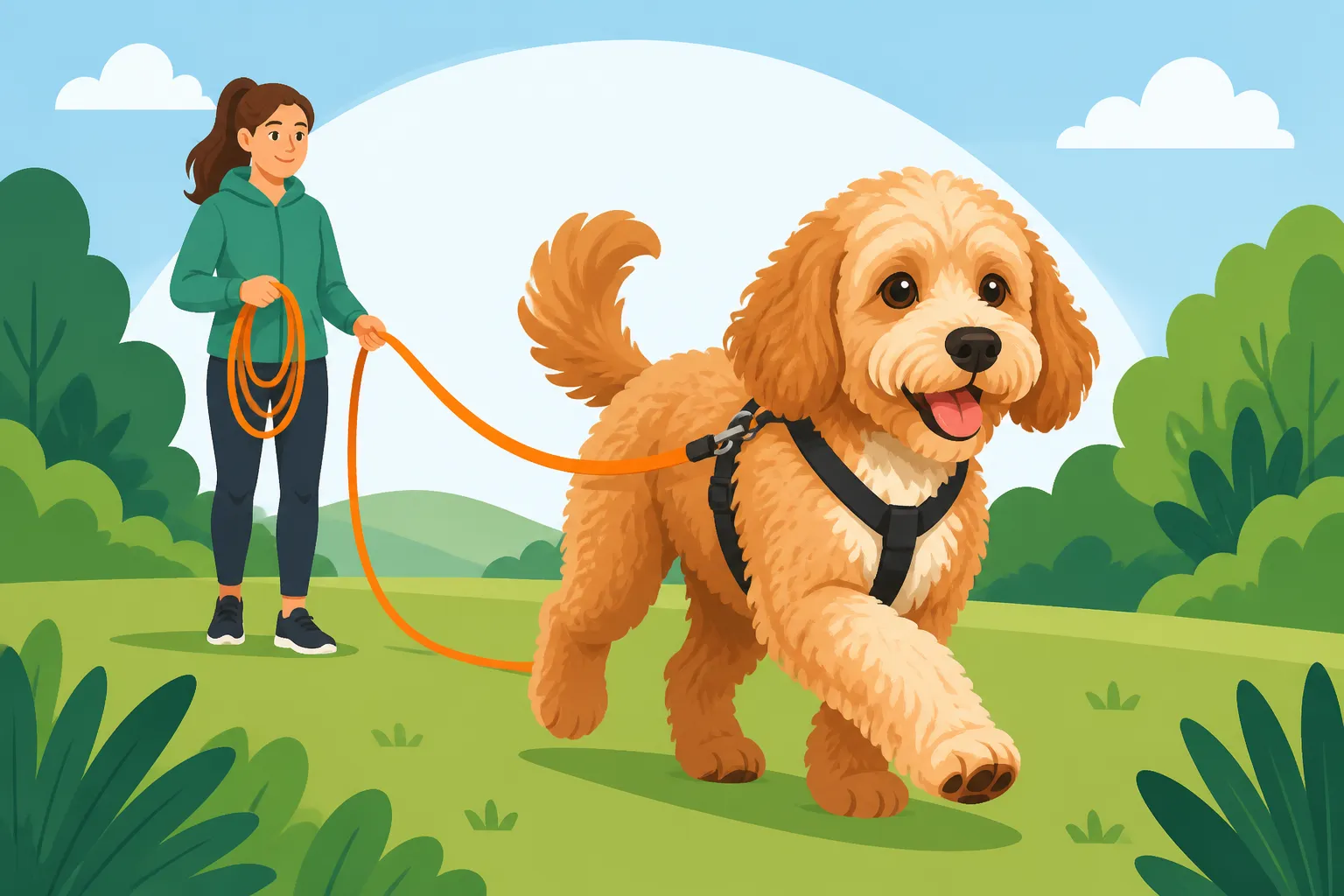
Working a Cockapoo on a Long Line
It’s a scenario many Cockapoo owners know all too well: you long to let your beloved furry friend run free, truly stretching those legs and indulging their natural instincts in a wide-open space. Yet, that nagging fear of them bolting after a squirrel, catching an irresistible scent, or simply getting too far ahead and ignoring your calls keeps their leash firmly in your hand. This guide is all about finding that middle ground, helping you learn how to confidently work your Cockapoo on a long line, offering them the freedom they crave while keeping them safe and within your control.
Why a Long Line is Essential for Your Cockapoo
Giving your Cockapoo the chance to explore beyond the typical six-foot lead is incredibly beneficial for their physical and mental well-being. A long line isn't just a longer leash; it's a vital training tool that bridges the gap between on-leash walks and reliable off-leash freedom. It allows for safe exploration and practice of crucial commands in a controlled yet expansive environment.
Understanding the Cockapoo's Instincts
Cockapoos are a wonderful blend of two intelligent and often energetic breeds: the Cocker Spaniel and the Poodle. From the Cocker side, they inherit a strong desire to follow their nose, often with a "flushing drive" that compels them to chase after birds, rabbits, or anything that moves. This can make off-leash excursions incredibly risky, as a sudden scent or movement can override all previous training. One moment they're by your side, the next they're a speck in the distance, deaf to your frantic calls.
Then there's the Poodle intelligence, which, while fantastic for training, can sometimes work against you if your Cockapoo decides their chosen adventure is more interesting than your command. They’re smart enough to know when they're out of reach. Understanding that these deep-seated instincts are part of their charm means acknowledging that boundless enthusiasm needs careful management. A long line allows them to engage with these instincts, sniffing and exploring, without the inherent dangers of complete freedom in an uncontrolled area. It's about giving them a safe outlet for their natural drives.
Safety First: Preventing Escapes and Accidents
The primary role of a long line is safety. There’s nothing more heart-wrenching than a dog going missing or encountering an unexpected hazard. Even in seemingly safe, enclosed areas, a determined Cockapoo can find a gap in a fence or get a burst of adrenaline that sends them running towards a road or another dog they shouldn't approach. A long line acts as your safety net. It means they can chase that leaf, investigate that bush, or even sprint a good distance, all while remaining physically connected to you.
Consider the potential dangers: busy roads, aggressive wildlife, poisonous plants, or even just getting utterly lost. The long line minimizes these risks significantly. It's particularly useful when you're exploring new places where you're unsure of the boundaries or potential hazards. It offers peace of mind, knowing that if your Cockapoo suddenly decides to make a break for it, you have a solid connection to reel them back in. This peace of mind then allows you to relax and enjoy the walk more, which your dog will absolutely pick up on.
Building a Reliable Recall, Safely
A solid recall is arguably the most important command you can teach your dog, especially a Cockapoo with their propensity to wander after scents. Many owners find their Cockapoo's recall is great in the garden, but falls apart the moment they hit the park. This is where the long line shines. It creates a controlled environment where your Cockapoo can practice coming back to you from a distance, with distractions, knowing that you can enforce the command if they ignore you. This isn't about punishment, but about ensuring success.
When your Cockapoo starts to ignore your call, a gentle tug on the long line can remind them that you mean business, guiding them back to you for praise and a high-value treat. This consistent reinforcement, where ignoring the command leads to a gentle physical prompt and obeying leads to a reward, is crucial. It teaches them that coming when called is always worthwhile, regardless of what exciting smell or sight has captured their attention. This builds a foundation for a strong recall in a way that simply hoping they’ll come back off-leash never can. It's a key step in building a reliable Recall on a Cockapoo That Has Found a Scent.
Choosing the Right Long Line for Your Cockapoo
Selecting the right long line isn't just about picking the longest one you can find. It's about finding a balance between length, material, durability, and comfort for both you and your Cockapoo. The right line can make training a joy, while the wrong one can be a tangled mess of frustration.
Length and Material Considerations
Long lines come in various lengths, typically ranging from 15 to 50 feet, sometimes even longer. For initial training in a relatively small, controlled area, a 15 or 20-foot line might be sufficient. This length offers more freedom than a standard leash but is still manageable. As your Cockapoo progresses and you move to larger, more open spaces, you might consider a 30 or 50-foot line. Remember, the longer the line, the more challenging it is to manage, especially when wet or in thick undergrowth. We have an article that goes into more depth on How Long a Long Line a Cockapoo Needs.
The material is also incredibly important. Here are some common options:
- Nylon: Often affordable and comes in various colors. However, it can absorb water, becoming heavy and difficult to handle when wet. It can also cause rope burn if it snags and slides through your hands.
- Biothane (PVC/TPU coated webbing): This is a fantastic option for Cockapoo owners. It's waterproof, easy to clean (just wipe it down!), and doesn't absorb odors. It offers a good grip even when wet and is less prone to tangling than traditional nylon. It's generally more durable and less likely to cause rope burn. You can often find excellent biothane long lines on Amazon.
- Cotton/Rope: While soft on the hands, these materials absorb water readily, get heavy, and can fray over time. They are also prone to tangling.
Consider where you'll be using the line most. If you live near lakes, beaches, or frequently walk in wet conditions, biothane is a clear winner. If you're mostly on dry, open fields, nylon might suffice, but always prioritize your comfort and safety regarding rope burn.
Hardware and Comfort
Beyond the line itself, pay attention to the hardware. The clip that attaches to your Cockapoo's harness should be sturdy, durable, and easy to operate, even with cold hands. A swivel clip is highly recommended as it prevents the line from twisting and tangling as your dog moves around. Avoid flimsy clips that could break or accidentally unlatch.
For your comfort, look for a line with a comfortable handle. Some lines have a padded loop handle, while others have no handle at all, designed to be held loosely or allowed to drag. If you opt for a handle, ensure it's large enough for your hand to slip through comfortably, but not so large that it could easily slip off your wrist. If you choose a handle-free line, which many experienced long-liners prefer for safety against entanglement, you’ll need to master proper handling techniques to avoid rope burn. Always wear gloves, especially with longer lines, to protect your hands. Many dog training suppliers, including those you find on Amazon, offer training gloves specifically for this purpose.
Where to Find a Quality Long Line
Finding a good quality long line is easier than ever with online retailers. Amazon is a popular choice, offering a vast selection of different materials, lengths, and price points from various manufacturers. When browsing, make sure to read reviews, paying attention to comments regarding durability, ease of cleaning, and how it handles in various weather conditions.
Specialty pet stores, both online and brick-and-mortar, are also excellent resources. These stores often stock higher-quality training equipment and their staff can provide valuable advice on which line might best suit your Cockapoo's size, temperament, and your training goals. Some dog training supply companies even offer custom-made long lines, allowing you to choose the exact length, material, and hardware you prefer. Don't be afraid to invest a little more in a quality long line; it's a critical safety and training tool that will get a lot of use and will last much longer.
Starting Long Line Training: The Basics
Embarking on long line training with your Cockapoo is an exciting step towards greater freedom and a more reliable recall. Like any training, it requires patience, consistency, and starting in a controlled environment to build confidence and good habits.
Introducing the Line to Your Dog
Before you even step out into a field, let your Cockapoo get used to the long line itself. Start by clipping it to their regular harness – never to their collar, as a sudden tug on a long line can cause serious neck injury. Let them drag it around the house or a securely fenced yard for short periods. This helps them become accustomed to the feel and weight of the line trailing behind them without any pressure or commands from you. Supervise them closely during this phase to prevent them from tangling it on furniture or chewing on it.
During these initial sessions, keep the atmosphere light and positive. Toss a favorite toy, offer treats, and praise them for simply existing with the line attached. You want them to associate the long line with positive experiences, not restriction. Once they are comfortable dragging the line indoors, take them to a secure, distraction-free outdoor space, like your backyard, and let them drag it there under supervision. This gentle introduction sets the stage for more active training.
The "Drag" Phase
Once your Cockapoo is comfortable dragging the line, you can move to the "drag" phase where you hold the end of the line, but mostly allow it to trail. The key here is not to hold it tight like a regular leash, but to keep it loose, allowing your dog to move freely while you maintain control. This is where you, the handler, learn how to manage the length of the line, gathering it up when your dog is close and letting it out when they venture further. This takes practice!
Find a large, open area with minimal distractions – a quiet park, a large field, or even a local sports oval during off-peak hours. Let your Cockapoo explore, but always keep the end of the line in your hand (or secured to your belt with a hands-free attachment for safety). The goal is to let them feel as if they're off-leash while you're still their safety net. Practice "reeling" the line in smoothly and letting it out without jerking. When your Cockapoo moves away, simply follow them at a comfortable distance, allowing the line to run out. When they turn back towards you, gather the slack. This builds your handling skills and prepares them for recall practice.
Practicing Recall in a Controlled Environment
Now comes the crucial part: practicing your recall. In your chosen safe, low-distraction environment, let your Cockapoo wander to the end of the long line. Wait for them to be engrossed in sniffing something interesting or looking away from you. This is your moment. Say their name enthusiastically, followed by your recall command (e.g., "Fido, Come!"). As you say the command, give a gentle, consistent tug on the long line to initiate their movement towards you.
The instant they start moving in your direction, release the tension on the line and praise them lavishly. When they reach you, reward them with a high-value treat – something they really love, like cheese or cooked chicken. Don't just give the treat and let them go; hold them gently for a moment, praise them, and then release them to go explore again. This teaches them that coming to you is the best thing ever, and it doesn't always mean the fun is over. Repeat this many times in short, positive sessions. Consistency is key here. You want to build a solid association between your recall command and a positive outcome. Consider using a whistle for recall too; sometimes a whistle carries further and cuts through distractions better than a voice, as detailed in Whether a Whistle Recall Beats a Voice on a Cockapoo.
Progressing Your Cockapoo's Long Line Skills
Once your Cockapoo is reliably coming back on the long line in a low-distraction environment, it's time to slowly increase the challenge. This gradual progression is vital to building a rock-solid recall that holds up in the real world.
Adding Distractions Gradually
The world is full of distractions, and your Cockapoo will eventually need to respond to your recall even when a fascinating smell or another dog is nearby. Introduce distractions one at a time, very gradually. Start with mild distractions, like a squeaky toy you bring out yourself, or walking near a distant path where people or dogs are present but not too close. Watch your dog's body language closely. If they are so engrossed they can't even hear you, the distraction is too high, and you need to dial it back.
As they become successful with milder distractions, slowly increase the intensity. This might mean practicing closer to a walking trail, where other people are passing, or in a park when other dogs are at a distance. Always be prepared to use the long line to gently guide them if they hesitate, ensuring they always succeed in returning to you. Remember to reward heavily for successful recalls amidst distractions. This systematic approach helps them generalize the recall command to various real-world scenarios. Many online training platforms, such as BAXTER & Bella, offer structured lessons that guide you through introducing distractions progressively.
Varying Environments
Just like distractions, varying the environments where you practice is crucial for a bomb-proof recall. A recall that works perfectly in your local park might completely fall apart in a forest full of new smells and sights. Take your Cockapoo to different parks, fields, trails, and even unfamiliar neighborhoods (always with the long line attached). Each new environment presents unique challenges and opportunities for learning.
When introducing a new environment, consider starting with a shorter long line or even keeping it somewhat shorter initially, until your dog gets a feel for the new surroundings. Then, gradually allow them more length. Pay attention to how your Cockapoo reacts to different types of terrain, sounds, and scents. They might be particularly prone to Whether a Cockapoo Ignores You Once It Scents Something in a wooded area, so be extra vigilant with the line in such places. The more places you practice, the more your Cockapoo will understand that "come" means come, no matter where they are or what exciting things are happening around them.
Transitioning to "Off-Leash" Mindset
The ultimate goal of long line training is often a reliable off-leash experience. While the long line provides safety, you want your Cockapoo to choose to return to you, rather than feeling forced. To foster this "off-leash" mindset, incorporate moments where you pretend the long line isn't even there. Let it drag on the ground, but keep an eye on your dog. If they wander too far, or ignore your call, step on the line to stop their progress, then calmly call them back and reel them in.
Another technique is to sporadically drop the end of the long line (only in extremely safe, truly enclosed areas where there is no chance of escape or danger). If they wander, calmly walk over, pick up the line, and call them. This teaches them that even without direct physical connection, you can still reach them. This is a subtle yet powerful step toward building trust and independence. The aim is for your Cockapoo to always be within your sphere of influence, even if not directly connected to your hand. Keep practicing recall games, hide-and-seek, and check-ins, always making yourself the most exciting thing in the environment.
Troubleshooting Common Long Line Challenges
Even with the best intentions and consistent training, you're bound to encounter a few bumps in the road when working a Cockapoo on a long line. It's perfectly normal, and recognizing common issues is the first step to overcoming them.
Dealing with Tangling and Tripping
One of the most frequent frustrations with long lines is the dreaded tangle. Whether it's wrapped around your legs, caught on a bush, or wound around your Cockapoo's own legs, tangles can be a real nuisance and even a safety hazard.
- Proper Handling: The key to avoiding tangles starts with how you hold and manage the line. Instead of letting it drag loosely, learn to "accordion" or "figure-eight" the line in your hands, managing the slack. This keeps excess line off the ground where it can snag. As your Cockapoo moves away, smoothly let out a loop; as they come closer, gather a loop back in. This takes practice but makes a huge difference.
- Material Choice: As discussed, biothane lines tend to tangle less than nylon or cotton because they are smoother and stiffer. If tangling is a major issue, investing in a biothane line might be a game-changer.
- Awareness: Always be aware of your surroundings. Scan for obstacles like low branches, rocks, or other people and dogs, and adjust your handling of the line accordingly.
- Hands-Free Options: For some, a hands-free long line belt can be helpful. This secures the line to your waist, freeing your hands and potentially reducing tangling around your legs. Just ensure the belt has a quick-release mechanism for safety, especially if your Cockapoo is prone to bolting.
When Your Cockapoo Ignores You on the Line
It's disheartening when you give a recall command and your Cockapoo just keeps sniffing, pretending not to hear you, even when they're on a long line. This often indicates one of a few things:
- Too Many Distractions Too Soon: You might have progressed too quickly. Go back to an environment with fewer distractions and solidify the recall there. Success builds success.
- Low Value Reward: Are your treats exciting enough? A piece of kibble might be fine in the living room, but in a field full of interesting smells, your Cockapoo needs something truly irresistible. Experiment with different high-value treats like real meat, cheese, or even a favorite toy.
- Inconsistent Follow-Through: If your Cockapoo knows they can sometimes ignore you without consequence, they will. When you give the command on the long line, always follow through with a gentle, consistent reel-in if they don't respond immediately. The long line is there precisely for this purpose – to ensure they understand the command always means to come.
- Poisoned Cue: If "come" has too many negative associations (e.g., only being called to go home, or to be scolded), your Cockapoo will avoid it. Make coming to you the most joyful, rewarding part of their walk. Call them for random, happy check-ins, give a treat, and then release them to play again.
Managing a Pulling Cockapoo
A Cockapoo with a strong The Flushing Drive Still Alive in a Cockapoo can still pull on a long line, especially if they catch a strong scent or see something interesting. This can be uncomfortable and even dangerous if they jerk you off balance.
- Harness Choice: Ensure your Cockapoo is wearing a comfortable, well-fitting harness, ideally one that discourages pulling (e.g., a front-clip harness). Never use a long line with a flat collar.
- Teach Loose-Line Walking: Even on a long line, you can practice loose-line walking. When they start to pull, stop walking. Only resume when the line slackens. This teaches them that pulling doesn't get them closer to their goal.
- Redirection: When you see your Cockapoo’s attention fixating on something they might pull towards, gently redirect their focus before they start pulling. Use a verbal cue, a treat lure, or change direction.
- Reinforce Calmness: Reward your Cockapoo for walking calmly on a loose line. Praise them and give treats when they are walking nicely by your side or exploring gently without tension on the line.
- Management Over Correction: The long line is more for management and guidance than harsh correction. If they're pulling constantly, it might be a sign they need more exercise before their training session, or you're asking too much of them in that environment.
Integrating Long Line Work into Daily Life
Working a Cockapoo on a long line isn't just a training exercise; it can become a regular and enriching part of their life, offering them freedom and mental stimulation while reinforcing good habits.
Using the Long Line for Enrichment Activities
A long line isn't solely for recall practice; it's a fantastic tool for enriching your Cockapoo's life. Many Cockapoos have a strong nose and love to use it. A long line allows them to engage in scent work safely. You can hide treats or toys in tall grass or behind bushes, and let your Cockapoo track them while still connected to you. This taps into their natural instincts and provides immense mental stimulation. Scent Work That Satisfies a Cockapoo is an excellent way to tire out an energetic Cockapoo without excessive physical exertion.
You can also use the long line for exploring new, interesting areas like nature trails or safe wooded patches. It gives them the freedom to wander off the path a bit, investigate new smells, and engage with their environment in a way a short leash restricts. It's about letting them be a dog, within safe boundaries. Think of it as supervised freedom, allowing them to make choices and explore, knowing you can intervene if needed. This type of exploration builds confidence and keeps them mentally sharp.
Maintaining Skills with Regular Practice
Just like any skill, recall and good long line manners need to be practiced regularly to stay sharp. Don't assume that once your Cockapoo has a good recall on the long line, you can stop practicing. Life happens, and if you let their skills slide, those ingrained instincts might take over again. Aim for at least a few long line sessions a week, even if they're short.
Vary the locations, distractions, and even the rewards to keep things interesting. Keep those high-value treats coming for successful recalls. Practice "check-ins" where you call them just to give a treat and praise, then release them, ensuring they don't associate coming to you only with the end of fun. The more consistently you practice, the more reliable their response will be, and the more ingrained the habit of checking in with you will become. The Age a Cockapoo's Recall Falls Apart is often when owners get complacent; consistent practice prevents this regression.
Knowing When to Trust Your Cockapoo Off-Leash
This is the million-dollar question for many Cockapoo owners. The decision to trust your Cockapoo off-leash is a highly personal one and depends entirely on your individual dog, your training, and the specific environment. There's no magic "aha!" moment when they are suddenly ready. Instead, look for consistent signs:
- Reliable Recall: Your Cockapoo consistently comes when called, even with significant distractions, at varying distances, and in different environments. They respond to your voice and/or whistle promptly.
- Good Check-ins: They frequently look back at you, even when exploring, to ensure you're still there. This shows they are keeping you in mind, rather than getting completely lost in their own world.
- Controlled Impulses: They demonstrate good impulse control around common temptations like squirrels, birds, or other dogs. They might notice them, but they don't bolt immediately.
- Understanding Boundaries: They stay within a reasonable distance and don't wander out of sight.
Even with all these boxes checked, always consider the environment. A wide, open, securely fenced park is very different from a busy trail near a road, or a wildlife-rich forest. Whether a Cockapoo Is Safe Off Leash on Open Ground is a different calculation than other areas. When in doubt, keep the long line on, or choose an alternative activity. It's always better to be safe than sorry. The long line remains a valuable safety tool even for dogs with excellent recall, offering that extra layer of security in new or unpredictable situations.
Long Line Comparison Table
To help you decide which long line might be best for your Cockapoo and your training needs, here's a quick comparison of common materials:
| Feature | Nylon Long Line | Biothane Long Line | Rope/Cotton Long Line |
|---|---|---|---|
| Material | Woven nylon webbing | PVC/TPU coated webbing | Woven cotton or natural fiber rope |
| Durability | Good, but can fray over time | Excellent, very strong and resistant to wear and tear | Varies, can fray or snap with heavy use |
| Waterproof | No, absorbs water | Yes, completely waterproof | No, absorbs water |
| Cleaning | Can be difficult to clean when muddy/wet | Very easy, wipes clean with a damp cloth | Difficult, holds dirt and odors |
| Tangle Resistance | Moderate, can tangle easily when wet | High, smoother surface and stiffness reduces tangles | Low, very prone to knotting and tangling |
| Grip/Feel | Can cause rope burn when wet, can be stiff | Good grip even when wet, less rope burn risk | Soft on hands but can be heavy when wet, higher rope burn risk if not handled correctly |
| Weight | Relatively lightweight (dry) | Heavier than nylon, but consistent weight | Lightweight (dry), very heavy when wet |
| Cost | Generally lower | Moderate to higher | Lower to moderate |
| Best For | Dry conditions, casual use, budget-conscious | All weather, serious training, easy maintenance, durability | Gentle handling, short lines, specific training styles |
Disclaimer
This article is for general informational purposes only and does not constitute professional advice. Laws, prices and regulations vary by location and change over time. Consult a qualified professional for guidance on your specific situation.