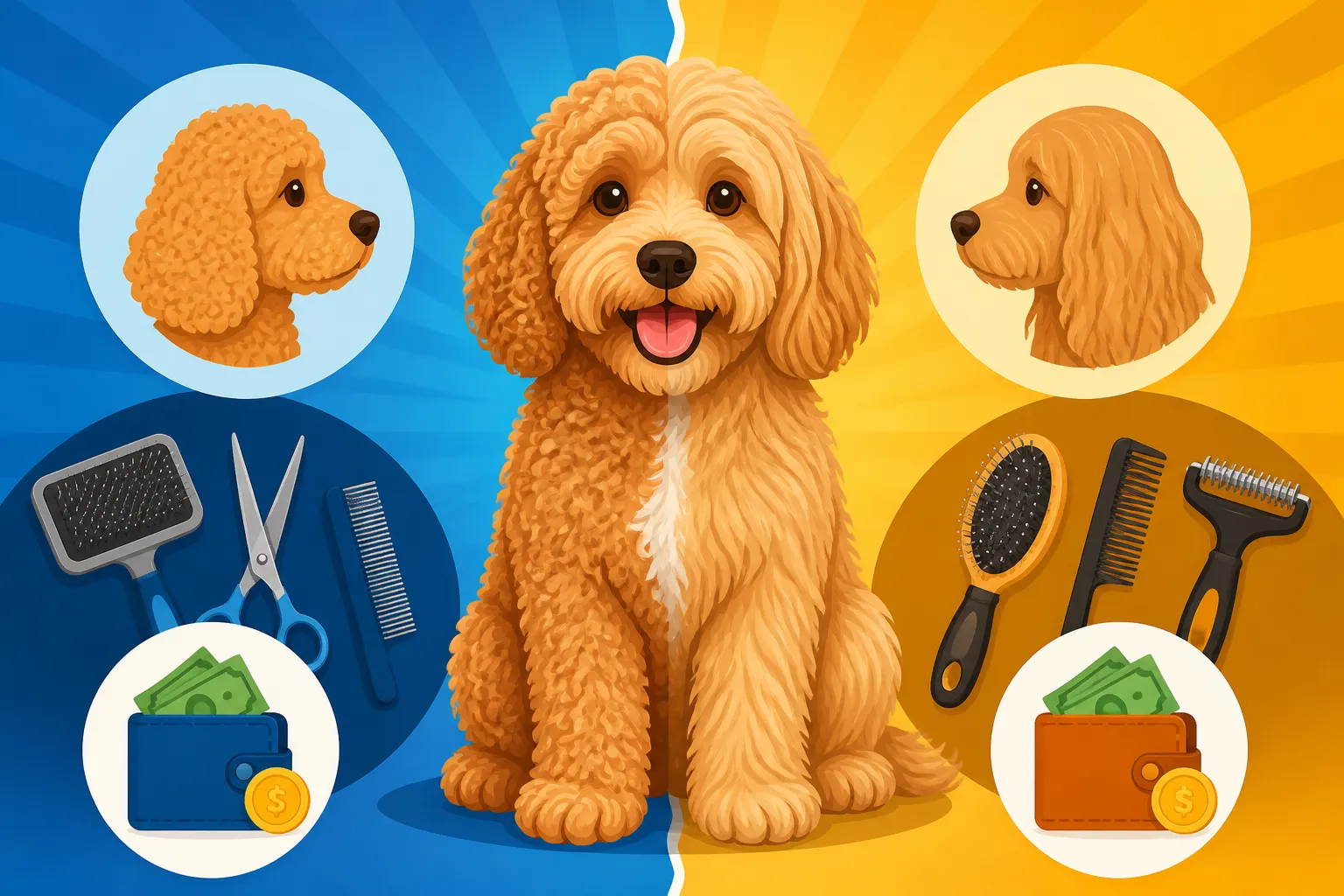
Whether Coat Type Changes a Cockapoo’s Grooming Bill
One of the biggest surprises for new Cockapoo owners is often the grooming bill. You bring home this adorable, fluffy bundle, and while you know mixed breeds require some upkeep, the sheer variety in their coats can lead to a huge range in how much time, effort, and money you'll spend keeping them looking their best. This guide will help you understand how your Cockapoo's specific coat type directly influences your grooming expenses, helping you prepare and potentially save.
Understanding Your Cockapoo's Coat Types
Before we dive into the dollars and cents, it's essential to understand that not all Cockapoos are created equal when it comes to their fur. The genetic lottery of crossing a Cocker Spaniel with a Poodle means you can get a delightful spectrum of coats, each with its own quirks and demands. Generally, we categorize them into three main types, and each one tells a story about its grooming needs.
The Straight-Coated Cockapoo
Sometimes, a Cockapoo inherits more of the Cocker Spaniel's coat characteristics, resulting in a straighter, flatter coat. This type often feels soft, somewhat silky, and tends to lie close to the body, especially on the back, while still having some feathering on the legs, ears, and tail. Many people mistakenly believe this coat type means less grooming, but it's not always the case. While it might shed more than the curlier types, which can be a surprise if you were promised a "non-shedding" dog, it may not matt as readily as the very curly coats.
However, the shedding aspect means you'll still be brushing regularly to manage loose hair around your home, even if professional grooming visits are less frequent for clipping. You might find yourself needing a good de-shedding tool and a powerful vacuum more often. The beauty of this coat is its classic spaniel look, but that beauty still requires dedicated attention to prevent tangles in the longer feathering and to keep shedding under control. For more on how genetics play a role, you might want to read The Curl Gene and Where a Cockapoo's Coat Lands.
The Wavy Wonder: A Common Cockapoo Look
This is arguably the most common and often sought-after Cockapoo coat, striking a lovely balance between the two parent breeds. It's typically soft, loose, and has a gentle wave or curl throughout. This "fleece" or "shaggy" coat is less prone to heavy shedding than the straight coat, largely because the wavy texture traps shedding hairs, preventing them from falling out easily. This is great for keeping your furniture cleaner, but it introduces a significant challenge: matting.
Those trapped hairs, combined with the wavy texture, love to intertwine and form mats, especially in areas of high friction like behind the ears, under the armpits, and around the collar. This coat type absolutely requires consistent, thorough brushing at home, often daily, to prevent these mats from forming. If left unattended, this beautiful wavy coat can quickly become a groomer's nightmare, and yours, leading to higher bills.
The Curly, Poodle-Like Cockapoo
At the other end of the spectrum, you have the Cockapoo that takes strongly after its Poodle parent, boasting a tight, dense curl. This coat is often considered the most "hypoallergenic" due to its minimal shedding, as the curls are incredibly effective at holding onto any loose hair. For those with allergies, this can be a huge relief, but it comes with the highest grooming demands of all three types.
The dense, tightly curled nature of this coat is a matting magnet. Even a tiny bit of neglect can lead to painful, skin-tight mats that are incredibly difficult and time-consuming to remove. This coat type almost always necessitates regular professional grooming appointments, usually every 4-6 weeks, coupled with diligent daily brushing at home. Without this commitment, you’re not just looking at a bad hair day; you're looking at potential skin problems and uncomfortable visits to the groomer that will certainly cost more. For a general overview of the grooming demands of all coat types, check out The Three Cockapoo Coat Types and Their Upkeep.
Why Different Coats Mean Different Grooming Bills
Now that we've explored the different coats, let's get down to the brass tacks: why does one coat cost more to groom than another? It largely boils down to time, effort, specialized techniques, and the tools required to properly maintain each type. Groomers price their services based on these factors, and a more demanding coat naturally commands a higher fee.
Time is Money: How Coat Density and Texture Add Up
Think about it from a groomer's perspective. A straight-coated Cockapoo, while still needing a bath, blow-dry, and tidy-up, generally takes less time to prepare and clip than a densely curled one. The hair is easier to comb through, dries faster, and clippers glide more smoothly. This translates to a quicker, and therefore less expensive, appointment. You might be able to stretch these appointments out a bit longer too, depending on how diligently you brush at home.
For a wavy or curly Cockapoo, especially if they haven't been meticulously brushed at home, the process takes considerably longer. Each section of coat needs careful line brushing to ensure there are no hidden tangles, then a thorough wash, and a precise blow-dry to straighten the curls enough for an even cut. This extended time in the tub and on the grooming table directly impacts the hourly rate effectively charged by the groomer. What might take How Many Minutes a Straight Coated Cockapoo Takes could be double or triple for a very curly, unkempt coat.
The Matting Menace: A Major Cost Driver
This is perhaps the single biggest factor influencing your grooming bill. Mats are not just unsightly; they can be incredibly painful for your dog, pulling on their skin and creating hotspots for infection. Groomers are ethical professionals, and their priority is the dog's welfare. If a Cockapoo comes in severely matted, there are usually only two options: a painstaking de-matting process or a full shave-down.
De-matting is agonizingly slow, often requiring special sprays, combs, and a great deal of patience. Many groomers will charge a significant hourly fee for de-matting, as it's hard work and stressful for both dog and groomer. In severe cases, it might even be refused because it's too painful for the dog, or a vet visit might be recommended for sedation. The alternative, a full shave-down, is quicker but still requires careful work to get under the mats without nicking the skin, and it means your dog loses their beautiful coat, often resulting in a "naked" look until it grows back. This is why Whether a Matted Cockapoo Has to Be Shaved is a real concern for many owners. Consistent home brushing is truly your best defense against these costly and uncomfortable scenarios.
Specialized Care for Specific Coats
Beyond just the time, certain coats might require specialized products or techniques. A very oily Cocker-dominant coat, for example, might need a degreasing shampoo, while a very dry Poodle-dominant coat might benefit from a hydrating conditioner to prevent breakage and static. These specialized products can sometimes add a small upcharge, or at the very least, they are an expense you’ll need to factor into your home grooming kit.
Furthermore, the tools themselves vary. While a basic slicker brush and comb are universal, a curly Cockapoo will benefit from a stronger pin brush and a wider-toothed comb, whereas a straight-coated one might need a finer comb for feathering and a rubber curry brush for shedding. Understanding how to use these tools effectively, especially line brushing, is key to preventing mats. Learning to properly Line Brushing a Cockapoo and Why the Top Coat Lies can save you a significant amount on professional fees.
| Cockapoo Coat Type | Shedding Level | Grooming Frequency (Professional) | Home Grooming Effort | Risk of Matting | Typical Cost Impact |
|---|---|---|---|---|---|
| Straight/Flat | Moderate | Every 8-12 weeks | Moderate (daily brush for shedding/tangles) | Low to Moderate | Lower |
| Wavy/Fleece | Low | Every 6-8 weeks | High (daily thorough brushing) | High | Medium to High |
| Curly/Poodle-like | Minimal | Every 4-6 weeks | Very High (daily diligent brushing) | Very High | Highest |
Strategies to Manage Grooming Costs for Any Cockapoo Coat
The good news is that while coat type definitely influences cost, you're not entirely at its mercy! There are proactive steps you can take to keep your Cockapoo looking sharp and your wallet a little heavier. It all comes down to a combination of home care, smart choices, and a bit of planning.
The Power of Home Grooming
This is where you can make the biggest dent in your grooming expenses. Regardless of your Cockapoo's coat type, consistent home grooming is absolutely paramount. For a wavy or curly coat, daily thorough brushing is non-negotiable. This means using the right tools – a good quality slicker brush and a metal comb that reaches down to the skin. Simply brushing the top layer of hair isn't enough; you need to feel for mats close to the skin. The metal comb is your secret weapon, as it will The Comb That Finds Mats a Slicker Misses.
Learning to trim around the eyes and paw pads, and keeping nails clipped, can also extend the time between full professional grooms. There are countless online tutorials and even beginner grooming classes that can teach you these basic skills. While you might not achieve a show-quality cut, keeping your dog tangle-free and tidy is invaluable. Many owners find that once they get a routine down, home grooming can actually be quite a bonding experience. Resources from pet supply companies like Chewy can be incredibly helpful for finding the right tools and educational materials to get started with home grooming. This active participation really helps answer Whether Grooming a Cockapoo at Home Saves Money with a resounding "yes."
Choosing the Right Groomer and Schedule
Finding a groomer who understands Cockapoo coats is crucial. A good groomer will advise you on the best schedule for your dog's specific coat type and lifestyle. Don't try to stretch out appointments too long just to save money, as this often backfires with matting that incurs higher charges. Think of it as preventative maintenance. For a curly Cockapoo, a 4-6 week schedule is often ideal, whereas a wavy one might manage 6-8 weeks, and a straight coat perhaps 8-12 weeks for a full clip, with more frequent tidies.
It’s also worth discussing different clip styles with your groomer. A shorter "puppy cut" or "teddy bear cut" can make home maintenance much easier and potentially allow for slightly longer intervals between appointments, especially for the curlier coats, which can help mitigate What a Cockapoo Groom Costs by Coat Type. Be open and honest with your groomer about your home grooming habits. They are there to help, not judge, and their advice can be invaluable.
Investing in Prevention: Nutrition and Supplements
Believe it or not, your dog's diet can play a role in coat health, which in turn can influence grooming costs. A healthy coat is less prone to breakage, excessive shedding (which can lead to tangles), and skin issues that might necessitate specialized grooming or vet visits. Feeding a high-quality, balanced diet provides the essential nutrients for a strong, healthy coat. Some owners choose fresh food options, for example from brands like Ollie, which often boast benefits for skin and coat due to their natural ingredients.
Additionally, certain supplements, particularly those rich in omega-3 and omega-6 fatty acids, can support skin and coat health, making the hair stronger and more manageable. If you notice your Cockapoo's coat feels unusually dry, brittle, or if their skin seems irritated, it's always wise to consult your vet. A healthy coat is easier to brush, less prone to matting, and generally more pleasant for both you and your groomer to work with. For more on how diet affects the coat, consider Whether Omega Oils Help a Cockapoo's Coat.
The Long-Term Financial Impact of Your Cockapoo's Coat
Grooming isn't a one-time expense; it's a lifelong commitment. When you bring a Cockapoo into your home, you're signing up for years of coat care. Understanding the long-term financial implications can help you budget effectively and avoid unpleasant surprises down the road.
Annual Grooming Budget Considerations
Let's do some quick mental math. If your Cockapoo needs professional grooming every six weeks at, say, a certain amount per session, that adds up quickly over a year. Multiplied by The Fourteen to Eighteen Years a Cockapoo Lives, this becomes a substantial sum. It's not just the full grooming sessions either; you might have costs for specialized shampoos, conditioners, brushes, combs, nail clippers, and perhaps even professional de-shedding tools if you have a straighter-coated Cockapoo.
For many owners, budgeting for regular grooming is as important as budgeting for food or vet care. Having a dedicated "fluff fund" can save you from financial stress. Remember, trying to cut corners by skipping professional appointments or neglecting home brushing will almost always lead to higher costs later due to matting or skin issues. Consistent, preventative care is always more cost-effective in the long run.
Unexpected Grooming Costs: Accidents and Neglect
Life happens, and sometimes, despite your best efforts, your Cockapoo might end up with a coat disaster. A roll in something sticky and impossible to wash out, an encounter with burrs in the woods, or simply a period where you couldn't keep up with brushing as much as you'd like, can lead to severe matting. These situations often result in emergency groomer visits and significantly higher fees.
In worst-case scenarios, extreme matting can cause skin infections, hotspots, or even restrict movement, leading to vet visits on top of the grooming bill. These unexpected costs can quickly escalate. This highlights why understanding The Yearly Grooming Total on a Cockapoo is important, but also why maintaining that consistent routine is your best defense against such surprises.
Pet Insurance and Grooming-Related Issues
While pet insurance typically doesn't cover routine grooming (like baths, haircuts, or nail trims), it can be incredibly valuable if grooming neglect or coat-related issues lead to medical problems. For example, if severe matting causes a skin infection that requires veterinary treatment, medication, or even sedation for shaving, some pet insurance policies might help cover those vet-related medical expenses.
It's crucial to read policy details carefully, as coverage varies greatly between providers. Companies like Healthy Paws often have different tiers or exclusions. Some policies might exclude conditions deemed preventable by routine care, so always check with your chosen insurer. While it's not a substitute for proper grooming, having pet insurance can provide a safety net for those unforeseen health issues that can arise if coat care inadvertently falls by the wayside. It’s another layer of protection for your beloved Cockapoo.
Disclaimer
This article is for general informational purposes only and does not constitute professional advice. Laws, prices and regulations vary by location and change over time. Consult a qualified professional for guidance on your specific situation.