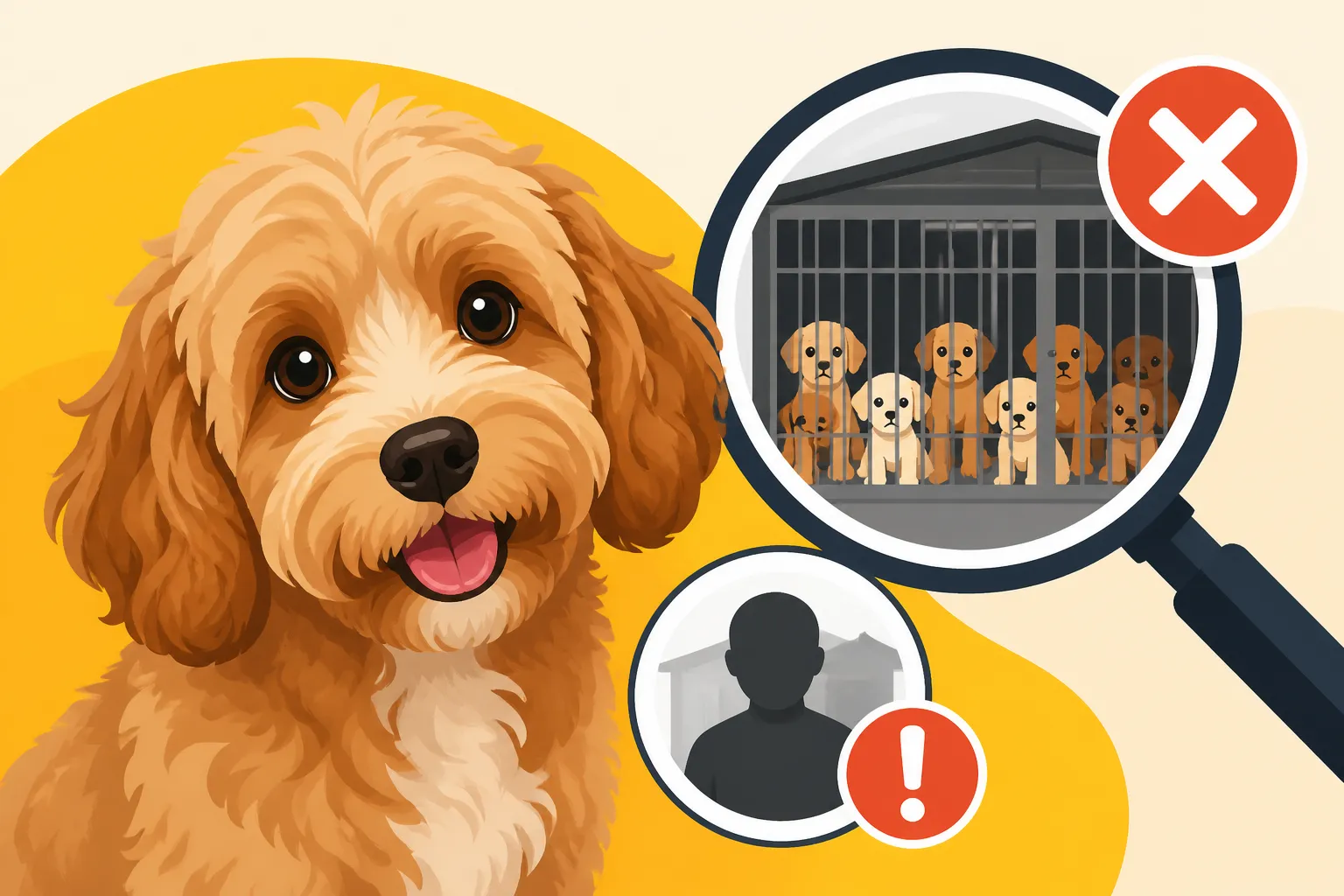
Spotting a Mill Bred Cockapoo Listing
It's incredibly frustrating when you're looking for a new Cockapoo puppy, filled with excitement, and then you start seeing listings that seem too good to be true. The vast difference in prices and the overwhelming number of online ads can make it really hard to tell a responsible breeder from someone who's simply in it for the money. This guide is here to arm you with the knowledge to confidently identify the red flags of a mill-bred Cockapoo listing, protecting both your future furry family member and your wallet from heartbreaking outcomes.
The Lure of the 'Bargain' Cockapoo: Understanding the Mill Connection
The internet has opened up a world of possibilities for finding puppies, but it has also created a fertile ground for less scrupulous breeders, often associated with puppy mills. These operations thrive on high volume and low overhead, which translates directly into seemingly attractive prices for puppies. It's a classic case of buyer beware, as that initial "bargain" almost always comes with a steep price tag down the line.
Why Mill-Bred Puppies Seem Cheaper at First Glance
When you see a Cockapoo puppy advertised for a price significantly lower than what reputable breeders typically ask, it's natural for your ears to perk up. Who doesn't love a good deal, right? These lower prices are usually a direct result of the conditions in which the puppies are bred and raised. Puppy mills cut corners on virtually everything: proper nutrition for the breeding parents, veterinary care, genetic health testing, clean living environments, and essential early socialization.
Imagine a scenario where a breeder has dozens, or even hundreds, of breeding dogs housed in cramped, often unsanitary kennels. These dogs are treated as commodities, not beloved pets. They receive minimal, if any, individual attention, and their basic needs for exercise, mental stimulation, and veterinary care are barely met. The cost savings from such neglect are passed on to the buyer as a lower upfront price. There’s no investment in costly genetic screening for issues like Familial Nephropathy and the Kidneys a Cockapoo Can Inherit or Progressive Retinal Atrophy in a Cockapoo, which means the breeder doesn't incur those expenses. This model allows them to produce puppies cheaply and in large numbers, flooding the market with "affordable" options.
The Hidden Costs That Emerge Later
That initial low price tag is almost always a bait-and-switch. The money saved upfront is quickly eclipsed by significant expenses as your mill-bred Cockapoo grows. These hidden costs manifest in various forms, primarily stemming from health and behavioral issues that are rampant in puppies from such environments. A puppy from a mill is far more likely to suffer from parasites, respiratory infections, and other communicable diseases due to unsanitary conditions and poor immunity. Many also carry genetic predispositions to serious conditions that were never screened for in the parents. For example, a puppy might develop Glaucoma From the Cocker Side of a Cockapoo or suffer from Phosphofructokinase Deficiency in a Cockapoo, leading to complex and expensive treatments.
Beyond physical health, the lack of early socialization in a mill environment can lead to profound behavioral problems. A puppy kept in isolation or confined to a small kennel from birth often misses critical developmental windows for learning to interact positively with humans and other animals. This can result in extreme shyness, fear, anxiety, aggression, or difficulty with house-training. Imagine bringing home a puppy that cringes at your touch, hides from new sounds, or struggles with basic commands because it’s never been exposed to a normal home environment. The cost of extensive training, behavior modification, or even specialized veterinary behaviorist consultations can quickly surpass the initial savings. It's a common, heartbreaking reality, and it's why understanding What a Mill Bred Cockapoo Costs You Later is so crucial.
The Ethical Dilemma of Supporting Puppy Mills
Choosing to buy a puppy from a mill, even unknowingly, contributes directly to a cycle of cruelty and neglect. It's not just about the puppy you bring home; it's about the countless breeding dogs left behind in those facilities. These parent dogs, often referred to as "brood bitches" or "stud dogs," endure a life of endless breeding, often in deplorable conditions, until they are no longer deemed profitable. They live without comfort, affection, or proper medical care, their sole purpose being to produce litter after litter.
Supporting these operations, even indirectly, perpetuates their existence. Every purchase fuels the demand, encouraging more animals to be subjected to these conditions. When you opt for a puppy from a responsible, ethical breeder, you are not only getting a healthier, better-socialized pet, but you are also making a stand against this inhumane industry. It's about aligning your actions with your values and ensuring that no animal suffers for your desire for a pet. The stark reality is that Why Cockapoos Fill Puppy Mills is due to their popularity and the ease with which unscrupulous breeders can exploit that demand.
Red Flags in Online Listings: What to Look For (and Away From)
Navigating online listings for Cockapoo puppies can feel like walking through a minefield. There are so many advertisements out there, and some of them are incredibly deceptive. Knowing what specific details to scrutinize, and what vague or missing information should immediately raise your eyebrows, is your best defense against inadvertently supporting a puppy mill.
Generic Photos and Stock Images
One of the most glaring red flags in an online listing is the use of generic, low-quality, or even stock photos. Puppy mill operators often advertise many puppies at once, sometimes across multiple platforms or even posing as different "breeders." They simply don't have the time or inclination to take individual, high-quality photos of each puppy in a clean, home-like setting. You might see images that look like they've been taken quickly in poor lighting, or photos where all the puppies look identical, or even pictures that appear to be lifted directly from other websites.
A reputable breeder, on the other hand, is usually proud to show off their puppies. They'll have a plethora of clear, recent photos and videos, often showing the puppies interacting with their littermates, their mother, and even human family members. They'll also provide distinct pictures of each available puppy, highlighting their individual features. If a listing only has one or two blurry photos, or if the images seem too perfect and professional to be real puppies for sale (like they came from a magazine), proceed with extreme caution. True breeders want you to see the personality and health of their specific puppies, not just a generic "Cockapoo" image.
Vague or Missing Information About Parents and Breeding
A responsible breeder is an open book about their dogs and their breeding practices. They understand that you're making a significant, long-term commitment and you deserve to know everything. Mill-bred listings, however, are notorious for providing vague, minimal, or outright missing information about the puppy's parents, their health, and the breeding environment. You might see a listing that simply says "Cockapoo puppies for sale" with no mention of the mother or father's names, breeds (e.g., American Cocker Spaniel vs. English Cocker Spaniel, or Poodle size), or any details about their temperament or health.
Crucially, ethical breeders will always provide documentation of genetic health testing on both parent dogs. This is paramount for a crossbreed like the Cockapoo, where inherited conditions from both parent lines need to be screened. If a listing doesn't mention health clearances for common issues like hip dysplasia, patellar luxation, eye conditions (like PRA), or kidney disease (FN), that's a huge warning sign. They might offer a vague statement like "vet checked," but this is not the same as comprehensive genetic health testing. You should be asking for specific test results, and a good breeder will be happy to share them. This includes asking for The Five Certificates a Cockapoo Breeder Should Show for each parent. If a breeder is evasive or dismissive when you ask about these details, it's time to walk away.
Pressure Sales Tactics and Instant Availability
Another tell-tale sign of a mill-bred listing is the presence of aggressive sales tactics and an insistence on immediate pickup. Puppy mills operate on volume, and they want to move puppies out as quickly as possible to make room for the next litter. They often don't screen potential buyers, don't have waiting lists, and may push for a quick transaction, sometimes even offering to meet you in a parking lot or deliver the puppy to you without a prior visit.
Reputable breeders, conversely, take their time. They're not just selling a puppy; they're placing a beloved member of their extended dog family into a suitable home. They will have an application process, ask you detailed questions about your lifestyle and experience, and often have a waiting list for their puppies. They'll want to ensure their puppies are going to responsible, loving homes that are a good match. There will be no rush to pick up the puppy, and they will likely invite you to visit their home to meet the puppy and its mother. If a "breeder" insists on cash-only payments, doesn't offer a health guarantee beyond a few days, or tries to rush you into a decision, these are major red flags that you are likely dealing with a high-volume, potentially mill-related operation.
| Feature | Reputable Breeder Listing | Mill-Bred Listing (Red Flags) |
|---|---|---|
| Photos | Multiple clear, recent photos of individual puppies with mom/litter in home setting. Videos available. | Few, blurry, generic, or stock photos. Might show multiple identical puppies without distinction. |
| Parent Information | Detailed info on both parents (names, breeds, temperaments, health tests). Photos of parents provided. | Vague or missing parent info. No photos of parents. May just say "Cockapoo parents." |
| Health Testing | Documentation of specific genetic health clearances (e.g., OFA, CERF, DNA panels) for both parents. | Vague "vet checked" claim. No mention of genetic testing. Breeder may dismiss your questions. |
| Environment | Open invitation to visit home/kennel where puppies are raised. Clean, stimulating environment. | Reluctance to allow visits. Offers to meet in public places (parking lots, etc.). |
| Availability | Waiting list common. Puppies usually available at 8+ weeks. Breeder screens potential buyers thoroughly. | "Puppies available now!" High pressure sales. No screening questions. |
| Guarantee/Contract | Comprehensive health guarantee, spay/neuter contract, lifetime support. | Minimal or no health guarantee. No contract or vague terms. |
| Price | Reflects investment in health, care, and quality breeding. Usually on the higher end of the typical range. | Significantly lower than average, designed to attract impulse buyers. |
Asking the Right Questions: Interrogating a Potential Breeder
When you've found a listing that seems promising, your next step is to engage with the potential breeder. This is where your investigative skills really come into play. A responsible breeder will welcome your questions and be eager to share information. A less scrupulous one, however, will become defensive, evasive, or simply not have the answers.
Health Testing: Beyond a Vet Check-Up
One of the most critical areas to probe is health testing. Many puppy mill operators will try to placate potential buyers with a blanket statement like, "Our puppies are vet checked!" While a vet check is important, it's a snapshot in time and doesn't tell you anything about the genetic health of the parents, which directly impacts the likelihood of your puppy developing inherited diseases. You need to ask about specific genetic tests and certifications for both the Cocker Spaniel and Poodle parents.
For the Cocker Spaniel side, ask about hip and elbow evaluations, patella checks, and eye certifications (like a yearly CAER exam). For the Poodle side, inquire about tests for Whether Both Cockapoo Parents Must Be prcd-PRA Clear, von Willebrand's Disease, and again, patella and eye certifications. A truly responsible breeder will readily provide you with official documentation, often from reputable testing labs. They should be able to explain what each test means and why it's important. Don't settle for "the vet said they're healthy." You need proof of specific genetic screenings performed on the parent dogs to ensure you're not inheriting a lifetime of expensive medical problems. Remember, Whether an Untested Cockapoo Litter Is a Gamble is a question that vets and responsible owners answer with a resounding yes.
Meeting the Parents and Visiting the Premises
An absolute non-negotiable when considering a Cockapoo puppy is the opportunity to meet at least the mother of the litter, and ideally the father, in their home environment. This visit serves multiple crucial purposes. Firstly, it allows you to observe the mother's temperament. Is she friendly, confident, and well-socialized? A mother who is fearful, aggressive, or extremely timid is a red flag, as temperament is often inherited and her stress levels can affect her puppies. Secondly, you get to see the conditions in which the puppies are being raised. Is the area clean, warm, and stimulating? Are the puppies well-fed, handled, and interacting positively with their environment?
Puppy mill operators will rarely allow you to visit their facility. They might offer to bring the puppy to you, or meet you at a neutral location like a highway rest stop or a pet store. This is a huge red flag because they don't want you to see the deplorable conditions their breeding dogs and puppies are living in. If a breeder is evasive about allowing a home visit or claims the mother isn't available, walk away. A truly ethical breeder wants you to see their operation and feel comfortable with where your puppy is coming from. This transparency is a cornerstone of responsible breeding.
Inquiring About Early Socialization and Environment
The first few weeks of a puppy's life are incredibly important for its development. A puppy from a responsible breeder will have been raised in a stimulating, loving home environment, exposed to various sights, sounds, and experiences from a young age. This early socialization helps them grow into confident, well-adjusted adult dogs. Ask the breeder what kind of socialization the puppies have received. Have they been handled daily by different people? Have they been exposed to household noises like vacuums, doorbells, or children playing? Do they have access to different textures and toys?
A mill-bred puppy, by contrast, often spends its formative weeks in a confined, barren kennel, with little to no human interaction or exposure to normal household life. This lack of early enrichment can lead to serious behavioral issues down the road, as these puppies haven't learned how to cope with the world outside their cage. They may develop fear aggression, separation anxiety, or extreme shyness. Understanding how a breeder approaches Raising a Cockapoo Puppy in terms of socialization can give you a clear picture of what kind of temperament you can expect. A good breeder will be able to describe their daily routine with the puppies and demonstrate how they introduce them to new stimuli.
Examining the Puppy Itself: Physical and Behavioral Clues
Even after thorough questioning and scrutinizing listings, the final, crucial step is to observe the puppy in person. Your potential Cockapoo will tell you a lot about its beginnings through its physical condition and behavior. Trust your instincts here; if something feels off, it probably is.
Signs of Neglect or Poor Health in a Puppy
When you meet the puppies, take a moment to really look at them. Are they bright-eyed and energetic, or do they seem lethargic, withdrawn, or sickly? A puppy from a mill or a neglectful environment might display a range of physical signs indicating poor health or inadequate care. Look for discharge from the eyes or nose, which could suggest respiratory infections or other illnesses. Check their coat: is it dull, dirty, matted, or riddled with fleas or ticks? A healthy Cockapoo puppy should have a clean, soft, and shiny coat, well-groomed for its age.
Examine their overall body condition. Are they underweight, with ribs prominently showing, or do they have a distended belly, which can be a sign of worms? Check their gums – they should be pink and healthy, not pale or inflamed. Listen to their breathing; any coughing, wheezing, or difficulty breathing is a red flag. A responsible breeder will present you with robust, clean, and happy puppies who have received appropriate veterinary care, including initial vaccinations and deworming. If a puppy appears to be struggling or showing signs of illness, it’s a strong indication of a substandard breeding environment.
Unusually Timid or Overly Fearful Behavior
Beyond physical health, pay close attention to the puppy's behavior. A well-socialized Cockapoo puppy, even at a young age, should be curious, playful, and generally unafraid of people. They might be a little shy at first, which is normal, but they should quickly warm up to gentle interaction. A puppy from a mill, however, often exhibits extreme timidity, fear, or even aggression due to a lack of positive human interaction during their crucial early developmental period.
Does the puppy cower, shy away from your hand, or try to hide when you approach? Does it avoid eye contact or tremble? These are strong indicators that the puppy has not been properly socialized and may carry deep-seated fear issues. While some puppies are naturally more reserved, an entire litter exhibiting such fearfulness is a major concern. This often stems from being raised in isolated, stressful conditions without the consistent, positive human contact necessary for healthy psychological development. Such a puppy may require extensive, specialized training and patience to overcome its anxieties, and even then, some issues may persist throughout its life.
Differences from Expected Cockapoo Temperament
The Cockapoo is generally known for its cheerful, outgoing, intelligent, and affectionate nature, inheriting the best traits from its Cocker Spaniel and Poodle parents. They are typically eager to please, friendly, and enjoy being part of family activities. While individual personalities vary, a fundamental deviation from this expected temperament can be a red flag. If a puppy seems excessively hyperactive, uncontrollable, overly aggressive towards littermates, or, conversely, extremely withdrawn and unresponsive to stimulation, it might suggest a problematic background.
A mill environment, with its lack of enrichment, stimulation, and often harsh conditions, can warp a puppy's natural disposition. The stress and neglect can lead to puppies that are either overly agitated and frantic, or completely shut down and unresponsive. Neither extreme aligns with the healthy, balanced temperament characteristic of a well-bred Cockapoo. If you observe behaviors that seem far removed from the breed standard – things like constant, frantic barking, compulsive behaviors, or a complete disinterest in play or interaction – it's worth considering that these could be coping mechanisms developed in a stressful, inadequate early environment. These temperamental issues, like health problems, can also lead to significant long-term costs in training and management.
Where to Find Ethical Cockapoo Breeders (and How to Verify)
Once you're aware of the red flags, the next natural question is: where do I find a responsible breeder? Thankfully, there are many dedicated individuals who prioritize the health, temperament, and welfare of their Cockapoos. Finding them often involves a bit more effort than a quick online search, but the rewards are immeasurable.
Reputable Breed Clubs and Associations
One of the best places to start your search for an ethical Cockapoo breeder is through breed-specific clubs and associations. While the Cockapoo is a crossbreed and not recognized by major kennel clubs like the AKC, there are dedicated Cockapoo clubs that have established ethical breeding guidelines and codes of conduct. Examples include the Cockapoo Club of America (CCA) and the American Cockapoo Club (ACC). These organizations typically advocate for health testing, responsible breeding practices, and support their members in producing healthy, well-socialized puppies.
These clubs often have breeder directories or lists of members who adhere to their standards. When contacting breeders from these lists, you're more likely to find individuals who are transparent about their practices, conduct thorough health screenings on their breeding dogs, and focus on the overall welfare of their animals. While membership in such a club isn't a guaranteed stamp of perfection, it does indicate a breeder's commitment to higher standards than those found in puppy mills. You can also research What the Cockapoo Club of America Set in 1999 for insights into their specific requirements. Always verify a breeder's claims of club membership directly with the club.
Recommendations and Referrals
Personal recommendations can be incredibly valuable when looking for a puppy. Talk to friends, family, or even your local veterinarian. Vets often interact with many breeders and puppies in their community and can provide insight into who operates responsibly. They might know breeders who consistently produce healthy, well-adjusted puppies and provide excellent aftercare support to new owners. A vet is also in a unique position to tell you if a breeder is bringing in sick or neglected puppies, or if they rarely provide health documentation.
Beyond vets, consider reaching out to local dog training clubs, groomers, or even Cockapoo-specific online forums and social media groups (with caution and critical thinking). Many experienced Cockapoo owners are passionate about their breed and happy to share their positive experiences with reputable breeders. These networks can often lead you to smaller, hobby breeders who may not have a massive online presence but are dedicated to ethical practices. Just remember to always do your own due diligence, even with a referral, by asking all the necessary questions and verifying health clearances.
The Transparency of Ethical Breeding Practices
Ultimately, the hallmark of an ethical breeder is transparency. They have nothing to hide and everything to gain by being open and honest with prospective puppy buyers. This transparency extends to every aspect of their breeding program: from the health tests and genetic lineage of their parent dogs, to the living conditions of their puppies, and their dedication to early socialization. They'll provide a clear, written contract detailing health guarantees, return policies, and expectations for puppy care.
Ethical breeders see themselves as partners with their puppy buyers, offering ongoing support and advice for the lifetime of the dog. They are invested in the well-being of every puppy they bring into the world. They will welcome your questions, spend time educating you, and encourage you to visit their facility. They will also likely ask you a lot of questions in return, as they are vetting you as much as you are vetting them. This mutual exchange of information and trust is vital. When seeking out food and supplies for your new puppy, whether it's through a trusted retailer like Chewy for a wide selection or exploring premium options like Ollie for tailored nutrition, you'll feel confident knowing your healthy, well-bred Cockapoo is getting the best start. For unexpected health issues, considering pet insurance from providers like Healthy Paws is always a wise decision, especially with the high costs of veterinary care today. This level of transparency and commitment to lifelong support is precisely what distinguishes a responsible breeder from a puppy mill operator who is simply looking to make a quick sale.
Disclaimer
This article is for general informational purposes only and does not constitute professional advice. Laws, prices and regulations vary by location and change over time. Consult a qualified professional for guidance on your specific situation.