Whether a Multigen Cockapoo Breeds True
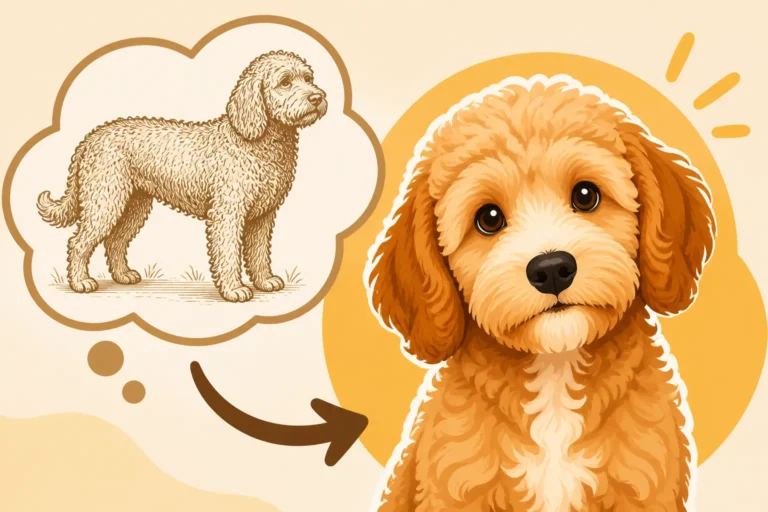
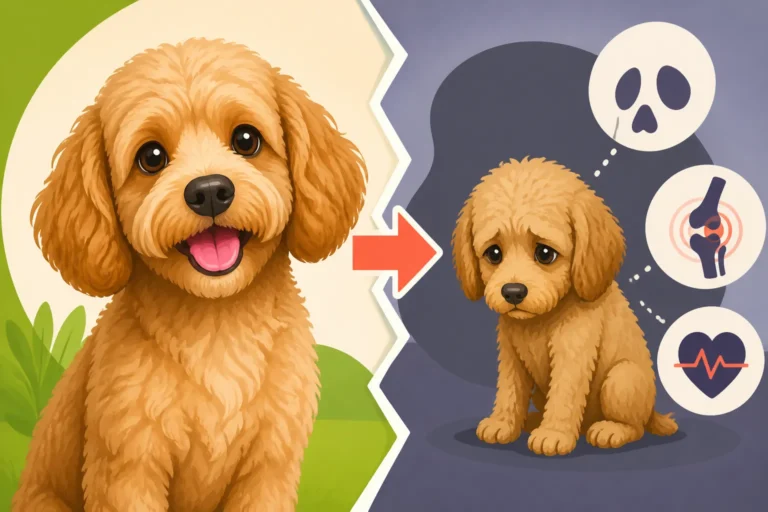
One of the biggest heartbreaks for any prospective Cockapoo owner is falling in love with a certain look or temperament, only for their puppy to grow into something quite different. This unpredictability, especially around coat type and shedding, is a common frustration for first-generation (F1) Cockapoo owners. This comprehensive guide will delve into whether multi-generational Cockapoos offer greater consistency, exploring the genetics and breeding practices that aim to make these delightful dogs "breed true" over time, and what you can realistically expect when bringing a multigen puppy into your home.
Understanding "Breeding True" in Dogs
When we talk about dogs "breeding true," it's a concept deeply rooted in the world of purebreds. It refers to the consistent passing down of specific, predictable traits from one generation to the next. For crossbreeds like the Cockapoo, this consistency is often the ultimate goal but rarely a reality in the early generations.
What "Breeding True" Really Means for Purebreds
For a purebred dog, "breeding true" is the cornerstone of its identity. Imagine a Golden Retriever; when you see a Golden Retriever puppy, you have a very strong idea of what it will look like, how big it will get, and even a general sense of its temperament. This predictability isn't magic; it's the result of hundreds, sometimes thousands, of years of selective breeding. Breeders meticulously chose dogs with desirable traits – specific coat color, texture, body structure, and temperament – and bred them together, generation after generation. Over time, this intense selection process led to a homogenization of their genetic makeup.
What happens at a genetic level is that a purebred dog typically carries very similar genes for these characteristic traits from both parents. This means when two purebred Golden Retrievers are bred, their puppies are highly likely to inherit the same set of genes, resulting in puppies that reliably look and act like Golden Retrievers. This genetic predictability allows for the establishment of a breed standard, a written description of the ideal dog of that breed, covering everything from nose to tail, eye color to ear set, and even gait. This standard serves as a blueprint for breeders and a reference for owners, ensuring that a dog from a recognized breed will consistently "breed true."
Why Crossbreeds Don't Typically "Breed True"
Now, let's contrast that with crossbreeds, or "designer dogs," like the Cockapoo. The very definition of a crossbreed is the mating of two distinct purebreds. In the case of a Cockapoo, you have an American or English Cocker Spaniel and a Poodle. These two breeds, while both wonderful, come from vastly different genetic backgrounds. They have different coat types (shedding vs. non-shedding), varying temperaments (flushing instincts vs. retrieving intelligence), and distinct physical attributes.
When you breed an F1 Cockapoo (a first-generation cross) from a Cocker Spaniel and a Poodle, the puppies inherit a mixed bag of genes, one set from each parent breed. This genetic lottery means that even within the same litter, you can see a huge variation. Some puppies might get more Poodle-like coats – curly and low-shedding – while others might lean more towards the Cocker Spaniel side with a wavier, shedding coat. Some might inherit the Poodle's lean build, others the Cocker's stockier frame. This genetic heterogeneity, while contributing to hybrid vigor (often leading to fewer immediate health issues due to a wider gene pool), is precisely why crossbreeds in their early generations do not "breed true." There's simply too much genetic diversity at play for consistent, predictable outcomes. It's like mixing two very different paint colors – you'll get a unique shade, but the next time you mix them, the exact shade might vary based on how much of each original color you added.
The Evolution of Cockapoo Generations
The journey of the Cockapoo from a chance pairing to a widely adored family companion has involved deliberate steps to try and harness those desirable traits. This evolution is best understood by looking at the different "generations" of Cockapoos.
From F1 to F1b and Beyond
The story of the Cockapoo often begins with the F1 generation, which is a direct cross between a purebred Cocker Spaniel and a purebred Poodle. These were the original Cockapoos, often celebrated for their hybrid vigor, intelligence, and charming personalities. However, as we discussed, their coats could be a toss-up – some were delightfully curly and low-shedding, while others had a wavier coat that shed more, like the Cocker parent. For allergy sufferers or those simply seeking that iconic "doodle" coat, this unpredictability could be a disappointment. This is where the F1b generation comes in.
An F1b Cockapoo is the result of breeding an F1 Cockapoo back to one of the original parent breeds, typically a Poodle. The "b" stands for "backcross." The primary motivation behind this was to increase the likelihood of specific traits, particularly the non-shedding, curly coat of the Poodle. By breeding an F1 (which is 50% Cocker, 50% Poodle) with a purebred Poodle (100% Poodle), the F1b generation generally becomes around 75% Poodle and 25% Cocker Spaniel. This genetic shift significantly boosts the chances of getting that sought-after curly, low-shedding coat. It also tends to lead to more consistent sizing if a Miniature or Toy Poodle is used. You can learn more about the specifics of these generations in What the Cockapoo Clubs Mean by F1 and F1b. While F1b greatly improves coat predictability compared to F1, it still doesn't guarantee uniformity across every single puppy or litter, as the genetic lottery still plays a role, albeit with slightly better odds. You might find yourself wondering Whether an F1 Cockapoo's Coat Is a Coin Flip which highlights the variability in early generations.
Defining a "Multigenerational" Cockapoo
Beyond F1 and F1b, we enter the realm of multigenerational (or "multigen") Cockapoos. This term typically refers to Cockapoos where both parents are already Cockapoos themselves, often F2, F3, or even further down the line. An F2 Cockapoo, for example, is the result of breeding two F1 Cockapoos together. An F3 would be two F2 Cockapoos, and so on. The hope and intention behind multigen breeding is to move closer to the "breeding true" ideal.
Breeders embarking on multigen programs are generally trying to select for specific, consistent traits within their Cockapoo lines. They're looking for dogs that reliably exhibit the "Cockapoo look" – a balanced appearance that isn't too Poodle-like or too Cocker-like, a consistent soft, wavy, or curly coat that ideally sheds minimally, and a predictable, friendly temperament. By repeatedly breeding Cockapoos to other Cockapoos who share these desired characteristics, the goal is to gradually reduce the genetic variability that defines earlier generations. This process, if done with careful selection and health testing over many generations, is what eventually leads to a stable breed. In fact, some proponents believe Whether Multigen Breeding Is Making a Cockapoo Breed is an ongoing process that is slowly but surely creating a distinct type. While the Cockapoo isn't yet a recognized purebred, multigen breeding represents a concerted effort to establish a consistent "type" that is more predictable than their F1 or F1b cousins.
The Goals and Hopes of Multigenerational Breeding
Multigenerational breeding isn't just about making more Cockapoos; it's a deliberate attempt by ethical breeders to refine and stabilize the characteristics that make Cockapoos so beloved. The main objective is to move away from the "genetic lottery" of earlier generations towards a more consistent and predictable outcome.
Stabilizing Desirable Traits
One of the primary drivers behind multigen breeding is the desire to stabilize specific traits that are highly valued by Cockapoo owners. The most obvious of these is the coat. Many people choose a Cockapoo specifically for its reputation as a low-shedding, potentially hypoallergenic dog. However, as mentioned, F1 Cockapoos can have a wide range of coat types, from fairly straight to tightly curled. With multigen breeding, breeders focus on pairing dogs that consistently produce the desired wavy or curly "furnishings" coat, aiming to reduce the chance of a puppy inheriting the flatter, shedding coat of a Cocker Spaniel. They are meticulously selecting for the "Ff" or "FF" furnishings gene to ensure the classic Cockapoo facial hair and coat texture. The Furnishings Gene That Decides a Cockapoo's Face is a key genetic marker in this effort.
Beyond coat, temperament is another huge focus. Cockapoos are generally known for being intelligent, affectionate, and good-natured. Multigen breeders strive to consistently produce puppies that inherit these traits, aiming for a dog that is neither excessively high-strung like some Poodles nor prone to the resource guarding or "soft" temperament sometimes seen in certain Cocker lines. The goal is a balanced dog with a biddable nature, eager to please, and adaptable to various family environments. They might also select for moderate energy levels, avoiding extremes from either parent breed to create a dog that's active enough for adventures but also happy to relax at home. Consistent size, particularly within the Toy or Miniature range, is also a common goal, making it easier for owners to anticipate their puppy's adult dimensions.
Reducing Unpredictability in Appearance and Temperament
The unpredictability of earlier Cockapoo generations can be a source of real frustration. Imagine wanting a certain look or size and ending up with something entirely different. Multigenerational breeding seeks to minimize these surprises. Owners often express a desire for a consistent "Cockapoo look"—that endearing teddy bear face, soft eyes, and expressive ears, all framed by a distinctive wavy or curly coat. When you look at an F1 litter, you might see puppies that look quite Poodle-like, others very Cocker-like, and some in between. This variability, while charming to some, makes it hard to know what you're truly getting.
Multigen breeding aims to create a more uniform aesthetic across litters. While individual puppies will always have their unique nuances, the general appearance—head shape, muzzle length, ear set, and overall body proportion—becomes more consistent. Similarly, regarding temperament, multigen breeding works to iron out the extremes. Instead of a puppy that might lean heavily into a Poodle's high drive or a Cocker's potential for stubbornness, breeders aim for a middle ground: a dog that's intelligent and trainable, but also calm and affectionate. This reduces the risk of an owner being caught off guard by an overly energetic or timid dog when they expected a balanced companion. It's about increasing the odds that the puppy you fall in love with at eight weeks will grow into the kind of Cockapoo you envisioned, both in looks and personality.
The Genetic Realities of "Breeding True" in Cockapoos
While multigen breeding offers increased predictability, it's crucial to understand that a Cockapoo, even many generations down the line, isn't a purebred. The genetic blueprint is still a mosaic of its two distinct parent breeds, and that brings inherent complexities.
The Enduring Influence of Two Diverse Gene Pools
Even after several generations of breeding Cockapoo to Cockapoo, the underlying genetic material still originates from the Cocker Spaniel and the Poodle. These aren't just two breeds; they represent hundreds of years of separate development, each with their own unique collection of genes for everything from coat texture to ear shape to inherent behaviors. When you cross them, even repeatedly, you don't magically erase the individual genetic contributions. Instead, you create new combinations. Think of it like a deck of cards: you might shuffle it many times, but the same 52 cards are still there, just in a different order.
This means that despite consistent efforts, "throwback" traits can still emerge in multigen litters. A puppy might suddenly appear with a flatter, shedding coat, or a more pronounced Cocker Spaniel muzzle, even if its immediate parents and grandparents had the desired wavy Poodle-cross look. This is due to genetic recombination, where recessive genes from either the Cocker or Poodle side can resurface when two carriers are bred. It's a reminder that true genetic homogeneity, which defines a purebred and allows it to "breed true," takes many, many more generations of rigorous, standardized selection than the Cockapoo has had thus far. While the probability of getting the desired traits significantly increases with each selective generation, the guarantee simply isn't there in the same way it is for a long-established purebred.
Coat Type and Consistency: A Prime Example
Coat type is perhaps the most visible and frequently discussed area where multigen breeding aims for consistency. The presence of furnishings (the longer hair on the face, eyebrows, and mustache) and the degree of curl are determined by specific genes, primarily the RSPO2 gene for furnishings and the KRT71 gene for curl. The Curl Gene and Where a Cockapoo's Coat Lands and The Furnishings Gene That Decides a Cockapoo's Face are the main players here.
Multigen breeders carefully test their breeding stock for these genes to increase the likelihood of producing puppies with the desired low-shedding, wavy or curly coat. For example, if both parent Cockapoos carry two copies of the furnishing gene (FF), all their puppies will also have furnishings. However, if even one parent carries a single copy (Ff) or is improper coated (IC), there's still a chance that puppies in the litter could have a flatter, shedding coat. Similarly, while breeding two curly-coated multigens increases the odds of curly puppies, slight variations in curl tightness can still occur. This is where reading a detailed Reading a Cockapoo Coat Report Before You Choose can be incredibly insightful for prospective owners. Even with all the genetic testing and careful pairing, nature can still throw a curveball, though less often than in an F1 litter. When considering grooming tools for these varying coats, Chewy offers an extensive selection, from slicker brushes for wavy coats to de-matting combs for curlier textures, ensuring you can find what you need regardless of your Cockapoo's specific coat type.
Temperament and Health: More Complex Than Coat
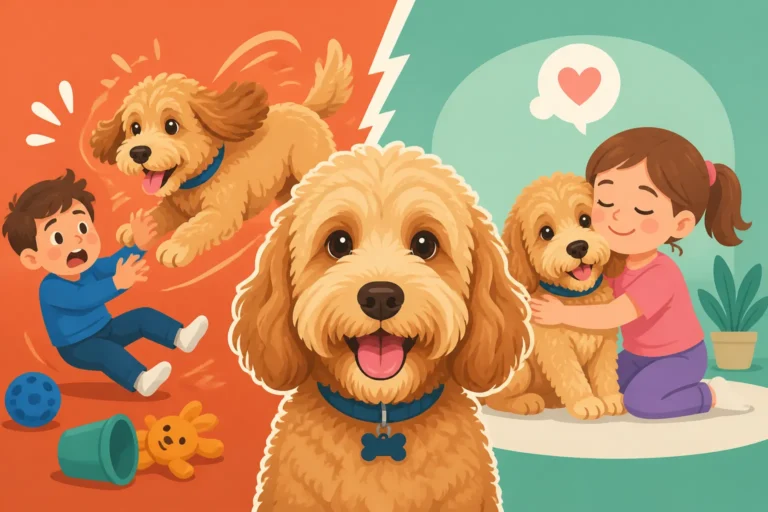
While coat genes are relatively straightforward, temperament and health are far more complex, often involving multiple genes (polygenic traits) and environmental influences. This makes achieving "true breeding" in these areas significantly more challenging. For temperament, breeders select for dogs with desired traits like friendliness, biddability, and moderate energy. However, even within a litter of multigen Cockapoos, individual personalities will vary. Puppy culture, early socialization, and the home environment all play a massive role in shaping a dog's disposition, sometimes even more so than genetics alone. A multigen Cockapoo might come from a line of calm, friendly dogs, but if it doesn't receive proper socialization, it could still develop shyness or reactivity.
When it comes to health, multigen breeding allows breeders to focus on screening for known hereditary conditions in both parent breeds, such as Familial Nephropathy and the Kidneys a Cockapoo Can Inherit from the Cocker side or Progressive Retinal Atrophy in a Cockapoo from the Poodle side. By ensuring their breeding stock is clear of these testable conditions, they significantly reduce the risk of passing them on. However, not all health issues are single-gene traits, and some can be influenced by multiple genes or environmental factors. New combinations of genes can also lead to previously unseen issues or simply variations in individual health. While multigen breeding improves the odds of a healthy puppy by allowing for more rigorous selection and screening over generations, it doesn't create an infallible genetic shield or guarantee uniform health across every single descendant.
The Breeder's Role and Responsibilities in Multigen Breeding
The success of creating a more consistent, "true breeding" Cockapoo largely rests on the shoulders of dedicated and ethical breeders. Their practices and transparency are paramount in providing owners with the best possible chances of getting the Cockapoo they envision.
Health Testing and Ethical Breeding Practices
For a multigen Cockapoo program to genuinely move towards "breeding true" in a positive sense, comprehensive health testing is non-negotiable. It's not enough to simply breed two Cockapoos together; breeders must thoroughly screen their breeding stock for the health conditions prevalent in both Cocker Spaniels and Poodles. This includes genetic tests for conditions like Progressive Retinal Atrophy (PRA), Phosphofructokinase (PFK) Deficiency, and Familial Nephropathy (FN), as well as orthopedic evaluations for hip and elbow dysplasia, and cardiac and eye certifications by veterinary specialists. These tests help ensure that undesirable health traits are not inadvertently being concentrated in the multigen lines.
Ethical breeders understand that creating a consistent "type" should never come at the expense of health. They will readily provide clear documentation of all health clearances for both parents and often the grandparents. They also engage in responsible breeding practices, avoiding over-breeding females, providing excellent nutrition and veterinary care for their breeding dogs, and ensuring puppies are raised in a stimulating, clean, and loving environment. A responsible breeder will be transparent and open to questions, guiding you through the health certificates. In fact, knowing The Five Certificates a Cockapoo Breeder Should Show is a critical piece of information for any potential puppy buyer.
The Importance of a Detailed Pedigree and Parent Information
When considering a multigen Cockapoo, a detailed pedigree becomes much more significant than with an F1. An F1 pedigree is simple: Cocker Spaniel parent and Poodle parent. For a multigen, understanding the lineage several generations back can offer valuable insights into the potential traits of your puppy. A good breeder will be able to provide information not just on the immediate parents, but also on their parents and even great-grandparents. This allows you to see if desirable traits (like a specific coat texture, color, or temperament) have been consistently present in the line, and if any undesirable traits have popped up.
Furthermore, observing the parent dogs themselves is crucial. Do they have the coat type you prefer? Are their temperaments stable and friendly? Do they exemplify the "Cockapoo type" you're looking for? If a breeder is breeding multigen Cockapoos, they should be able to articulate their breeding goals – what traits they are aiming to stabilize and improve upon. They should also be transparent about any variations that have occurred in previous litters, because even in multigens, perfection is not guaranteed. When sourcing supplies for these well-bred puppies, many responsible breeders turn to trusted retailers like Chewy for everything from high-quality puppy food to essential socialization toys, understanding the importance of providing the best start.
Navigating the "Breed Standard" Dilemma
One of the biggest hurdles to a Cockapoo truly "breeding true" in the traditional sense is the absence of a universally recognized breed standard. While there are Cockapoo clubs that have drafted their own standards, such as the Cockapoo Club of America and the American Cockapoo Club, these are not recognized by major kennel clubs like the American Kennel Club (AKC). This means there's no single, official blueprint for what an "ideal" Cockapoo should look like or how it should behave. What a Cockapoo Standard Actually Describes can vary between different clubs or even individual breeders.
This lack of a unified standard means that different multigen breeders might be selecting for slightly different "ideals." One breeder might prioritize a very curly, compact dog, while another might prefer a wavier coat and a slightly leaner build. While both are striving for consistency within their own lines, the overall "Cockapoo type" across the board remains somewhat fluid. This makes it challenging to define what "breeding true" truly means for the Cockapoo as a whole. However, for a buyer, focusing on a breeder whose individual vision aligns with your preferences is key. Look for a breeder who has a clear, consistent goal for their multigen program and a track record of producing puppies that meet their stated objectives.
What to Expect from a Multigenerational Cockapoo
So, after all the talk of genetics, generations, and breeder intentions, what can you, as a hopeful Cockapoo owner, truly expect from a multigen puppy? The answer lies in managing expectations and appreciating the journey of this evolving crossbreed.
Increased Predictability, Not Guarantee
The most important takeaway is that while a multigen Cockapoo offers significantly increased predictability compared to an F1 or F1b, it does not come with a 100% guarantee. Ethical multigen breeders put immense effort into genetic testing, health screening, and careful selection to minimize variability. They are working to create lines that consistently produce the desired wavy or curly, low-shedding coats, and the affectionate, intelligent temperaments that Cockapoos are famous for. This means your chances of getting a Cockapoo that fits the commonly imagined "teddy bear" look and personality are much higher with a well-bred multigen.
However, the genetic dice still roll. Very occasionally, even in a carefully planned multigen litter, you might find a puppy with a slightly straighter coat, or one that leans more heavily into the Cocker's flushing drive, or a Poodle's energy. These are sometimes called "throwbacks" and are a testament to the diverse gene pools still at play. It's about probabilities, not certainties. Therefore, approach a multigen Cockapoo with the understanding that while the odds are strongly in your favor for consistency, a small element of delightful surprise might still be present.
Embracing Individuality within the "Cockapoo Type"
Even among purebreds, no two dogs are exactly alike, and the same holds true for multigen Cockapoos. While multigen breeding aims to establish a consistent "Cockapoo type," each puppy will still be an individual with its own unique personality quirks, subtle variations in appearance, and a distinct spirit. You might get two puppies from the same multigen litter, both with beautiful wavy coats and outgoing personalities, yet one might be a champion cuddler while the other is an adventurous explorer.
Embracing this individuality is part of the joy of welcoming a dog into your life. The "Cockapoo type" might define a general framework of traits—friendly, intelligent, moderately active, charming—but within that framework, there's ample room for distinct personalities to shine. This is what makes the relationship with your dog so special; they aren't just a generic template, but a unique companion with their own endearing habits and expressions. Learning to appreciate these individual differences, knowing that they fall within the general parameters you desired, makes the bond even stronger.
Preparing for Ongoing Care Regardless of Generation
Regardless of whether you choose an F1, F1b, or a multigen Cockapoo, the commitment to their care remains constant. Cockapoos, particularly those with the coveted wavy or curly coats, require consistent grooming to prevent matting. This isn't just a cosmetic issue; severe matting can cause pain, skin problems, and even restrict movement. Understanding The Three Cockapoo Coat Types and Their Upkeep will be essential for any owner. Regular brushing, professional grooming every 6-8 weeks, and attentive ear cleaning are all part of responsible Cockapoo ownership. You'll find a vast array of brushes, combs, and shampoos on Chewy that can help you maintain their beautiful coats between professional grooming sessions.
Beyond grooming, all Cockapoos thrive on training, socialization, and regular exercise. Their intelligent and eager-to-please nature makes them highly trainable, but consistency is key. Early and ongoing socialization helps them grow into well-adjusted, confident adult dogs. And their energetic heritage means they need daily walks, playtime, and mental stimulation to prevent boredom and destructive behaviors. So, while a multigen might offer more predictability in certain traits, the responsibilities of loving and caring for a Cockapoo are universal across all generations.
Disclaimer
This article is for general informational purposes only and does not constitute professional advice. Laws, prices and regulations vary by location and change over time. Consult a qualified professional for guidance on your specific situation.