The Miniature Cockapoo
Finding the perfect dog for your home is often a journey filled with excitement, but it can also bring a fair share of confusion, especially when you start delving into the world of "designer breeds" and their various sizes. Many prospective owners are drawn to the Cockapoo's charm and intelligence, but then they hit a snag: what exactly is a Miniature Cockapoo, and how does it fit into the broader Cockapoo family? This guide aims to clear up that confusion, offering a deep dive into what makes the Miniature Cockapoo such a beloved companion.
Defining the Miniature Cockapoo's Size
When we talk about a Miniature Cockapoo, we're referring to a specific size category that lands right in the sweet spot for many families. It's not as tiny as a Teacup or Toy, but it's also not as substantial as a Maxi. This middle-ground size often makes it incredibly versatile for different living situations.
Height and Weight Expectations
Typically, a Miniature Cockapoo stands roughly between 11 to 14 inches tall at the shoulder. Think of them as comfortably fitting under your dining room table without being cramped, or being able to hop up on the sofa with a little encouragement. Their weight usually falls in the range of 13 to 18 pounds. Now, it's important to remember these are general guidelines, not strict rules. Genetics can be a funny thing, and even within the same litter, you might see a spectrum of sizes. One puppy might lean a bit smaller, closer to the Toy end, while another might stretch a bit taller, nudging the upper limit of the Miniature classification. A responsible breeder will give you an honest estimation based on the parents and previous litters, but nature always has a hand in the final outcome.
How a Miniature Differs from a Toy or Maxi
The distinction between a Miniature and its smaller or larger counterparts isn't just about a few inches or pounds; it often impacts their lifestyle and suitability for different homes. A Toy Cockapoo, being smaller, often thrives as a true lap dog, perfectly content in smaller living spaces like apartments, and might be more fragile around very young children. Their delicate frames mean they need careful handling.
On the other hand, a Maxi Cockapoo, which can be considerably larger and heavier, often requires more space and definitely more exercise. They can feel like a much more robust companion, almost a small-to-medium sized working dog in some respects. The Miniature Cockapoo, however, strikes a lovely balance. They're generally sturdy enough for active play and can handle a busy family home without being easily overwhelmed or injured, yet they're not so large that they command an entire couch or need acres to run. They're a comfortable size for both indoor cuddling and outdoor adventures, offering the best of both worlds for many owners.
Predictability of Adult Size
Predicting the exact adult size of a Cockapoo, especially a first-generation (F1) cross, can feel a bit like reading tea leaves. When you cross a Cocker Spaniel with a Miniature Poodle, you're essentially mixing two different genetic blueprints. While the Miniature Poodle parent gives a strong indication, the Cocker Spaniel can introduce variability. Sometimes, you'll see a litter where all the puppies mature within a very tight range, and other times, there's quite a spread.
Breeders who have been working with Cockapoos for multiple generations (F2, F1b, or Multigen) often have a better sense of what their lines produce, making their size predictions more reliable. They can look at the historical data of their breeding dogs and their offspring. For a puppy, observing its growth curve from a young age and knowing the sizes of its immediate parents, as well as their parents, provides the best clues. However, it's always wise to anticipate a little wiggle room. If an exact size is paramount for your living situation, it's crucial to discuss this openly with your breeder and perhaps consider an older puppy or adult dog whose size is already established.
Parentage and Genetics of the Miniature Cockapoo
Understanding the genetic blueprint behind a Miniature Cockapoo is key to appreciating their unique blend of traits. It’s not just about mixing two breeds; it’s about how those specific parental characteristics come together to create this charming companion.
The Poodle Influence in Miniature Breeding
For a Cockapoo to be classified as "Miniature," the Poodle parent is almost always a Miniature Poodle. This is the cornerstone of their size classification. The Miniature Poodle brings a wealth of desirable traits to the table. They are renowned for their exceptional intelligence, which translates into a highly trainable and often eager-to-please Cockapoo. This intelligence is a huge plus for families looking for a dog that can pick up commands quickly, excel in obedience, or even participate in dog sports.
Beyond brains, the Miniature Poodle contributes that iconic low-shedding, often curly coat. This is a big draw for many people, especially those with allergies, though it does come with a significant grooming commitment, which we’ll discuss later. Poodles are also known for their zest for life, athleticism, and sometimes a slightly more reserved nature with strangers compared to the effusive Cocker Spaniel. When combined, these Poodle traits help shape the Miniature Cockapoo's overall temperament, coat type, and activity level.
The Cocker Spaniel Contribution
The other half of the Miniature Cockapoo equation comes from the Cocker Spaniel, which can be either the American Cocker Spaniel or the English Cocker Spaniel. Both bring their own distinct flair to the mix. American Cocker Spaniels tend to be slightly smaller and often possess a more luxurious, flowing coat, along with a generally sweet and eager-to-please disposition. English Cocker Spaniels are typically a bit more robust in build, with a strong instinct for flushing game, and often have a slightly higher energy drive.
Regardless of the specific Cocker variety, this parent breed imbues the Miniature Cockapoo with its characteristic merry disposition, deep loyalty, and often a playful, sometimes mischievous streak. Cockers are known for their loving nature, their desire to be close to their families, and their expressive eyes. They also contribute those wonderfully soft, floppy ears that are so characteristic of the Cockapoo.
It’s worth considering Whether an English Cocker Cross Has More Drive if you're particularly active, as their working lines can sometimes mean a higher demand for mental and physical stimulation. The flushing drive, that inherent urge to find and flush out birds, is often still very much alive in a Cockapoo, even if they're a pampered house pet. This instinct means they can be highly motivated by scent and might be prone to following an interesting smell rather than your recall command if not properly trained. Whether a Working Cocker Line Shows in a Cockapoo can significantly influence the puppy's energy and drive.
Understanding Generations F1, F1b, F2 for Miniatures
The "generation" of a Cockapoo puppy refers to its specific parentage, and it plays a crucial role in predicting traits like size, coat type, and sometimes even temperament. For Miniature Cockapoos, these generational distinctions are particularly important for breeders aiming for consistency.
- F1 Miniature Cockapoo: This is a first-generation cross, meaning a purebred Cocker Spaniel is bred with a purebred Miniature Poodle. F1s often exhibit a good mix of both parent breeds and can have a wider variety of coat types, from fairly straight to wavy or curly. Their size range can also be a bit more variable, falling within the established Miniature guidelines but sometimes with greater individual differences.
- F1b Miniature Cockapoo: An F1b is created by breeding an F1 Cockapoo back to one of the original parent breeds, typically a Miniature Poodle. This "backcross" is often done to enhance certain traits, most notably to create a curlier, lower-shedding coat that is more reliably hypoallergenic-friendly. An F1b Miniature Cockapoo will likely lean more heavily towards the Poodle side in terms of coat and may even be slightly smaller than an F1, depending on the Poodle parent's size.
- F2, F3, and Multigen Miniature Cockapoos: These generations result from breeding two F1 Cockapoos together (F2), or two F2s (F3), and so on, leading to "Multigenerational" Cockapoos. The goal here is often to establish more consistent traits within the Cockapoo line, making it more predictable in terms of size, coat, and temperament. Breeders aiming for a very specific Miniature size and look will often work with Multigen Cockapoos. Understanding What the Cockapoo Clubs Mean by F1 and F1b can really help you decipher a breeder's description of their puppies.
The choice of generation impacts everything from how much grooming you’ll do to how likely your dog is to shed. It's a vital piece of information when you're selecting a Miniature Cockapoo puppy.
| Generation | Parentage | General Size Predictability | Coat Predictability (Shedding/Allergy) | Common Use |
|---|---|---|---|---|
| F1 | Purebred Cocker Spaniel x Purebred Mini Poodle | Good | Variable (can shed more, less allergy-friendly) | Original cross, hybrid vigor |
| F1b | F1 Cockapoo x Purebred Mini Poodle (usually) | Very Good | More consistent (curlier, less shedding, more allergy-friendly) | Enhancing Poodle traits (coat, size) |
| F2 / Multigen | F1 x F1 or F2 x F2 (etc.) | Excellent | More consistent (depending on parent coats) | Developing consistency within the Cockapoo breed |
Temperament and Personality of the Miniature Cockapoo
The temperament of a Miniature Cockapoo is truly one of its most appealing attributes. They are known for their delightful blend of the Cocker Spaniel's merry disposition and the Poodle's intelligence and eagerness to please. This combination often results in a dog that is both adaptable and affectionate.
Energy Levels and Exercise Requirements
While Miniature Cockapoos are not typically considered high-strung, they are certainly not couch potatoes. They possess a moderate to high energy level, thanks to their active lineage. The Cocker Spaniel side contributes a playful zest, and the Poodle provides boundless enthusiasm for mental and physical activities. This means your Miniature Cockapoo will absolutely thrive on regular exercise.
They generally need at least 30 to 60 minutes of dedicated exercise daily, which can be broken up into a couple of brisk walks, playtime in a securely fenced yard, or engaging in interactive games. Think about a good sniffy walk around the neighborhood in the morning, followed by some fetch in the park in the afternoon. The Miles a Cockapoo Wants Every Day might surprise some owners, as even smaller dogs can have significant exercise needs. Without adequate outlets for their energy, a Miniature Cockapoo can become bored, which might manifest as unwanted behaviors like excessive barking, chewing on furniture, or even digging. They love to be involved in family activities, whether it's a hike on a local trail or a game of tug-of-war in the living room.
Intelligence and Trainability
Both parent breeds are incredibly intelligent, and this trait shines brightly in the Miniature Cockapoo. Poodles are famous for their smarts and trainability, often excelling in obedience and agility. Cocker Spaniels are also very intelligent and eager to please, making them responsive to positive reinforcement. This dual inheritance means your Miniature Cockapoo is likely to be a quick learner, soaking up new commands and tricks with enthusiasm.
Their intelligence makes them a joy to train, but it also means they need mental stimulation to stay happy and well-adjusted. Puzzle toys, scent games, and learning new commands can keep their clever minds engaged. They respond beautifully to positive reinforcement methods – think treats, praise, and favorite toys. Harsh corrections are generally counterproductive for such a sensitive and intelligent breed, and can lead to anxiety or a reluctance to learn. Instead, focus on making training fun and rewarding. Many owners find that Whether a Marker Word Beats a Clicker on a Cockapoo comes down to individual preference, but both are effective tools for clear communication during training. Their desire to please their people, coupled with their intelligence, makes them excellent candidates for everything from basic manners to advanced canine sports.
Social Nature and Family Compatibility
Miniature Cockapoos are renowned for their loving, social, and affectionate personalities. They thrive on companionship and genuinely want to be part of the family action. This makes them wonderful pets for families, singles, and seniors alike, as long as their need for interaction and exercise is met. They generally get along well with children, often showing a patient and playful side. However, as with any dog, supervision is crucial, especially with younger children, to ensure respectful interactions. Teaching Children to Handle a Cockapoo is vital for the safety and well-being of both child and dog.
Their social nature extends to other pets as well. Many Miniature Cockapoos happily coexist with other dogs and even cats, particularly if introduced properly and raised together. However, this strong desire for companionship also means they can be prone to separation anxiety if left alone for long periods. They are truly people-oriented dogs who form strong bonds with their human families. If your lifestyle involves long hours away from home, you’ll need to put strategies in place, such as dog walkers, doggy daycare, or perhaps even considering two dogs, to ensure your Miniature Cockapoo doesn’t become lonely or stressed. They want to be your shadow, following you from room to room, and thriving on that close connection.
Care and Grooming Needs for a Miniature Cockapoo
The Miniature Cockapoo’s delightful appearance comes with a commitment to consistent care and grooming, especially when it comes to their coats. Understanding these needs from the outset will help you keep your Cockapoo healthy and looking their best.
Managing the Miniature Cockapoo's Coat
One of the biggest draws of the Cockapoo is the promise of a low-shedding, often hypoallergenic coat. While many Miniature Cockapoos do fit this description, it's not a "wash and wear" coat. In fact, their Poodle-inherited "furnishings" (the hair on their face, legs, and body) are what often make them low-shedding, but also prone to matting.
You'll find Miniature Cockapoos with a range of coats:
- Straight Coat: Less common but can occur, often sheds more.
- Wavy Coat: A popular and manageable coat type, still requires regular brushing.
- Curly Coat: The most Poodle-like coat, very low-shedding, but requires the most intensive grooming to prevent mats.
Regardless of the specific texture, routine brushing is non-negotiable. For wavy coats, brushing a few times a week might suffice, but for curly coats, daily brushing is often necessary. The key is to get right down to the skin to prevent mats from forming, especially behind the ears, in the armpits, and around the tail and legs. These areas are notorious for knotting up quickly. A good quality slicker brush and a metal comb are your best friends. You can find excellent options for all your grooming needs on sites like Chewy.
Professional grooming is also a must for most Miniature Cockapoos, typically every 6 to 8 weeks. This schedule helps maintain a manageable length, prevents extensive matting, and keeps their nails trimmed and ears clean. Discuss with your groomer what kind of "look" you prefer, whether it's a short, practical puppy cut or a slightly longer teddy bear clip. Expect The Three Cockapoo Coat Types and Their Upkeep to vary significantly in time and cost.
Nutritional Considerations for Their Size
Feeding your Miniature Cockapoo correctly is fundamental to their overall health and well-being. Their size means they have specific caloric and nutrient needs that differ from larger or smaller breeds. As active, medium-sized dogs (on the smaller end of medium, or larger end of small), they require a balanced diet formulated for their life stage – puppy, adult, or senior.
High-quality dog food, whether kibble, wet food, or a combination, should be the foundation. Look for reputable brands that list a whole meat source as the primary ingredient. Avoid generic "filler" ingredients. Portion control is also crucial. Overfeeding, even by a little, can quickly lead to weight gain in a Miniature Cockapoo, putting strain on their joints and increasing the risk of other health issues. Your veterinarian can help you determine the ideal caloric intake based on your dog's age, activity level, and individual metabolism.
Feeding two meals a day is standard for adult Miniature Cockapoos, while puppies may need three or four smaller meals initially. Always ensure fresh water is available. If your Cockapoo has a sensitive stomach or specific dietary needs, your vet might recommend specialized foods. When choosing food, read labels carefully, and consult resources like Chewy for a wide selection and detailed ingredient lists. Remember, Feeding a Miniature Cockapoo isn't just about filling a bowl; it's about providing the right fuel for their active and happy life.
Dental Health and Routine Vet Care
Dental health is often overlooked but is incredibly important for Miniature Cockapoos. Smaller breeds, including Cockapoos, are particularly prone to dental issues such as tartar buildup, gum disease, and crowded teeth. Dental Crowding in a Small Cockapoo can create pockets where food particles and bacteria accumulate, leading to bad breath, pain, and even systemic health problems if left untreated.
Daily tooth brushing with dog-specific toothpaste is the gold standard for preventing dental disease. Dental chews and water additives can help, but they are not a substitute for brushing. Regular professional dental cleanings under anesthesia, as recommended by your vet, are often necessary to remove tartar buildup below the gum line.
Beyond dental care, routine veterinary check-ups are essential for all Miniature Cockapoos. These yearly visits allow your vet to perform a thorough physical examination, administer necessary vaccinations, and recommend parasite prevention (fleas, ticks, heartworm). Early detection of any health issues can make a significant difference in treatment outcomes and your dog's quality of life. Maintaining a close relationship with your vet and staying up-to-date on preventative care will help ensure your Miniature Cockapoo lives a long, healthy, and vibrant life.
Health Considerations for the Miniature Cockapoo
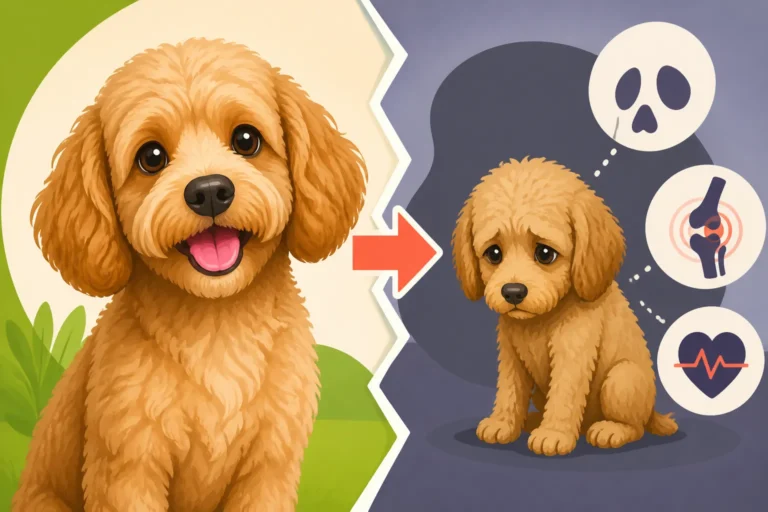
While Cockapoos are often celebrated for their robust "hybrid vigor," they are not immune to health issues. Being a crossbreed of two distinct purebreds, they can inherit genetic predispositions from both the Cocker Spaniel and the Poodle. Understanding these potential concerns is paramount for any Miniature Cockapoo owner.
Inherited Conditions from Cocker Spaniels
The Cocker Spaniel side of your Miniature Cockapoo's family tree can contribute to several health concerns. One of the most serious to be aware of, particularly from American Cocker Spaniels, is Familial Nephropathy and the Kidneys a Cockapoo Can Inherit. This is a devastating kidney disease that can manifest in young dogs, leading to kidney failure. Responsible breeders will rigorously test their Cocker Spaniel lines for this condition.
Another concern is certain eye conditions, such as Glaucoma From the Cocker Side of a Cockapoo. Glaucoma can cause increased pressure within the eye, leading to pain and potentially blindness if not treated promptly. Other eye issues like Progressive Retinal Atrophy (PRA), though more commonly associated with Poodles, can also be found in Cocker Spaniel lines. Ear infections are also quite common due to the Cocker's long, floppy ears, which can trap moisture and debris. Regular ear cleaning and monitoring are essential.
Poodle-Related Health Concerns
From the Poodle side, Miniature Cockapoos can inherit a different set of genetic predispositions. Progressive Retinal Atrophy (PRA) is a significant concern, which causes the gradual degeneration of the retina, eventually leading to blindness. It's an inherited condition that responsible breeders screen for. Whether Both Cockapoo Parents Must Be prcd-PRA Clear is a question that highlights the importance of genetic testing.
Another condition sometimes seen in Poodles, and therefore potentially in Cockapoos, is Addison's disease, an autoimmune disorder affecting the adrenal glands. This can lead to a variety of vague symptoms like lethargy, vomiting, and weight loss. Orthopedic issues are also a possibility, such as luxating patellas (slipping kneecaps), which can be more prevalent in smaller Poodle varieties. Slipping Kneecaps in a Toy Cockapoo discusses this common issue in small dogs that can also affect Miniatures.
Hip dysplasia, while more commonly associated with larger breeds, can also occur in Poodles and, by extension, Cockapoos. Proper health clearances for both parents are vital to minimize the risk of these conditions being passed on.
Common Health Issues for Miniature Dogs
Beyond breed-specific inherited conditions, Miniature Cockapoos, like many smaller dogs, are prone to certain general health issues. Dental disease, as mentioned earlier, is a widespread problem due to crowded mouths and rapid tartar buildup. Regular dental care is non-negotiable.
Another common concern, especially in puppies, is hypoglycemia (low blood sugar), which can occur if small puppies don't eat regularly or are stressed. This is why Feeding a Teacup Cockapoo (and Miniatures, especially very young ones) often means more frequent meals.
It's also worth noting that due to their affectionate and sometimes sensitive nature, Miniature Cockapoos can be prone to anxiety, particularly separation anxiety, if not properly socialized and managed. While not a "physical" health condition, it greatly impacts their well-being and can lead to stress-related physical symptoms.
When choosing a Miniature Cockapoo, the best defense is always a good offense: choose a reputable breeder who performs comprehensive health testing on both parent dogs. Don't be shy about asking to see the results of these tests, often provided as certificates. These tests cover conditions like those discussed above and are a critical part of ensuring your future companion has the best possible start to a healthy life. A breeder should be transparent about The Five Certificates a Cockapoo Breeder Should Show.
This table summarizes some of the key health considerations for Miniature Cockapoos, highlighting common issues from their parent breeds and those common to smaller dogs.
| Health Condition | Parent Breed Link (Primary) | Impact | Prevention / Management | Importance of Testing (Parents) |
|---|---|---|---|---|
| Familial Nephropathy (FN) | Cocker Spaniel | Kidney failure, typically in young dogs | Responsible breeding, DNA testing | High (DNA Test) |
| Progressive Retinal Atrophy (PRA) | Poodle (and Cocker) | Gradual blindness | Responsible breeding, DNA testing | High (DNA Test) |
| Glaucoma | Cocker Spaniel | Painful eye pressure, can lead to blindness | Eye exams, genetic screening (if applicable) | Medium (Eye Exams) |
| Luxating Patella (Slipping Kneecaps) | Poodle (smaller sizes) | Joint pain, lameness | Screening parents for healthy knees | High (Physical Exam, X-rays) |
| Addison's Disease | Poodle | Adrenal gland dysfunction | Genetic screening (some lines), careful breeding | Medium (Blood tests) |
| Hip Dysplasia | Both (less common in small Poodles) | Hip joint malformation, arthritis | X-ray screening of parents | Medium (X-rays) |
| Dental Disease | Common in small breeds | Tartar, gum disease, tooth loss | Daily brushing, professional cleanings | Low (Routine care) |
| Ear Infections | Cocker Spaniel | Pain, odor, itching | Regular cleaning, vet check-ups | Low (Routine care) |
Disclaimer
This article is for general informational purposes only and does not constitute professional advice. Laws, prices and regulations vary by location and change over time. Consult a qualified professional for guidance on your specific situation.