Whether Two Wavy Cockapoos Throw a Curly Puppy
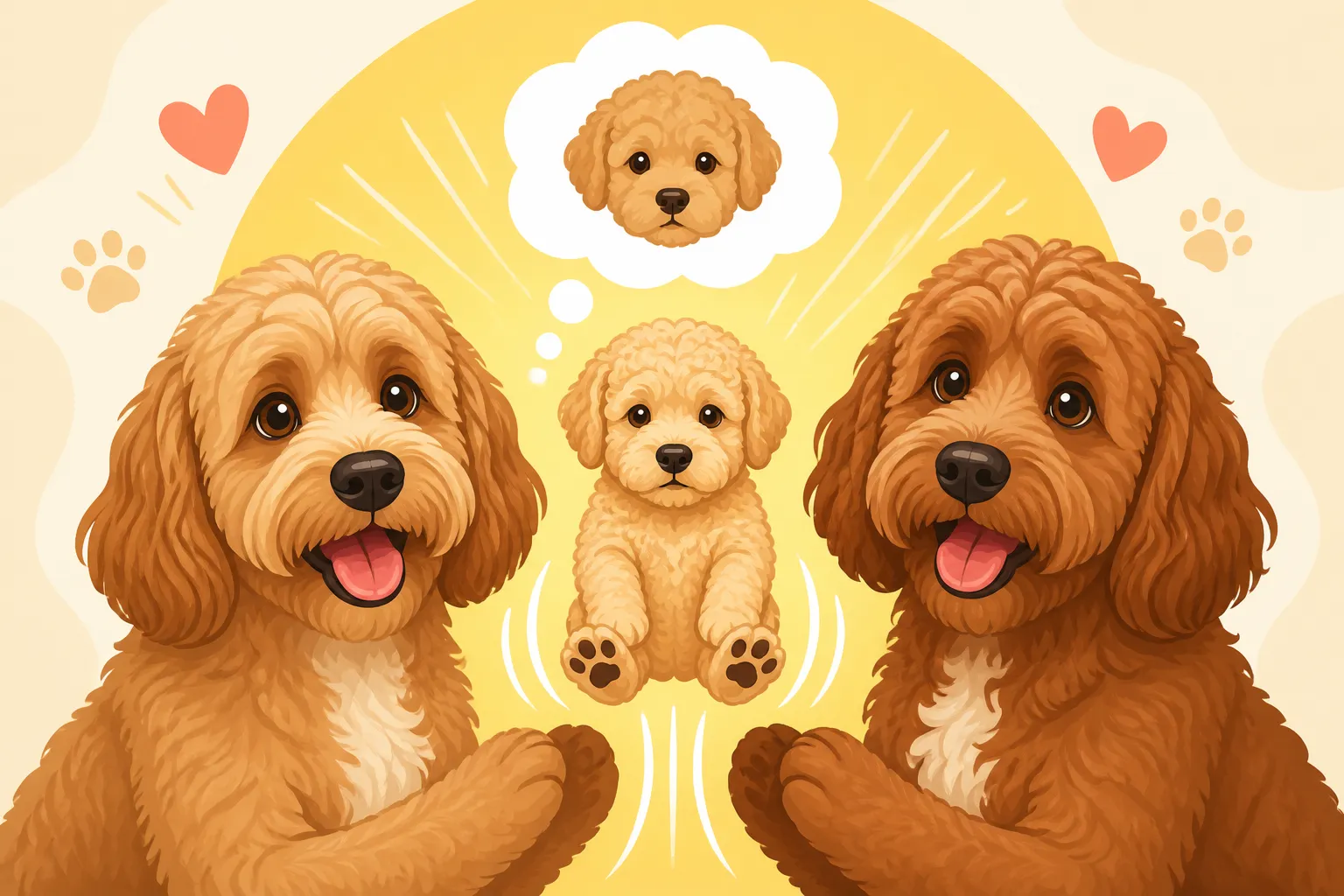
It’s a common scenario: you adore the soft waves of your Cockapoo, or perhaps you're a breeder with two beautifully wavy parent dogs, and you dream of a litter filled with those plush, low-shedding curls. The assumption often made is that if both parents have that lovely wavy coat, their puppies will follow suit. But then, a tightly curled little pup shows up in the litter, leaving you scratching your head and wondering if your eyes are deceiving you. This guide will unravel the genetics behind Cockapoo coat types, explaining exactly how two wavy-coated Cockapoos can indeed produce a curly-coated puppy, and what that means for owners and breeders hoping to predict their furry friend's future look.
Understanding the Genetics of Cockapoo Curl
The Cockapoo's delightful variety of coats, from straight to wavy to curly, is one of its most charming, yet sometimes confounding, traits. Many people mistakenly believe that coat type is simply a random roll of the dice, or that specific pairings guarantee a certain outcome. In reality, the curl in a Cockapoo's coat is primarily influenced by a single gene, known as KRT71, which determines the structure of the hair shaft. Understanding this gene is key to predicting coat outcomes.
The KRT71 Gene and Its Role in Curl
The KRT71 gene has different variants, or alleles, that dictate how much curl a dog's coat will have. Think of it like a switch with different settings. There's an allele for straight hair (often denoted as 'c') and an allele for curly hair (often denoted as 'C'). What's interesting is that the curly allele ('C') is generally considered dominant over the straight allele ('c'). This means that even if a dog only inherits one copy of the curly allele, it will likely express some degree of curl.
When we talk about a dog's genetic makeup, we refer to its genotype. Each dog inherits two copies of this gene, one from each parent. So, possible genotypes are CC (two curly alleles), Cc (one curly, one straight), or cc (two straight alleles). The outward appearance of the dog, like a wavy or curly coat, is called its phenotype. What KRT71 Says About a Cockapoo's Curl goes into more detail about this fascinating genetic interplay.
Decoding Wavy and Curly Genotypes
Now, let's connect the genotypes to the coat types we see in Cockapoos.
- Straight Coat: A straight-coated Cockapoo typically has the 'cc' genotype. Without any dominant curly alleles, their coat is flat and smooth, much like a Cocker Spaniel's.
- Curly Coat: A truly curly-coated Cockapoo often has the 'CC' genotype. They'll have tight ringlets that are usually quite dense and require diligent grooming to prevent matting. Sometimes, a dog with a 'Cc' genotype can also appear very curly, especially if other modifier genes are at play, or if the dog also has furnishings (the beard and eyebrows).
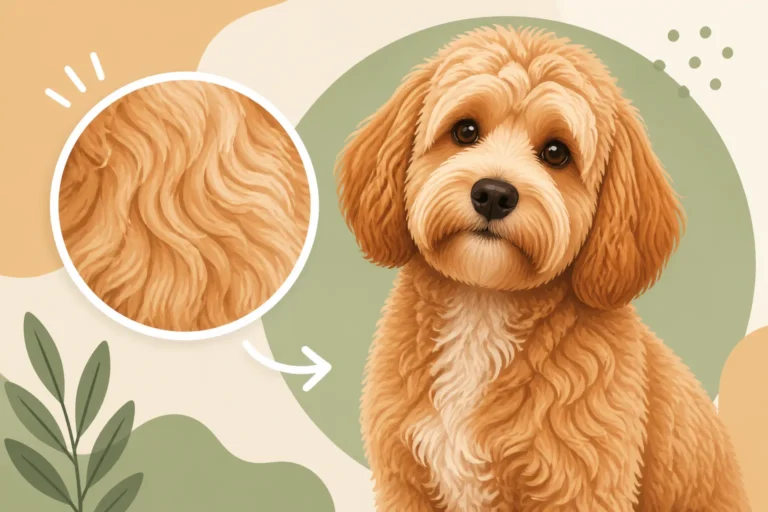
- Wavy Coat: This is where it gets a little more nuanced. A wavy-coated Cockapoo, the one many people adore for its loose curls and often lower-shedding qualities, typically has the 'Cc' genotype. They've inherited one curly allele and one straight allele. The dominant curly allele gives them the wave, but the presence of the straight allele prevents the super tight curl seen in a 'CC' dog.
So, when you see a beautiful wavy Cockapoo, it's very likely they are heterozygous for the curl gene (Cc). This is crucial for understanding why two wavy parents can have a curly puppy.
The Probability of a Curly Puppy from Wavy Parents
This is where the magic (or science!) of Punnett Squares comes into play. If both parent Cockapoos have wavy coats, it strongly suggests they both carry the 'Cc' genotype. When two 'Cc' dogs are bred, they each have an equal chance of passing on either their 'C' or their 'c' allele to their offspring.
Punnett Square for Wavy x Wavy Parents
Let's visualize this with a simple Punnett Square:
| Parent 2 (C) | Parent 2 (c) | |
|---|---|---|
| Parent 1 (C) | CC | Cc |
| Parent 1 (c) | Cc | cc |
Looking at the possible combinations in the square, here's what you can expect from a litter where both parents are wavy (Cc):
- CC (Curly): There is a 25% chance of a puppy inheriting two curly alleles, resulting in a tightly curled coat. This is your curly puppy!
- Cc (Wavy): There is a 50% chance of a puppy inheriting one curly and one straight allele, resulting in a wavy coat, just like the parents.
- cc (Straight): There is a 25% chance of a puppy inheriting two straight alleles, resulting in a straight coat.
This means that even if you have two perfectly wavy Cockapoos, there's a very real possibility – a 25% chance for each puppy – that one or more will be born with a truly curly coat. It also means there's a 25% chance of a straight-coated puppy, which can be just as surprising to new owners. Breeders often use genetic testing to better understand these probabilities, as discussed in Whether a Breeder Can Guarantee a Cockapoo's Coat.
Real-Life Scenarios and Breeder Expectations
For breeders, this genetic lottery can be both exciting and challenging. Imagine a breeder, Sarah, who has two lovely wavy-coated Cockapoos, Bella and Charlie. Both have gorgeous, flowing waves that don't shed much, and their temperament is golden. Sarah uses a genetic testing service like Paw Print Genetics to confirm that both Bella and Charlie are indeed 'Cc' for the KRT71 gene.
When Bella has her litter, Sarah knows there's a chance she'll see a mix of coats. True to prediction, out of a litter of four, one puppy has a distinctly curly coat, much tighter than its parents. Two others have the familiar wavy coat, and one, to Sarah's slight surprise, has a very straight coat. This is a perfect example of the genetic percentages playing out. Understanding this helps Sarah manage expectations for potential puppy buyers who might be hoping for a specific coat type. She can explain that while she aims for low-shedding, wavy coats, genetics means there's always a possibility of straight or very curly coats too.
For prospective owners, it means being open to variety. If you have your heart set on a specific curl pattern, asking the breeder about the parents' coat genetics can give you a better idea of the potential outcomes for the litter. It also highlights why A Cockapoo's Coat at Eight Weeks might not be the final word on how their adult coat will look.
Navigating Coat Types and Owner Expectations
Knowing that two wavy Cockapoos can produce a curly puppy prepares you for the realities of the breed's genetic diversity. It also helps in setting realistic expectations for grooming and care, as each coat type comes with its own set of needs.
Grooming Differences for Wavy vs. Curly Coats
The distinction between wavy and curly coats isn't just aesthetic; it significantly impacts grooming requirements.
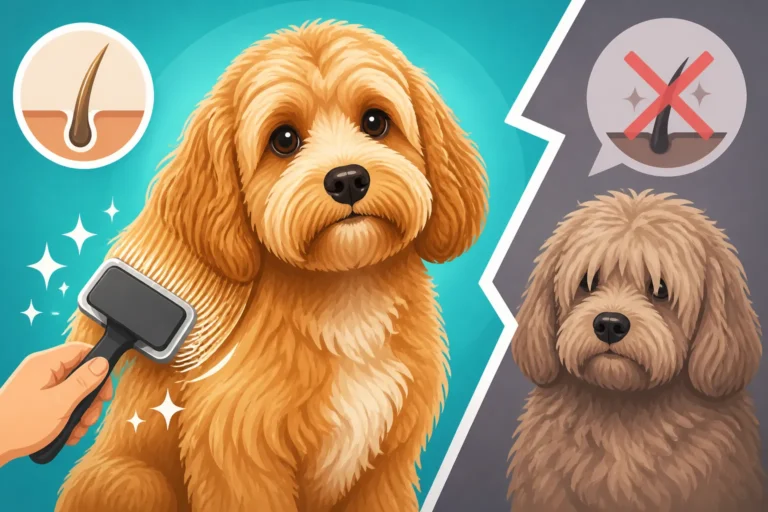
- Wavy Coats (Cc): Often considered the "ideal" Cockapoo coat, wavy coats tend to be lower shedding than straight coats and less prone to tight matting than very curly coats. They still need regular brushing, typically a few times a week, to prevent tangles and remove loose hair. A good slicker brush and metal comb are your best friends here. For a truly furnished wavy coat, monthly or bi-monthly professional grooming might be sufficient, depending on the length you keep it.
- Curly Coats (CC/some Cc): These coats are dense and can range from loose ringlets to very tight curls, similar to a Poodle's. They are generally considered the most hypoallergenic option but demand the most intensive grooming. Tightly curled coats act like Velcro, trapping loose hair and dirt, which quickly forms mats if not regularly brushed. Daily brushing, often involving line brushing, is highly recommended. Professional grooming every 4-6 weeks is almost a necessity to keep the coat manageable and mat-free. This is where Whether a Curly Cockapoo Needs Daily Work becomes a very real consideration. Without this diligent care, a curly-coated Cockapoo can quickly become a matted mess, potentially requiring a full shave-down, which no owner wants.
Investing in quality grooming tools early on is essential. You can find excellent brushes, combs, and detangling sprays on platforms like Chewy or Amazon. Products from brands like Chris Christensen or Artero are often recommended for doodle coats, though many great options exist.
When Genetic Testing Offers Clarity
For breeders, genetic testing for coat characteristics like KRT71 is an invaluable tool for making informed breeding decisions and advising prospective puppy buyers. It removes a lot of the guesswork and allows for greater predictability in litters.
For example, if a breeder wants to maximize the chances of producing curly-coated puppies, they might choose to breed a wavy parent (Cc) with a curly parent (CC). This pairing would yield either CC or Cc puppies, ensuring no straight coats and a higher percentage of curly ones. On the other hand, if a breeder wanted to avoid straight coats entirely, they would ensure at least one parent carried two copies of the curl gene (CC) or was at least a carrier (Cc) for furnishings. Whether a Coat DNA Test Is Worth the Money offers more insights into this practice.
Reputable breeders will often provide genetic test results for their breeding dogs, which can be a huge reassurance for families looking for a specific coat type, especially those with allergy concerns. Always ask your breeder about the parents' coat DNA panels.
Beyond the Curl: Other Coat Factors in Cockapoos
While the KRT71 gene is crucial for curl, it's not the only player in the complex world of Cockapoo coats. Other genes, notably those for "furnishings" (facial hair like eyebrows and a mustache) and shedding, also contribute significantly to the overall look and maintenance of a Cockapoo's coat.
The Impact of Furnishings
The furnishings gene (often referred to as Rspo2 or F gene) determines whether a dog has the characteristic beard and eyebrows that contribute to the "doodle look" and, crucially, to the low-shedding quality. A dog that inherits two copies of the furnishing gene (F/F) or one copy (F/f) will have furnishings. A dog without furnishings (f/f) will have a smooth face and typically a higher-shedding coat, resembling more of a spaniel, regardless of its curl gene.
Even a straight-coated Cockapoo with furnishings will shed less than a straight-coated Cockapoo without furnishings. So, while KRT71 dictates the curl, the furnishings gene often dictates the shedding. This is why some people might mistakenly think a wavy coat is low-shedding just because it's wavy, when the furnishings are often the primary factor. Understanding this is vital if you're looking for a genuinely low-shedding dog. What Furnishings Look Like on a Cockapoo explains this in detail.
The Progression of a Cockapoo's Coat Over Time
One of the biggest surprises for new Cockapoo owners is that a puppy's coat at 8 or 10 weeks old is rarely its final adult coat. Cockapoo coats go through a significant change, often referred to as the "coat change," usually starting around 6-10 months of age and sometimes lasting well into their second year.
During this period, the soft puppy fluff is replaced by the denser, more mature adult coat. This transition can cause extreme matting, as the shedding puppy coat tangles with the emerging adult coat. A puppy that looked wavy at 12 weeks might develop much tighter curls by 18 months, or vice versa, though the underlying genetics will always set the ultimate potential. This coat change is a prime example of why persistent and thorough grooming is so important, and it’s a time when many owners feel overwhelmed. Don't be surprised if your wavy little pup suddenly develops a much stronger curl, requiring more frequent brushing. Preparing for A Cockapoo's Coat Through the Ten Month Change will save you a lot of frustration.
Having a good brush, like a wide-toothed comb for detangling and a slicker brush for everyday maintenance, on hand from Chewy or Amazon is a game-changer. Also, considering a high-quality food, perhaps a fresh food option like Ollie, can contribute to healthy skin and coat during this period of change.
The Different Coat Types a Cockapoo Can Have
Considering all the genetic factors, Cockapoos can exhibit a range of coat types.
- Flat/Straight Coat: This type is similar to a Cocker Spaniel, often shedding more. It's usually the result of being 'cc' for curl and 'f/f' for furnishings.
- Wavy Coat: The most common and often desired coat, typically 'Cc' for curl and 'F/F' or 'F/f' for furnishings. It offers a good balance of low shedding and manageable grooming. The Wavy Coated Cockapoo details this popular type.
- Curly Coat: Tighter curls, like a Poodle's. These dogs are often 'CC' for curl and usually 'F/F' or 'F/f' for furnishings, making them very low-shedding but high maintenance in terms of grooming. The Tight Curled Cockapoo is an excellent resource for owners of these dogs.
Understanding these distinctions and the genetic possibilities allows for a more informed choice when bringing a Cockapoo into your home, helping to ensure that the coat type aligns with your lifestyle and grooming commitment.
Disclaimer
This article is for general informational purposes only and does not constitute professional advice. Laws, prices and regulations vary by location and change over time. Consult a qualified professional for guidance on your specific situation.