Whether Seizures Are Recorded in Cockapoo Pedigrees
The sudden, disorienting experience of watching your beloved Cockapoo suffer a seizure is terrifying for any pet parent. It's a moment that leaves you feeling helpless, confused, and desperate for answers. You start wondering, "Is this something they inherited? Should I have known? Is there a way to track these things?" It's a completely natural thought to wonder if such a serious health event would be something recorded in a dog's pedigree, offering a glimpse into their genetic past. This guide will explore the complex reality of seizures in Cockapoos, how their lineage plays a role, and what information you can realistically expect from pedigrees and responsible breeders.
Understanding Canine Seizures and Their Impact
When your Cockapoo has a seizure, it's essentially a temporary, involuntary disturbance of normal brain function. It can manifest in many ways, and for many owners, the sight of their dog collapsing, convulsing, drooling, or even just appearing dazed and confused can be utterly heartbreaking and deeply alarming. It’s a health issue that affects dogs of all breeds and mixes, and unfortunately, Cockapoos are not immune.
Types of Seizures in Dogs
Seizures in dogs aren't a one-size-fits-all phenomenon. They vary widely in their presentation and severity, which can make them even more difficult for owners to identify or understand initially. Getting a clear picture of what happened is vital for your vet to make an accurate diagnosis.
The most commonly recognized type is the generalized seizure, often referred to as a "grand mal" seizure. This is what most people picture: the dog loses consciousness, falls to its side, paddles its limbs stiffly or rhythmically, may drool excessively, vocalize, and often loses bladder and bowel control. These episodes can last from a few seconds to several minutes, and the dog will typically enter a post-ictal phase afterward, appearing disoriented, exhausted, or even temporarily blind. It's truly harrowing to witness, and you might feel utterly useless during the event.
Then there are focal seizures, sometimes called partial seizures, which are often much more subtle and can be easily missed or mistaken for other behaviors. These seizures only affect one part of the brain and thus only one part of the body. Your Cockapoo might experience involuntary twitching of a single limb, facial muscle spasms, excessive licking, jaw chomping, or even "fly-biting" behavior. Some dogs might seem to 'zone out,' stare blankly, or appear to be hallucinating. The dog might remain conscious during a focal seizure, or their consciousness could be impaired, making them seem confused or unresponsive. It’s easy to dismiss these subtle signs as mere quirks, which is why diligent observation is key.
Common Causes of Seizures
The causes of seizures in dogs are incredibly varied, and pinpointing the exact reason for your Cockapoo's episode can often be a long and challenging journey. It's important to remember that a seizure itself is a symptom, not a disease, and understanding the root cause is critical for effective management.
One of the most common diagnoses, especially for dogs between six months and five years of age, is idiopathic epilepsy. This essentially means "epilepsy of unknown cause." It's diagnosed when all other potential causes for seizures have been ruled out. Idiopathic epilepsy is generally considered genetic or inherited, but the exact genes responsible are often complex and not fully understood or easily tested for in all breeds, let alone a crossbreed like a Cockapoo. It’s the diagnosis that can leave many owners feeling frustrated because there isn't a clear "fix."
Beyond idiopathic epilepsy, seizures can be symptomatic of a range of other health issues. These include structural brain diseases like tumors, inflammation, infection, or trauma (e.g., a past head injury). They can also stem from metabolic problems, such as liver disease (portosystemic shunt), kidney failure, low blood sugar (hypoglycemia), or electrolyte imbalances. Toxins, whether ingested (like certain pesticides, lead, or human medications) or produced internally by bacterial infections, can also trigger seizures. Even severe heatstroke can sometimes lead to neurological complications including seizures. This wide array of potential causes is why your vet will likely recommend a thorough workup, which can involve blood tests, urinalysis, and sometimes more advanced diagnostics like an MRI or spinal tap. It's a lot to navigate, and the uncertainty can be very stressful.
The Genetic Threads: Cockapoo Parent Breeds and Seizures
The Cockapoo, being a crossbreed, inherits traits and potential health predispositions from both the Cocker Spaniel and the Poodle. This genetic tapestry means understanding the health history of both parent breeds is crucial when discussing conditions like seizures. It's not as simple as looking at one side of the family; you have to consider both.
Seizure History in Cocker Spaniels
Cocker Spaniels, particularly the American Cocker Spaniel, have a known predisposition to certain seizure disorders. Idiopathic epilepsy is recognized within the breed, with seizures typically beginning between six months and five years of age, much like in other predisposed breeds. While not every Cocker will develop epilepsy, responsible breeders are acutely aware of these tendencies and strive to breed away from affected lines.
Beyond typical epilepsy, Cocker Spaniels are sometimes associated with a condition informally known as "Cocker Rage" or "Rage Syndrome." This isn't strictly an epileptic seizure, but it's a neurological disorder that can be mistaken for one due to its sudden, unprovoked aggressive outbursts, often followed by a period of confusion or detachment. These episodes are rare but serious, and while the exact genetic basis is still being researched, it’s certainly something conscientious Cocker Spaniel breeders consider. Understanding these nuances from the Cocker side is important because your Cockapoo may carry some of these predispositions.
Seizure History in Poodles
Poodles, whether Standard, Miniature, or Toy, also have their own genetic predispositions to seizure activity, primarily idiopathic epilepsy. Like Cocker Spaniels, affected Poodles typically begin seizing during their younger adult years. In some Poodle lines, specific genetic mutations linked to certain forms of epilepsy have been identified, which allows for DNA testing in those particular instances.
For example, some Poodles can carry genes for certain forms of myoclonic epilepsy or a specific type of neonatal encephalopathy that can present with seizure-like activity in puppies. While these specific conditions might be less common than general idiopathic epilepsy, their existence highlights the importance of genetic health testing in parent breeds. A reputable Poodle breeder will be familiar with these genetic risks and should be able to discuss the health history of their lines, particularly concerning neurological issues. This dual inheritance means your Cockapoo's risk profile for seizures is a blend of both parent breeds' vulnerabilities.
The Enigma of Pedigree Records for Seizures
When you get a Cockapoo, you often receive a "pedigree" of sorts. However, what exactly that pedigree contains, and what it doesn't, can be a source of confusion and frustration, especially when it comes to a complex health issue like seizures. Most people assume a pedigree is a comprehensive health report, but that's rarely the case.
What a Pedigree Actually Shows
Let's be clear: a traditional pedigree document primarily serves as a family tree. It lists the names of your Cockapoo's parents, grandparents, and often great-grandparents, along with their registration numbers (if applicable to the parent breeds, like AKC or Kennel Club numbers for the Poodle and Cocker Spaniel). It essentially traces the lineage, showing who bred whom. Think of it more like a genealogical chart than a medical history.
What you won't typically find directly on a pedigree are specific details about every health issue an individual ancestor may have experienced. For instance, it won't say, "Great-grandmother Fifi had idiopathic epilepsy starting at age 3." That kind of detailed medical history is generally not compiled or recorded on the public-facing pedigree document itself. The focus is on verifying ancestry and sometimes, for purebreds, titles earned in conformation or performance events.
The Absence of Seizure Records on Pedigrees
This brings us to the core of the question: are seizures recorded in Cockapoo pedigrees? The straightforward answer is generally no. Individual seizure events or even a diagnosis of idiopathic epilepsy are not standard entries on a pedigree document supplied by a breeder, even for purebred dogs, let alone a Cockapoo.
While some breeders might know about seizure history in their lines, this information is usually anecdotal or kept in their private records, not printed on the official lineage certificate. The lack of a universal, mandatory system for reporting and publicly logging every health condition for every dog, particularly in a crossbreed context, means that pedigrees simply aren't designed to convey this level of detail. This can be incredibly frustrating for prospective owners who are trying to make informed decisions about their puppy's potential health. You're left relying heavily on a breeder's honesty and diligence.
Challenges in Tracking Seizures in Crossbreeds
The hybrid nature of the Cockapoo, while offering many wonderful qualities, also presents unique challenges when it comes to tracking inherited health conditions like seizures. The lack of a unified breed club with stringent health testing requirements, combined with the complexities of genetic inheritance, means getting a clear picture can be an uphill battle.
Lack of a Centralized Registry for Health Data
Unlike many established purebreds, Cockapoos do not have a single, universally recognized breed club or registry that mandates specific health tests and collects comprehensive health data on all registered individuals. While groups like the Cockapoo Club of America and the American Cockapoo Club exist, their reach and requirements aren't as standardized or widespread as, say, the AKC for purebreds. This means there's no central database where a Cockapoo's seizure history, or that of its parents, would be uniformly logged and made accessible.
For purebred Cocker Spaniels and Poodles, there are organizations like the Orthopedic Foundation for Animals (OFA) and the Canine Eye Registry Foundation (CERF, now part of OFA's Companion Animal Eye Registry – CAER) that track results for hip and elbow dysplasia, eye certifications, and some DNA tests. However, even these typically don't include records of seizure diagnoses directly. The absence of a similar robust, mandatory, and transparent health registry for Cockapoos makes it incredibly difficult to trace health issues across generations or even verify a breeder's claims. You often hear discussions about whether two registries have made Cockapoos healthier or whether club papers prove a cockapoo was tested, which highlights this very issue.
The Complexity of Genetic Inheritance in Crossbreeds
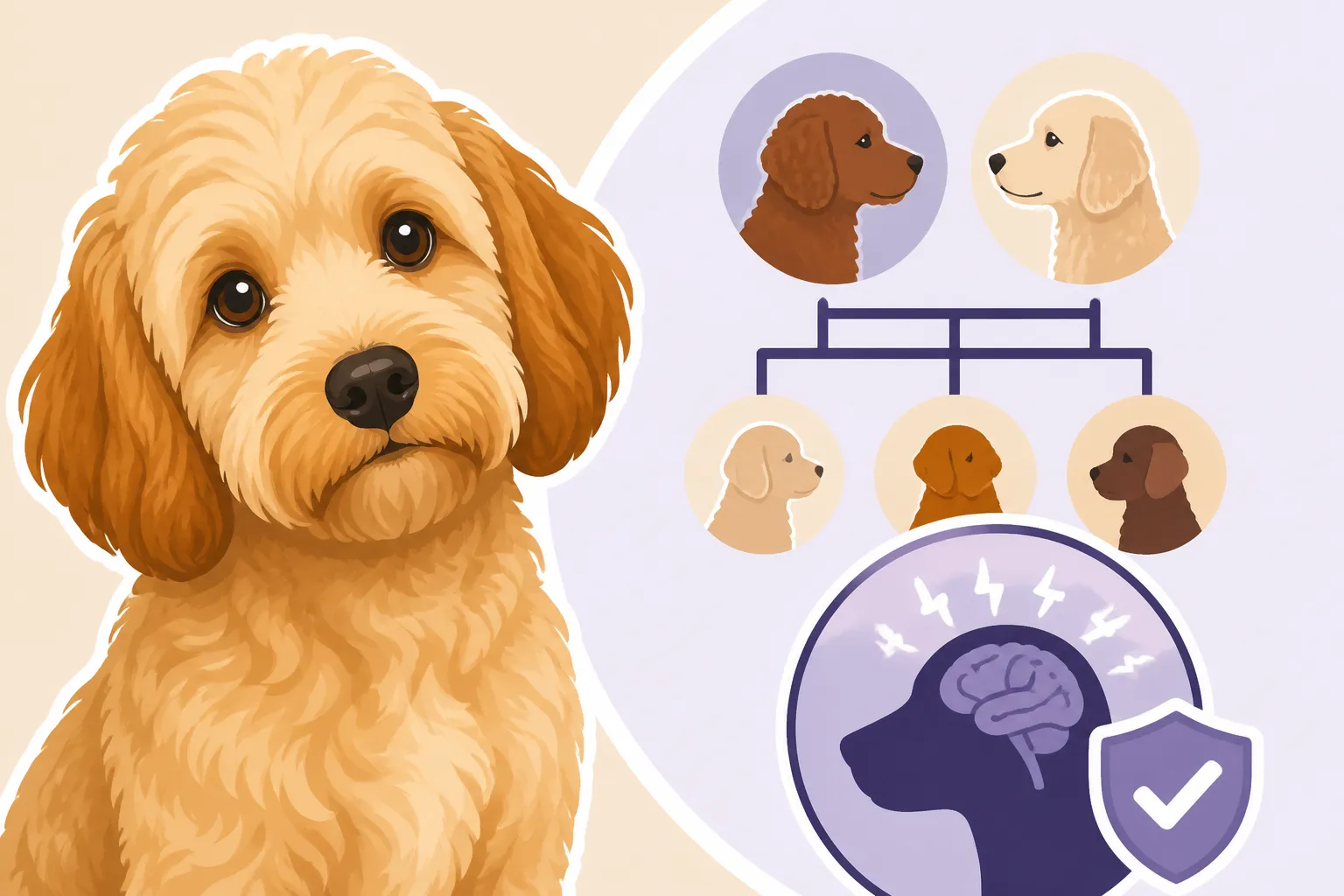
Inheritance patterns for conditions like idiopathic epilepsy can be incredibly complex. It's often not a simple dominant or recessive gene, but rather polygenic, meaning multiple genes interact to determine susceptibility. This makes it challenging to predict, even with genetic testing. When you cross two breeds, each with its own set of genetic predispositions, the waters become even murkier. A Cockapoo inherits a random mix of genes from both parents. Even if both parent breeds carry a predisposition to epilepsy, the specific combination in a Cockapoo puppy might result in a higher or lower risk.
Furthermore, not all forms of epilepsy have a known genetic marker that can be easily tested for. While DNA tests exist for certain types of epilepsy in specific breeds (e.g., neonatal encephalopathy in Poodles), a general "epilepsy test" that covers all forms for all breeds simply doesn't exist yet. This means breeders often have to rely on careful record-keeping and screening of their lines, making transparent communication with buyers even more critical. It’s a gamble, which is why considering whether an untested Cockapoo litter is a gamble is always wise.
Empowering Owners: What You Can Do
Even with the challenges of pedigree records, you, as a Cockapoo owner or prospective owner, are not powerless. There are proactive steps you can take to understand and manage the risk of seizures in your furry family member. Knowledge and diligent observation are your best tools.
Asking the Right Questions to Breeders
Before bringing a Cockapoo puppy home, it is absolutely paramount to engage in open and thorough communication with the breeder. Don't be afraid to ask direct and specific questions about the health history of the puppy's parents and their lineage. A responsible breeder will welcome these questions and should be transparent.
Here are some critical questions to ask:
- "Have any of your breeding dogs or their close relatives (parents, siblings, offspring) experienced seizures or been diagnosed with epilepsy?"
- "What health screenings have been performed on the sire and dam (the parent dogs)?" Look for certifications for common Cockapoo health concerns, such as hip and elbow evaluations, eye exams (CAER), and genetic tests for conditions like Progressive Retinal Atrophy (prcd-PRA), which is important to know about, as outlined in whether both Cockapoo parents must be prcd-PRA clear. While these don't directly test for epilepsy, they show a commitment to health.
- "Can you provide me with references from previous puppy buyers?" Speaking with other owners can offer invaluable insight into the breeder's practices and the health outcomes of their dogs.
- "What is your health guarantee, and does it cover inherited conditions like epilepsy?" Understand the terms of any health guarantee, specifically regarding genetic or inherited diseases. Many breeders offer a limited-time guarantee, and understanding its scope is vital. You should also inquire about the five certificates a Cockapoo breeder should show.
Monitoring and Documenting Seizure Activity
If your Cockapoo does experience a seizure, your role in documenting the event is crucial for your veterinarian. Vets often rely heavily on your observations to understand the nature and frequency of the seizures, as they rarely witness them firsthand.
Keep a detailed seizure log. This should include:
- Date and Time: Exactly when the seizure started and ended.
- Duration: How long the seizure lasted (even if it's just a few seconds).
- Description: What exactly happened? Was your dog conscious? Did they paddle their legs, drool, vocalize, lose bladder/bowel control, or exhibit subtle twitching? Note any unusual behaviors before (prodrome) and after (post-ictal phase) the seizure.
- Potential Triggers: Was there anything unusual that happened before the seizure? Loud noises, stress, excitement (as discussed in whether excitement triggers a Cockapoo's PFK episode), specific foods, medications, or even certain times of day.
- Frequency: How often are the seizures occurring? Are they increasing in frequency or severity?
If possible and safe to do so, record a video of the seizure on your phone. This can be incredibly helpful for your vet in distinguishing between different types of seizures or other neurological events. Remember that this information helps your vet differentiate between true seizures and other conditions, as well as developing a management plan, potentially including daily medication, as explored in whether an epileptic Cockapoo can be managed.
The Role of Pet Insurance
Dealing with a dog who has a chronic condition like epilepsy can be financially demanding due to diagnostic tests, specialist visits, and lifelong medication. This is where pet insurance can truly offer a lifeline, providing financial peace of mind.
Many comprehensive pet insurance plans, such as those offered by Healthy Paws, can help cover the costs associated with diagnosing and treating seizures and epilepsy, provided the condition is not pre-existing (meaning it developed before you enrolled or during a waiting period). It's incredibly important to enroll your Cockapoo in pet insurance when they are young and healthy, before any potential conditions arise. Carefully read the policy details, paying close attention to coverage for hereditary or chronic conditions, waiting periods, and deductibles. Being prepared financially can make a huge difference in your ability to provide the best possible care for your Cockapoo, especially if you're managing a lifelong condition. The stress of vet bills should not compound the emotional distress of your dog's health issues.
Responsible Breeding and Transparency
The backbone of preventing inherited health issues in any breed, including the Cockapoo, lies with responsible breeders. Their commitment to health testing, ethical breeding practices, and transparent communication is paramount in helping future generations of Cockapoos lead healthier lives.
The Ethical Breeder's Responsibility
An ethical Cockapoo breeder understands their profound responsibility to the dogs they produce and the families who adopt them. This responsibility goes far beyond simply matching a male and female dog. It involves a deep understanding of canine genetics, health clearances, and the temperament of their breeding stock.
A truly responsible breeder will:
- Conduct Health Testing: They will screen their parent dogs for conditions prevalent in Cocker Spaniels and Poodles, such as hip dysplasia, elbow dysplasia, patellar luxation, various eye conditions (like prcd-PRA, glaucoma from the Cocker side, as discussed in Glaucoma From the Cocker Side of a Cockapoo), and sometimes even certain cardiac issues. While a specific "epilepsy test" isn't widespread, they will be aware of seizure history in their lines and actively avoid breeding dogs from lines with known inherited epilepsy.
- Prioritize Temperament: Good breeders breed for sound temperament, as well as health.
- Provide Health Guarantees: They will offer a written health guarantee against severe genetic defects.
- Educate Buyers: They act as a resource for their puppy buyers, providing guidance on care, training, and potential health issues.
- Be Transparent: They are open and honest about any health concerns in their dogs' lineage, even if it's not a condition they can test for.
Why Transparency Matters More Than Pedigree Entries
Given that seizure events aren't typically recorded on pedigrees, a breeder's transparency becomes the single most critical factor for prospective Cockapoo owners. This isn't about shaming breeders whose lines may have had a seizure event; it's about making informed choices. An honest breeder will share known health issues, even the less common ones, and discuss how they manage these risks in their breeding program. They understand that transparency builds trust and helps owners prepare for potential challenges.
Imagine a scenario where a breeder knows a great-aunt of the puppy had seizures, but never discloses it. An owner might then be blindsided years later. If the information was shared upfront, even if there's no "cure," the owner could be more prepared, know what symptoms to watch for, and discuss preventive measures with their vet. This level of honesty is far more valuable than a mere list of names on a pedigree. It empowers you to navigate your Cockapoo’s health journey with greater confidence and understanding.
Living with an Epileptic Cockapoo
If your Cockapoo receives a diagnosis of epilepsy, it's a daunting prospect. However, it's important to remember that many dogs with epilepsy can lead full, happy, and relatively normal lives with proper management and dedicated care. It's a journey, but one you don't have to face alone.
Managing Seizure Disorders
The goal of managing epilepsy is typically to reduce the frequency, severity, and duration of seizures, rather than complete elimination, though that's always the hope. This often involves a multi-faceted approach determined by your veterinary neurologist or regular veterinarian.
Medication: The cornerstone of epilepsy management for most dogs is anti-epileptic drugs (AEDs). These medications, such as phenobarbital, potassium bromide, levetiracetam (Keppra), or zonisamide, are prescribed based on your dog's specific needs, seizure frequency, and response to treatment. Finding the right medication or combination, and the correct dosage, can take time and requires close monitoring by your vet through regular blood tests. It’s crucial to administer these medications exactly as prescribed and not to stop them suddenly, as this can trigger more severe seizures. Living with an epileptic Cockapoo often means daily medication routines.
Lifestyle Adjustments: While medication is key, certain lifestyle adjustments can also help. Identifying and avoiding potential triggers, if any can be discerned, is important. Reducing stress, ensuring consistent routines, and providing a calm environment can be beneficial. Some owners find that a consistent diet and avoiding certain treats or foods can also play a role, though this varies greatly by individual dog. Regular, moderate exercise is generally good, but extreme over-exertion or excitement might need to be monitored in some cases. Your vet might also want to discuss what triggers a Cockapoo's seizures in more detail.
The Emotional and Practical Aspects
Living with a Cockapoo who has seizures can take an emotional toll on owners. The fear of another seizure, the worry about their quality of life, and the financial burden can all be significant stressors. It’s okay to feel overwhelmed, and seeking support from your vet, online communities, or even pet loss support groups can be helpful.
Practically, it means being vigilant. Keeping a seizure diary is vital for tracking progress and adjusting medication. Having an emergency plan in place, knowing what to do during a seizure, and when to seek immediate veterinary attention is paramount. It also means regular veterinary check-ups to monitor medication levels and your Cockapoo's overall health. While it's a commitment, the bond you share with your Cockapoo often grows even stronger through these challenges, as you become their most dedicated advocate and caregiver. The long life of a Cockapoo, often the fourteen to eighteen years a Cockapoo lives, means that managing chronic conditions can be a significant part of your journey together.
Conclusion
While you won't typically find "seizures recorded" directly on a Cockapoo's pedigree, the underlying genetic predispositions from their Cocker Spaniel and Poodle heritage mean that seizures are a real concern for this delightful crossbreed. The absence of a centralized health registry for Cockapoos further highlights the importance of asking diligent questions to your breeder, understanding their commitment to health testing, and valuing their transparency above all else. As an owner, your role in monitoring, documenting, and managing any seizure activity is crucial, and resources like pet insurance can offer invaluable support. By being informed and proactive, you can help ensure your Cockapoo receives the best possible care, allowing them to thrive even if they face health challenges.
Disclaimer
This article is intended for informational purposes only and does not constitute veterinary advice. If your Cockapoo is experiencing seizures or any other health concerns, please consult with a qualified veterinarian immediately for diagnosis and treatment.