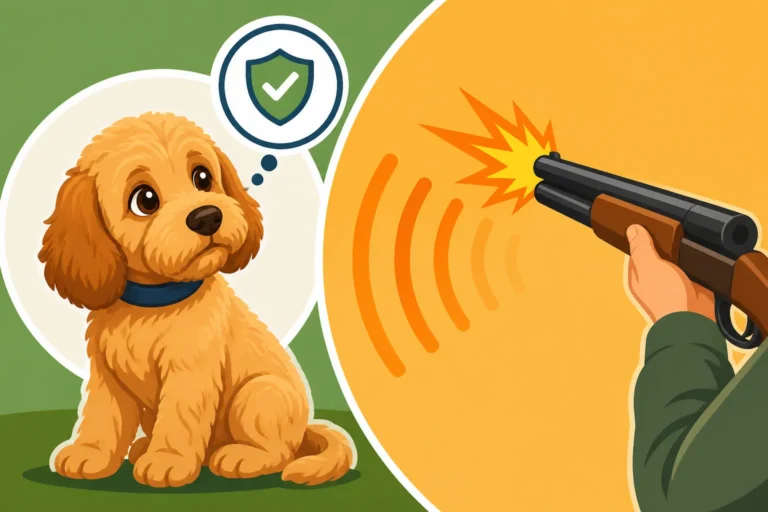
Whether an E-Collar Has Any Place on a Cockapoo
It’s a common scenario: you’re out with your beloved Cockapoo, maybe enjoying a walk in the park, and suddenly a squirrel or another dog catches their eye. Before you can react, they’re off, seemingly deaf to your calls. Or perhaps you’re struggling with persistent barking, jumping, or leash pulling, and the frustration is mounting. In moments of desperation, many owners start to wonder about tools that promise quick, effective results, and the idea of an "e-collar" often comes up. But is a static correction collar truly a suitable or even safe option for a sensitive, intelligent breed like a Cockapoo? This comprehensive guide will explore what e-collars are, their potential impact on your Cockapoo, and offer alternative, force-free training methods to help you build a stronger, more trusting relationship with your furry friend.
Understanding E-Collars: More Than Just a "Shock"
When people hear "e-collar," often the first image that comes to mind is a harsh, painful shock. It's an understandable reaction, given the history and popular perception of these devices. However, modern e-collars have evolved, and understanding their mechanics is crucial before forming an opinion on their use, especially for a dog with the unique blend of sensitivity and intelligence found in a Cockapoo.
The Technology Behind Modern E-Collars
Today’s e-collars are typically remote training collars that deliver various forms of stimuli. While they are still capable of static correction (which some might call a "shock"), many models also offer vibration and tone settings. The static correction itself is often described as a muscle stimulation, similar to what a physical therapist might use, rather than a painful electric shock. Users can usually adjust the intensity levels, from very low sensations barely perceptible to stronger, more noticeable pulses.
The idea behind these collars, as presented by their proponents, is to provide a "tap on the shoulder" or an attention-getting sensation at a distance. For example, if your Cockapoo is bolting after a rabbit, a trainer might use the static correction to interrupt the behavior, drawing the dog's attention back to the handler. However, the precise sensation and how an individual dog perceives it can vary wildly. What one dog dismisses, another might find terrifying. This variability is especially important for a breed like the Cockapoo, known for its deep attachment to its people and often a desire to please, but also prone to anxiety and stress.
Common Uses and Misconceptions
E-collars are often marketed for a range of behavioral issues, most commonly for teaching reliable recall, curbing excessive barking, managing leash reactivity, or establishing boundary training in a yard. The appeal is clear: the ability to deliver a consistent, immediate consequence or interruption from a distance can seem like a magic bullet for difficult behaviors that feel impossible to manage otherwise.
However, a major misconception is that these collars teach a dog what to do. In reality, they are primarily tools for suppressing unwanted behaviors. For instance, if your Cockapoo chases a squirrel and gets a static correction, they might learn not to chase squirrels (or at least, not when you're around with the collar on). What they don't learn is what they should do instead. Without clear, positive instruction, this can lead to confusion, anxiety, or even a breakdown in trust. Furthermore, if the timing of the correction is off, even by a second, your Cockapoo might associate the unpleasant sensation with something else entirely – perhaps the sight of another dog, or even you – leading to new, undesirable behaviors like fear or aggression. Whether a Cockapoo Is Too Soft for Correction is a pertinent question here, as their inherent sensitivity means misapplication can have profound negative consequences.
The Impact on a Cockapoo's Sensitive Nature
Cockapoos are a crossbreed inheriting traits from both Cocker Spaniels and Poodles, two breeds known for their intelligence, eagerness to please, and often, a degree of sensitivity. This unique combination means that tools like e-collars, which rely on aversive stimuli, need to be approached with extreme caution, as the potential for psychological harm can be significant.
Why Cockapoos Can Be Particularly Affected
Both American and English Cocker Spaniels, the typical parent breeds for Cockapoos, can be quite sensitive dogs. They thrive on positive reinforcement, praise, and a strong bond with their handlers. Harsh corrections or training methods based on intimidation can easily cause them to shut down, become fearful, or even develop reactive behaviors. Poodles, while highly intelligent and robust, also respond incredibly well to positive, engaging training. They love to learn and solve problems, and their keen minds can quickly become distressed if they don't understand what's expected of them or if they associate training with discomfort.
When you combine these traits in a Cockapoo, you often get a dog that is highly attuned to its owner's emotions and very eager to please. They are intelligent enough to remember events and associations, for better or worse. Using an e-collar, even at low settings, can be perceived as betrayal or an inexplicable punishment, leading to a deep erosion of trust. Their bright, expressive eyes and sometimes anxious tendencies mean that any unpleasant training experience can linger and manifest in ways you might not immediately connect back to the collar. Signs a Cockapoo Is Anxious Rather Than Bored can be subtle, but a sudden change in demeanor or reluctance to engage can sometimes point to such underlying stress.
Potential Behavioral Fallout
The use of an e-collar, if misunderstood or misapplied by the dog, can lead to a cascade of negative behavioral consequences. Instead of solving the initial problem, you might inadvertently create several new ones. For example, if your Cockapoo is corrected for barking at the mail carrier, they might learn to associate the mail carrier (or anyone approaching the house) with the unpleasant sensation, leading to increased fear or even aggression towards strangers.
Another common issue is learned helplessness. A dog that is repeatedly corrected for behaviors it doesn't understand, or for natural instincts it can't control, may simply stop offering behaviors altogether. They become withdrawn, lethargic, and lose their vibrant personality, fearing that any action they take might result in discomfort. This is heartbreaking for any dog owner, but particularly for those who cherish their Cockapoo's playful, joyful spirit. Furthermore, the constant anticipation of a potential correction can significantly increase a dog's general stress and anxiety levels, affecting their overall health and well-being. What Triggers a Cockapoo's Seizures is a very different topic, but it highlights that chronic stress can exacerbate various health conditions in sensitive dogs.
The Ethical Debate: Pain versus Communication
The debate surrounding e-collars often boils down to differing philosophies on dog training. Proponents argue that modern e-collars are not painful and serve as a clear form of communication, analogous to a human tapping a shoulder or receiving a mild static shock from a doorknob. They believe that when used correctly, by experienced trainers, they can be humane and highly effective for specific scenarios, particularly off-leash safety.
However, many certified professional dog trainers and veterinary behaviorists strongly advocate against their use. They argue that any tool relying on aversive stimuli carries inherent risks, especially in untrained hands. The "pain versus communication" argument is often seen as a false dichotomy; for a dog, a static pulse might indeed be a very clear communication that something unpleasant is happening, but not why it's happening or what to do instead. The core ethical concern is whether it's truly necessary to inflict discomfort or fear to train an animal, particularly when highly effective, force-free methods exist that build trust and strengthen the human-animal bond without these risks. For a Cockapoo, whose very nature thrives on companionship and positive interaction, the potential damage to this bond is a serious consideration.
Exploring Force-Free Training Alternatives for Your Cockapoo
Given the potential risks and the sensitive nature of Cockapoos, exploring force-free, positive reinforcement training methods is often the most humane and effective path. These methods focus on teaching your dog what you want them to do, rather than punishing what you don't. They build confidence, strengthen your bond, and result in a happy, well-adjusted companion.
Building a Strong Foundation with Positive Reinforcement
Positive reinforcement is all about rewarding behaviors you like. When your Cockapoo does something desirable, like sitting politely instead of jumping, or coming when called, you immediately reward them with something they value – a tasty treat, a favorite toy, or enthusiastic praise. This makes them more likely to repeat that behavior in the future because they associate it with a positive outcome.
This approach is incredibly powerful for Cockapoos because they are so intelligent and eager to please. They thrive on praise and interaction. Starting with basic obedience cues like sit, stay, come, and lie down, and consistently rewarding success, lays a robust foundation for all future training. Consistency is key, and everyone in the household needs to be on the same page. Think about enrolling in an online course, like those offered by BAXTER & Bella, which focus heavily on positive, relationship-based training, giving you a structured approach from the comfort of your home. Building a strong Building a Recall a Cockapoo Answers is a cornerstone of this method, making your voice the most rewarding thing in their environment.
Mastering Recall and Loose-Leash Walking
One of the most common reasons owners consider e-collars is for unreliable recall or pulling on the leash. Fortunately, there are many effective force-free ways to address these challenges. For recall, start in a low-distraction environment with a long line (you can find various lengths and materials on Amazon) attached to a comfortable harness. Call your Cockapoo, and as they turn towards you, cheerfully reel them in while praising and rewarding them lavishly when they reach you. Gradually introduce more distractions and practice in different locations. Make coming to you the most exciting and rewarding thing they can do, every single time. A Cockapoo That Goes Deaf on a Trail is a common concern, but consistent, fun recall games can overcome this.
For loose-leash walking, avoid yanking or correcting. Instead, reward your Cockapoo for walking by your side with a slack leash. If they pull, simply stop walking. As soon as the leash slackens, even for a second, start moving again and reward them for that moment of compliance. This teaches them that pulling gets them nowhere, but a loose leash keeps the walk enjoyable. A front-clip harness can also be a valuable tool, redirecting their pulling power towards you and making it harder for them to drag you along.
Addressing Specific Behavioral Challenges
Beyond recall and leash manners, Cockapoos can sometimes present with other challenges like excessive barking, jumping on guests, or mild resource guarding. For barking, identify the trigger (e.g., mail carrier, doorbell). Instead of punishing the bark, teach an alternative behavior. For instance, when the doorbell rings, teach your Cockapoo to go to their mat and lie down, rewarding them heavily for doing so. This is called "replacement behavior."
For jumping, turn your back and ignore them the moment they jump, only giving attention (and a reward) when all four paws are on the floor. For nipping or mouthing, redirection to appropriate chew toys is far more effective than punishment. For more complex issues, or if you feel overwhelmed, consulting with a certified professional dog trainer (CPDT) or a veterinary behaviorist who specializes in positive reinforcement is invaluable. They can help you understand the root cause of the behavior and develop a tailored plan. Whether a Cockapoo Works Out How to Get Its Way can be true if they are constantly rewarded for undesirable behaviors, which is why clear, positive guidance is so important.
Weighing Your Options: Is an E-Collar Ever Right for a Cockapoo?
The decision of whether to use an e-collar is deeply personal and often contentious. While many trainers and owners swear by positive reinforcement exclusively, it's also true that desperate situations can lead people to consider all available options. Understanding the nuances and risks is paramount, especially when your Cockapoo's well-being is at stake.
Situations Where Owners Might Consider It
Typically, owners consider an e-collar when all other force-free methods have seemingly failed, and they perceive a significant safety risk or unmanageable behavior. This might include a Cockapoo with a dangerously unreliable recall, prone to running into traffic or disappearing for long periods, or aggressive behaviors that pose a threat to people or other animals, which can put A Cockapoo With Children at risk. In these extreme cases, some trainers advocate for e-collars as a last resort, arguing that the controlled use of an aversive tool, when properly applied by a highly skilled professional, might be necessary to prevent a worse outcome, such as the dog being hit by a car or euthanized for aggression.
However, even in these situations, it's critical to acknowledge that e-collars are not a substitute for training. They are aids that, in the wrong hands, can cause more harm than good. They don't teach your dog to want to come back; they teach them to avoid a correction when not coming back. This is a subtle but crucial distinction for a companion animal whose relationship with you should be built on trust, not fear. For many, the mental and emotional toll on a sensitive Cockapoo makes this a line they're unwilling to cross, preferring to manage risks through prevention and continued force-free training.
Consulting Professionals and Making an Educated Choice
Before even considering an e-collar, it is absolutely essential to consult with multiple qualified professionals. Seek out trainers certified in force-free, positive reinforcement methods first. They can offer insights into why your current training might not be working and provide new strategies that align with your Cockapoo's natural temperament. Many organizations, such as the Certification Council for Professional Dog Trainers (CCPDT) or the Pet Professional Guild (PPG), offer directories of trainers who adhere to ethical, science-based methods.
If, after exhausting all positive reinforcement options and under the guidance of a veterinary behaviorist (a veterinarian with specialized training in animal behavior, who can also assess for underlying medical conditions contributing to behavior), you are still contemplating an e-collar for a serious safety issue, ensure that any trainer you consider is:
- Highly Experienced: They should have extensive, proven experience with e-collars and a deep understanding of canine behavior, particularly sensitive breeds like Cockapoos.
- Transparent: They should clearly explain their methods, the science behind them, and all potential risks and benefits.
- Focused on Education: A good trainer will teach you how to use the tool, rather than just using it on your dog.
- Relationship-Oriented: Even when using aversive tools, their overall approach should still aim to maintain and improve the bond between you and your dog.
It's also important to understand that no tool is a quick fix. Effective training, regardless of the tools used, requires consistency, patience, and a deep understanding of your dog's individual needs. For a Cockapoo, with their intelligent and often deeply bonded nature, investing in gentle, understanding methods almost always yields the most rewarding, long-lasting results.
Here's a comparison of common training tools and their primary impact:
| Tool/Method | Primary Mechanism | Immediate Effect | Long-term Impact (Positive Reinforcement Focus) | Risks (Aversive Tool Focus) |
|---|---|---|---|---|
| Positive Reinforcement | Rewards (treats, praise, toys) | Encourages desired behaviors | Builds confidence, trust, and a strong bond; dog learns to offer behaviors | None if applied correctly; potential for "bribing" if not phased out strategically |
| Clicker Training | Sound marker | Marks precise desired behavior | Clear communication, faster learning, dog enjoys learning | None if applied correctly |
| Long Line | Leash extension | Safe practice for recall/distance | Freedom to explore safely, builds reliable recall without fear | Entanglement, tripping hazard if not handled properly |
| Front-Clip Harness | Physical redirection | Reduces pulling on leash | Teaches loose-leash walking comfortably, no pressure on neck | Can chafe if ill-fitting; may not be enough for very strong pullers without training |
| Head Halter | Gentle muzzle control | Redirects dog's head, prevents pulling | Offers physical control for strong pullers while training loose-leash | Can be uncomfortable for some dogs; requires careful introduction and positive association |
| E-Collar (Static/Vibration) | Aversive stimulus | Interrupts unwanted behavior | Suppresses behavior, often out of fear of correction | Fear, anxiety, aggression, learned helplessness, broken trust, misassociation with triggers |
Remember, your Cockapoo looks to you for guidance, comfort, and safety. Choosing training methods that honor their sensitive spirit will ultimately lead to a happier, healthier, and more harmonious life together. Whether a Cockapoo Concentrates in a Class depends heavily on the training method, and positive methods typically yield better engagement.
Disclaimer
This article is for general informational purposes only and does not constitute professional advice. Laws, prices and regulations vary by location and change over time. Consult a qualified professional for guidance on your specific situation.