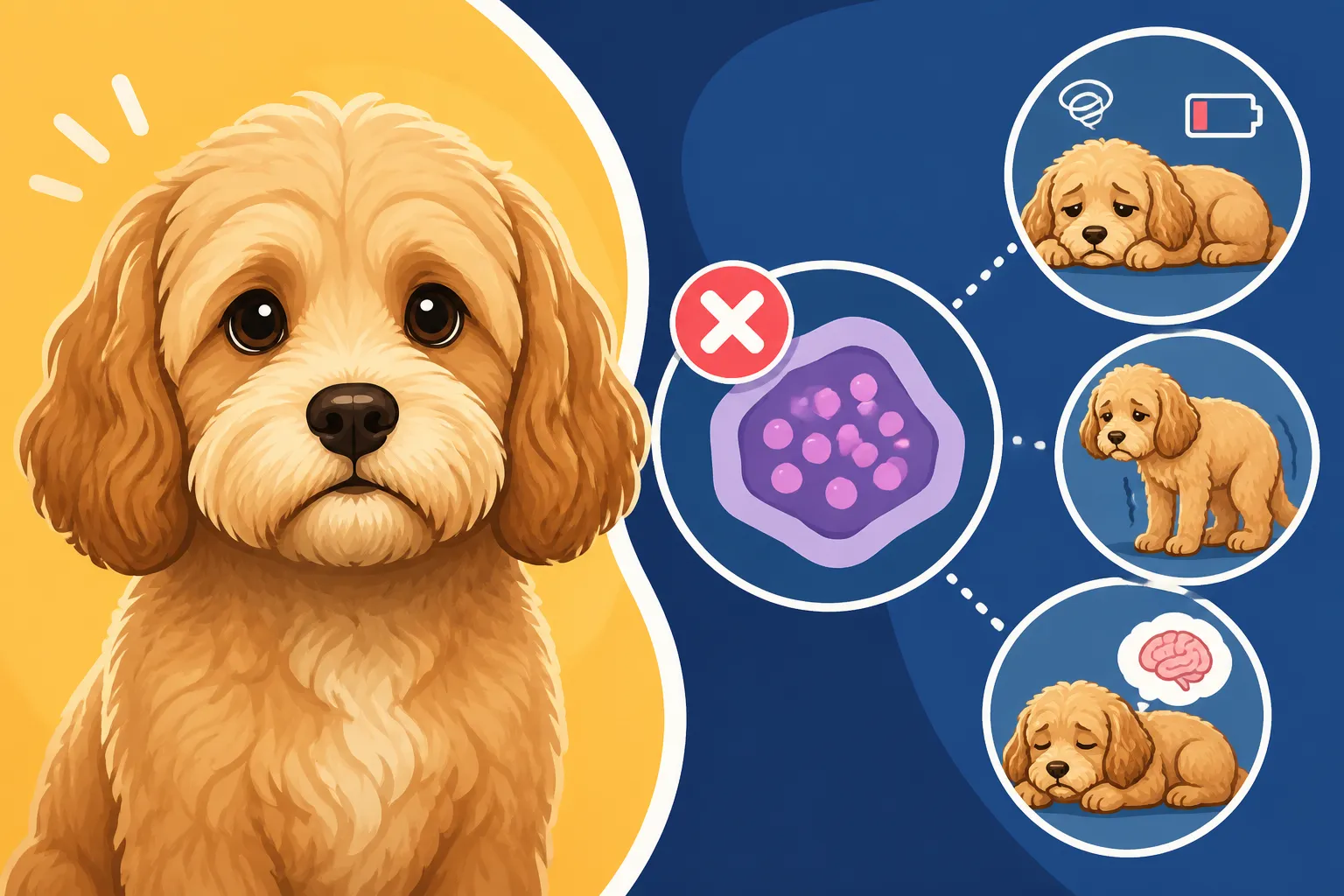
What PFK Deficiency Does to a Cockapoo
It’s truly unsettling to see your beloved Cockapoo suddenly become lethargic, weak, or even collapse after what seemed like a normal playtime. When these puzzling symptoms appear, often without warning, it's natural to feel a surge of fear and confusion. This comprehensive guide is here to shed light on Phosphofructokinase (PFK) deficiency, a hereditary condition that can affect Cockapoos, explaining what it is, how to recognize its signs, and most importantly, how to manage it to ensure your furry family member lives the fullest, happiest life possible.
Understanding Phosphofructokinase Deficiency
Dealing with a health issue in your Cockapoo can be incredibly stressful, especially when it's something you might not have even heard of before. Phosphofructokinase deficiency is one of those conditions that can sneak up on owners, but understanding its underlying causes and how it affects the body is the first step toward managing it effectively. It's a genetic metabolic disorder, meaning it messes with how your dog's body uses energy, specifically in red blood cells and muscle cells.
The Genetic Roots of PFK
PFK deficiency is an inherited condition, which means it’s passed down from parents to their puppies, and it follows an autosomal recessive pattern. What does that actually mean for us pet parents? Well, it means a Cockapoo must inherit two copies of the faulty gene – one from each parent – to actually suffer from the disease. If they only inherit one copy, they become a "carrier." Carriers don't show any symptoms of the disease themselves, but they can pass that gene on to their offspring. This is why it’s so crucial for breeders to understand Which Cockapoo Parent Passes On PFK. Without proper genetic testing of the parent dogs, a breeder could unknowingly pair two carriers, leading to affected puppies in the litter. This hidden aspect of genetic inheritance is often where the frustration and heartbreak begin for new puppy owners.
Think of it like this: if both mom and dad each have one normal gene and one faulty PFK gene, they're fine. But when they have puppies, there's a 25% chance each puppy will get two faulty genes and be affected, a 50% chance they'll get one faulty gene and be a carrier like their parents, and a 25% chance they'll get two normal genes and be completely clear. It's a genetic lottery, and it's why asking a breeder for health clearances, including The DNA Test That Clears a Cockapoo of PFK, is non-negotiable.
What PFK Does in the Body
So, what exactly is phosphofructokinase, and why is its deficiency such a problem? PFK is an enzyme, a crucial protein that helps facilitate a specific chemical reaction in the body. Specifically, it plays a vital role in glycolysis, which is the process where glucose (sugar) is broken down to create energy. This energy is essential for the function of virtually every cell, but it's particularly critical for red blood cells and muscle cells.
When PFK is deficient, red blood cells can't produce enough energy to maintain their structure and function properly. This leads to premature destruction of red blood cells, resulting in a type of anemia called hemolytic anemia. Imagine a tiny power plant suddenly running out of fuel – the workers (red blood cells) can't do their job, and the whole system (your dog's body) starts to suffer. This is why you might see signs like weakness and pale gums. Similarly, muscle cells also rely on PFK for energy, especially during bursts of activity. When they lack this enzyme, they struggle to produce the necessary energy, leading to muscle weakness, cramping, and exercise intolerance. It’s a systemic problem that touches on the very core of how your dog’s body generates power for daily life.
Breeds at Risk
While PFK deficiency can sound quite complex, it's not a mystery illness. It's well-documented in certain breeds, and understanding this can help us understand why Cockapoos are susceptible. The PFK gene mutation originates from specific purebred lines. The primary breeds linked to PFK deficiency are English Springer Spaniels and American Cocker Spaniels – both of which are foundational breeds for the Cockapoo. Because Cockapoos are a cross between a Cocker Spaniel (American or English) and a Poodle, they can inherit this genetic predisposition from their spaniel parent.
Other breeds that can also be affected include the Whippet and some mixed breeds that carry these ancestral lines. This genetic link underscores why thorough health testing of both parent breeds is so important when breeding Cockapoos. You can’t assume that just because a Poodle parent is clear, the Cockapoo puppy will be safe if the Cocker Spaniel parent is a carrier. This shared genetic history means that anyone considering adding a Cockapoo to their family should be vigilant and ask their breeder about genetic screening, especially for PFK deficiency.
How PFK Deficiency Manifests in a Cockapoo
It’s often the subtle changes in our dogs that first catch our attention, only for those changes to escalate into something truly concerning. PFK deficiency in a Cockapoo presents with a range of symptoms, and recognizing them early can make a world of difference. The frustrating part is that these signs can sometimes mimic other common ailments, making diagnosis a bit of a puzzle for even the most attentive owner.
Recognizing the Early Signs
The initial signs of PFK deficiency can be quite general, which is why they often get mistaken for simple fatigue or a temporary upset. You might notice your Cockapoo, usually so full of boundless energy, suddenly slowing down on walks. They might not be as eager to play fetch, or they might seem unusually tired after even mild exercise. This exercise intolerance is one of the hallmarks of the condition, as their muscles aren't getting the energy they need.
Beyond just sluggishness, look out for pale gums or a generally paler tongue and inner eyelids – these are classic signs of anemia, which, as we discussed, is a direct result of the red blood cells breaking down prematurely. In more severe episodes, you might even observe jaundice, a yellowish tint to the skin or whites of the eyes, due to the breakdown products of red blood cells building up. It's also worth noting if your Cockapoo appears weaker or collapses during or after excitement or physical exertion. This isn't just a dog being dramatic; it's a genuine struggle for their body to cope, and it's a clear signal that something serious is happening under the surface.
Triggers for PFK Episodes
One of the most perplexing aspects of PFK deficiency for owners is how symptoms often appear intermittently or are triggered by specific events. It's not usually a constant state of illness; rather, it often manifests as acute episodes. The most common triggers are activities that increase metabolic demand, such as intense exercise, excessive excitement, or even stress. For example, a vigorous session at the dog park, a long hike, or even an overly enthusiastic greeting from visitors can suddenly bring on an episode. This aligns with the question, Whether Excitement Triggers a Cockapoo's PFK Episode, which many owners ask.
Why do these triggers have such an impact? Because PFK-deficient red blood cells are less stable and have a shorter lifespan. When the body is under stress or performing intense activity, it needs a surge of energy and oxygen, which healthy red blood cells normally provide. In a PFK-affected dog, these fragile cells can’t keep up with the increased demand and break down even faster, worsening the anemia and muscle weakness. Even things like high environmental temperatures or certain medications might exacerbate symptoms, although these are less commonly reported as direct triggers. Understanding these triggers is crucial for preventing severe episodes and adapting your Cockapoo's lifestyle to their condition.
Distinguishing PFK from Other Conditions
Given the somewhat vague nature of early PFK symptoms, it's easy to confuse them with other, more common Cockapoo health issues. Many owners might initially suspect their dog is simply out of shape, has a minor injury, or is just getting older. However, the suddenness and severity of some episodes, especially with the pale gums and weakness, should always prompt a veterinary visit. For instance, generalized weakness could also be a sign of something like a cardiac issue or even a neurological problem, though the specific combination of anemia, exercise intolerance, and often dark urine (which we'll discuss next) points more directly to PFK.
Other conditions that might present with similar lethargy or weakness include autoimmune diseases like autoimmune hemolytic anemia (AIHA) – which can also lead to red blood cell destruction, but through a different mechanism. Some forms of The Autoimmune Diseases a Cockapoo Can Inherit could cause similar generalized malaise. The key differentiator for PFK often lies in the episodic nature tied to exertion and the characteristic urine changes. Because a PFK-affected Cockapoo may pass dark urine after an episode, specifically, Whether a PFK Affected Cockapoo Passes Dark Urine is a strong indicator. This dark urine is caused by hemoglobin, released from the destroyed red blood cells, being filtered by the kidneys. While blood in the urine from a urinary tract infection might also be dark, it typically isn't associated with acute weakness or pale gums in the same way. This specific detail often helps veterinarians narrow down the diagnosis.
Diagnosing PFK Deficiency in Your Cockapoo
When you're faced with a dog exhibiting strange symptoms, the diagnostic journey can feel like a maze. For PFK deficiency, a multi-faceted approach is best, combining clinical observation with specific laboratory tests to get a definitive answer. Getting an accurate diagnosis quickly is paramount, not just for your peace of mind, but for implementing appropriate management strategies.
Initial Veterinary Examination
When you first bring your Cockapoo in with concerns about weakness, lethargy, or pale gums, your veterinarian will start with a thorough physical examination. They’ll be looking for signs like pale mucous membranes (gums, inner eyelids), a rapid heart rate, or an enlarged spleen, which can indicate the body is working hard to compensate for red blood cell loss. They’ll also ask you detailed questions about the onset of symptoms: when they appear, what seems to trigger them, and if you’ve noticed any changes in urine color or appetite. This is where your observations about exercise intolerance or specific triggers become invaluable.
It’s crucial to be as specific as possible, detailing any instances where your Cockapoo seemed unwell after playing vigorously or experiencing heightened excitement. Your vet might also perform basic neurological checks to rule out other causes of weakness or collapse. If they suspect anemia, a packed cell volume (PCV) test, which measures the percentage of red blood cells in your dog's blood, will likely be one of the first things they run. A low PCV confirms anemia and guides the next steps in their investigation, helping them decide if further, more specialized tests are warranted.
The Importance of DNA Testing
Without a doubt, the most definitive way to diagnose PFK deficiency is through genetic testing. This isn't just a suspicion; it's a scientific confirmation. A simple buccal swab (rubbing a cotton swab inside your dog's cheek) or a blood sample can be sent to a specialized laboratory. These labs analyze your dog's DNA for the specific mutation responsible for PFK deficiency. The results will tell you if your Cockapoo is clear (does not carry the gene), a carrier (carries one copy but is unaffected), or affected (carries two copies and will likely develop symptoms).
For prospective puppy owners, understanding The DNA Test That Clears a Cockapoo of PFK is vital. Reputable breeders should already be performing these tests on their breeding stock. If a breeder shows you The Five Certificates a Cockapoo Breeder Should Show, a PFK clearance should ideally be among them, especially if their lines involve English or American Cocker Spaniels. This DNA test is not just for diagnosing sick dogs; it's an indispensable tool for responsible breeding to prevent the perpetuation of this condition. It takes away all the guesswork and gives you a clear answer, which is a huge relief when dealing with such a concerning condition.
Bloodwork and Urinalysis Indicators
While DNA testing provides the definitive answer, routine bloodwork and urinalysis can offer strong clues that point towards PFK deficiency. When your Cockapoo is experiencing an episode, blood tests will typically reveal regenerative hemolytic anemia. "Regenerative" means the body is trying to produce new red blood cells to compensate for those being destroyed, which is often indicated by an increase in reticulocytes (immature red blood cells). There might also be signs of elevated bilirubin, a byproduct of red blood cell breakdown, which can lead to jaundice. Sometimes, liver enzymes can also be slightly elevated due to the stress on the system.
A urinalysis, particularly after an acute episode, can be very telling. As mentioned, the presence of dark urine, specifically hemoglobinuria (hemoglobin in the urine), is a significant indicator. This happens because the excessive breakdown of red blood cells releases hemoglobin into the bloodstream, which then gets filtered by the kidneys and excreted in the urine. Your vet will look for other abnormalities in the urine too, like specific gravity, to rule out kidney issues or other causes for the dark color. While these tests won't give a conclusive diagnosis on their own, they are crucial puzzle pieces that, when combined with your observations and the genetic test, form a complete picture, ensuring your Cockapoo gets the right care.
Managing Life with a PFK Affected Cockapoo
Receiving a diagnosis of PFK deficiency can feel overwhelming, but it's important to remember that it's a manageable condition. The key is to understand your Cockapoo's limitations and to make thoughtful adjustments to their daily routine. It's not about denying them a happy life, but about protecting them from triggers and supporting their overall well-being.
Lifestyle Adjustments and Exercise
The cornerstone of managing PFK deficiency is preventing the episodes that can cause distress and damage to your Cockapoo's system. This primarily involves careful management of their activity levels and avoiding excessive excitement. While it might sound counterintuitive for an energetic breed like a Cockapoo, over-exertion is a major trigger. This doesn't mean your dog can't exercise, but rather that exercise needs to be moderate, consistent, and carefully monitored.
Short, regular walks are preferable to long, strenuous hikes. Avoid intense games of fetch that involve sustained running and bursts of speed. During warmer months, it’s especially important to keep exercise cool and brief, as heat can add to their physiological stress. Pay close attention to your Cockapoo's cues: if they start to lag, pant excessively, or seem unusually tired, it's time to stop and rest. Keeping them calm and comfortable, especially after any physical activity or exciting event, will go a long way. Creating a predictable routine can also help minimize stress and unexpected bursts of energy. Remember, What PFK Deficiency Means for a Cockapoo Owner often boils down to careful, proactive management.
Dietary Considerations for PFK Dogs
Diet plays a supporting role in managing PFK deficiency, primarily by providing consistent, high-quality nutrition to support overall health, especially red blood cell production. There isn't a specific "PFK diet," but a well-balanced, easily digestible diet is always recommended. Your vet might suggest a diet rich in B vitamins and iron, as these are crucial for healthy red blood cell formation. While supplements can sometimes be beneficial, always consult your veterinarian before adding anything to your Cockapoo's diet, as excessive iron, for example, can be harmful.
Some anecdotal reports suggest that high-carbohydrate meals might trigger episodes in some PFK-affected dogs, due to the rapid influx of glucose that then needs to be metabolized. However, this is not universally proven. A better approach is to provide consistent, measured meals to avoid dramatic swings in blood sugar. Discussing your Cockapoo's specific dietary needs with your vet is crucial to tailor a plan that supports their energy levels and overall health without causing undue stress on their system. Many high-quality commercial dog foods are perfectly suitable, but always ensure it's appropriate for your dog's age, size, and activity level.
Emergency Preparedness
Even with the best preventative measures, a PFK episode can still occur. Being prepared for an emergency is vital for minimizing stress and ensuring your Cockapoo receives prompt medical attention. First and foremost, know the signs of an acute crisis: sudden severe weakness, collapse, very pale gums, difficulty breathing, or dark brown/red urine. If you see these, it’s an immediate trip to the emergency vet. Keep your vet's number, and the number of the nearest emergency animal hospital, readily accessible.
Consider a pet insurance plan, such as those offered by Healthy Paws, which can help cover unexpected emergency veterinary costs. While pre-existing conditions are usually excluded, having a policy in place before any diagnosis can provide significant financial relief for future, unrelated health issues, and sometimes, ongoing management of a diagnosed condition can fall under covered care if it's not a direct pre-existing exclusion. Make sure your family members or anyone who cares for your Cockapoo understands PFK deficiency, its triggers, and what to do in an emergency. Having a clear plan and keeping calm will benefit both you and your beloved pet during a crisis.
Breeding Responsibly and Preventing PFK
Preventing inherited diseases like PFK deficiency starts with responsible breeding practices. It's a commitment that breeders make to the health and future of the Cockapoo breed, and it's something every potential puppy owner should be aware of and insist upon. The goal is to eliminate the gene from the breeding pool while maintaining genetic diversity.
Pre-breeding Screening for Parents
For any breeder serious about the health of their Cockapoos, genetic screening of both parent dogs is paramount. This means running a DNA test for PFK deficiency on both the Cocker Spaniel and the Poodle parents before they are ever bred. As discussed earlier, PFK deficiency is recessive, so a carrier parent looks perfectly healthy but can still pass on the faulty gene. If two carriers are bred together, there's a 25% chance that each puppy in the litter will be affected.
A responsible breeder will provide proof of clear test results for both parents. If one parent is a carrier, they should only be bred to a dog that has tested "clear" for the PFK gene. In this scenario, while no puppies will be affected by the disease, approximately 50% of the litter could still be carriers. These carrier puppies should then also be tested and preferably sold with a spay/neuter contract to prevent them from inadvertently passing on the gene in the future. This diligent screening is the single most effective way to reduce the incidence of PFK deficiency in Cockapoo puppies. This also applies to other serious genetic conditions, such as ensuring Whether Both Cockapoo Parents Must Be prcd-PRA Clear to prevent progressive retinal atrophy.
Understanding Carrier Status
The concept of "carrier" status is often a point of confusion for prospective puppy owners, but it's vital to grasp when it comes to recessive genetic disorders like PFK deficiency. A Cockapoo that is a carrier for PFK deficiency possesses one copy of the normal gene and one copy of the mutated PFK gene. Critically, these dogs do not exhibit any symptoms of the disease themselves because the single healthy gene is sufficient to produce enough functional PFK enzyme. They live perfectly normal, healthy lives, often for The Fourteen to Eighteen Years a Cockapoo Lives.
However, the importance of knowing a dog's carrier status lies entirely in breeding. As mentioned, if a carrier is bred with another carrier, affected puppies will be born. If a carrier is bred with a clear dog, approximately half the litter will be carriers, and half will be clear. If a carrier is bred with an affected dog (though this should never happen in responsible breeding), half the litter will be carriers, and half will be affected. This is why testing all potential breeding dogs is so crucial. A breeder who truly prioritizes health will use this information to make informed decisions about pairings, working to eliminate affected offspring from their lines and, over time, reduce the prevalence of the carrier gene itself within the breed population.
The Role of Responsible Breeders
The commitment of a responsible Cockapoo breeder extends far beyond just producing cute puppies; it encompasses a dedication to the long-term health and welfare of their dogs. When it comes to genetic conditions like PFK deficiency, their role is foundational. A responsible breeder will:
- Perform extensive health testing: They won't just test for PFK, but for a whole panel of genetic conditions relevant to both Cocker Spaniels and Poodles, including those affecting joints and eyes. They should be transparent about these results and willing to share certificates. Asking for The FN DNA Test a Cockapoo Breeder Runs or similar health clearances is a sign you're dealing with a reputable individual.
- Understand genetics: They will have a thorough understanding of recessive inheritance patterns and use this knowledge to make informed breeding decisions. They won't breed two carriers together, understanding that Why Two Carrier Parents Produce an Affected Cockapoo.
- Educate prospective owners: They will openly discuss potential health concerns, including PFK, with potential buyers. They won't hide information or downplay the importance of genetic testing. They will explain what it means if a puppy is a carrier and why that matters if you were ever considering breeding.
- Offer health guarantees: A strong health guarantee, backed by a commitment to the puppy's well-being, is a hallmark of a responsible breeder. While no guarantee can cover every single potential health issue, it shows a willingness to stand behind the health of their puppies.
- Provide support: Even after you take your puppy home, a good breeder will remain a resource for questions and support throughout your Cockapoo's life.
Choosing a puppy from a breeder who adheres to these high standards is your best defense against encountering preventable genetic diseases like PFK deficiency. Steer clear of any breeder who cannot or will not provide clear genetic health clearances for both parents, as buying Whether an Untested Cockapoo Litter Is a Gamble can lead to heartache and significant veterinary expenses down the line, potentially even for conditions like PFK.
| PFK Deficiency Symptom | Description | What it Might Be Confused With | Key Differentiator for PFK |
|---|---|---|---|
| Exercise Intolerance/Weakness | Lethargy, unwillingness to play, slowing down on walks, inability to sustain activity, or sudden collapse. | General fatigue, arthritis, cardiac issues, low blood sugar, neurological problems, minor injury. | Often episodic, triggered by excitement/exertion, and accompanied by other PFK-specific signs like pale gums or dark urine. |
| Pale Gums/Mucous Membranes | Gums, tongue, or inner eyelids appear unusually light pink or white, indicating anemia. | Anemia from internal bleeding, other autoimmune diseases (e.g., AIHA), nutritional deficiencies, chronic disease. | Occurs due to hemolytic anemia; often appears during or after an episode of exercise intolerance, signaling rapid red blood cell destruction. |
| Dark Brown/Red Urine | Urine color resembles Coca-Cola or dark tea, due to hemoglobin being excreted by the kidneys. | Urinary tract infection (UTI), kidney stones, bladder injury, ingestion of certain foods/medications, some liver conditions. | This is hemoglobinuria, specifically from massive red blood cell destruction, not whole red blood cells. Usually seen after exertion and accompanied by anemia and weakness. Whether a PFK Affected Cockapoo Passes Dark Urine is a strong indicator. |
| Jaundice | Yellowish tint to the skin, whites of eyes, or gums. | Liver disease, gall bladder issues, severe infections. | Occurs due to high levels of bilirubin from extensive red blood cell breakdown, secondary to the hemolytic anemia. |
| Muscle Cramping/Stiffness | Apparent pain or reluctance to move certain muscles after activity. | Muscle strain, sprain, arthritis, other metabolic myopathies. | Linked to the deficiency of PFK in muscle cells, directly impairing energy production during exertion. Less common than anemia signs but can be present. |
Disclaimer
The information provided in this guide is intended for general informational purposes only and does not constitute veterinary medical advice. Always consult with a qualified veterinarian for any health concerns or before making any decisions about your Cockapoo's care, diet, or treatment. Genetic health conditions can be complex, and only a professional can provide an accurate diagnosis and personalized treatment plan.