Whether a Black Cockapoo Silvers
It can be quite a surprise, and sometimes a bit of a worry, to see your gorgeous black Cockapoo's coat start to change. One minute they're a sleek, midnight marvel, and the next you notice a scattering of lighter hairs, maybe even a bluish-grey hue creeping in. Owners often wonder if this is just normal aging, or if something else is at play, perhaps even a sign of a health issue. This guide will delve into whether a black Cockapoo truly "silvers" and what those fascinating coat color shifts actually mean for your beloved companion.
Understanding Cockapoo Coat Genetics and Color Changes
When you bring a Cockapoo into your life, you're embracing a wonderful mix of two fantastic breeds: the Cocker Spaniel and the Poodle. Both contribute a rich tapestry of genetic possibilities, and nowhere is this more apparent than in their coats. A black Cockapoo, in particular, carries specific genes that dictate not only the initial dark pigment but also how that pigment might evolve over time. It's a complex dance of genetics, and understanding the basics can help you appreciate your pup's unique beauty, no matter how their coat changes.
The Role of the Poodle Parent in Coat Color
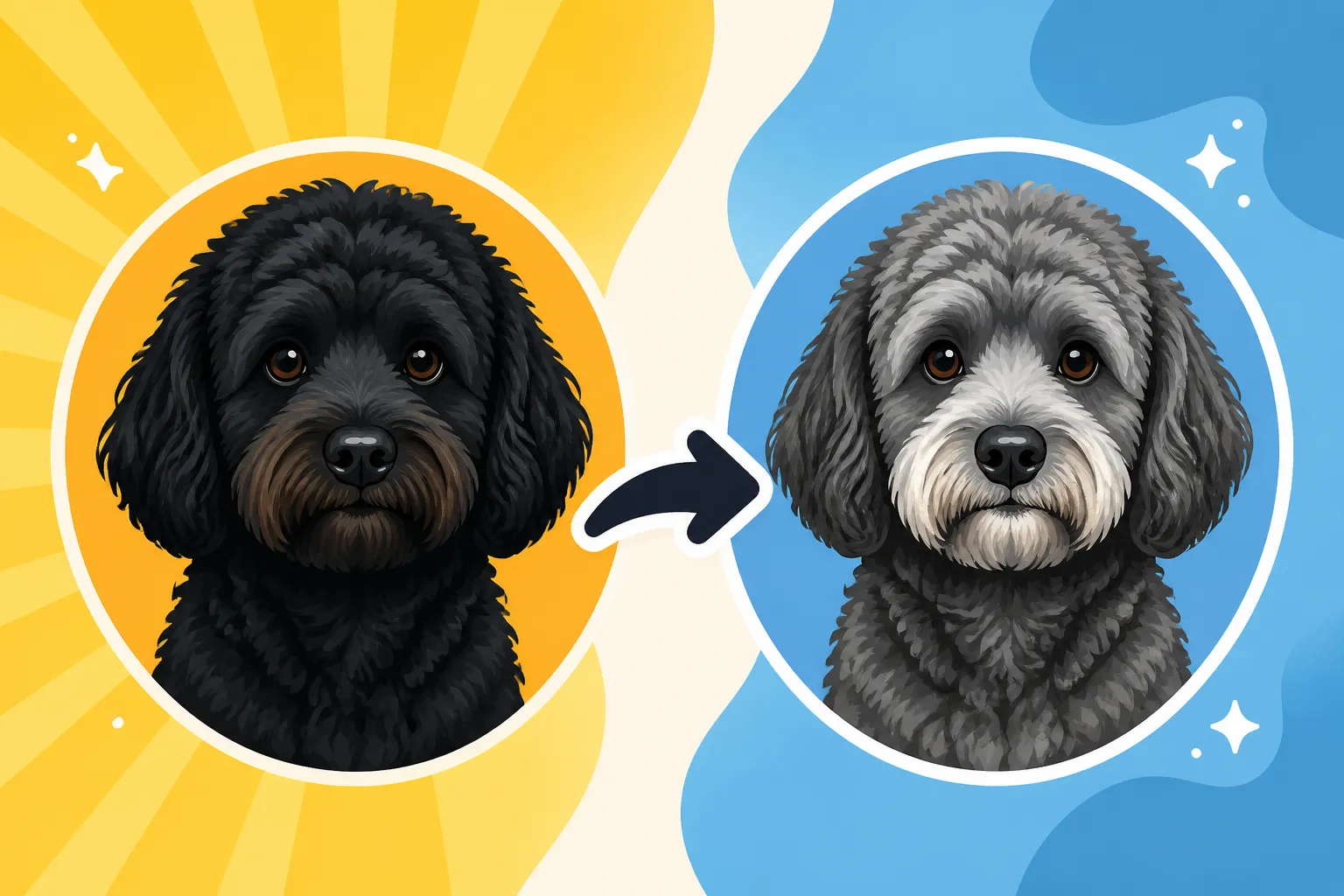
The Poodle side of your Cockapoo's family tree brings with it some truly fascinating coat genetics, especially when it comes to fading and color progression. Poodles are known for a phenomenon called "progressive greying" or "silvering," where a dark coat, often black or brown, gradually lightens to a silver, blue, or café au lait over the first few years of life. This isn't just random fading; it's a genetically controlled process. If your black Cockapoo has inherited the dominant progressive greying gene (often referred to as the G locus), they might be one of those pups destined to "silver." This means their black coat, which might have been quite dark as a puppy, will slowly transform into a beautiful silver-grey. It's not uncommon for this to start appearing subtly around 6 months to a year of age and continue to develop until they are around two or three years old.
How Cocker Spaniel Genetics Influence Black Coats
While Poodles are the primary source of the "silvering" gene, the Cocker Spaniel side also contributes to the overall black pigment and how stable it remains. Cocker Spaniels come in a glorious array of colors, including solid black. Their black coats tend to be quite stable, maintaining their deep hue throughout their lives, barring age-related greying. However, some Cocker lines might carry dilution genes or genes that can subtly affect the richness of the black over time. When you mix the Cocker's typically stable black genetics with the Poodle's potential for progressive greying, you get a beautiful uncertainty in the Cockapoo's coat. A black Cockapoo that doesn't carry the Poodle's greying gene is more likely to retain a truer black, similar to a Cocker, though subtle fading can still occur. Whether a Cockapoo's Color Fades With Age covers some of these nuances.
The Fading Gene and Its Impact
Beyond true silvering, there are other genes that can cause a black coat to lighten, often referred to as "fading." This is different from the progressive greying gene. A fading black might turn a reddish-brown, a dull charcoal, or even develop rusty highlights, especially in areas exposed to the sun or where the coat gets more wear, like around the muzzle or on the back. This kind of fading is more common and less uniform than true silvering. It's influenced by multiple genes and can sometimes be exacerbated by environmental factors. It's important to differentiate this from a genetic silvering process, as the underlying mechanisms are different, even if the end result of a lighter coat might seem similar to the untrained eye. For instance, a black Cockapoo that carries two copies of the "dilution" gene (dd) will be blue instead of black, and a "blue" often presents as a diluted black, appearing grey.
The "Silvering" Phenomenon: What it is and Why it Happens
The term "silvering" often conjures images of an older dog going grey, but in the context of Poodle breeds and their mixes like the Cockapoo, it refers to a specific genetic trait. It's a natural, predetermined lightening of what was initially a deeply pigmented coat. This isn't a flaw or a health concern; it's simply how their genetic blueprint unfolds. It's one of the captivating aspects of Cockapoo coat variations, which can range from The Furnishings Gene That Decides a Cockapoo's Face to the very curl itself, influenced by What the Curl Gene Does in a Cockapoo.
What is "Progressive Greying" or "Silvering"?
Progressive greying, or "silvering," is a genetic trait primarily associated with the Poodle breed. Dogs born black or brown, but carrying the G gene (for greying), will see their coat pigment progressively reduce over time. This isn't a sudden change but a gradual one, almost like watching a time-lapse video of a photograph slowly desaturating. The individual hairs don't lose their color; rather, new hairs that grow in are lighter, eventually replacing the darker puppy coat. For a black Cockapoo, this means starting as a rich, dark black and slowly developing into a beautiful, often sparkling, silver-grey. It’s a very distinct process from simple fading or age-related greying.
When Does Silvering Typically Appear?
The timeline for silvering can vary from one Cockapoo to another, even within the same litter. Generally, owners might start noticing subtle changes between 6 months and 2 years of age. Some puppies show hints of it earlier, while for others, it's a more gradual revelation as they mature. The process can continue until the dog is around three or four years old, at which point their adult silver coat color is typically established. It's common to first observe the lightening around the muzzle, eyes, and paws, before it spreads across the body. This gradual transition is what makes it so fascinating to watch unfold. The coat at A Cockapoo's Coat at Eight Weeks will look vastly different from the adult coat.
Identifying a True Silver Cockapoo
How do you know if your black Cockapoo is truly silvering versus just fading? A true silver Cockapoo will often have a very deep, almost startlingly dark black puppy coat. As the silvering gene expresses itself, the coat will lighten uniformly and progressively to a clear, often shimmering silver or bluish-grey. It's not usually patchy or rusty, but a consistent shift in color. If you look at the roots of the hair, especially on a freshly groomed dog, you might see lighter hairs emerging. For breeders, genetic testing can confirm the presence of the G gene, offering a clear answer. If you're observing your pup's coat change and it's moving from black to a lovely, even silver, you likely have a beautiful silvering Cockapoo on your hands!
Distinguishing True Silvering from Other Coat Changes
It's easy to get confused when a black Cockapoo's coat starts to change, especially since there are several reasons a dark coat might lighten. Is it true silvering, or is it just fading? Is it premature aging? Understanding the differences can save you unnecessary worry and help you appreciate the natural progression of your dog's unique coat.
Fading vs. Silvering
While both fading and silvering result in a lighter coat, the mechanisms and appearance are quite distinct. Fading typically causes a black coat to take on reddish, brown, or dull charcoal tones, often unevenly. It can be more pronounced in areas exposed to sunlight, like the back and sides, or where the fur is rubbed, such as under a harness or around the face. This kind of fading is often due to the weakening of pigment in the existing hair strands, or the growth of new hairs with a less intense black pigment, possibly influenced by diet or sun exposure. Silvering, on the other hand, is a genetic process that causes the black pigment to progressively disappear, leading to a clean, clear silver or blue-grey coat. It's typically much more uniform and consistent throughout the coat as it develops, without the reddish or brownish undertones of a faded black. It's a planned lightening, not a degradation of color.
Age-Related Greying in Black Cockapoos
Just like humans, dogs naturally start to grey as they age, regardless of their genetic predisposition to silvering or fading. This age-related greying usually begins around the muzzle and eyes, gradually spreading to other parts of the face and eventually scattering throughout the body. This is a sign of maturity, often seen in Cockapoos as they approach their senior years, usually starting around 7-8 years old, though some might show it earlier. It's distinct from progressive silvering because it's tied to the aging process rather than a youthful genetic color change, and it typically appears as white or grey hairs interspersed within the black, rather than a uniform transformation of the entire coat to silver. So, while your senior black Cockapoo will certainly "grey," it's a different process from a young Cockapoo genetically "silvering."
Environmental Factors Affecting Black Coat Color
Beyond genetics and aging, several environmental factors can influence the appearance of a black Cockapoo's coat, sometimes making it look lighter or duller.
- Sunlight Exposure: Just like human hair, a dog's coat can be bleached by prolonged exposure to the sun. A black coat might develop reddish or brownish highlights, especially if your Cockapoo spends a lot of time outdoors. This is purely superficial and not a genetic change to the dog's base color.
- Diet and Nutrition: A diet lacking essential nutrients, particularly certain amino acids and trace minerals, can impact coat quality and color vibrancy. For instance, deficiencies can lead to a duller black or even a reddish cast, especially if the copper levels are insufficient. High-quality dog food, like that from Chewy or specialized fresh food options like Ollie, can help support a healthy, vibrant coat, though it won't prevent genetic silvering. Whether Diet Changes a Cockapoo's Coat Condition explores this further.
- Grooming Products: Harsh shampoos, improper bathing techniques, or leaving shampoo residue in the coat can strip natural oils and affect coat health, potentially making it appear less vibrant. Using pet-specific, pH-balanced products can help maintain coat integrity.
- Medications and Health Conditions: In rare cases, certain medications or underlying health issues can affect coat pigmentation. If you notice any sudden or unusual changes in your Cockapoo's coat color or texture, especially alongside other symptoms, it's always best to consult your veterinarian.
These environmental factors can create a "faded" look, but they don't cause the genetic silvering we've been discussing.
Here's a quick comparison of these coat changes:
| Characteristic | Progressive Silvering (True Silvering) | General Fading | Age-Related Greying |
|---|---|---|---|
| Genetic Basis | Specific G gene (progressive greying) from Poodle side | Multiple genes, often polygenic; not a single "fading gene" | Natural process of aging, not a specific coat color gene |
| Appearance | Uniform lightening from black to clear silver/blue-grey, often shimmering | Dull black, reddish-brown, or charcoal tones; often uneven/patchy | White or silver hairs interspersed, primarily around muzzle/eyes, then body |
| Onset Age | Typically 6 months to 2-3 years of age | Can occur at any age, but often as coat matures or due to environmental factors | Usually begins around 7-8 years, but can be earlier in some individuals |
| Progression | Gradual, consistent lightening over months/years | Can be gradual or sudden; may worsen with sun exposure | Gradual increase of white/silver hairs over years |
| Primary Cause | Genetic expression | Pigment weakening, sun exposure, diet, other environmental factors | Natural biological aging |
Caring for a Black Cockapoo's Coat and Managing Color Changes
Whether your black Cockapoo is silvering, fading, or simply aging gracefully, proactive coat care and good nutrition are key to keeping them looking their best. A healthy coat, regardless of its evolving color, is a reflection of overall well-being. Knowing what to expect and how to properly care for their unique coat will make a big difference in their comfort and appearance.
Maintaining Coat Health for Optimal Color
Consistent and proper grooming is paramount for any Cockapoo, especially those with darker coats that might be undergoing color changes. Regular brushing, ideally several times a week, helps distribute natural oils, remove loose hair, and prevent mats. Mats can not only be uncomfortable but can also trap dirt and moisture, leading to skin issues and a dull coat. The Weekly Hours Each Cockapoo Coat Type Takes can give you an idea of the commitment. For Cockapoos with curly or wavy coats, a slicker brush followed by a metal comb is essential. You can find a vast array of suitable grooming tools on platforms like Amazon or Chewy.
Bathing frequency depends on your dog's lifestyle and coat type, but generally, every 4-6 weeks is a good baseline. Use a high-quality, moisturizing dog shampoo and conditioner. For black coats, some owners even opt for color-enhancing shampoos designed to deepen black pigments, though these won't stop genetic silvering. After bathing, thoroughly dry your Cockapoo to prevent skin irritation and matting. Professional grooming every 6-8 weeks is also highly recommended to maintain coat length, hygiene, and ensure any emerging mats are handled before they become a serious issue. Be aware that Whether Shaving Ruins a Cockapoo's Coat is a common concern, but a skilled groomer knows how to maintain coat health.
Nutrition and Coat Pigmentation
A balanced diet plays a significant role in coat health and color vibrancy. High-quality dog food, rich in proteins, essential fatty acids (like Omega-3 and Omega-6), and vitamins, can support strong, shiny hair. Look for foods that list meat as the first ingredient and avoid excessive fillers.
For dogs with black coats that seem to be fading (not silvering), some owners explore diets with specific supplements like kelp, spirulina, or certain amino acids, which are believed by some to enhance pigment. However, always consult your vet before adding any supplements to your dog's diet. If you're interested in fresh food options that prioritize high-quality ingredients, services like Ollie deliver tailored meals that can contribute to overall coat health. Remember, while diet can influence the richness and health of the existing coat, it typically won't reverse a genetically predetermined silvering process. It can, however, prevent unnecessary fading due to nutritional deficiencies.
Grooming Practices for Black Coats
When grooming a black Cockapoo, especially one that is silvering or prone to fading, a few practices can help.
- Sun Protection: If your Cockapoo spends a lot of time outdoors, consider applying a dog-specific sunscreen to their nose and any thinly haired areas, and provide plenty of shade. This can help minimize sun-induced reddish fading on their back.
- Regular Trims: Regular trims, particularly for a curly or wavy coated Cockapoo, can help manage the coat and keep it looking neat. For those with a true silvering gene, the new silver hairs will grow in, and regular clipping will keep the color consistent. You might notice differences in texture or color as Whether a Cockapoo's Coat Grows Back the Same after clipping, but this is usually temporary.
- Eye and Muzzle Care: Pay special attention to cleaning around the eyes and muzzle, as tear stains or food residue can be more noticeable on a black or silvering coat. Gentle wiping with a damp cloth daily can prevent discoloration.
- Professional Advice: Don't hesitate to talk to your groomer about your Cockapoo's specific coat type and any color changes you're observing. They can offer personalized advice on products and techniques. Whether your Cockapoo has a straight, wavy, or How Many Minutes a Curly Cockapoo Takes to groom, a professional can offer insights.
Ultimately, whether your black Cockapoo retains its midnight hue, transitions to a stunning silver, or develops a soft, age-related grey, embracing these natural changes is part of the journey. What matters most is that your furry friend is healthy, happy, and loved.
Disclaimer
This article is for general informational purposes only and does not constitute professional advice. Laws, prices and regulations vary by location and change over time. Consult a qualified professional for guidance on your specific situation.