Whether a Cockapoo’s Coat Feels Oily at the Roots
Cockapoo coat oiliness at the roots stems from Cocker Spaniel genetics and sebaceous glands producing excess sebum.
The daily stuff, done right.
Feeding amounts by life stage, coat and skin routines, dental and nail care, exercise needs, and what changes as they age.
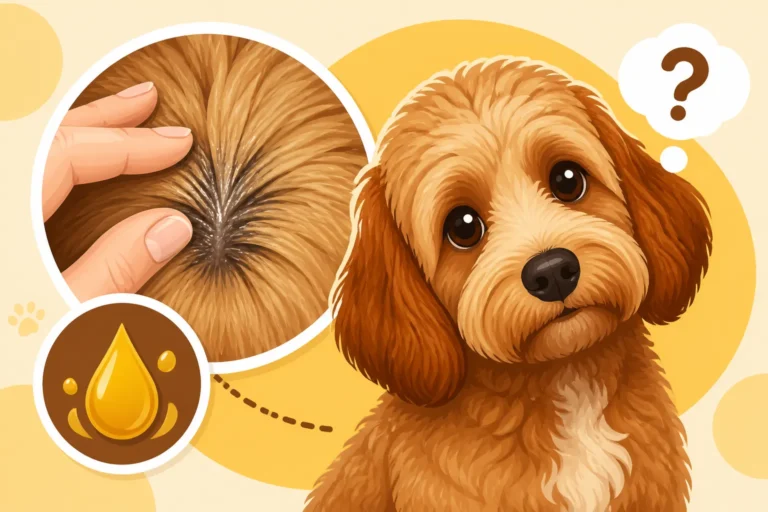
Cockapoo coat oiliness at the roots stems from Cocker Spaniel genetics and sebaceous glands producing excess sebum.
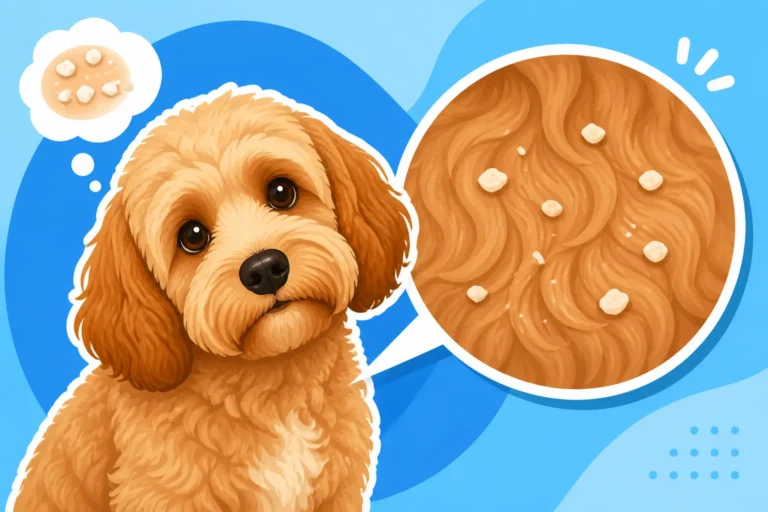
Cockapoo dandruff stems from Cocker Spaniel and Poodle genetics, dry winter weather, and improper bathing habits causing skin flakes.
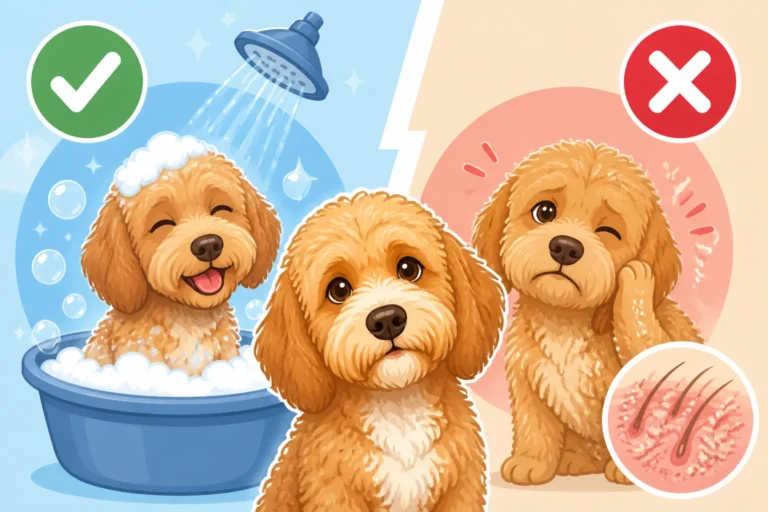
Cockapoo skin dryness after washing relates to Poodle and Cocker Spaniel ancestry and natural oil loss from bathing.
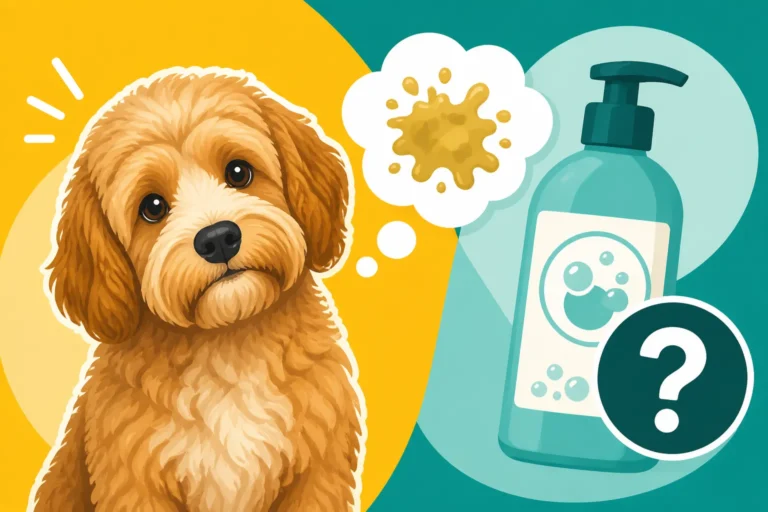
Cockapoo coat grease causes, Cocker Spaniel genetics, and diet factors explain when a degreasing shampoo is needed.
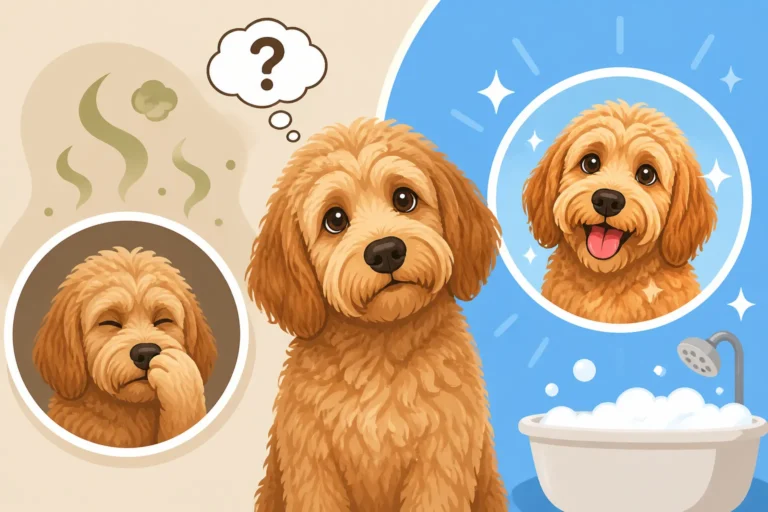
Cockapoo body odors stem from oily Cocker Spaniel skin and dense Poodle curls trapping moisture and bacteria between baths.
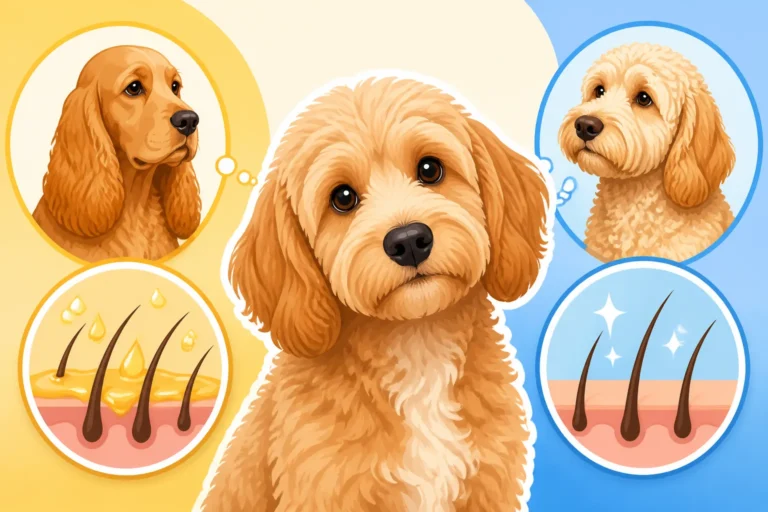
Cockapoo oily skin and doggy smells stem from inherited Cocker Spaniel sebaceous glands producing excess sebum.
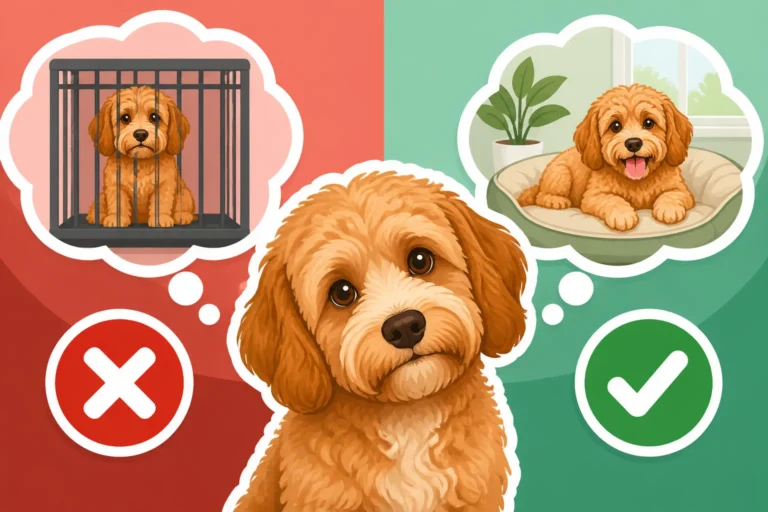
Cockapoo coat types, including straight, wavy, and curly, determine grooming needs and whether a short clip helps manage mats.
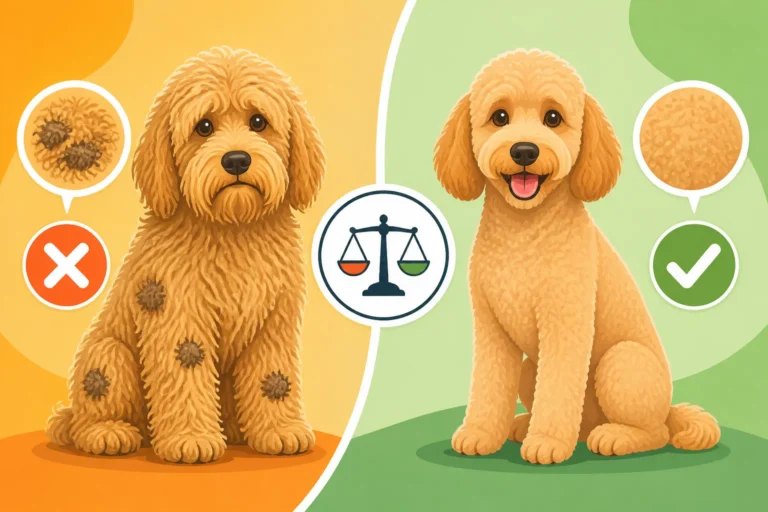
Clipping a Cockapoo coat reduces tangles and prevents painful mats caused by trapped dead hair during the puppy coat change.
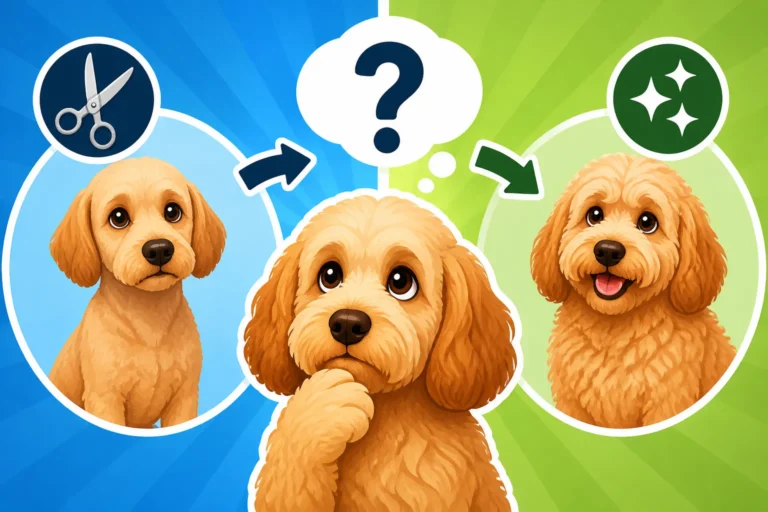
Cockapoo coat regrowth after clipping depends on genetics like furnishings and curl genes, determining adult texture.
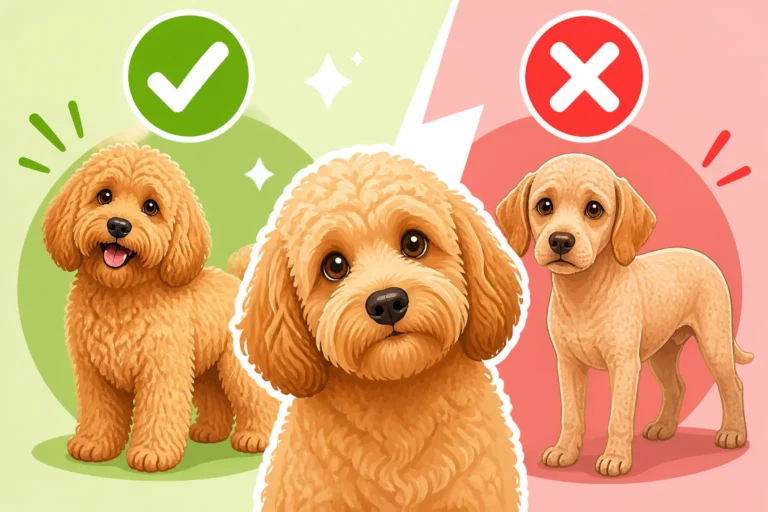
Shaving a Cockapoo does not cause permanent coat damage, but the fur may grow back looking and feeling different after a close clip.