Whether a Toddler and a Cockapoo Can Be Left Together
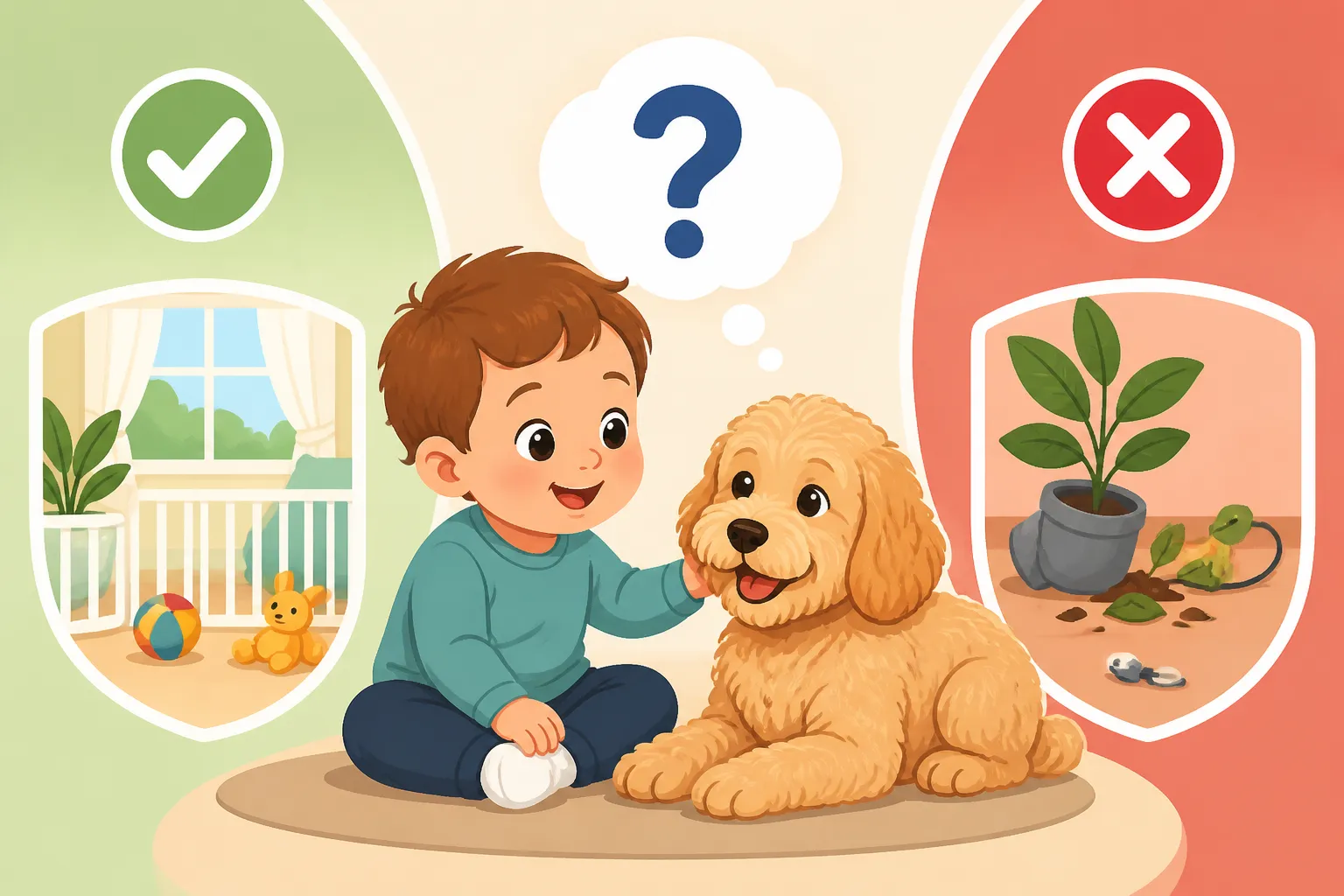
It's a dream for many families to have their beloved Cockapoo and their little ones grow up together, becoming the best of friends. We all picture those heartwarming moments of gentle cuddles and shared laughter. However, the reality is that leaving a curious, unpredictable toddler unsupervised with any dog, no matter how sweet-natured, carries inherent risks. This guide is here to walk you through why constant, active supervision is non-negotiable and how to foster a safe, respectful relationship between your Cockapoo and your toddler.
Why Unsupervised Interaction is Never a Good Idea
The idea that a dog and a child can just "figure it out" or that "my dog would never bite" is a dangerous misconception. While Cockapoos are generally known for their friendly and affectionate nature, they are still animals with instincts. When you combine those instincts with the unpredictable actions of a toddler, you create a recipe for potential problems that can have lasting, heartbreaking consequences.
The Unpredictability of Toddlers
Toddlers are adorable bundles of energy, but they also have very little understanding of boundaries, personal space, or a dog's sensitive spots. Their actions, though not malicious, can be incredibly startling or even painful for a dog. Imagine a tiny human suddenly grabbing an ear, pulling a tail, poking an eye, or falling on top of them. A toddler's squeals and quick movements can also be perceived as threatening or overstimulating.
For a Cockapoo, who might usually tolerate a lot from their adult family members, these sudden, clumsy, and often forceful interactions can cross a line quickly. They don't understand that a toddler doesn't mean harm; they only feel the discomfort or fear. This lack of understanding from both sides makes any unsupervised interaction a gamble you simply shouldn't take. Even the most tolerant dog can reach a breaking point, especially if they are startled or hurt repeatedly.
The Dog's Instinctive Reactions
Even the most well-behaved and loving Cockapoo has a threshold, and when that threshold is breached, they will resort to instinct. Dogs communicate their discomfort long before they resort to a bite, but these signals are often too subtle for a toddler (and sometimes even adults) to recognize. A dog might lick its lips, yawn, turn its head away, stiffen its body, or even try to walk away. If these signals are ignored, or if they can't escape the situation, a growl or a snap might be their next, more obvious attempt to communicate distress.
It's important to understand that a dog's bite, especially a defensive one, isn't always about aggression in the human sense. It's often a desperate attempt to create space, stop a painful interaction, or protect themselves when they feel trapped. A Cockapoo, with its sensitive nature, might be more prone to feeling overwhelmed than a larger, more stoic breed. Understanding Whether a Cockapoo Is Too Soft for Correction can help you appreciate their delicate emotional balance, which needs to be respected around little ones.
The Cockapoo's Unique Traits and Sensitivities
Cockapoos inherit traits from both the Cocker Spaniel and the Poodle, which contributes to their wonderful personalities but also means they have specific sensitivities. From the Cocker side, some lines can be more prone to resource guarding or may react defensively if startled or feeling cornered, though this is rare in well-bred Cockapoos. The Poodle side brings intelligence and a need for mental stimulation, but also a potential for anxiety or overstimulation in chaotic environments. What the Cocker Puts Into a Cockapoo and Which Cockapoo Traits Come From the Poodle delves deeper into these inherited characteristics.
They are often highly attached to their families and thrive on attention. This can sometimes lead to jealousy if a new baby or toddler suddenly demands a large share of that attention. A Cockapoo might try to insert themselves into interactions, or conversely, become stressed by the noise and unpredictability. It's crucial to acknowledge these possibilities and manage the environment to prevent any negative associations or stress for your dog. For instance, sometimes behaviors that seem like misbehavior are actually Signs a Cockapoo Is Anxious Rather Than Bored.
Setting Up a Safe Environment and Proactive Management
Since leaving a toddler and a Cockapoo alone together is never advisable, the key to a harmonious household is proactive management and setting up a safe, predictable environment. This isn't about blaming the dog or the child, but about creating a structure that ensures everyone's safety and peace of mind.
Constant, Active Supervision is Paramount
When we say "supervision," we don't mean glancing up from your phone occasionally or being in the same room while focused on something else. Active supervision means being fully engaged, within arm's reach, and ready to intervene at any moment. You need to be able to anticipate potential issues from both your toddler and your Cockapoo before they escalate. Think of yourself as a referee, constantly managing the game.
One effective strategy for managing close proximity is the "umbilical cord" method, where you literally tether your dog to yourself (or keep them on a short leash with you) when the toddler is around. This ensures that the dog cannot approach the child without your direct control and prevents the child from cornering the dog. This is especially helpful during periods when your toddler is most active or unpredictable.
Creating Safe Spaces for Both Toddler and Dog
Establishing designated "safe zones" is perhaps one of the most critical steps in managing a household with both toddlers and Cockapoos. Your dog needs a place where they can retreat and feel completely undisturbed, away from little hands and curious gazes. This might be a crate, a dog bed in a separate room, or a designated "dog-only" area blocked off by a baby gate. It's their sanctuary, and everyone in the family, especially older children, must understand that when the dog is in their safe space, they are to be left alone.
Similarly, consider creating safe zones for your toddler. A playpen or a gated-off room can provide a secure area for your child to play without inadvertently bothering the dog. This allows both your Cockapoo and your toddler to exist in the same home comfortably, but with clear physical boundaries that prevent accidental negative interactions. You might consider placing your Cockapoo's crate or bed on an elevated surface like a sturdy table (if they are comfortable jumping up) or a dog-friendly couch, so they have an even clearer visual and physical boundary from a crawling or walking toddler.
Teaching Boundaries to Both Children and Cockapoos
Effective training involves teaching both parties appropriate behavior. For your toddler, this means teaching gentle hands, quiet voices, and respecting the dog's personal space. Phrases like "gentle hands" or "pat, pat, no grab" can be used consistently. Always model the desired behavior yourself. Show your child how to offer a treat gently, how to pet softly on the back (never the head), and when to leave the dog alone. Resources for teaching children to interact respectfully with dogs are plentiful online and through local trainers. Teaching Children to Handle a Cockapoo is an essential read.
For your Cockapoo, reinforce calm behavior around the toddler. If your Cockapoo is overly excitable, work on commands like "sit," "stay," and "go to your place." Reward them heavily with treats and praise for remaining calm when the toddler is nearby. You can use positive reinforcement techniques to make the toddler's presence a positive experience for your dog. Tools like those found on Amazon, such as treat pouches or clickers, can be incredibly helpful here. A program like BAXTER & Bella offers online training that can guide you through these steps, focusing on obedience and manners in a family setting, which can be invaluable when managing interactions with children. Also, addressing issues like Whether a Cockapoo Mouths Children's Hands early on is crucial for safety.
| Dog Body Language (Stress Signals) | What it Might Mean to Your Cockapoo | Action to Take |
|---|---|---|
| Lip Licking / Yawning | Feeling stressed, unsure, uncomfortable | Increase distance, redirect attention, separate |
| Turning Head / Body Away | Trying to avoid interaction, wanting space | Increase distance, redirect attention, separate |
| "Whale Eye" (whites of eyes show) | Feeling anxious, worried, threatened | Immediate separation, create distance |
| Stiff Body / Tail Low or Tucked | Feeling tense, uncertain, potentially fearful | Increase distance, redirect attention, separate |
| Low Growl / Snapping Air | Warning! Very uncomfortable, don't come closer | Immediate separation, assess situation |
| Trembling / Cowering | Frightened, overwhelmed, seeking escape | Separate and provide a safe, quiet space |
| Freezing in Place | Overwhelmed, unsure how to react, may lash out | Immediate separation, do not force interaction |
Understanding Cockapoo Communication and Warning Signs
Your Cockapoo is constantly communicating, even if it's not with barks or obvious growls. Learning to "speak dog" is one of the most important skills you can develop as a pet owner, especially when there are small children in the home.
Recognizing Stress Signals in Your Cockapoo
Dogs use a complex array of body language signals to express their emotions. Being able to spot these subtle cues can help you intervene before a situation escalates.
- Lip Licking and Yawning: Often mistaken for just being hungry or tired, these can be stress signals, especially if there's no food or tiredness involved. If your Cockapoo licks their lips or yawns repeatedly when your toddler is approaching, they're likely feeling uneasy.
- Turning Head or Body Away: This is your dog's polite way of saying, "Please give me space." If they actively try to avoid eye contact or present their side or back to the child, they're uncomfortable.
- "Whale Eye": When your dog turns their head away but their eyes remain fixed on the threat, exposing the whites of their eyes, it's a clear sign of anxiety or fear.
- Stiff Body Language: A relaxed dog has a fluid, soft body. If your Cockapoo becomes stiff, freezes, or holds its breath, it's a huge red flag.
- Low or Tucked Tail: While a wagging tail usually means happiness, a low, stiff wag or a tail tucked between the legs signals fear or anxiety.
- Pinned Ears: Ears flattened against the head can indicate fear or submission.
- Growling: This is the loudest, clearest warning your dog can give. A growl is a gift. It means "I'm very uncomfortable, and if you don't stop, I might bite." Never punish a growl, as this teaches the dog to skip the warning and go straight to biting. Instead, remove the child (or dog) from the situation immediately and calmly. Understanding Whether a Cockapoo Needs a GPS Collar or other management tools can even extend to thinking about their safety if they bolt from stress.
When to Separate Immediately
You should always be ready to separate your Cockapoo and toddler at a moment's notice. Trust your gut. If something feels off, it probably is.
- Any Signs of Discomfort from the Dog: As detailed above, if you see any of those subtle (or not-so-subtle) stress signals, it's time to create space.
- Toddler Being Too Rough: If your toddler is grabbing, pulling, hitting, or otherwise being too physical, and doesn't respond to your redirection, remove them from the dog's vicinity immediately.
- Over-Excitement: Sometimes, both dog and child can get overly excited, leading to uncontrolled play that can quickly turn into an accident. High-pitched squeals and frantic movements from either can escalate tension. It's better to end the interaction on a calm note than let it spiral.
- Meal Times or High-Value Items: Never allow a toddler near a dog that is eating, or near their toys, bones, or other high-value items. This is a common trigger for resource guarding, which can be dangerous. Your Cockapoo should be given quiet space to eat undisturbed.
Building a Harmonious Relationship Over Time
The goal isn't to keep your dog and toddler completely separate forever, but to build a foundation of respect and understanding through careful management and positive experiences. It's a marathon, not a sprint, and requires consistent effort from all adults in the household.
Structured, Positive Interactions
When your Cockapoo and toddler do interact, make sure these moments are structured, short, and positive. Always have a trusted adult present, actively supervising every second. Encourage gentle activities like:
- Supervised Fetch: Have your toddler throw a soft toy for your Cockapoo from a safe distance, rewarding the dog for retrieving and bringing it back to you, not the child.
- Gentle Petting: Under close supervision, teach your toddler to pet the dog gently on the shoulder or back for a few seconds, then praise both the child and the dog.
- Treat Dispensing: Let your toddler drop treats into a bowl for your Cockapoo, or gently place them on the floor away from the dog's face. This creates a positive association with the child's presence.
This kind of interaction helps both parties learn what is expected and associate positive feelings with each other. Remember, A Cockapoo With Children can be a joyful experience when managed correctly.
Gradual Exposure and Desensitization
Introduce your Cockapoo to the sights, sounds, and smells of your toddler gradually and positively. If you're expecting a baby, start introducing new baby smells (lotions, powders) before the baby arrives. Play recordings of baby cries softly, gradually increasing the volume, while giving your Cockapoo treats or playing their favorite game. The goal is to create positive associations with everything related to the toddler.
Once the toddler is mobile, continue with short, supervised exposures. Allow your Cockapoo to observe the toddler from a distance, rewarding calm behavior. Slowly decrease the distance as both become more comfortable, always prioritizing the dog's comfort and the child's safety. For instance, you could be reading a book from Amazon about dog training while your Cockapoo is relaxing near your toddler, with a baby gate providing separation. Training platforms like BAXTER & Bella can offer tailored advice for integrating a new baby or child into a household with a dog, focusing on desensitization and positive reinforcement. Early training is key, so consider Raising a Cockapoo Puppy with these future interactions in mind.
Resources for Further Guidance
Don't hesitate to seek professional help if you're feeling overwhelmed or notice any concerning behaviors.
- Certified Professional Dog Trainers (CPDT-KA): Look for trainers who specialize in family integration or have experience with dogs and children. They can offer invaluable personalized advice and hands-on guidance.
- Veterinary Behaviorists (DACVB): For more complex behavioral issues, a veterinary behaviorist has a medical degree and can diagnose and treat behavioral problems, sometimes with medication in conjunction with training.
- Online Resources and Books: Many reputable organizations and authors offer excellent guides on living safely with dogs and children. Look for materials by certified professionals that emphasize positive reinforcement and safe management strategies.
Remember, safety is always the priority. While your Cockapoo can absolutely be a wonderful family companion, it's up to the adults to ensure that the relationship with a toddler is built on respect, understanding, and constant vigilance.
Disclaimer
This article is for general informational purposes only and does not constitute professional advice. Laws, prices and regulations vary by location and change over time. Consult a qualified professional for guidance on your specific situation.