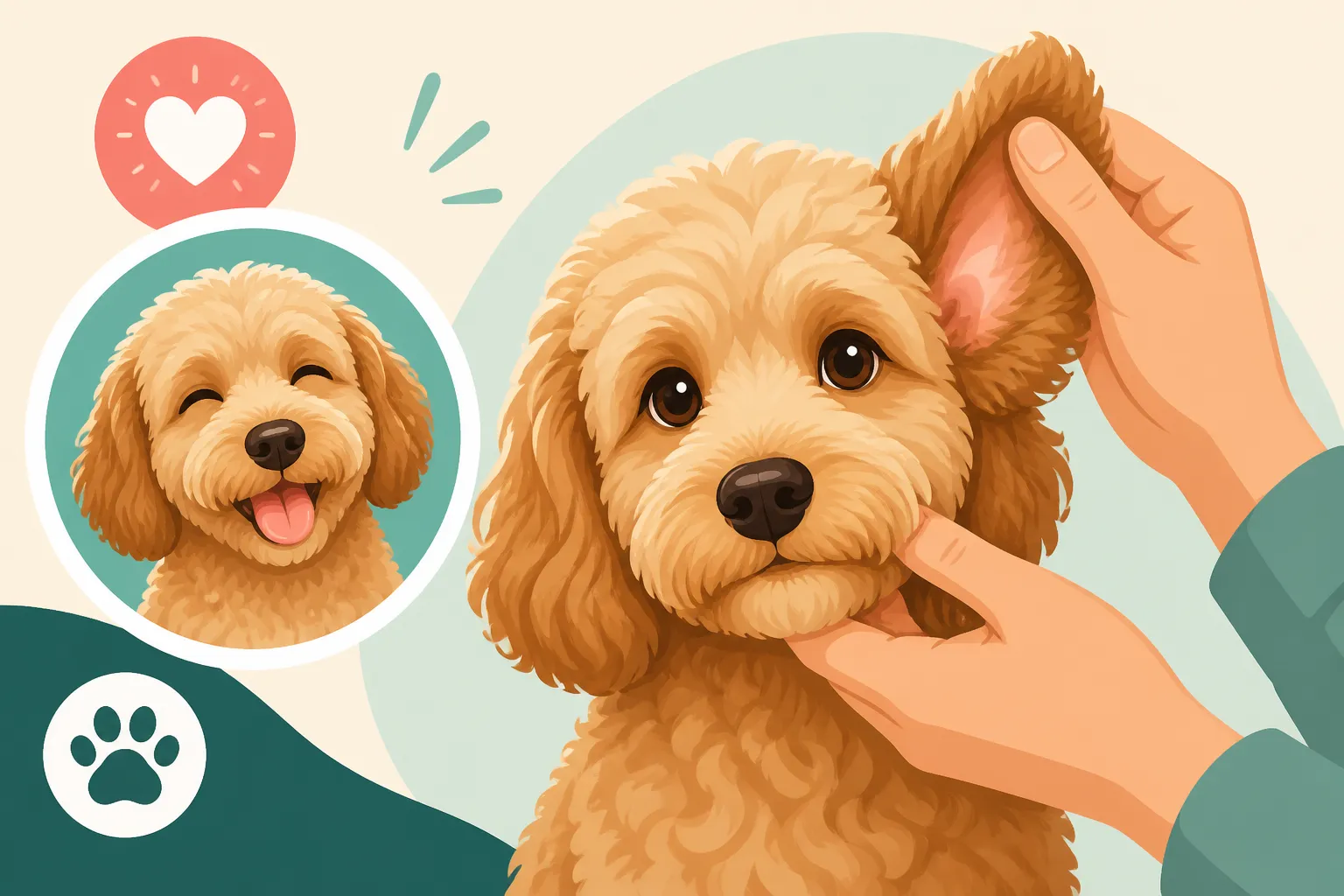
Getting a Cockapoo Used to Ear Handling
Many Cockapoo owners find themselves dreading ear cleaning and vet visits because their beloved pup becomes a wriggling, resistant mess. Those adorable floppy ears, while charming, can be prone to issues, and getting your Cockapoo to cooperate with inspection and cleaning often feels like an impossible battle. This guide will help you transform ear handling from a stressful chore into a positive, even enjoyable, routine for both you and your furry friend.
Why Ear Handling is Such a Big Deal for Cockapoos
It's easy to look at those fluffy, expressive ears and think they're just another cute Cockapoo feature. But for many owners, they represent a recurring challenge, both in terms of health and daily care. Understanding why ear handling can be such a struggle is the first step toward making it easier for your pup.
The Anatomy of a Cockapoo's Ear and Why It's Prone to Issues
Cockapoos inherit their signature floppy ears from both the Cocker Spaniel and the Poodle side of their lineage. Unlike breeds with upright ears, these floppy ears hang down, effectively sealing off the ear canal from much-needed airflow. This creates a warm, dark, and often moist environment that is, unfortunately, the perfect breeding ground for all sorts of unwelcome guests – think yeast infections, bacterial overgrowths, and even ear mites. It's a common complaint amongst Cockapoo owners, and if you've ever dealt with a painful ear infection, you know the struggle is real.
To make matters more complex, many Cockapoos also inherit significant hair growth inside their ear canals, particularly from their Poodle ancestors. This extra hair acts like a tiny net, trapping wax, debris, and moisture, further exacerbating the warm, moist conditions. Imagine trying to keep a jungle path clear when it’s constantly growing new vines and it’s always raining; that’s what your Cockapoo’s ear canal can be like. Regular cleaning and inspection become absolutely critical to prevent these issues, meaning ear handling isn't just a nicety – it's a necessity for your dog's comfort and well-being. Without good handling manners, even a simple vet check-up for a suspected infection can become a dramatic ordeal.
Early Experiences and How They Shape Your Cockapoo's Perception
Just like us, a Cockapoo's early experiences profoundly shape their perception of the world. When it comes to ear handling, the first few times their ears are touched, inspected, or cleaned can either build a foundation of trust and tolerance or create a lasting aversion. If a puppy’s first experience with ear handling is rough, scary, or, worse, associated with pain – perhaps from a breeder performing a quick, uncomfortable ear plucking, or a hurried first vet check – it can instill a deep-seated fear. They learn to associate that touch with discomfort, and that memory is incredibly hard to erase.
Many new Cockapoo owners, myself included once upon a time, get a puppy and aren't fully informed about just how vital early, positive handling is for all parts of their body, especially the ears. We often only realize the problem when our pup develops their first ear infection, and then trying to medicate an already sore, fearful ear becomes a Herculean task. If your Cockapoo has had little to no positive ear handling during its critical socialization period (roughly 3-16 weeks), the sensation of someone touching their ears can feel strange, vulnerable, and even threatening. It’s not necessarily that they’re being "bad," but rather that they haven't learned to trust or feel safe during this type of interaction. This is why a proactive approach, starting young and keeping it positive, is the very best strategy. For more on early training, check out What a Cockapoo Puppy Should Learn First.
Starting Early: Puppyhood and Positive Associations
The earlier you begin, the better your chances of instilling a positive association with ear handling. Puppyhood is a golden window of opportunity for shaping your Cockapoo's world, and that includes their comfort with grooming and veterinary procedures.
Making Ear Handling a Game, Not a Chore
When your Cockapoo is a puppy, every interaction is a learning opportunity. Instead of approaching ear cleaning as a stern, necessary chore, try to weave it into playtime. Start incredibly gently, not even directly with the ears at first. Begin by stroking their head, their back, their chest – places they already enjoy being touched. As they relax, gradually move your hands closer to their ears. A light touch to the outside of the ear flap, followed immediately by a high-value treat (think tiny pieces of cheese, cooked chicken, or a dollop of peanut butter on a spoon), and enthusiastic praise, is the name of the game. The goal is to create a clear mental link: "Ears touched = delicious reward!"
Keep these sessions short – literally 5-10 seconds at first – but frequent. Do them several times a day if you can, always ending on a positive note. If your puppy starts to get squirmy or pulls away, stop immediately. Never force it, as that will undo all your positive work. Just reset, perhaps go back to a body rub they enjoy, and try again later. Consistency is far more important than intensity. Over time, as your pup learns to anticipate the good stuff that comes with ear touches, you’ll find them much more willing participants. This approach is much like teaching them other fundamental skills, as discussed in Handling a Cockapoo Puppy Before Its First Groom.
Tools of the Trade: Introducing Brushes and Wipes
Part of the battle with ear handling isn't just the touch, but also the strange objects that might come near their ears. Before you ever try to clean or medicate, introduce your Cockapoo to the tools you'll be using. Let them sniff the ear wipes, the cotton balls, even the ear cleaner bottle (unopened, of course). Place these items on the floor, allowing your puppy to investigate at their own pace. When they show curiosity, reward them. The idea is that these items become mundane, rather than mysterious and potentially scary.
Once they're comfortable with the presence of the tools, start to gently introduce the touch of them. For instance, briefly touch a clean cotton ball to the outside of their ear flap, immediately followed by a treat. Repeat this with an ear wipe. Gradually, you can move to gently wiping the visible part of the ear. This gradual exposure helps to desensitize them to the sensation of the tools. Remember, you're not actually cleaning the ear deeply at this stage; you're just building positive associations with the idea of cleaning. This gentle introduction is particularly important because Whether Ear Hair Should Come Out of a Cockapoo can be a contentious topic, and the more comfortable your dog is with you near their ears, the easier any necessary intervention will be. Many of these supplies, like gentle ear wipes and cleaners, can be found readily on Amazon, making it easy to stock up on the right tools for positive reinforcement.
Step-by-Step Desensitization and Counter-Conditioning
Once your Cockapoo is comfortable with basic ear touches and the presence of tools, it’s time to slowly increase the intensity and duration of the handling. This process, called desensitization and counter-conditioning, gradually makes your dog less reactive to a stimulus (ear handling) by pairing it with something positive (treats) while slowly increasing exposure.
Gentle Touch and Gradual Progression
The key here is small, manageable steps. Start by gently touching the outside of the ear flap, just as before, rewarding any calm behavior. Hold for a second, treat. Hold for two seconds, treat. Gradually, you’ll extend the duration. Once they're okay with sustained touching, move to gently lifting the ear flap, exposing the opening of the ear canal. This might be a new sensation for them, so keep it brief initially and reward heavily. After lifting, peek inside, even if it's just a quick glance, and then reward. The progression looks something like this:
| Step | Action | Reward |
|---|---|---|
| 1. Initial Touch | Light touch on outside of ear flap | Immediate high-value treat and praise |
| 2. Increased Duration | Hold touch for a few seconds | Treat and praise |
| 3. Lifting Ear Flap | Gently lift ear to expose canal | Treat and praise |
| 4. Brief Inspection | Quick peek into ear canal | Treat and praise |
| 5. Gentle Wiping | Wipe visible part of ear with damp cloth/wipe | Treat and praise |
| 6. Mimic Ear Cleaning (no liquid) | Gently insert cotton ball just into opening | Treat and praise |
| 7. Introducing Liquid (tiny drop) | Small drop of ear cleaner on cotton ball, wipe | Treat and praise |
If at any point your Cockapoo pulls away, shakes their head, or shows signs of stress, you've gone too fast. Simply stop, don't scold them, and revert to an easier step where they were comfortable. This isn't a race; it's about building lasting trust and comfort. The more patient you are, the more willing your Cockapoo will become. This systematic approach applies to all forms of handling, even for something like Teaching a Cockapoo to Give a Foot for Nails.
Simulating Grooming and Vet Experiences
As your Cockapoo becomes more accepting of you handling their ears, you can start to mimic the sensations they might encounter at the groomer or vet. This means introducing the actual ear cleaner (always vet-approved, of course) into the routine, starting with just a tiny drop on a cotton ball to wipe the outer ear, then gradually progressing to applying a small amount directly into the ear if needed, followed by massaging the base of the ear. The important thing is to create a positive association with the actual sensation of cleaning.
If your Cockapoo has a coat type that requires ear plucking or trimming around the ears, it’s beneficial to introduce the sounds and sensations of these tools. Start with clippers (unturned on) near their ears, then turned on but far away, slowly bringing them closer, always pairing with treats. For ear plucking, you can gently pull a tiny, loose hair (if present) from their outer ear, immediately followed by a big reward. Online training platforms, such as those offered by BAXTER & Bella, can provide excellent step-by-step guidance on how to introduce these more specific grooming sensations in a positive way, making the process less daunting for both you and your dog. Remember, the goal is to prevent fear before it starts, especially considering Whether a Cockapoo's Ears Are Better Than a Cocker's can still involve regular maintenance.
Dealing with Resistance and Setbacks
Let's be real: no training journey is perfectly linear. There will be days when your Cockapoo simply isn't in the mood, or perhaps they've had a bad experience elsewhere that sets them back. It's crucial to recognize resistance for what it is – often fear or discomfort, not defiance. If your Cockapoo pulls away, whimpers, or tries to bite, stop immediately. Pushing through will only worsen the problem and erode the trust you're trying to build. End the session calmly and try again later, or even the next day, by going back to an easier step where they were comfortable.
Consistency remains your best friend. Even short, five-minute sessions daily that are entirely positive are far more effective than infrequent, stressful struggles. If you find your Cockapoo is consistently highly reactive or fearful, despite your best efforts, don't hesitate to seek professional help. A certified positive reinforcement trainer or a veterinary behaviorist can provide tailored strategies and guidance. They can help identify underlying issues, teach you advanced techniques, and ensure you're both safe during the process. Sometimes, an underlying health issue could be making their ears sensitive, so a vet check is always a good first step if resistance is strong and persistent, to rule out pain. Failing to address ear issues can result in significant vet bills.
Maintaining Ear Health and Positive Reinforcement Long-Term
Getting your Cockapoo used to ear handling isn't a one-and-done task. It's an ongoing commitment to their health and comfort. Building a routine and knowing when to call in the professionals are vital parts of keeping those adorable ears happy and healthy throughout your dog’s life.
Regular Cleaning and Inspection Routine
Once your Cockapoo is a pro at ear handling, establish a consistent routine for cleaning and inspection. For many Cockapoos, a weekly or bi-weekly check and gentle wipe-down is sufficient to prevent problems. This doesn't need to be a full-blown deep clean every time, but rather a quick lift of the ear, a sniff, and a peek. Make it a normal part of your grooming schedule, perhaps alongside brushing their coat. The less "special" or infrequent it feels, the less likely they are to become apprehensive.
Always use appropriate ear cleaning solutions recommended by your veterinarian. These are formulated to be gentle and effective for dogs. Avoid using harsh chemicals or cotton swabs that can push debris further into the ear canal or irritate sensitive skin. When you do clean, gently wipe the visible folds and surfaces of the ear flap. While inspecting, look for any signs of trouble: redness, swelling, unusual discharge (yellow, brown, black), a foul odor, or excessive scratching. Early detection is key to preventing minor irritations from escalating into painful, costly infections. Sometimes, if there's a persistent problem, your vet might recommend Whether a Cockapoo Needs Its Ears Cultured to pinpoint the exact culprit.
When to Seek Professional Help
No matter how diligent you are with home care and desensitization, some ear issues require veterinary intervention. If you notice any of the warning signs – persistent head shaking, pawing at the ears, excessive redness, a strong odor, or any discharge – don't delay in scheduling an appointment with your vet. Trying to treat an active, painful infection at home can make your Cockapoo even more resistant to future handling, as they'll associate the touch with pain. The vet can properly diagnose the issue and prescribe the correct medication.
Professional groomers can also be fantastic partners in maintaining ear health and continuing positive handling, especially for tasks like ear plucking or trimming that you might not feel comfortable doing yourself. Many groomers are skilled at working with anxious dogs and can reinforce the positive associations you've built at home. If your Cockapoo requires a procedure that might be uncomfortable or painful, your vet might discuss options like mild sedation to ensure they remain calm and don't develop further negative associations. The long-term costs of neglecting a Cockapoo's health, including ear care, can be substantial, so it's always best to be proactive, as part of The Full Cost of Sixteen Years With a Cockapoo. Prioritizing regular vet visits, including checks on those crucial ears, is just as important as regular eye exams, like Whether a Cockapoo Needs a Yearly CAER Exam.
Disclaimer
This article is for general informational purposes only and does not constitute professional advice. Laws, prices and regulations vary by location and change over time. Consult a qualified professional for guidance on your specific situation.