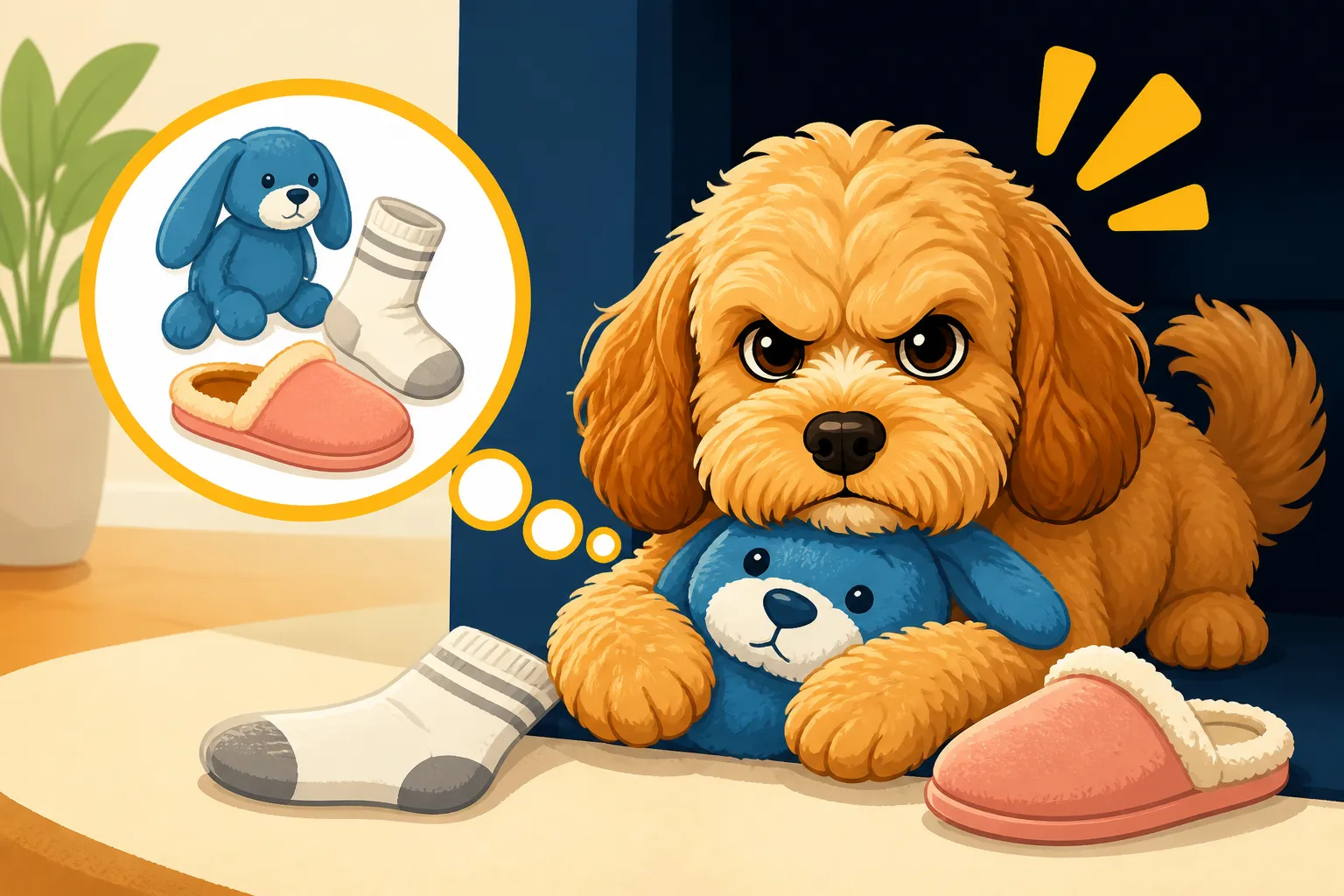
Whether a Cockapoo Guards What It Has Stolen
It can be incredibly upsetting and even frightening when your sweet, goofy Cockapoo suddenly turns possessive, growling or snapping over something they've snatched. You might think, "Why on earth is my dog guarding a dirty sock?" or "This isn't the cuddly companion I brought home!" This guide is here to walk you through understanding why your Cockapoo might guard "stolen" items, how to prevent this behavior from taking root, and what steps you can take if it's already happening, helping you restore peace and safety in your home.
Understanding Resource Guarding: Why Your Cockapoo Does It
Resource guarding, at its heart, is a dog's natural instinct to protect valuable items from perceived threats. It’s not about being malicious or trying to assert dominance over you; it's often rooted in fear, insecurity, or a deeply ingrained drive to keep what they deem essential for survival. When your Cockapoo guards something they’ve "stolen," it’s typically because they perceive that item, however mundane it seems to us, as highly valuable, and they feel a need to defend it.
What is Resource Guarding, Really?
Imagine your Cockapoo snatches your TV remote off the coffee table. To you, it's an annoying inconvenience. To your dog, it might be a novel, interesting chew toy. If you then rush over, yell, and try to snatch it back, your dog might interpret this as you trying to steal their valuable new possession. This can trigger a defensive response. Resource guarding isn't just about food; it can extend to toys, beds, preferred resting spots, specific people, or, as we're discussing, items they've pilfered from around the house. The intensity can range from subtle body language – a stiffening, a quick glance – to overt aggression like growling, snarling, or even biting. It's a spectrum, and understanding where your dog falls on it is key. It's their way of saying, "This is mine, and I don't want you to take it."
The Roots of Guarding in Cockapoos
While any dog can develop resource guarding, certain breeds might have inherent predispositions, and the Cockapoo, being a cross of the Cocker Spaniel and Poodle, carries traits from both. Cocker Spaniels, especially some lines, can be prone to guarding food or other items, sometimes described as "Cocker Rage" (though this is a specific, rare neurological condition, not typical guarding). More broadly, many working and sporting breeds have an innate drive to secure resources. Poodles, with their intelligence and sometimes sensitive nature, can also be quite opinionated about their possessions.
For a Cockapoo, this means they might inherit a strong "possession drive" from their Spaniel side, combined with the Poodle's smarts, which means they learn quickly what items are "high value" and how to keep them. If a puppy experiences scarcity or competition for resources, even in subtle ways, they can develop guarding behaviors. Being disciplined harshly for stealing an item can also inadvertently strengthen the guarding behavior, as the dog associates your approach with the loss of their prized possession and a negative interaction. This is why understanding their motivation, rather than just reacting, is crucial. You might find that Whether Resource Guarding Runs in Cockapoo Lines could shed more light on this.
Reading the Warning Signs
One of the most important things you can do as a Cockapoo owner is learn to recognize the early, subtle signs of resource guarding. Dogs communicate clearly, but often in ways we miss. Before a growl or snap, there are usually quieter signals:
- Freezing or Stiffening: Your dog might suddenly become very still, their body tense, as you approach the "stolen" item.
- Hard Stare: They might give you a direct, unblinking stare, sometimes coupled with narrowed eyes.
- Ears Back/Low Tail: While not always guarding specific, these can be signs of anxiety or fear preceding a defensive posture.
- Darting Away: If you approach, they might quickly grab the item and run to a secluded spot.
- Body Blocking: They'll position their body over or around the item, trying to hide it or physically prevent you from reaching it.
- Low Growl or Snarl: This is a clear warning. It's their way of saying, "Back off."
- Lip Lick or Yawn: These can be appeasement signals indicating stress or discomfort.
- Raised Hackles: The hair on their back might stand up, particularly over their shoulders and down their spine.
It's vital not to punish these early warning signs. A growl is a dog's way of telling you they're uncomfortable before they resort to biting. If you punish the growl, you might teach them to suppress that warning, leading to a dog that bites "without warning" in the future. Instead, acknowledge the warning and adjust your approach.
Proactive Steps: Preventing Guarding Before It Starts
Prevention is always easier than cure, especially when it comes to behaviors like resource guarding. Building a foundation of trust and positive association around possessions can go a long way in preventing your Cockapoo from feeling the need to guard.
Building an Environment of Trust and Abundance
One of the best ways to prevent resource guarding is to ensure your Cockapoo never feels like they need to fight for resources. This means creating an environment where high-value items are always plentiful and readily available.
- Food: Always provide meals in a calm, consistent manner. If you have multiple pets, feed them separately to avoid any competition. Avoid hovering over your Cockapoo while they eat, as this can make them feel pressured. If your Cockapoo tends to bolt their dinner, a slow feeder bowl can help, making mealtime last longer and feel more satisfying.
- Toys: Provide a good variety of toys, rotating them regularly so that they feel new and exciting. Make sure there are always plenty available, rather than just one "special" toy. When you introduce a new toy, do so calmly and positively. You might find some great enrichment toys on Amazon to help with this. For a young dog, this abundance helps with What a Cockapoo Puppy Chews Through in Six Months.
- Space: Ensure your Cockapoo has their own designated safe space, like a crate or a dog bed, where they can retreat with their treasures without feeling disturbed. This personal space should be respected by everyone in the household, especially children.
The goal is to teach your Cockapoo that people are a source of good things, not a threat to their possessions.
Early Training and Positive Reinforcement
Starting early with a puppy is absolutely critical. From the moment you bring your Cockapoo puppy home, teach them that human hands near their food bowl or toys mean more good things, not less. This is where positive reinforcement shines.
- Food Bowl Exercises: While your puppy is eating, gently approach and drop an even higher-value treat into their bowl. Then calmly walk away. Repeat this frequently. This teaches them that your approach enhances their meal, rather than threatening it.
- Toy Sharing: Practice trading. Offer a delicious treat in exchange for a toy, then immediately give the toy back or offer a different equally exciting toy. The key is to make the exchange positive and rewarding for them. This builds trust and teaches them that giving something up means getting something even better in return.
- Foundation Skills: A good online puppy training program can be invaluable here. Programs like BAXTER & Bella offer structured lessons that cover everything from basic obedience to preventing problem behaviors, teaching you how to build a strong, positive relationship with your puppy right from the start. A well-trained Cockapoo, as discussed in Raising a Cockapoo Puppy, is a joy to live with.
Remember, consistent positive reinforcement means rewarding desired behaviors and avoiding punishment for undesirable ones. Punishment can escalate fear and guarding.
Teaching the "Trade Up" Game
The "Trade Up" game is probably the most powerful tool you have for managing a Cockapoo who has stolen an item. It teaches your dog that giving up a "stolen" item isn't a loss, but an opportunity for an even better reward.
Here's how to teach it:
- Start with low-value items: Begin with toys or items your dog isn't intensely attached to.
- Offer a high-value treat: When your Cockapoo has the item, calmly approach and offer them a much more desirable treat (like a piece of cooked chicken or cheese).
- Say "Drop It": As they open their mouth to take the treat, say your "Drop It" cue.
- Exchange and Reward: Once they drop the item, immediately give them the treat. If they pick up the original item again, repeat. If they don't, praise them enthusiastically!
- Return or Redirect: You can either give the original item back (if it's appropriate) or immediately redirect them to an appropriate chew toy.
- Practice Often: Practice this in various situations with different items. The goal is for your Cockapoo to associate "Drop It" and giving up an item with receiving something fantastic.
This process transforms you from someone who takes things away into someone who provides amazing things. It’s far more effective than trying to wrestle an item away or scolding them. You'll be amazed at how quickly a smart Cockapoo, like the one described in Whether a Cockapoo Learns Faster Than a Cocker, picks this up.
Managing Existing Guarding: Safety and Behavior Modification
If your Cockapoo is already exhibiting resource guarding behaviors, particularly over stolen items, it's essential to implement a careful management and modification strategy. Your primary goal is safety for everyone in the household, followed by gradually changing your dog's emotional response to having things taken away.
Immediate Safety and Management Strategies
The first and most important step is to prevent guarding incidents from happening. Each time your Cockapoo successfully guards an item, the behavior is reinforced, making it harder to change.
- Dog-Proof Your Home: This is like child-proofing, but for your Cockapoo. Put away anything that could be a tempting, "stolen" item: socks, shoes, remotes, phones, children's toys, food left on counters. Use baby gates, closed doors, and secure cabinets. This is especially true for items a bored Cockapoo might chew, as detailed in What a Bored Cockapoo Chews Through. If they can't get it, they can't guard it.
- Supervise Constantly: When you can't dog-proof, supervise your Cockapoo closely. If you see them eyeing a forbidden item, redirect them with a treat or an appropriate toy before they can snatch it.
- Use a Leash: If supervision is difficult, a leash can be a great management tool. Keep your Cockapoo on a long line (a lightweight leash) attached to you or a sturdy anchor point when in an area with tempting items. This allows you to gently guide them away from potential "thefts." You might find that How Long a Long Line a Cockapoo Needs is a useful resource for this.
- Establish Clear Boundaries: Ensure everyone in the family understands not to challenge your Cockapoo directly when they have a stolen item. The "trade up" method should always be the go-to response.
By managing the environment, you remove the opportunities for your Cockapoo to practice and reinforce guarding behaviors.
Systematic Desensitization and Counter-Conditioning
Once you have safety measures in place, you can start the process of changing your Cockapoo's emotional association with people approaching their items. This is a gradual process that requires patience and consistency.
- Identify Trigger Items: Make a list of items your Cockapoo tends to guard. Start with the least valuable items first.
- Work at a Distance: Have your Cockapoo with a low-value item (like a basic chew toy they don't guard intensely). Stand far enough away that they don't show any signs of guarding. Toss a high-value treat towards them, then walk away. Repeat several times. The goal is for them to see you approaching and tossing a treat as a positive event.
- Gradually Reduce Distance: Over many sessions, slowly decrease the distance from which you toss the treat. The moment you see any tension or guarding signal, you're too close. Back up to the distance where they were comfortable and try again.
- Hand-Feeding and Touching: Eventually, you should be able to approach, toss the treat, and even gently touch the item briefly before walking away. Eventually, you can incorporate the "Drop It" cue and the "Trade Up" game more directly.
- Practice "Drop It" in a controlled way: Use the "Trade Up" method to practice dropping items you want them to have, like their own toys, making the exchange a positive experience every time. Teaching a Cockapoo to Bring the Ball Back can be adapted to teach dropping for rewards.
This process must be slow and steady. Never rush it. Each positive interaction builds trust. Remember, punishing a growl, even a soft one, can lead to bigger problems, as detailed in Whether a Sharp Word Shuts a Cockapoo Down.
Addressing Specific Stolen Items
The approach might vary slightly depending on what your Cockapoo has managed to "steal."
- Food Scraps: If they snatch food off the floor or a low counter, immediately get a higher-value treat ready. Approach calmly, offer the treat, and say "Drop It." Once they drop the food scrap, reward heavily. Then, immediately clean up any remaining forbidden food. Prevention is key here – don't leave tempting food out.
- Personal Items (Socks, Remote Controls, etc.): These items are often intriguing because they smell like you. Again, the "Trade Up" method is your best friend. Offer an irresistible treat for the item. Once they drop it, put your item safely away and immediately redirect them to an appropriate, exciting chew toy or puzzle toy that they are allowed to have. This helps with the underlying issue of What a Cockapoo Puppy Chews Through in Six Months.
- Their Own Chew Toys and Bones: Sometimes, a Cockapoo might guard their own high-value chews or bones from other pets or even family members. In multi-dog households, always give high-value chews in separate areas to prevent conflict. For guarding from people, continue practicing "Trade Up" with these specific items, ensuring the exchange is always positive. If the guarding is severe, consider limiting access to these items until the behavior is under control, or only allowing them when your Cockapoo is safely crated or behind a gate.
| Item Stolen | Initial Response | Prevention Strategy |
|---|---|---|
| Food Scraps (on floor/counter) | Offer a higher-value treat, "Drop It" cue. | Keep counters clear, feed in designated area. |
| Socks/Shoes | Offer a high-value treat, "Drop It" cue, redirect to toy. | Pick up laundry, use shoe racks. |
| Remote/Phone/Glasses | Offer a high-value treat, "Drop It" cue, secure item. | Keep electronics/valuables out of reach. |
| Child's Toy | Offer a high-value treat, "Drop It" cue, exchange for dog toy. | Supervise play, designate separate toy areas. |
| Outdoor Find (stick/rock) | Offer a high-value treat, "Drop It" cue. | Leash walks, practice "Leave It" consistently. |
| Their Own Bone/Chew | "Trade Up" with an even better treat. | Give high-value chews in a safe, undisturbed area. |
When Professional Help Becomes Essential
While the strategies above are incredibly effective for mild to moderate resource guarding, there are times when you absolutely need to bring in a professional. Ignoring severe guarding can be dangerous for everyone involved.
Identifying When to Call an Expert
If your Cockapoo's resource guarding behavior involves any of the following, it's time to seek professional help immediately:
- Aggression that escalates quickly: If your Cockapoo goes straight to snarling, snapping, or biting without clear, early warning signals.
- Biting: Any instance of biting, even if it doesn't break the skin, is a serious indicator that professional intervention is needed.
- Guarding of people: If your Cockapoo guards specific family members, preventing others from approaching.
- Fear-based aggression: If your dog seems genuinely terrified when approached while guarding, indicating deeper anxiety.
- Inability to manage: If you feel overwhelmed, frustrated, or fearful of your dog's behavior despite implementing management strategies.
- Risk to children: If there are children in the home, any guarding behavior must be addressed by a professional to ensure their safety.
A certified professional dog trainer (CPDT) or, for more severe cases, a veterinary behaviorist (Dip ACVB) can provide tailored guidance and hands-on support. They can help diagnose the root cause of the behavior and develop a safe, effective modification plan. Don't be ashamed to ask for help; it's the responsible thing to do for your dog and your family. For comprehensive support, consider online platforms that connect you with certified trainers, similar to the support found on BAXTER & Bella.
Finding the Right Professional
When looking for a professional, it's crucial to find someone who uses modern, force-free, positive reinforcement methods. Avoid anyone who suggests harsh punishment, "dominance theory," or using methods that induce fear or pain. These methods can often exacerbate resource guarding and damage your relationship with your Cockapoo.
Look for:
- Certifications: Seek trainers with certifications like CPDT-KA (Certified Professional Dog Trainer – Knowledge Assessed) or behaviorists with Dip ACVB (Diplomate of the American College of Veterinary Behaviorists).
- Experience with Resource Guarding: Ask about their experience in successfully resolving resource guarding cases.
- References: A good professional should be happy to provide references.
- Observation: They should want to observe your dog in your home environment, if possible, to get a clear picture of the behavior.
Remember, addressing resource guarding is a journey, not a quick fix. With patience, consistent positive reinforcement, and professional guidance when needed, you can help your Cockapoo overcome this challenging behavior and ensure a harmonious home for everyone.
Disclaimer
This article is for general informational purposes only and does not constitute professional advice. Laws, prices and regulations vary by location and change over time. Consult a qualified professional for guidance on your specific situation.