Whether a Cockapoo Can Be Trusted With a Rabbit
It's a natural and often optimistic thought for dog owners: can all our beloved pets live in harmony? For Cockapoo parents who also happen to adore rabbits, this question often comes with a knot of anxiety. You dream of a happy household where your fluffy Cockapoo gently interacts with a hopping bunny, but the reality can be heartbreakingly different from the idyllic scenes we imagine. This guide will delve deep into the instincts that drive your Cockapoo, explore the crucial factors in assessing their individual temperament, and offer realistic strategies for managing (or preventing) interactions to ensure the safety and well-being of both animals.
The Instincts at Play: Why Your Cockapoo Sees a Rabbit Differently
Let's be frank: the idea of a Cockapoo and a rabbit becoming best friends is often more wishful thinking than practical reality. It's not about whether your Cockapoo is "mean" or "aggressive"; it's about deeply ingrained predatory instincts inherited from their parent breeds. Understanding these drives is the first crucial step in protecting your rabbit.
The Hunter's Heart: Cocker Spaniel Prey Drive
Your Cockapoo is half Cocker Spaniel, and that's a significant factor when we talk about small, fast-moving animals like rabbits. Cocker Spaniels were originally bred as flushing gundogs. What does "flushing" mean? It means their job was to enthusiastically quarter through dense undergrowth, sniffing out and bursting small game – think pheasants, partridges, and yes, rabbits – from their hiding spots. They were then expected to chase these animals into the open for hunters.
This isn't just a historical footnote; this instinct is very much alive in many modern Cockapoos. When a Cocker Spaniel sees something small, furry, and darting, its brain often registers "prey." That sudden movement, that quick hop, can trigger an immediate, almost uncontrollable urge to chase, capture, and sometimes, dispatch. It's not personal; it's instinct. I've seen countless Cockapoos, even those from show lines, exhibit an intense focus on squirrels in the park or birds in the yard. They might ignore "leave it" commands entirely when that prey drive kicks in, becoming temporarily deaf to your voice. Imagine that intensity directed at a much more vulnerable house rabbit. It's a terrifying thought, but one we must confront honestly.
The Poodle's Contribution to Drive
While Poodles might not have the same "flushing" history as Spaniels, don't underestimate their own drives. Poodles were originally bred as water retrievers, meaning they also had to be keen, intelligent, and focused on finding and bringing back game, often birds. This still requires a level of prey drive and a strong work ethic. Miniature Poodles, often used in Cockapoo breeding, can be particularly energetic and alert, often showing a keen interest in chasing small, moving objects.
When you combine the enthusiastic, flushing drive of a Cocker Spaniel with the intelligent, focused drive of a Poodle, you get a Cockapoo. The mix means that while some individuals might have a milder disposition, others can have a very pronounced prey drive. There’s no guarantee that the Poodle's gentler nature will entirely override the Spaniel's hunting instincts. It's a genetic lottery, and when a rabbit's life is on the line, it's not a gamble you want to take lightly. Your Cockapoo might chase sticks with gusto or retrieve a ball tirelessly, demonstrating this underlying drive in seemingly innocent ways, but it’s still a drive that could be redirected. The Flushing Drive Still Alive in a Cockapoo is an excellent read if you want to understand more about these inherent traits.
Assessing Your Cockapoo's Individual Temperament and Training
Every Cockapoo is an individual, and while breed instincts provide a baseline, personal history, socialization, and training play a significant role. However, it's crucial to approach this assessment with extreme caution and realism, especially when a vulnerable animal's safety is at stake.
Puppyhood Exposure and Socialization
Many new puppy owners are told that early socialization is key, and it absolutely is for a well-adjusted dog. However, "socialization" with a rabbit needs to be handled with the utmost care and understanding of instinct. Simply exposing a puppy to a rabbit does not mean they will see it as a friend. A young Cockapoo puppy might be curious or even a bit tentative around a rabbit, especially if the rabbit is larger or confident. But as they mature, typically between six months and two years, their inherent prey drive can kick in with surprising force.
Proper "exposure" in this context would mean extremely controlled, supervised interactions where the rabbit is always in a secure enclosure and the puppy is on a leash, taught to be calm and rewarded for ignoring the rabbit. It never means letting them "play" together, even for a moment. If your Cockapoo puppy was not raised with careful, consistent training around small animals, then a natural prey response is even more likely to emerge. It’s a delicate balance, and getting it wrong can have dire consequences.
Training and Impulse Control
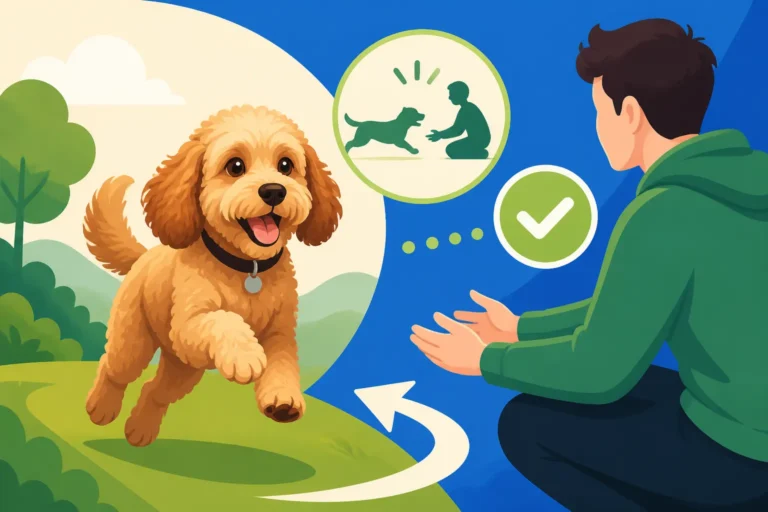
This is where many owners feel a sense of hope, believing that if they just train their Cockapoo enough, their instincts can be overcome. While strong training is essential for managing a Cockapoo's natural drives in general, it has its limits when it comes to fundamental predatory behavior. Commands like "leave it," "stay," and a rock-solid recall are absolutely non-negotiable if you even consider allowing your Cockapoo near a rabbit. If your Cockapoo struggles with Recall on a Cockapoo That Has Found a Scent or frequently gives chase to squirrels and birds outside, then it’s a clear red flag that they are not ready, and likely never will be, for safe interaction with a rabbit.
Think about the quality of the training you've provided. Is it consistent? Is it proofed in high-distraction environments? Even with excellent training, a sudden darting movement from a rabbit can trigger an instinctual response that bypasses learned commands. Many owners find value in structured online programs like those offered by BAXTER & Bella, which emphasize building a strong foundation of obedience and impulse control from puppyhood. Such programs can help give you the tools to manage your dog's behavior in general, which is a great start. However, it’s vital to remember that "management" is not "elimination" of instinct.
Signs of High Prey Drive
How can you tell if your Cockapoo has a high prey drive that makes cohabitation with a rabbit particularly risky? Look for these signs in their everyday behavior:
- Intense Focus: Does your dog lock onto squirrels, birds, or even leaves blowing in the wind with unblinking intensity?
- Stalking Behavior: Do they crouch, flatten their body, and move slowly and deliberately before pouncing on toys or small animals?
- Sudden Bursts of Speed: Do they go from calm to full-speed chase in an instant when something moves?
- Ignoring Commands: When focused on something that triggers their prey drive, do they become "deaf" to your calls or commands? Whether a Cockapoo Ignores You Once It Scents Something is a crucial indicator here.
- Fixation on Small Animals: Are they constantly scanning for and interested in chasing neighborhood cats, squirrels, or birds? Whether a Cockapoo Chases Squirrels is a common tell.
- Excitement Over Rustling Sounds: Do they react strongly to rustling in bushes or sounds that might indicate a small animal hiding?
- Rough Play with Toys: While not directly indicative of prey drive towards live animals, dogs with high prey drive often engage in vigorous "kill shake" behavior with their toys.
Here’s a quick overview of how to interpret your Cockapoo’s behavior:
| Behavior Characteristic | Low/Moderate Prey Drive (More Manageable) | High Prey Drive (Higher Risk) |
|---|---|---|
| Response to Small Animals | Curious, might give a short chase, but easily redirected. | Intense focus, relentless chase, deaf to commands. |
| Reaction to Movement | Notices movement, but doesn't fixate. | Instant lock-on, stalking, immediate burst of speed. |
| Trainability around Distractions | Can maintain focus with consistent effort and high-value rewards. | Training often breaks down when prey appears; instinct overrides. |
| Engagement with Toys | Enjoys fetching, tugging; gentle play. | Vigorous "kill shakes," intense retrieval, often destructive. |
| Body Language | Relaxed, loose, ears attentive to owner. | Stiff body, low crouch, ears forward, eyes fixed on target. |
Ultimately, if you see multiple signs of high prey drive, the risk of a Cockapoo injuring or killing a rabbit is very significant. It's not a question of if but when an instinctual moment could override training.
Strategies for Coexistence: Prioritizing Safety (If It's Even Possible)
Given the strong prey drive inherent in many Cockapoos, achieving genuine "trust" with a rabbit is often an unrealistic goal. The safest and most responsible approach for both animals often involves complete separation. If you absolutely must have both pets under the same roof, stringent management and safety protocols are paramount.
Absolute Separation as the Safest Bet
Let's be clear: the single most effective way to prevent a tragic incident is to ensure your Cockapoo and your rabbit never have direct, unsupervised access to each other. This is not about being overly cautious; it's about being responsible.
- Designated Spaces: Your rabbit needs its own secure room, or at least a highly fortified enclosure that your Cockapoo cannot access, knock over, or damage. Think sturdy cages, multi-level hutches with strong latches, and ideally, a room with a closed door where the rabbit can free-roam safely.
- Baby Gates and Crates: Utilize baby gates to section off areas of your home. Your Cockapoo should be comfortable in a crate, which can be a vital management tool when you need to focus your attention elsewhere, such as cleaning the rabbit's area or letting the rabbit out for exercise in a separate space. For resources on training your dog for calm crate time, consider searching for enrichment toys on Amazon that can keep them occupied.
- Rotation Schedule: Implement a strict schedule where one pet is out while the other is securely confined. For instance, the rabbit might have free-roaming time in the living room while the Cockapoo is crated or in another room behind a closed door. Then, swap. This means dedicated interaction time for each pet, but never together.
- No Unsupervised Moments: Even if you've seen them "get along" for brief moments, never, ever leave them alone in the same room, even for a quick trip to the bathroom. Accidents happen in a split second. A playful nip from a dog, even if not intended maliciously, can be fatal for a fragile rabbit.
This approach acknowledges the inherent risk and removes the opportunity for instinct to take over. It may not be the picture of harmony you imagined, but it ensures both animals live safely and without constant stress.
Controlled, Supervised Introductions (Extreme Caution)
If, despite the risks, you feel compelled to attempt any form of interaction, understand that it must be done with the absolute highest level of control and supervision, and always with the knowledge that complete trust may never be achieved. This is a strategy for management, not for fostering friendship.
- Rabbit Securely Enclosed: The rabbit must always be in a sturdy, escape-proof, dog-proof cage. This cage should be strong enough to withstand your Cockapoo jumping on it or trying to chew through it. Wire cages can be dangerous if the dog can poke a nose or paw through and grab at the rabbit. A solid-sided x-pen with a secure top, or a large dog crate, might be suitable.
- Cockapoo on Leash and Collar: Your Cockapoo must be on a leash, held by a competent adult who is prepared to intervene instantly. A double leash might even be advisable for a particularly strong or determined dog. Building a Recall a Cockapoo Answers is crucial here, but you cannot rely on it alone.
- Short, Calm Sessions: Keep initial sessions very brief, perhaps just a few minutes. The goal is calm, neutral behavior from the dog. If your Cockapoo is barking, lunging, or fixated, the session ends immediately.
- Positive Reinforcement: Reward your Cockapoo heavily with high-value treats for calm behavior, for looking at you instead of the rabbit, or for simply lying down quietly in the room with the rabbit's cage present. You can find excellent high-value training treats on Amazon. The idea is to associate the rabbit's presence with positive experiences (treats from you), not with chasing.
- Distance Matters: Start with the rabbit's cage across the room from your Cockapoo. Gradually, and only if your dog remains perfectly calm, can you slowly decrease the distance over many sessions.
- Never Direct Contact: Under no circumstances should the Cockapoo ever have direct, unrestrained physical contact with the rabbit. A rabbit's bones are incredibly delicate, and even a "playful" paw or mouth can cause severe injury or death.
This process requires immense patience, vigilance, and an unwavering commitment to safety. It's not a path for the faint of heart or for those who cannot commit to constant, active supervision.
Environmental Management
Beyond direct interactions, think about the environment itself.
- Rabbit-Proofing: Ensure the rabbit's enclosure is not just secure from the dog, but also provides ample hiding spots for the rabbit within its own space. Rabbits are prey animals and need to feel safe.
- Dog Exercise and Mental Stimulation: A bored Cockapoo is a more mischievous Cockapoo, and potentially a more driven one. Ensure your dog gets plenty of physical exercise and mental stimulation. Scent Work That Satisfies a Cockapoo can be a fantastic outlet for their natural sniffing and searching drives, redirecting that energy away from "hunting" housemates. Regular walks, training sessions, and interactive toys can help keep them calm and content, making them less likely to obsess over a caged rabbit.
- Separate Playtimes: Just as you separate their living spaces, separate their playtimes. Dedicate individual quality time to each pet.
Realistic Expectations and What to Do When Things Go Wrong
It’s tough love, I know, but sometimes the most empathetic thing we can do for our pets is to be realistic about their needs and instincts. You love your Cockapoo, and you love your rabbit, but sometimes their natural inclinations simply aren’t compatible for a shared, unsupervised life.
Understanding the Limits of Training
One of the hardest lessons for a devoted pet owner is accepting the limits of training. You can train a dog not to jump on guests, to walk nicely on a leash, or to sit on command. You can even train a dog with a high prey drive to ignore a squirrel most of the time if the reward is high enough and the distraction manageable. But you cannot train away a deeply ingrained instinct to hunt and chase a small, vulnerable animal that triggers that exact prey drive.
If your Cockapoo spots a rabbit, and that rabbit instinctively bolts, your dog's brain might override all the training in a fraction of a second. It's not a failure on your part, nor is it defiance from your dog; it's the raw power of millions of years of evolution. Accepting this reality is crucial for making responsible decisions. You are not a bad owner for acknowledging that your dog's nature is simply incompatible with a particular living situation. Whether the Cocker or the Poodle Shows Up in Training is an important factor to consider when thinking about their biddability and natural drives.
What to Do in an Emergency
Despite all precautions, accidents can happen. If your Cockapoo does get access to your rabbit and an incident occurs, here's what to do immediately:
- Separate Them Instantly: The priority is to stop the interaction. Do not hesitate. Safely remove your Cockapoo from the area, ideally securing them in a crate or another room.
- Assess the Rabbit: Rabbits are incredibly fragile. Even if you don't see obvious wounds, internal injuries can be severe. Look for:
- Any visible wounds, even small ones.
- Limping or difficulty moving.
- Changes in breathing or posture.
- Lethargy, hiding, or refusal to eat/drink.
- Contact Your Veterinarian IMMEDIATELY: Do not wait to see if the rabbit improves. A rabbit that has been caught or shaken by a dog needs urgent veterinary attention. Even a scare can be enough to put them into shock, and internal injuries are often not immediately apparent. Time is of the essence.
- Re-evaluate Safety Protocols: After an incident, no matter how minor it seems, you must critically re-evaluate your safety measures. This might mean stricter separation, or even considering if having both animals in the same household is truly viable long-term.
Deciding If It's a Viable Long-Term Arrangement
This is the hardest part. Sometimes, despite our best efforts, the inherent risks are just too high, or the stress on one or both animals is too great.
- Rabbit's Quality of Life: Is your rabbit living in constant fear or confinement, unable to express natural behaviors due to the dog's presence? A rabbit constantly stressed by a predator's presence can suffer significant health issues.
- Cockapoo's Quality of Life: Is your Cockapoo constantly fixated on the rabbit's enclosure, frustrated by being unable to "hunt," or frequently being reprimanded for instinctual behavior? This isn't fair to your dog either.
- Your Own Stress: Are you constantly anxious, never able to relax because you're worried about an accidental encounter? Living with that level of stress is unsustainable.
It's a tough decision, but sometimes, for the ultimate welfare of both pets, it may be necessary to consider rehoming one of them to a more suitable environment. This is never an easy choice, but a responsible pet owner prioritizes the safety and well-being of all animals under their care above personal desire for a multi-species household. It's a testament to your love for them both, not a failure.
No matter your decision, remember that your Cockapoo's behavior stems from instinct, not malice. With proper understanding, strict management, and realistic expectations, you can ensure both your Cockapoo and your rabbit lead happy, safe lives – even if those lives remain mostly separate.
Disclaimer
This article is for general informational purposes only and does not constitute professional advice. Laws, prices and regulations vary by location and change over time. Consult a qualified professional for guidance on your specific situation.