Whether a Cockapoo Recall Holds in a Field
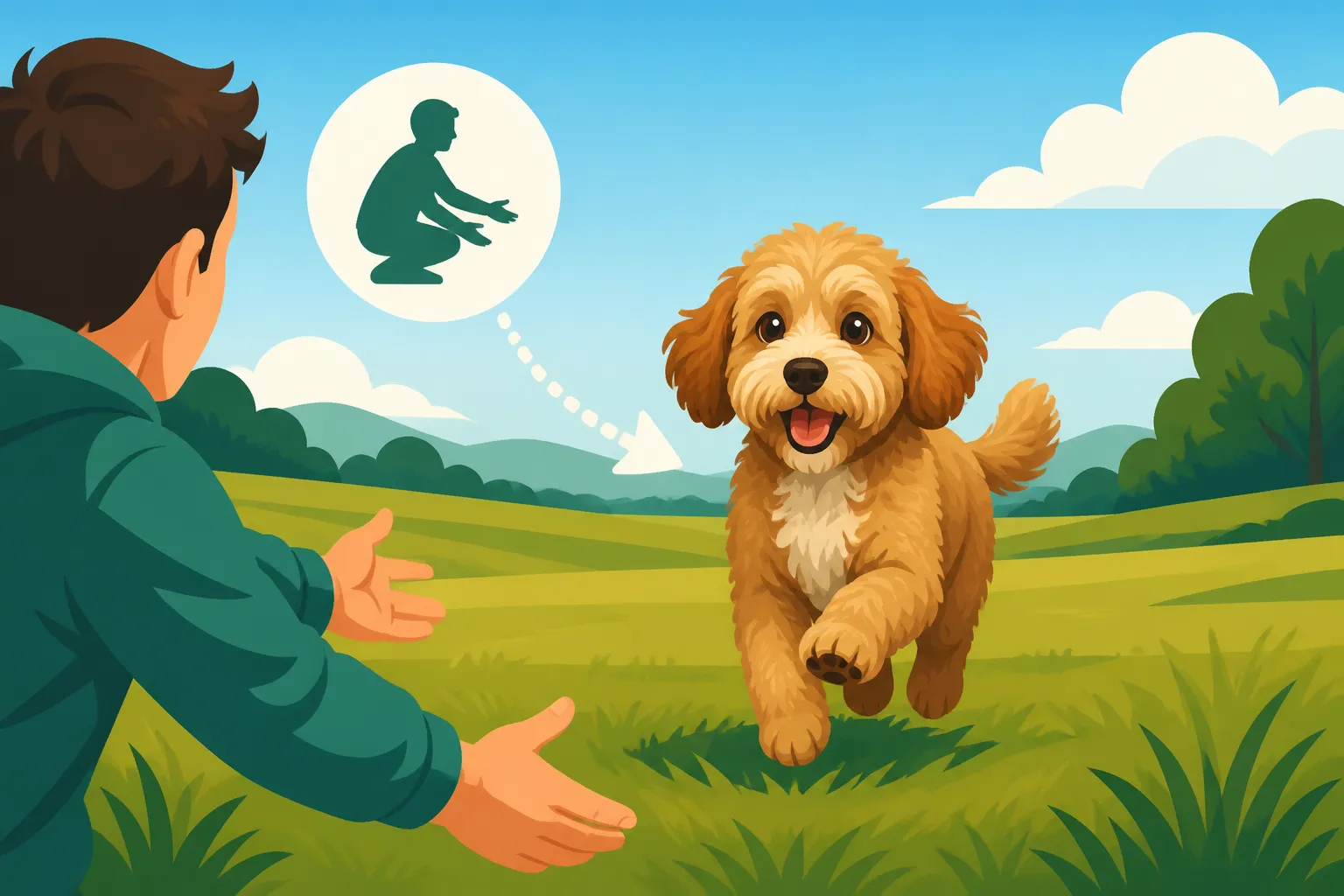
Oh, the open field recall! It's one of those dreams for every dog owner, isn't it? The image of your beloved Cockapoo bounding through tall grass, chasing butterflies, and then, with a single call, happily trotting back to your side. But let's be honest, for many of us, the reality can feel a lot more like shouting into the wind while our furry friend pretends to be suddenly deaf, nose to the ground, off on an adventure of their own. It's frustrating, it's worrying, and it can even be dangerous. This guide is here to unravel why your Cockapoo might sometimes "forget" you exist in a wide-open space and, more importantly, how you can build a recall so strong it holds even when the lure of the wild is at its most potent.
Understanding the Cockapoo's Instincts in an Open Field
Before we can build an iron-clad recall, we need to understand what's going on in that adorable Cockapoo brain when they hit a wide-open space. It’s not about defiance, though it often feels like it. It’s about instinct, environment, and sometimes, a little bit of selective hearing.
The Call of the Spaniel Ancestry: What Makes a Cockapoo Bolt?
Remember, your Cockapoo is half Cocker Spaniel, and those spaniels were bred for centuries to hunt. Specifically, they're flushing dogs, designed to quarter a field, nose to the ground, sniffing out birds and small game, and then "flushing" them out for the hunter. This isn't just a quaint historical fact; it's hardwired into their DNA. When your Cockapoo steps into a field, their senses go into overdrive. That rustle in the grass? A potential rabbit. That faint scent on the breeze? A fascinating trail left by a deer or another creature. For a spaniel-descended dog, a field isn't just an open space; it's a vast, exciting puzzle box teeming with olfactory delights and potential chases.
This strong prey drive, or "flushing drive," means that once they've picked up a scent or spotted movement, their natural inclination is to pursue. Their world narrows to that exciting stimulus, and your voice, no matter how much you love them, can become distant background noise. It's a powerful urge, and it's something we have to work with, not against. You might find your Cockapoo starts Whether a Cockapoo Zigzags on a Walk as their instincts take over, covering ground to find those scents.
The Poodle's Independent Streak: How Does This Factor In?
While Cocker Spaniels bring the hunting enthusiasm, the Poodle side of your Cockapoo also contributes to their behavior in the field. Poodles are intelligent, often highly biddable dogs, but they also have a keen sense of their surroundings and can sometimes be quite independent. They were originally water retrievers, so they also have a working heritage that involves making decisions and problem-solving. This intelligence, combined with the spaniel's drive, can create a dog that is incredibly engaged with its environment.
A Poodle's intelligence means they're observant. They notice everything. So, while the spaniel in them might be following a scent, the Poodle brain might be calculating the best path to investigate that fascinating squirrel over in the corner of the field. They're not just mindlessly chasing; they're actively exploring and often making their own choices based on what's most interesting to them at that moment. This means that if you haven't made yourself the absolute most exciting thing in the field, they're likely to choose whatever is the most exciting. Understanding Whether the Cocker or the Poodle Shows Up in Training can help you tailor your approach.
Why a Field is Different from the Backyard: Environmental Distractions
Your Cockapoo might have a fantastic recall in your fenced backyard, or even in a quiet park, but completely "forget" it the moment they step into a vast, open field. Why the sudden amnesia? The answer lies in the sheer volume and novelty of distractions.
In a backyard, your dog knows every blade of grass, every tree, every fence post. The smells are familiar, the sounds predictable. There are far fewer novel stimuli to compete with your voice. But a field is a sensory explosion. New scents from wild animals, birds taking flight, other dogs playing in the distance, people walking by, even the wind carrying new smells – it's an overwhelming buffet of information. Each new sensation pulls at your Cockapoo's attention, making it incredibly difficult for them to focus on you. For them, it's like suddenly being in a bustling carnival after living in a quiet library. Their brain is processing so much that tuning into your command becomes a huge challenge. This is precisely why building a recall that holds in a field requires a specific, incremental approach, accounting for all these heightened distractions.
Building an Indestructible Recall for Open Spaces
Alright, so we know why they do it. Now, let's talk about how to overcome those powerful instincts and build a recall that makes you feel confident, even when your Cockapoo is twenty yards away eyeing a flock of geese. It's not magic; it's consistent, thoughtful training.
Foundation Training: Beyond the Basics
Before you even think about letting your Cockapoo off-leash in a wide-open field, their recall needs to be rock solid in less distracting environments. This means practicing in your home, then your backyard, then a quiet park on a long leash. Your goal is for "Come!" to be the most exciting word they've ever heard, consistently associated with amazing rewards.
Start with "hide and seek" games indoors. Call their name and then "Come!" When they reach you, throw a party – treats, praise, exciting toys. Make it a celebration. Gradually increase the distance and distractions. Never call them to you for something unpleasant, like a bath or to leave the park when they’re having fun, without first giving them a treat and then immediately releasing them to play again. You want "Come!" to always mean good things happen, not that the fun stops. This foundational work is non-negotiable. Without it, you're building a house on sand. Remember, What a Cockapoo Puppy Should Learn First includes this essential recall, but it needs ongoing reinforcement.
Introducing Distractions Gradually: How to Proof Your Recall
Once your Cockapoo's recall is superb in low-distraction environments, it's time to "proof" it by slowly adding more challenges. This isn't about throwing them into the deep end; it's about baby steps.
- Controlled Distractions: Start in a fenced park or a very large, empty sports field. Have a friend walk a short distance away, or roll a ball a few feet from you. Practice your recall.
- Increasing Distance: Gradually increase the distance you call them from. Begin with five feet, then ten, then twenty. Each successful recall gets a jackpot reward.
- Variable Environments: Move from quiet fields to fields with more activity – other people walking, dogs on leash in the distance, maybe some birds in the sky. Always start with very short distances and low distractions in the new environment before gradually building up.
- Simulated Scents: You can even introduce "simulated" distractions. Drag a tempting treat on a string a few yards away, let your Cockapoo sniff it, then call them away from it. The goal is to make you more rewarding than even the most tantalizing distraction.
The key is never to set your Cockapoo up for failure. If they ignore your call, you've asked too much too soon. Go back a step, make it easier, and build confidence before trying again. This slow, steady progress is how you truly build reliability.
The Power of a Long Line: Safe Practice in Open Fields
The long line is your absolute best friend when training recall in an open field. It allows your Cockapoo the freedom to explore and experience the vastness of the field, while giving you the ultimate safety net. It's typically a lead ranging from 15 to 50 feet, made of durable nylon or biothane, and you can find excellent options on platforms like Amazon.
Here’s how to use it effectively:
- Safety First: Always use a well-fitting harness, not just a collar, when on a long line. If your dog suddenly bolts and hits the end of the line, it prevents neck injury.
- Practice, Practice, Practice: Let your Cockapoo wander. When they’re focused on something, but before they’re too far gone, call their name and then "Come!" If they hesitate, gently reel them in with the line, celebrating enthusiastically when they reach you. The line isn't for punishment, but for gentle guidance.
- "Invisible" Line: As your recall improves, let the line drag behind them. This gives them the sensation of being off-leash, but you can still step on it or grab it if they ignore your call.
- Gradual Fading: Only when their recall is flawless on a dragging long line, in various distracting environments, do you consider brief periods off-leash in very safe, controlled settings. Even then, always be prepared to clip the line back on if necessary.
Using a long line is crucial because it allows you to practice the recall before their natural instincts totally take over and they're out of reach. It builds that muscle memory and reinforces that coming to you is always the best choice, regardless of what exciting things might be happening around them. For more on this, check out Working a Cockapoo on a Long Line.
Tools and Techniques to Enhance Field Recall
Beyond the fundamental training, there are specific tools and techniques that can make a huge difference in cementing a reliable recall, especially when you're out in the great wide open.
High-Value Rewards and Motivators: What Truly Gets Their Attention
When you're competing with the overwhelming smells of a field or the sight of a darting squirrel, a bland piece of kibble just isn't going to cut it. To make yourself the most compelling option, you need high-value rewards.
Think about what makes your Cockapoo go absolutely wild. Is it a stinky piece of cheese? Cooked chicken? Hot dogs? Slices of roasted liver? These are your "jackpot" treats. Save these exclusively for recall practice, especially in distracting environments. Don't use them for sitting or staying in the living room; that diminishes their specialness. When your Cockapoo bolts back to you in a field, they should be greeted with a shower of these incredible treats, enthusiastic praise, and perhaps a quick game with their absolute favorite toy. This makes the experience so overwhelmingly positive that it outweighs the thrill of any potential chase. Variety helps too; dogs can get bored of the same treat, so rotate your high-value options.
Whistle Training and Emergency Recalls: Different Signals for Different Situations
A whistle can be an incredibly powerful tool for recall, especially in open fields. Here's why:
- Consistency: Your voice can fluctuate with emotion, distance, and wind conditions. A whistle produces a consistent, clear sound every time.
- Distance: The sound of a whistle travels further than your voice, especially against wind or other environmental noises.
- Emergency Signal: It can serve as a distinct "emergency" recall that's separate from your everyday "Come!" command.
To train with a whistle, pair it with your high-value treats. Blow two short pips on the whistle, then immediately give your Cockapoo a treat. Repeat this many, many times in quiet environments. Once they associate the whistle with incredible rewards, start using it for recall in progressively more distracting settings, just like you would with your verbal command. The key is never to use the whistle unless you are absolutely sure you can reward them immediately.
For an emergency recall, choose a different, unique sound (e.g., three short pips) or a different word ("HERE!"). This is the command you only use when safety is paramount and you need them back right now. Again, pair it with the highest value rewards imaginable. This isn't for casual use; it's your nuclear option. You want Whether a Whistle Recall Beats a Voice on a Cockapoo because it cuts through distractions.
Leveraging Technology and Training Programs: Modern Aids
In today's world, we have access to some fantastic resources to help with training, even for something as challenging as field recall.
- Online Training Programs: Companies like BAXTER & Bella offer comprehensive online puppy and dog training programs that include detailed modules on recall. These can provide step-by-step guidance, video demonstrations, and support from professional trainers, all from the comfort of your home. They break down complex behaviors into manageable steps, which is invaluable for consistency.
- GPS Trackers: While not a training tool in themselves, a GPS collar can provide immense peace of mind, especially during the more advanced stages of recall training in large, open areas. If your Cockapoo were to get truly lost or bolt further than anticipated, a tracker allows you to locate them quickly, reducing panic and ensuring their safety. Many available on Amazon are lightweight and integrate with your smartphone.
- Clicker Training: A clicker can also be a highly effective tool to mark the exact moment your Cockapoo performs the desired action (turning towards you, starting to run back, reaching you). This precision helps them understand exactly what they're being rewarded for. Pair the click with a treat, then use it during recall practice.
These tools, when used correctly and consistently as part of a positive reinforcement strategy, can significantly boost your success rate and confidence in your Cockapoo's field recall.
Common Pitfalls and Troubleshooting for Field Recall
Even with the best intentions and consistent training, you might still encounter bumps in the road. It's normal! Understanding common pitfalls and how to troubleshoot them can turn potential failures into learning opportunities.
When Recall Fails: Analyzing Why It Might Not Stick
It's disheartening when your Cockapoo blows you off in the field, isn't it? But instead of getting angry, let's look at why it might be happening.
- You're Not Exciting Enough: This is tough love, but often true. If a rabbit darting across the field or a fascinating new smell is 100 times more exciting than you, your recall will suffer. You need to consistently be the "funnest" thing in the field. This means high-value treats, enthusiastic praise, and interactive play every single time they return.
- Inconsistent Rewards: Did you forget treats one day? Were you distracted by your phone? Any inconsistency weakens the association between "Come!" and "AWESOME things happen!" Every single recall in a distracting environment needs to be rewarded like they just won the lottery.
- Punishing Recall: Have you ever called your dog, then immediately put them on a leash and left the park? Or called them to scold them for something? If "Come!" has ever meant something negative, even inadvertently, your dog will learn to be wary. Recall should never lead to the end of fun or punishment.
- Asking Too Much, Too Soon: If your dog failed, chances are the environment was too distracting, or you asked them to come from too far away. Go back to basics, simplify the environment, shorten the distance, and gradually build up.
- A "Poisoned" Cue: If you've used the "Come!" command when you knew your dog wouldn't obey (e.g., when they're chasing something full-tilt), you've essentially taught them that "Come!" is optional. This is why the long line is so vital – it prevents those failed recalls.
Be honest with yourself about these points. It's often not the dog's fault, but rather a gap in our training approach or consistency.
Dealing with Scent Overload: When Their Nose Takes Over
The Cockapoo's spaniel nose is a formidable thing. In a field, it's like a supercomputer processing an endless stream of fascinating information. When they get "nose blind" to your calls, it's because that olfactory input is so powerful.
Here’s how to work with it:
- Anticipate and Intercept: Watch your Cockapoo. If you see their head drop, nose to the ground, and their tail starts to wag with excitement, that's your cue to call them before they're fully engrossed. Intercept them early.
- Movement is Key: Sometimes, just standing still and calling won't break their focus. Try running away from them while calling their name enthusiastically. This often triggers their natural chase instinct and makes you more interesting.
- "Check-In" Practice: Teach your Cockapoo to "check-in" with you periodically, even without a call. Reward them every time they voluntarily glance back or trot over. This reinforces that you're a source of good things, not just when they're explicitly called. Teaching a Cockapoo to Check In on a Walk can be a great starting point for this.
- Scent Work as an Outlet: Give their nose a proper job! Engaging in scent work games, either structured classes or simple at-home activities, can satisfy their instinctual need to sniff. A satisfied nose is sometimes less frantic in the field. Scent Work That Satisfies a Cockapoo provides excellent ideas.
It's about understanding their nature and finding ways to work with it, rather than just yelling at it.
Consistency is Key: The Ongoing Commitment
Building an indestructible recall isn't a "one and done" training session; it's an ongoing commitment for the entire life of your Cockapoo. Dogs aren't robots; they forget, they get over-excited, and they test boundaries.
- Short, Frequent Sessions: Instead of long, tedious training, aim for short (5-10 minute), fun recall sessions multiple times a week, in varied environments.
- Random Rewards: Don't just reward every time in the same way. Sometimes a single treat, sometimes a jackpot, sometimes a quick game of tug. This keeps them guessing and highly motivated, making them think, "What amazing thing will happen this time if I go back?"
- Never Stop Practicing: Even if your Cockapoo has a perfect recall, continue to practice it. Life happens: new distractions emerge, their hearing might diminish with age, or a particularly compelling scent might appear. Regular reinforcement keeps that recall sharp.
- Be a Fun Partner: Your Cockapoo wants to spend time with you. Make yourself the most fun, engaging, and rewarding part of their world, especially when you're outside. Play games, explore together, and make every interaction positive.
A truly reliable recall in a field is a testament to the bond you share with your Cockapoo and the consistent effort you've both put into training. It’s an investment in their safety and your peace of mind, allowing you to enjoy those wonderful open spaces together, knowing they'll always come home.
Disclaimer
This article is for general informational purposes only and does not constitute professional advice. Laws, prices and regulations vary by location and change over time. Consult a qualified professional for guidance on your specific situation.