Scent Games a Cockapoo Never Tires Of
One of the most common frustrations for Cockapoo owners is finding productive ways to channel their dog's boundless energy and sharp mind, especially when physical exercise might be limited or the weather isn't cooperating. You know that look – the one that says, "I'm bored, human, entertain me!" This isn't just about walks; it's about engaging their incredible natural abilities. This comprehensive guide will explore the wonderful world of scent games, showing you how these fun, engaging activities can tap into your Cockapoo's innate sniffing talents, provide immense mental enrichment, and strengthen the bond you share, all while keeping that intelligent brain happily busy.
Understanding Your Cockapoo's Incredible Nose
If you've ever watched your Cockapoo seemingly ignore your calls to chase after an invisible something in the grass, or suddenly become laser-focused on a tiny spot on the sidewalk, you've witnessed their superpower: their nose. Our Cockapoos come from a lineage of dogs bred for incredible scent detection, and understanding this heritage is key to unlocking their potential for scent work.
The Legacy of the Hunting Spaniel and Poodle
Let's talk about those amazing parent breeds for a moment. The Cocker Spaniel, whether American or English, was originally bred to be a flushing dog. What does that mean? It means they used their powerful noses to locate game birds hidden in dense cover, then "flush" them out for the hunter. This isn't just a casual sniff; it's an intense, methodical search, often performed at a rapid pace and with immense focus. That instinct for systematic scenting, for really working the ground with their nose, is absolutely still present in your Cockapoo. You can see The Flushing Drive Still Alive in a Cockapoo when they meticulously investigate every inch of the yard, head down, tail wagging. They're not just dawdling; they're working a grid, just like their ancestors did.
Then we have the Poodle. While often thought of as fancy show dogs, Poodles were originally water retrievers, highly intelligent and known for their keen senses and trainability. They too have a fantastic sense of smell and a strong desire to please, making them excellent candidates for advanced scent detection work. When you combine the Spaniel's inherent drive to find hidden things with the Poodle's intelligence and desire for structured tasks, you get a Cockapoo who is practically hardwired to excel at scent games. They possess both the innate drive and the mental capacity to learn and love this type of activity.
Why Scent Work is More Than Just a Game
For your Cockapoo, using their nose isn't just fun; it's deeply satisfying. Imagine if your primary way of experiencing the world was through smell, and suddenly you were given a task that celebrated that sense, challenging you to use it in new and exciting ways. That's what scent work is for dogs. It's an incredibly enriching activity that taps into their most powerful sensory organ, providing mental stimulation that physical exercise alone often can't match.
Think of it this way: a long walk is great for their body, but sniffing out a hidden treat is like a mental puzzle for their brain. It requires concentration, problem-solving, and decision-making. This kind of cognitive engagement can be exhausting in the best possible way, leaving your Cockapoo happy, calm, and much less likely to invent their own, less desirable, forms of entertainment, like excessive barking or chewing things they shouldn't. It's a fantastic outlet for their natural instincts and a wonderful way to prevent boredom. You might find that after a good session of scent work, your dog settles down much more readily than after an equally long, but less mentally engaging, walk.
Getting Started with Simple Scent Games Indoors
The best part about scent games is that you don't need fancy equipment or a huge space to begin. You can start right in your living room with things you already have! The key is to make it fun, easy, and always end on a successful note, building your Cockapoo's confidence with every "find."
The Classic Shell Game Which Hand
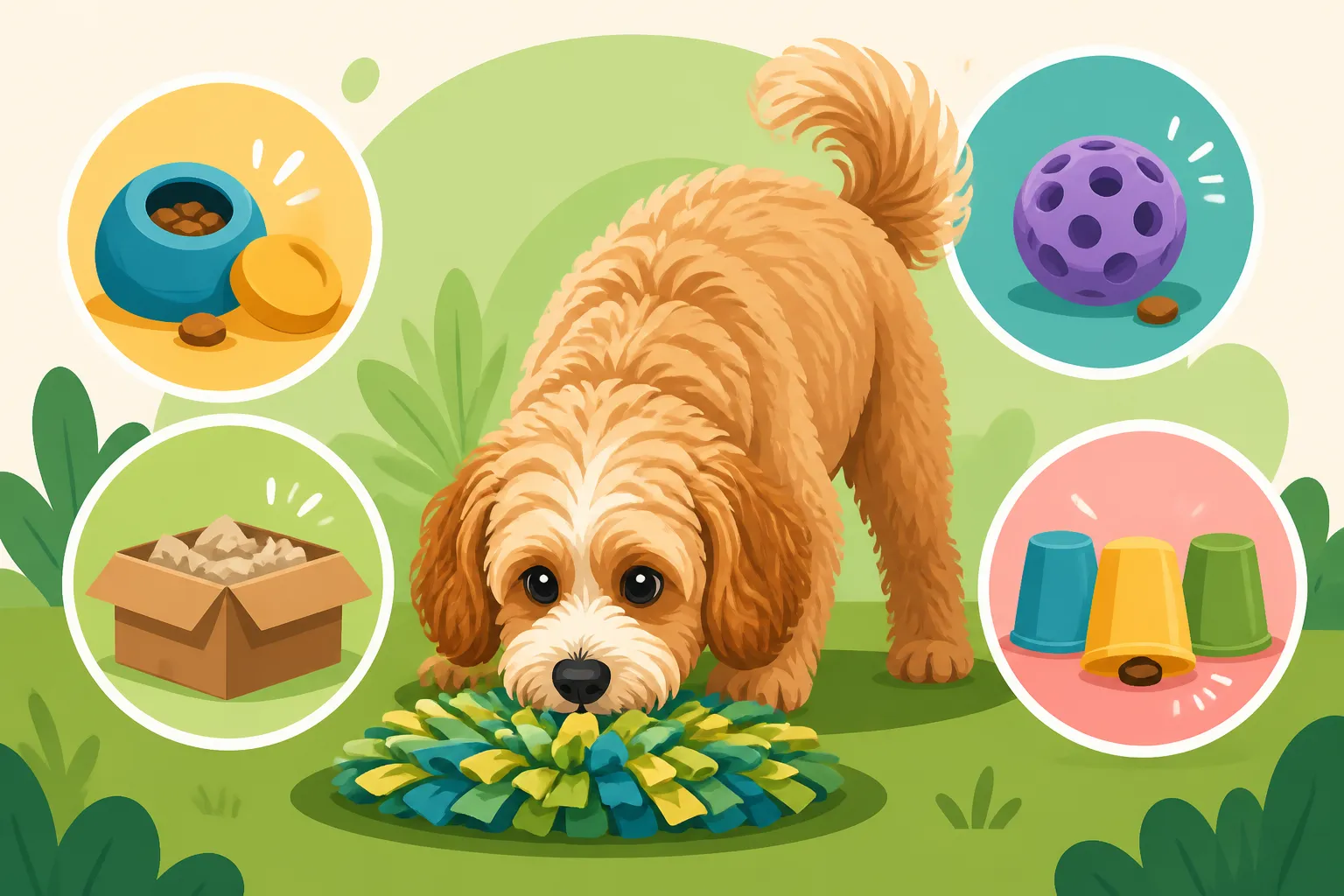
This is arguably the easiest way to introduce your Cockapoo to the concept of finding a hidden treat by scent. You'll need two or three opaque cups (or even your hands) and a high-value, smelly treat. Start by letting your dog see and smell the treat. Then, place the treat under one of the cups, letting them watch you do it. Slide the cups around a little, then encourage them to "find it!" When they nose or paw the correct cup, lift it, let them eat the treat, and offer plenty of praise.
As they get better, you can make it more challenging. First, hide the treat under the cup without them watching the final placement, but let them see you put it under a cup. Then, start placing the treat under a cup when they aren't looking at all, relying solely on their nose. You can also gradually increase the number of cups, or move the cups further apart. This game teaches them that their nose is a powerful tool and that focusing on scent leads to rewards. It's truly amazing to see them concentrate, sniffing intently, before making their choice.
Hide and Seek with Treats or Toys
This game is a staple for a reason: dogs absolutely love it! Again, start simple. Have your Cockapoo "stay" or enlist a helper to hold them while you go just a few feet away and place a treat or a favorite toy where it's easily visible. Then release them with a cue like "find it!" or "go sniff!" When they find it, big praise and the reward.
Gradually increase the difficulty. Hide the treat or toy in slightly less obvious places – under a cushion, behind a chair leg, or partially covered by a blanket. As they become more adept, you can hide items in different rooms, making them use their nose to track the scent. Remember to place things at their nose level initially, then gradually higher or lower. The idea is to make them successful. Imagine their excitement as they zoom through the house, nose to the ground, finally unearthing their prize! This game is not only fantastic for scent work but also strengthens their understanding of cues like "stay" and "come."
DIY Scent Boxes for Beginners
Scent boxes are a fantastic way to engage your Cockapoo's sniffing abilities in a structured, yet playful, manner. You don't need expensive equipment; just a few cardboard boxes of various sizes. Take some empty cereal boxes, shoe boxes, or even Amazon delivery boxes you have lying around. The idea is to create a "pile" of these boxes. Hide high-value treats inside a few of them (maybe in a crinkled piece of paper, or just loose), and leave others empty.
Let your Cockapoo explore the pile. Encourage them to sniff around and investigate. When they find a treat, celebrate! Over time, you can make the hides more difficult by placing treats deeper inside boxes, under flaps, or even by layering boxes. You can also vary the number of treats and empty boxes. This creates a challenging but rewarding scent environment, and it’s a brilliant way to recycle those delivery boxes! It’s a game that really asks them to slow down, focus their nose, and work through a problem.
Advancing to More Complex Scent Challenges
Once your Cockapoo has mastered the basics indoors, it's time to level up! Taking scent games outdoors, introducing new scents, and adding distractions can provide even greater mental stimulation and build their skills.
Expanding the Search Area Outdoors
Taking scent work outside opens up a whole new world of smells for your Cockapoo, and the natural environment provides endless variations. Start in your own backyard. Just as you did indoors, begin with easy hides, perhaps placing treats under a leaf, near a tree trunk, or in a patch of grass. Gradually increase the distance between hides and the complexity of the hiding spots. You might hide treats along a fence line, behind a garden gnome, or nestled in a bush.
Once they're confident in the yard, you can venture to a safe, enclosed park or a quiet, grassy area. The myriad of natural scents – other animals, plants, rain, earth – will present a more challenging environment. This is where you might see their inherent drive to Why a Cockapoo Quarters the Yard kick in, systematically working an area to locate the scent. Always ensure the area is safe, free of hazards or unknown substances, and that your Cockapoo is on a long line if off-leash safety isn't guaranteed. This progression helps them generalize their scent skills to different environments, proving just how adaptable their noses are.
Introducing Specific Odors and Ignoring Others
For those who want to delve deeper into scent work, you can introduce specific target odors, much like detection dogs learn to find certain substances. This typically involves commercially available "scent kits" that contain small amounts of specific essential oils (like birch, anise, or clove) on cotton swabs. You'll introduce one specific odor at a time. The process involves pairing the target odor with a high-value treat. For instance, you might put a cotton swab with a drop of birch oil in a tin, place a treat next to it, and reward your dog when they show interest in the tin.
The goal is for your Cockapoo to learn that this specific smell is what leads to a reward, regardless of where it's hidden or what other smells are present. This teaches discrimination. Over time, you can hide the target odor without a treat directly next to it, rewarding them for simply indicating the presence of the specific scent. This is a foundational step if you're ever interested in competitive nose work, where dogs earn titles for finding hidden odors. It's a fantastic mental exercise that truly sharpens their focus. You can learn more about if Whether a Cockapoo Can Earn a Scent Work Title is for your dog.
Moving to "Proofing" and Distractions
As your Cockapoo's scent skills grow, you'll want to introduce "proofing." This means practicing in environments with increasing distractions to ensure their focus remains on the target scent. Think about trying scent games when there are other people nearby, dogs playing in the distance, or different environmental noises. This simulates real-world challenges and builds their concentration.
You can also introduce "distractor scents." For example, if your target odor is birch, you might hide a tin with birch, and also hide another tin with a strong, but non-target, scent like a piece of cheese. Your Cockapoo needs to learn to ignore the cheese and only indicate the birch. This really pushes their ability to discriminate and maintain focus, teaching them to work through complex scent puzzles. This is where their Poodle intelligence really shines, as they learn to differentiate between what's interesting and what's important to the task.
Tools and Resources for Scent Work Enthusiasts
While you can start with household items, there are some fantastic tools and resources that can enhance your scent work journey and make it even more engaging for your Cockapoo.
Essential Gear for Scent Games
You don't need a huge investment to get started, but a few items can really make a difference:
- High-Value Treats: This is paramount! Find small, soft, super-smelly treats that your Cockapoo absolutely loves. Think small pieces of cheese, cooked chicken, hot dogs, or commercially available soft training treats. The higher the value, the more motivated they'll be.
- Snuffle Mats & Puzzle Toys: These are fantastic for indoor scent enrichment. Snuffle mats are fabric mats with many folds and pockets where you can hide kibble or small treats, encouraging your dog to sniff them out. Puzzle toys often require your dog to manipulate parts of the toy to release treats. These are great for independent scent work sessions. You can find a huge variety of these on Amazon, suitable for all skill levels.
- Scent Kits: If you're serious about introducing specific odors, consider a beginner's scent kit. These typically include small tins, cotton swabs, and essential oils like birch, anise, and clove. They come with instructions on how to introduce the odors safely and effectively.
- Long Line: For outdoor scent work in unfenced areas, a long line (15-30 feet) is invaluable. It allows your Cockapoo freedom to explore and follow scent trails while keeping them safely connected to you. This is especially helpful if your dog has a tendency to disregard Recall on a Cockapoo That Has Found a Scent when a particularly interesting smell catches their attention.
Here's a quick comparison of some popular scent game tools:
| Tool/Game | Description | Ideal For | Key Benefit |
|---|---|---|---|
| Shell Game | Hiding a treat under one of several cups/hands. | Beginners, building focus, quick fun | Teaches basic scent discrimination in small spaces |
| Hide & Seek | Hiding treats/toys in various indoor/outdoor locations. | All levels, engaging natural seeking behavior | Builds confidence, works on "stay" and "find" cues |
| DIY Scent Boxes | Treats hidden inside or under cardboard boxes. | Beginners to intermediate, indoor stimulation | Encourages methodical searching, recycling |
| Snuffle Mat | Fabric mat with nooks for hiding kibble/treats. | All levels, independent play, slow eating | Promotes natural foraging, mental exercise |
| Puzzle Toys | Toys requiring manipulation to release treats. | All levels, problem-solving, independent play | Cognitive challenge, keeps them busy |
| Target Scent Kits | Introducing specific essential oils (birch, anise, clove) on swabs. | Intermediate to advanced, competitive nose work | Teaches odor discrimination, high mental load |
Online Training Resources and Classes
The world of dog training has evolved so much, and there are now fantastic online resources to guide you through scent work. If you're looking for structured learning, consider online courses or virtual workshops. Many professional dog trainers offer programs specifically for nose work or canine scent detection, breaking down the steps into manageable lessons.
Organizations like BAXTER & Bella offer comprehensive online training programs that can guide you through various dog sports and enrichment activities, including scent work. Their structured approach can be incredibly helpful for owners who want to deepen their understanding and develop their Cockapoo's skills methodically. A good online course will not only teach you how to set up the games but also how to "read" your dog's body language as they work a scent, which is an invaluable skill. These resources can help you progress from simple games to more advanced concepts like creating complex search patterns and introducing multiple odors.
Benefits Beyond the Fun: Why Scent Work Matters
Beyond just being a fun way to pass the time, engaging your Cockapoo in scent games offers a multitude of tangible benefits for their well-being and your relationship.
Mental Enrichment and Reducing Problem Behaviors
A tired dog isn't necessarily a well-behaved dog; a mentally stimulated dog is. Cockapoos are incredibly intelligent and active, and if their brains aren't given productive outlets, they'll often find their own, which can sometimes manifest as undesirable behaviors. Think about it: a bored Cockapoo might decide that shredding your new rug is an interesting game, or that incessant barking at every leaf that blows by is a fun way to pass the time. Scent work provides a constructive and fulfilling channel for that mental energy.
By regularly engaging their minds with scent challenges, you're meeting a fundamental need. This kind of enrichment helps to reduce stress, anxiety, and general restlessness. When a dog has had a good "brain workout," they are typically calmer, more content, and less prone to destructive behaviors. You might notice a significant decrease in issues like What a Bored Cockapoo Chews Through or excessive demand barking simply because their minds are being appropriately challenged and satisfied. It helps them unwind and truly relax.
Building Confidence and Strengthening Your Bond
Scent work is a fantastic confidence booster for dogs. Every time your Cockapoo successfully finds a hidden treat or toy, they experience a sense of accomplishment. This positive reinforcement builds their self-esteem and makes them feel capable and smart. This is especially beneficial for shy or nervous dogs, as scent work is a low-pressure activity that allows them to succeed at their own pace, focusing on a natural instinct rather than high-stress commands.
Moreover, engaging in these activities together actively strengthens the bond between you and your Cockapoo. You become a team, working towards a common goal. You're the one setting up the challenges, praising their efforts, and celebrating their successes. This shared experience fosters trust, mutual respect, and a deeper understanding of each other's communication. It's not just about giving them something to do; it's about connecting with them on a deeper, instinctual level, recognizing and celebrating their inherent talents.
Exercise for Dogs with Physical Limitations
Sometimes, a traditional long walk or strenuous play session just isn't possible for your Cockapoo. This could be due to age, an injury, recovering from surgery, or even just extreme weather conditions. In these situations, scent games become an invaluable tool for providing essential mental and even light physical exercise without putting strain on their bodies. A dog with hip issues might not be able to run for miles, but they can still enjoy a vigorous "sniff session" in the living room or backyard.
Even if your Cockapoo is perfectly healthy, scent work offers a wonderful alternative or supplement to physical exercise, ensuring their minds remain sharp and engaged. It's a low-impact activity that can still provide a significant "workout" for their brain, leaving them pleasantly tired. So, whether your Cockapoo is a senior dog who can't move as fast as they used to, a puppy whose joints are still developing, or simply needs a rainy-day activity, scent games offer a safe, inclusive, and highly beneficial form of enrichment. It’s an ideal way to ensure they stay happy and fulfilled, regardless of their physical state.
Disclaimer
This article is for general informational purposes only and does not constitute professional advice. Laws, prices and regulations vary by location and change over time. Consult a qualified professional for guidance on your specific situation.