Whether a Cockapoo’s Muzzle Is Longer Than a Cocker’s
A Cockapoo’s muzzle can look longer than a Cocker Spaniel’s, but there is no single shape shared by every Cockapoo. The result depends on the individual parents, breeding generation, and coat around the face. This guide explains what to compare, why a muzzle can look different from one photo to another, and how to judge a puppy’s likely adult appearance without relying on guesswork.
Can a Cockapoo Have a Longer Muzzle Than a Cocker Spaniel
The short answer depends on the Cocker and Poodle parents
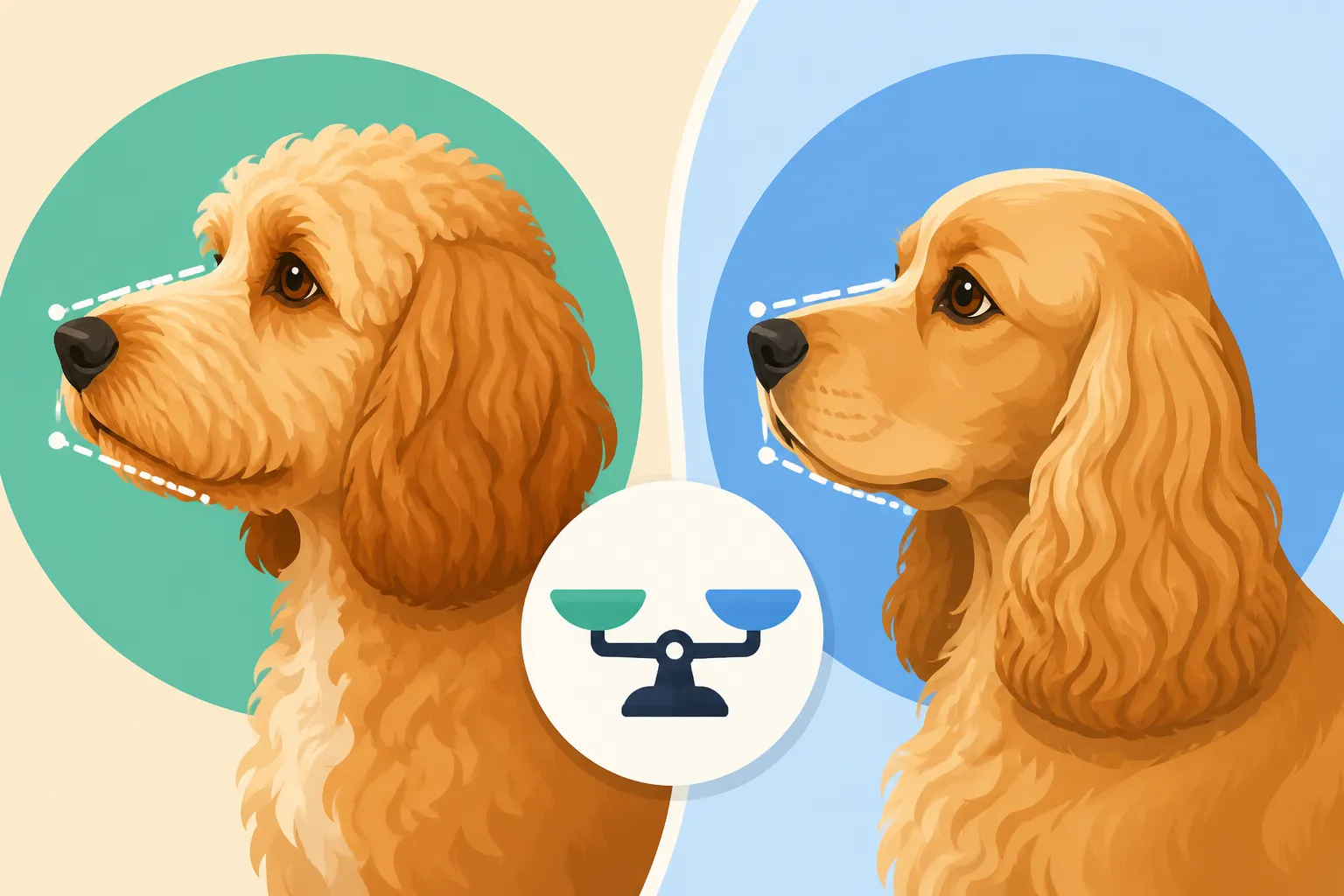
Yes, a Cockapoo may have a muzzle that looks longer than a particular Cocker Spaniel’s. That is especially possible when the Poodle parent has a longer, narrower muzzle and the Cockapoo inherits a similar profile. But another Cockapoo, even from the same litter, may have a shorter-looking or broader muzzle.
“Cocker Spaniel” can also mean different things. American Cocker Spaniels and English Cocker Spaniels do not have identical head shapes, and individuals within each type vary too. Some Cockers have a more compact, broad-looking muzzle; others appear less short-faced. So the comparison is not as simple as saying that every Cockapoo has a longer muzzle than every Cocker.
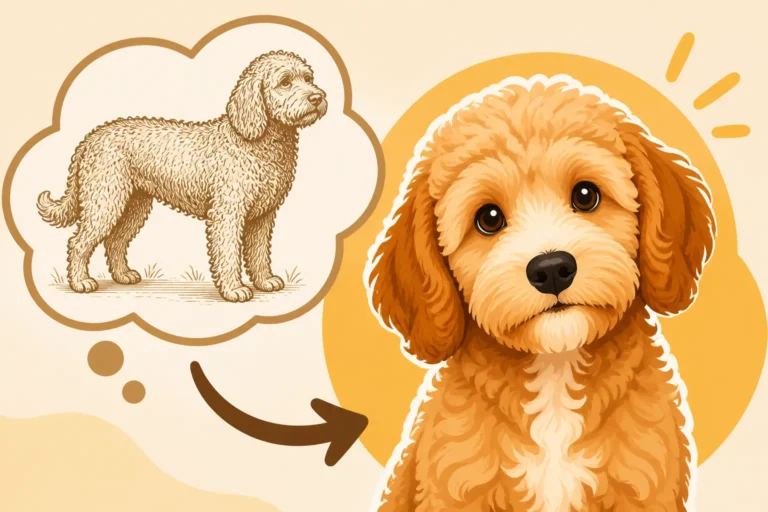
It helps to think of the Cockapoo as a combination rather than a fixed halfway point between two breeds. A puppy may take after one parent in head shape and the other in coat, ears, or body proportions. For a wider look at this mix of inherited traits, see What a Cockapoo Inherits From Each Parent and The Cocker Puts Into a Cockapoo.
Breed labels do not predict an individual dog’s profile
Generation can offer background, but it cannot promise a particular muzzle shape. An F1 Cockapoo has a Cocker parent and a Poodle parent, while later-generation crosses may have Cockapoo parents or a backcross to one of the original breeds. Those labels describe ancestry, not a precise facial blueprint. Two puppies with the same generation label can still look noticeably different.
The size of the Poodle parent is not a reliable shortcut either. A Toy Poodle does not automatically produce a short muzzle, and a larger Poodle does not guarantee a long one. Head shape is inherited through many influences, and a puppy’s appearance reflects the specific parents and family lines, not simply the Poodle’s size category. The size labels themselves are worth unpacking in The Four Cockapoo Sizes.
If you are choosing a puppy, ask to see clear, side-on photos of both parents and, when possible, adult relatives from earlier litters. Photos can suggest the range of shapes in a family, but they cannot guarantee that a young puppy will grow into an exact copy of either parent. A breeder who talks about variation honestly is more helpful than one who promises a particular muzzle based only on a puppy’s eight-week-old face.
Why a Cockapoo’s Muzzle Can Look Longer or Shorter
Coat and furnishings change the face you see
A Cockapoo’s facial coat can create a surprisingly strong illusion. Long hair on the cheeks, beard, or chin may make the whole front of the face look fuller and shorter. If the hair is trimmed close around the muzzle, the same dog may appear more tapered or longer-faced. That can make before-and-after grooming photos look like they show two different head shapes, even though the underlying skull has not changed.
Furnishings—the longer hair commonly seen around the muzzle and eyebrows—also affect the outline. A shaggy beard may hide the muzzle’s actual width, while a short trim can reveal the shape more clearly. If you are trying to assess a puppy’s features, look for several photos taken at different angles and with the face visible, rather than relying on one fluffy front-facing picture. What Furnishings Look Like on a Cockapoo and Telling a Furnished Cockapoo Puppy by Its Muzzle explain why facial hair can be so misleading.
A coat does not change the underlying muzzle, but it can change how long, wide, or square it appears. That is one reason a groomed adult Cockapoo may look more like a Cocker or more like a Poodle than the same dog did as a puppy. For more on how much coat can vary in a first-generation litter, see Whether an F1 Cockapoo's Coat Is a Coin Flip.
Camera angle and expression can distort comparisons
A photo taken straight on can make the muzzle look shorter and broader than it appears from the side. A low camera angle may exaggerate the nose or chin, while a close-up can make the center of the face look larger. Even a relaxed mouth versus a slightly open mouth can change the impression.
For a fair comparison, take side-profile photos of the Cockapoo and Cocker at roughly the same distance and height. Keep the dogs’ heads in a neutral position, with their mouths relaxed and facial hair not obscuring the outline. Avoid comparing a close-up of one dog with a full-body photo of another; the difference in perspective can be more noticeable than the difference in anatomy.
Age matters too. A puppy’s head and face continue developing as it grows, and the adult coat can change the way its features read. A puppy that looks compact and round-faced may appear more defined later, especially after its coat is trimmed. Whether a Cockapoo's Coat Is Final at Three offers more context on why a young dog’s overall look can keep changing.
| What you are comparing | What it may tell you | What it cannot tell you |
|---|---|---|
| Side profile of both dogs | Relative muzzle length and shape | Exactly how a puppy will look as an adult |
| Front-facing photo | Width and facial expression | Reliable muzzle length |
| Parent photos | Possible family traits and range | A guaranteed match to either parent |
| Groomed and ungroomed photos | How coat changes the face’s outline | A change in the underlying skull |
| Puppy and adult relatives | How features may develop in that family | The precise outcome for one puppy |
How to Compare a Cockapoo’s Muzzle With a Cocker’s
Look at the profile, not just the nose
When people say “longer muzzle,” they often mean the length of the area from the eyes and stop to the nose. The stop is the transition between the forehead and muzzle. Comparing that area from the side is more useful than judging nose size, beard length, or the amount of hair around the cheeks.
Notice the overall shape as well as length. A muzzle may look longer because it tapers more sharply toward the nose, even if its actual length is similar. A broader, squarer muzzle can seem shorter by comparison. The forehead, stop, jaw, and coat all contribute to the impression, so try not to draw conclusions from one feature alone.
It is also worth comparing dogs with similar grooming. A Cockapoo with a trimmed face beside a Cocker with a full coat is a poor visual test. If you are looking at breeder photos, ask whether the dogs are shown at a natural angle and whether the facial coat has been recently clipped. Grooming does not need to be identical, but a clear profile makes the comparison less confusing.
Use the parents as clues, not guarantees
A puppy’s parents are the most practical place to start. Look at the Poodle parent’s muzzle length and width, then compare those features with the Cocker parent. If both parents have similar proportions, the puppy may have a more predictable-looking family pattern, although inheritance still leaves room for variation. If their head shapes differ, puppies may fall across a wider range.
Ask for photos of adult offspring from the same pairing or closely related litters, if available. These can show how puppies from that family have developed, but one sibling’s appearance does not guarantee another’s. A responsible breeder should be comfortable discussing what they can observe and what remains uncertain. For information on how much facial furnishings can be inherited, see Whether Furnishings Come From the Poodle Only.
If you are considering a puppy mainly because you want a certain appearance, pause before treating a longer or shorter muzzle as a promise. Puppy photos are snapshots, and the coat can change dramatically. Whether an F1b Cockapoo Looks More Poodle is another useful read if you are comparing generations and hoping one label will predict the adult look.
What Muzzle Shape Means for Everyday Care
Appearance alone does not diagnose a health problem
A muzzle that looks longer or shorter is not, by itself, a reason to assume a Cockapoo has a health issue. Face shape is one part of a dog’s appearance, and a photo cannot tell you whether the dog is comfortable, breathing normally, or experiencing dental trouble.
Pay attention to the dog in front of you. Persistent noisy breathing, repeated coughing or gagging, difficulty eating, or signs of pain deserve attention from a veterinarian rather than an online comparison of breed profiles. Likewise, a puppy’s bite and tooth alignment should be assessed by a veterinary professional if you have concerns. Do not try to judge health from muzzle length alone.
For a puppy visit, ask the veterinarian to check the mouth, bite, and overall facial structure as part of the routine examination. If you are comparing adult dogs, observe them at rest and during ordinary activity rather than focusing only on posed pictures. A relaxed, comfortable dog tells you more than a flattering profile shot.
Grooming can make the muzzle easier to see
Regular face grooming helps keep hair from covering the eyes and obscuring the outline of the muzzle. A gentle comb can help you check for tangles in the beard and around the cheeks. Move slowly, especially if the puppy is new to brushing, and reward calm handling so face care does not become a struggle. The Three Cockapoo Coat Types and Their Upkeep gives a broader sense of why facial coat care varies from dog to dog.
If you need a basic grooming comb or brush, a retailer such as Chewy may be one place to look. Choose a tool that suits the coat and your dog’s comfort rather than buying a product simply because it is marketed for a particular breed. A comb should pass through the hair without pulling; if a mat is tight against the skin, ask a groomer or veterinarian for help instead of tugging at it.
Chewy can also be a practical place to browse grooming supplies if you are building a small home-care kit, but the tool matters less than calm, consistent handling. Practice touching the cheeks, chin, and muzzle briefly, then stop before your puppy becomes overwhelmed. If you want to compare grooming shapes, ask a groomer to leave enough facial hair for comfort while keeping the eyes clear.
The most useful answer is that some Cockapoos do have a longer-looking muzzle than some Cockers, but neither breed label settles the comparison. Look at the dog’s side profile, consider the parent dogs, and remember that coat, grooming, age, and camera angle can all change the impression. Chewy is one option for basic grooming tools, while a veterinarian is the right person to consult about health concerns rather than appearance alone.
Disclaimer
This article is for general informational purposes only and does not constitute professional advice. Laws, prices and regulations vary by location and change over time. Consult a qualified professional for guidance on your specific situation.