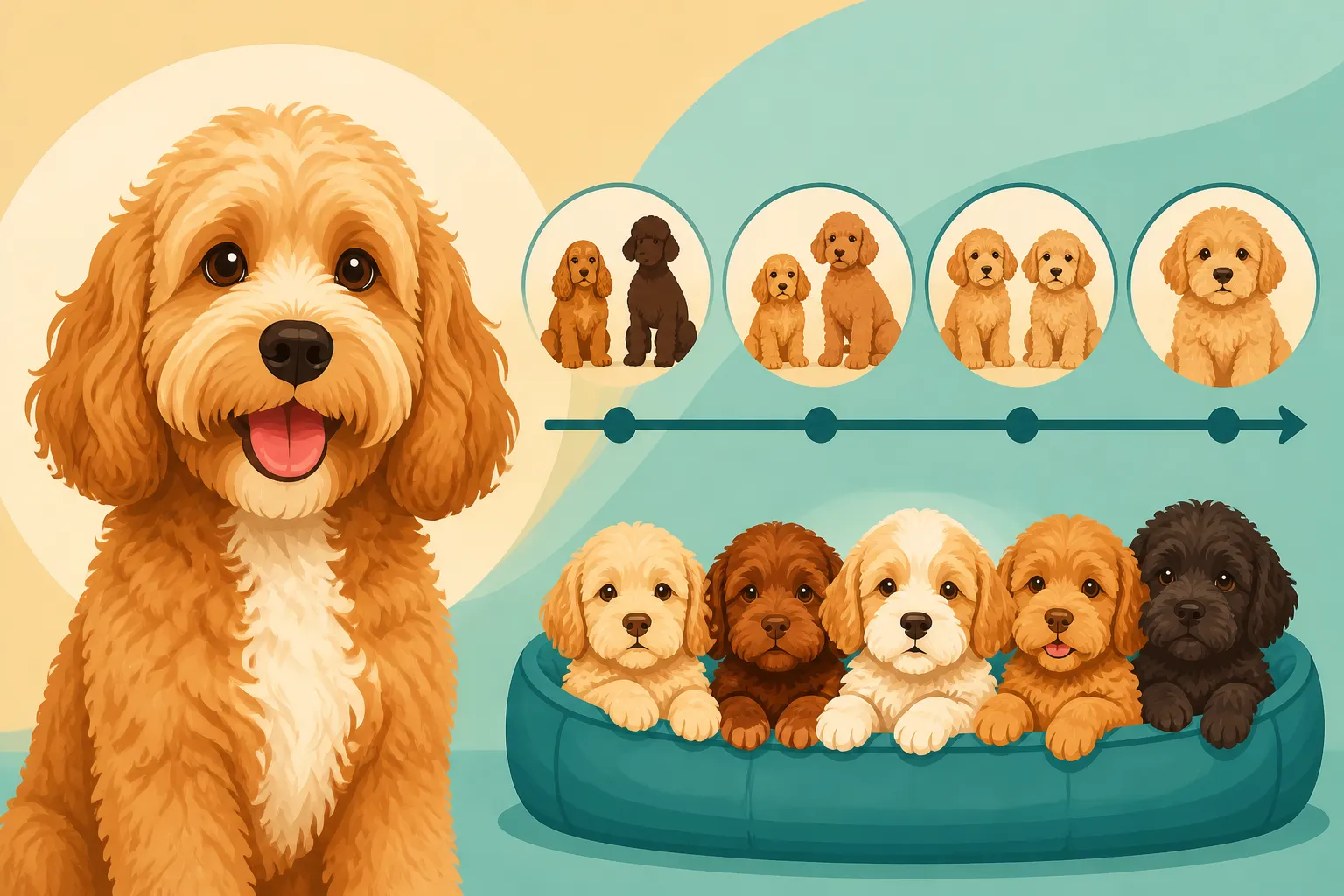
The Years the First Cockapoo Litters Appeared
Have you ever wondered about the origins of your beloved Cockapoo, or perhaps seen an older photo of a fluffy mixed-breed dog and thought, "Could that be a Cockapoo?" It's easy to assume that many of our popular 'designer dogs' are relatively new phenomena, but the Cockapoo actually has a much richer and lengthier history than many realize. This guide will take you on a journey back to the very beginnings of this charming crossbreed, exploring the pivotal years when the first Cockapoo litters made their appearance and how they paved the way for the enduring popularity we see today.
Unearthing the Cockapoo's Roots: A Mid-Century American Story
It's fascinating to consider that the Cockapoo, a dog that seems so distinctly "modern" to many, actually predates the popularization of the term "doodle" itself. The story of their emergence isn't just about two breeds mixing; it's a tale woven into the fabric of mid-20th century American pet culture, responding to evolving desires for companion animals. We're talking about a time when families were looking for something a little different, a dog that combined the best traits of beloved breeds without some of their inherited challenges.
The Intent Behind the Initial Crosses: Were They Accidental or a Deliberate Quest for Something New?
When we look back at the origins of many crossbreeds, there's often a bit of a chicken-and-egg scenario. Were these first Cockapoos the result of an accidental meeting between a Cocker Spaniel and a Poodle, or was there a deliberate, thoughtful intention behind these pairings? While it's hard to definitively say for every single individual litter from decades ago, the general consensus points towards a growing, purposeful effort. People were beginning to notice the wonderful temperaments and appealing qualities that emerged when these two particular breeds were combined. It wasn't just a random backyard breeding; there was a burgeoning understanding that this specific cross had something special to offer. Breeders, or at least curious dog lovers, started to experiment, not necessarily with a grand plan for a new "breed," but with a clear desire to produce puppies with specific characteristics. This period laid the groundwork for what would become a distinct and much-loved hybrid. You can delve more deeply into this topic in Whether the First Cockapoo Was an Accident.
The Social Climate of the 1950s: Why This Era Was Ripe for a New Kind of Companion Dog
The 1950s in America were a time of great change, and that included how people viewed their pets. Post-war prosperity and the rise of suburbia meant more families were seeking companion animals that fit into a modern, often smaller, household. There was a desire for dogs that were good with children, relatively easy to train, and perhaps most importantly, didn't shed excessively due to the increasing popularity of indoor living. The purebred breeds of the time, while cherished, often came with specific health or shedding considerations that some families found challenging. This created a fertile ground for the idea of a "hybrid vigor" dog, one that might blend the best of both worlds. It wasn't just about looks; it was about lifestyle. The American Cocker Spaniel was already a hugely popular family dog, known for its sweet nature, while Poodles, particularly Miniature and Toy sizes, were gaining recognition not just for their intelligence and elegance but also their low-shedding coats. The combination felt like a natural fit for the era's evolving pet ownership needs.
Pinpointing the Emergence: The Actual Years and Parent Breeds
The beauty of the Cockapoo's history is that it wasn't a singular event but a gradual blossoming across various locations. While there isn't one universally agreed-upon "first litter" with a date stamped on it, we can certainly narrow down the timeframe and understand which parent breeds were the catalysts for this phenomenon.
When the First Documented Litters Appeared: Focusing on the 1950s and Early 1960s
Most canine historians and long-time enthusiasts agree that the first deliberate breedings of Cocker Spaniels and Poodles, yielding what we now recognize as Cockapoos, began in the United States around the mid-1950s. This makes the Cockapoo one of the original designer dog crosses, a real pioneer long before the term "doodle" even entered our vocabulary. While precise records from these early days are scarce compared to today's breeding practices, anecdotal evidence and the memories of early breeders and owners consistently point to this decade as the genesis. By the early 1960s, the concept was clearly taking hold, with more intentional breedings occurring as word spread about these delightful pups. These early Cockapoos quickly captured hearts, and their popularity began to quietly simmer, laying the foundation for a much larger wave of enthusiasm in later decades. If you're curious about this pioneering status, you might enjoy The Doodle That Predates the Word.
The American Cocker Spaniel's Pivotal Role: Its Traits and Influence
The American Cocker Spaniel was undeniably one of the foundational parents for the early Cockapoo litters. At the time, the American Cocker was incredibly popular, known for its sweet disposition, beautiful flowing coat, and expressive eyes. They were (and still are) wonderful family companions, eager to please, and generally good with children. However, they did come with certain grooming demands and a propensity for shedding, not to mention some breed-specific health concerns. When paired with a Poodle, the hope was to retain that fantastic, loving Cocker temperament while potentially introducing a lower-shedding coat and perhaps even some of the Poodle's celebrated intelligence and robustness. The Cocker side brought an inherent friendliness and a desire to be near their people, traits that continue to define the Cockapoo today. It was this winning personality that initially drew many to the idea of the cross. For more on this, check out Which Cocker Was Used in the First Cockapoos.
The Poodle Contribution: Size and Temperament
On the other side of the equation was the Poodle, a breed often misunderstood but revered by those who know them. Poodles, in all their sizes, are incredibly intelligent, active, and possess a non-shedding, hypoallergenic-friendly coat. For the early Cockapoo crosses, it was primarily the Miniature Poodle and Toy Poodle that were used, contributing to the smaller to medium sizes we often associate with Cockapoos. This was a strategic choice; combining a smaller Poodle with an American Cocker Spaniel produced a dog that was a manageable size for many homes. The Poodle brought a sharp mind, trainability, and that highly desired coat type. Their lively, playful nature also blended wonderfully with the Cocker's gentle demeanor, creating a balanced and engaging companion. The Poodle's genes were crucial in giving the Cockapoo its characteristic "furnishings" – the longer hair on the muzzle and eyebrows – which is a hallmark of the low-shedding "doodle" look. To understand more about the size pairings, read Whether a Miniature Poodle Sired the First Cockapoos.
From Novelty to Beloved Companion: The Cockapoo's Rapid Ascent
What started as a handful of experimental litters quickly grew into a quiet phenomenon. The charm of these early Cockapoos was undeniable, and it wasn't long before they began to gain a devoted following, albeit without the massive internet hype we see with new breeds today.
Spreading the Word: How Early Adopters Championed the Breed
In the 1950s and 60s, there was no social media to catapult a new dog into viral fame. The spread of the Cockapoo's popularity was a grassroots effort, largely fueled by enthusiastic owners telling their friends, family, and neighbors about their amazing new companion. Imagine a time when you'd see a friend's new puppy, ask about it, and be utterly charmed by its temperament and unique look. This word-of-mouth endorsement was incredibly powerful. Owners praised the Cockapoo's intelligence, its affectionate nature, its manageable size, and for many, the unexpected bonus of a coat that seemed to shed less than their previous dogs. These happy owners became unintentional ambassadors for the crossbreed, creating a steady demand that encouraged more breeders to pursue these pairings. It was an organic rise to popularity, built on genuine satisfaction, which is a testament to the inherent qualities of the Cockapoo itself.
The Irresistible Appeal: Why Families Fell for the Cockapoo
The appeal of the Cockapoo was multifaceted, hitting on several key desires for a family pet. First, their temperament was often described as exceptionally friendly, outgoing, and eager to please – a true "people dog." They bonded deeply with their families and were known for their gentle nature with children, making them ideal companions for bustling households. Secondly, the physical appearance was incredibly endearing. They had the expressive eyes of a Cocker Spaniel, often with the soft, curly or wavy coat of a Poodle, creating that adorable "teddy bear" look that has become so iconic. This combined aesthetic was hard to resist. Finally, the promise of a potentially low-shedding dog was a huge draw, especially for those with allergies or simply a desire for less dog hair around the house. These factors combined to make the Cockapoo a highly sought-after companion, slowly but surely spreading its presence across American homes. The widespread love for these dogs is why they spread so effectively through America, as described in How the Cockapoo Spread Through America.
The Original "Doodle": How the Cockapoo Paved the Way
It’s easy to think of "doodles" as a recent trend, often picturing the more commonly known Goldendoodles or Labradoodles. But the Cockapoo holds a special place in this history, as it was truly the trailblazer. It established the very concept of combining a Poodle with another popular breed to create a new type of companion dog.
A Hybrid Before the Hype: Emphasizing its Pioneering Status
The Cockapoo was innovating decades before the term "doodle" was even coined. While the Labradoodle is often credited with popularizing the name "doodle" in the late 1980s, the Cockapoo had already been delighting families for 30 years or more. This makes the Cockapoo arguably The Doodle That Predates the Word. They were proof that a thoughtfully chosen cross between two distinct purebreds could result in a dog with unique advantages, combining desirable traits from both sides. This wasn't just a fleeting trend; it was a foundational movement in the world of hybrid dogs. Without the early success and widespread affection for the Cockapoo, it's fair to wonder if the subsequent "doodle" phenomenon would have taken off in the same way. They demonstrated the potential and sparked interest in what other Poodle crosses could offer.
Shaping the Future of Designer Dogs: Its Legacy
The Cockapoo's early success served as a blueprint, whether consciously or not, for many other Poodle crosses that followed. The idea that you could specifically breed for a particular set of traits – a desirable temperament, a manageable size, and a low-shedding coat – became more widely accepted, leading to the creation of other "designer dogs." While the intentions behind these crosses varied, the Cockapoo clearly demonstrated the market for such dogs. It highlighted the appeal of a "best of both worlds" approach, driving an interest in hybrid vigor and the blending of desirable characteristics. Today, when you see a diverse array of doodle breeds, remember that the Cockapoo was there first, quietly laying the groundwork and proving the concept could work. This history also explains Why the Cockapoo Came Before the Labradoodle.
Reflecting on the Early Days: Lessons Learned for Today's Breeders
Looking back at the Cockapoo's origins isn't just a historical exercise; it offers valuable insights for anyone interested in the breed today, especially concerning ethical breeding practices and responsible pet ownership.
Navigating the "Designer Dog" Controversy: What Early Breeders Faced
Even in the mid-20th century, the concept of deliberately crossing two purebred dogs wasn't without its detractors. Traditionalists often viewed such practices with skepticism, seeing them as undermining established breeds or being purely commercial endeavors. Early Cockapoo breeders and owners likely faced questions and criticism from those who preferred the predictable nature and documented pedigrees of purebred dogs. There wasn't the widespread acceptance or understanding of hybrid vigor that exists today. This meant that early Cockapoo advocates had to rely solely on the tangible qualities of the dogs themselves – their health, temperament, and appeal – to win over hearts and minds, rather than relying on breed club endorsements or formal recognition. It was a challenging environment, but the inherent charm and adaptability of the Cockapoo ultimately allowed it to thrive.
The Importance of Health Screening: A Modern Imperative
One significant difference between the early days of Cockapoo breeding and today is the understanding and implementation of comprehensive health screening. In the 1950s and 60s, genetic testing for dogs was virtually nonexistent. Breeders relied more on visible health, lineage reputation, and general knowledge of breed-specific issues. This meant that while efforts were made to breed healthy dogs, many of the genetic predispositions of both Cocker Spaniels and Poodles could inadvertently be passed down.
Today, responsible Cockapoo breeders have access to a wealth of genetic tests and health certifications that can significantly reduce the risk of passing on hereditary diseases. For instance, they can test for conditions like progressive retinal atrophy (PRA), which can lead to blindness, or Familial Nephropathy (FN), a severe kidney disease, both of which can originate from the parent breeds. Ensuring parents are cleared for these conditions is paramount. Resources like Chewy, while not directly involved in breeding, provide educational materials and products that support a dog's long-term health, emphasizing the modern shift towards preventative care. For potential owners, understanding The Kidney and Eye Tests a Cockapoo Price Should Cover is crucial when looking for a puppy.
It's a stark contrast to the initial years where such detailed insight wasn't available. This evolution underscores the importance of choosing a breeder who is transparent about health testing and committed to the well-being of their puppies, utilizing all the tools available in modern veterinary science. This proactive approach helps ensure that the Cockapoo's future continues to be as bright as its past. When you're considering bringing a Cockapoo into your home, always ask about the health certifications of the parent dogs. It’s an investment in a healthy, happy future for your furry family member.
The Enduring Legacy of the Early Cockapoo
From their quiet beginnings in the mid-20th century, the Cockapoo has grown from a hopeful crossbreed into a beloved and enduring companion. The pioneering efforts of early breeders and the undeniable charm of these dogs set the stage for the entire "doodle" phenomenon. Their journey from a novel idea to a household name is a testament to their delightful personalities, adaptability, and the sheer joy they bring to countless families. Today, finding everything your Cockapoo needs, from specialized food to fun toys, is incredibly easy through online retailers like Chewy, making modern pet ownership a breeze compared to earlier times. The legacy of those first Cockapoo litters continues to shape our understanding of companion dogs and proves that sometimes, the best things come from unexpected combinations.
Disclaimer
This article is for general informational purposes only and does not constitute professional advice. Laws, prices and regulations vary by location and change over time. Consult a qualified professional for guidance on your specific situation.