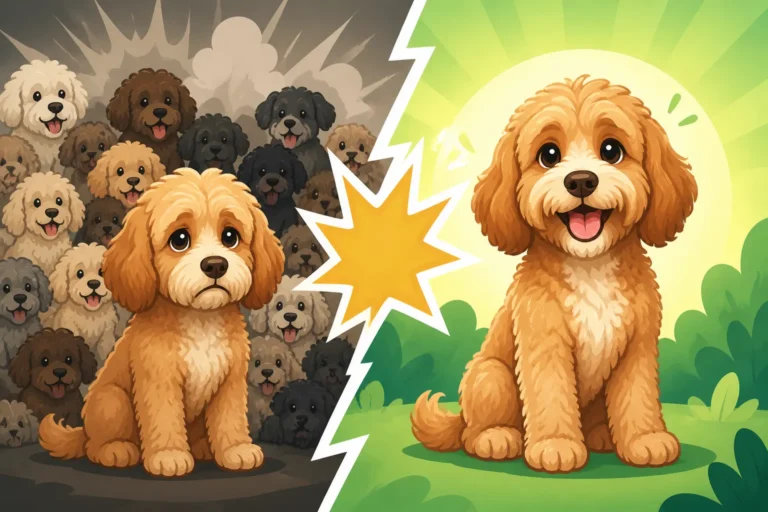
Whether the Cockapoo Could Follow the Cobberdog Route
It’s a common aspiration for many Cockapoo owners and enthusiasts: to see this beloved crossbreed evolve into a formally recognized breed. We often look at other successful "designer dogs" that have made the leap, and one that frequently comes up in conversation is the Australian Labradoodle, or more specifically, the Cobberdog. The path to breed recognition is long and complex, fraught with challenges, and it naturally leads us to wonder if the Cockapoo, with its long and endearing history, could ever follow a similar route. This guide will delve into what the "Cobberdog route" actually entails and explore the significant hurdles and potential pathways for the Cockapoo to achieve similar status.
What Exactly is the Cobberdog Route?
When people talk about the "Cobberdog route," they're usually referring to the very deliberate and highly structured process undertaken to establish the Australian Cobberdog as a distinct breed. It wasn't just about mixing two breeds and seeing what happened; it was a decades-long commitment to a specific vision, with a clear focus on health, temperament, and consistent physical traits. This wasn't an accidental cross that gained popularity; it was a carefully managed genetic program.
From Doodle to Developed Breed
The Australian Labradoodle itself started as a cross between a Labrador Retriever and a Poodle, primarily to create a guide dog for people with allergies. However, the early generations showed a lot of variation, as you might expect from any F1 cross. The founders of what became the Cobberdog recognized that to achieve consistency and maintain specific traits, they needed to move beyond simply calling it a "Labradoodle." They envisioned a dog that would reliably possess a calm, intuitive temperament suitable for therapy and assistance work, a low-shedding coat, and excellent health.
This vision required a more scientific and selective breeding program. They brought in other breeds, carefully chosen for specific traits, to diversify the gene pool and solidify the desired characteristics. This wasn't just about producing cute puppies; it was about laying the genetic foundation for a new breed. The goal was to create dogs that would breed true, meaning their offspring would consistently exhibit the same desired qualities, generation after generation. This is a crucial distinction from simply breeding one 'designer dog' to another without a clear, overarching plan.
The Role of a Breed Standard and Registry
A fundamental part of the Cobberdog's journey was the creation of a definitive breed standard. This document meticulously describes every aspect of the ideal Cobberdog: its size, conformation, coat type and texture, colors, movement, and crucially, its temperament. This isn't a vague suggestion; it's a blueprint that every breeder aiming for recognition must adhere to. It provides a clear target for selection and breeding decisions.
Alongside the standard, a dedicated breed registry was established. This registry carefully tracks every Cobberdog, ensuring that only dogs meeting the strict criteria, descended from approved lines, and undergoing specific health tests are included. This controlled environment ensures the integrity of the breed's development. It’s a very different scenario from the free-for-all that often characterizes early "doodle" breeding, where parentage can sometimes be murky, and health testing is inconsistent. For instance, the question of whether a Cockapoo club registered puppy costs more usually relates to the efforts of those clubs to bring some order to Cockapoo breeding, but even those efforts haven't reached the level of a closed studbook yet.
Health and Temperament as Cornerstones
One of the most impressive aspects of the Cobberdog's development is the unwavering emphasis on health and temperament. Breeders involved in its establishment committed to extensive health testing for their breeding stock, going far beyond what is typical for many casual crossbreedings. This isn't just about preventing common issues; it's about actively improving the health of the entire breed line. They aim to reduce the incidence of inherited diseases by carefully selecting parents who are clear of known genetic conditions.
Furthermore, the Cobberdog was developed with a specific temperament in mind: calm, intelligent, gentle, and highly trainable, making them ideal assistance and therapy dogs. Breeders actively select for these traits, recognizing that a dog's disposition is just as important as its physical appearance or coat type. This focus means that prospective owners can have a much higher expectation of what kind of dog they are getting, both in terms of health and personality, compared to a crossbreed where outcomes can be much more variable.
The Current State of the Cockapoo: Challenges to Breed Recognition
The Cockapoo has been around for decades, often cited as The Doodle That Predates the Word. It gained popularity organically, not through a formalized breeding program. This has led to a very different landscape compared to the Cobberdog, presenting significant challenges if it were ever to pursue official breed recognition.
A History of Hobby Breeding vs. Formal Development
The Cockapoo originated in the United States in the 1950s, a charming cross between a Cocker Spaniel and a Poodle. The initial intent was simply to combine the pleasant temperaments and low-shedding coats of both parent breeds. These early litters, which you can read about in The 1950s American Litters Behind the Cockapoo, were largely the result of individual hobby breeders or even accidental pairings. There was no overarching blueprint, no single group guiding the development.
This grassroots origin, while endearing, means that the Cockapoo's development has been largely unregulated. Breeders have pursued their own lines, often with varying goals and without a unified vision for what a "perfect" Cockapoo should be. This lack of centralized direction from the outset is a major point of divergence from the Cobberdog, where a dedicated group established and maintained strict control over breeding. The consequence is a wider variation in appearance, temperament, and health outcomes within the Cockapoo population. For example, some Cockapoos are energetic, true to their Spaniel heritage, while others are calmer, leaning more towards the Poodle's disposition.
Divergent Standards and Multiple Clubs
One of the most significant hurdles for the Cockapoo is the lack of a single, universally accepted breed standard. Currently, there are at least Two Clubs and Two Definitions of a Cockapoo with differing ideas about what a Cockapoo should be. While these clubs strive to guide breeders and establish some level of consistency, their existence highlights a fundamental disagreement within the community itself. One club might favor certain physical traits, while another might emphasize different ones.
A recognized breed must have one standard that all breeders agree to uphold. This standard defines the ideal dog, and breeders work towards it. When you have multiple standards or, worse, no standard at all for many breeders, it's impossible to establish a consistent breed type. This isn't just about aesthetics; it's about predictable temperament, size, and health characteristics. Until the Cockapoo community can coalesce around a single, agreed-upon standard, the path to formal recognition will remain largely blocked. We often wonder What a Cockapoo Standard Actually Describes and the answer varies greatly depending on which club or even which breeder you ask.
The Impact of Varied Parentage and Generations
The term "Cockapoo" encompasses a wide spectrum of generations and parentage, from first-generation (F1) crosses to multi-generational (F3 or higher) dogs. An F1 Cockapoo is a direct cross between a purebred Cocker Spaniel and a purebred Poodle. An F1b involves an F1 Cockapoo bred back to one of the parent breeds, usually a Poodle, often in an attempt to enhance the low-shedding coat. Multi-generational Cockapoos are the result of breeding Cockapoo to Cockapoo.
This variety, while offering choices to potential owners, presents a huge challenge for breed recognition. The genetic makeup and resulting traits can vary dramatically across these generations. An F1 litter might show a wide range of coat types, from almost flat to tightly curled. Later generations, especially carefully selected multi-gens, can be more consistent, but even then, without a unified standard and strict adherence, variation persists. This makes it difficult to define what a "true" Cockapoo looks like or acts like. The question of Whether a Multigen Cockapoo Breeds True is critical, and for formal recognition, that 'trueness' needs to be highly reliable and predictable.
Key Differences and Similarities: Cockapoo vs. Cobberdog
Understanding the core differences between how the Cockapoo evolved and how the Cobberdog was purposefully created is essential for gauging the Cockapoo's prospects for breed recognition. It's not just a matter of time; it's a matter of fundamental approach.
Intentional Breeding vs. Popular Demand
The most striking difference lies in their origins. The Cobberdog was born out of a specific, intentional breeding program with clear goals: to create a therapy and assistance dog with a non-shedding coat and a gentle temperament. Every breeding decision, every introduction of new genetics, was meticulously planned and recorded to achieve this outcome. It was a top-down, scientifically informed effort.
The Cockapoo, on the other hand, arose from popular demand. People loved the idea of a friendly, often low-shedding companion, and breeders, both reputable and otherwise, responded to that demand. It was a bottom-up, organic growth, driven by market forces and individual preferences rather than a unified scientific committee. This has resulted in the charming, varied dogs we know and love, but it also means there's less consistency across the breed type. This difference in intent is largely Why the Cockapoo Has Been Sixty Years Becoming a Breed without achieving formal recognition.
Genetic Diversity and Health Screening
The Cobberdog breeders understood the importance of a healthy gene pool. While they had a specific type in mind, they carefully managed genetic diversity and implemented rigorous health screening from the beginning. They created a foundation stock that was thoroughly tested for common genetic diseases found in the parent breeds. This proactive approach helps to minimize hereditary health issues within the developing breed.
For the Cockapoo, health testing has been much more hit-and-miss. While many ethical Cockapoo breeders now do extensive health testing, especially for conditions like PRA and patellar luxation, it's not universally enforced or standardized. There are still many Cockapoos bred from parents with unknown health histories. This can lead to a higher incidence of preventable hereditary conditions. For a breed to be recognized, proving a strong commitment to health and demonstrating a consistent reduction in genetic diseases is paramount. Potential owners often face the gamble of Whether an Untested Cockapoo Litter Is a Gamble, a risk that a formally recognized breed aims to minimize.
Coat Types and Consistency
A defining feature of the Cobberdog is its consistent, low-shedding coat, specifically bred for allergy sufferers and ease of care. Breeders have worked hard to ensure that this trait is reliably passed down through generations.
The Cockapoo's coat, however, is notoriously variable. Depending on the generation and the specific genetics inherited from the Cocker Spaniel and Poodle parents, a Cockapoo can have anything from a flat, shedding coat (often called an "Improper Coat") to a wavy "fleece" coat, or even a tight "wool" curl. This variation is part of the Cockapoo's charm for some, but it's a significant barrier to breed recognition, which typically demands a consistent and predictable coat type. Whether a Breeder Can Guarantee a Cockapoo's Coat is a question many prospective owners ask, and the honest answer is that it's much harder for Cockapoos due to the wide genetic variation.
Here's a quick comparison of the two paths:
| Feature | Cockapoo (Current Status) | Australian Cobberdog (Path to Recognition) |
|---|---|---|
| Origin | Organic, popular demand, hobby breeding. | Intentional, planned program, scientific foundation. |
| Primary Goal | Companion dog, often low-shedding, friendly. | Assistance/therapy dog, non-shedding, specific temperament & health. |
| Breed Standard | Multiple, often conflicting, or non-existent. | Single, strict, universally applied standard. |
| Registry | Multiple, optional, varying requirements. | Single, controlled, mandatory for all breeding stock. |
| Health Testing | Variable, from extensive to none, often buyer-dependent. | Mandatory, rigorous, recorded, and a cornerstone of selection. |
| Coat Consistency | Highly variable (flat, wavy, curly, shedding to non-shedding). | Highly consistent, low-shedding, specific texture (fleece/wool). |
| Temperament | Generally friendly, but can vary greatly in energy/drive. | Highly consistent: calm, intuitive, intelligent, gentle. |
| Generations | F1, F1b, F2, Multigen – wide variety, less predictability. | Managed generational breeding with strict selection for desired traits. |
| Recognition | Not formally recognized by major kennel clubs. | Formally recognized by breed-specific associations, working towards wider recognition. |
Steps a Cockapoo Could Take Towards a Defined Breed
So, if the Cockapoo community did want to follow the Cobberdog route, what would that actually look like? It would require a monumental shift in philosophy and practice, a level of cooperation that has, so far, eluded the breed. Whether the Cockapoo Will Ever Be Recognized hinges on these very steps.
Unifying Under a Single, Strict Standard
The absolute first step would be for the existing Cockapoo clubs and prominent breeders to set aside their differences and agree on a single, comprehensive breed standard. This isn't just a casual meeting; it would involve extensive discussions, compromise, and a shared vision for the future of the breed. This standard would need to cover everything from ideal size and conformation across all size classes (Teacup to Maxi) to acceptable coat types, colors, and the defining temperament traits.
Once established, this standard would need to be enforced. This means breeders would actively select dogs for breeding that conform to this ideal, and rigorously deselect those that don't. This process takes generations and requires unwavering commitment. It's a huge undertaking, especially given the current diversity within the Cockapoo population. Without this unified standard, the breed will always remain a charming cross, rather than a distinct, recognized breed.
Mandatory Health Testing and Open Registries
Another critical step, echoing the Cobberdog's path, would be the implementation of mandatory, transparent health testing for all breeding stock. This isn't just about screening for a couple of common ailments; it would involve a comprehensive panel of tests for conditions prevalent in both Cocker Spaniels and Poodles. This includes genetic tests for conditions like Progressive Retinal Atrophy (PRA), Familial Nephropathy (FN), Phosphofructokinase (PFK) Deficiency, and orthopedic evaluations for hip and elbow dysplasia, as well as patellar luxation. The results of these tests would need to be openly published and accessible, perhaps through a central database. Organizations like the Orthopedic Foundation for Animals (OFA) already provide such resources for purebred dogs, and a developing Cockapoo breed would need to create a similar, mandatory system. Remember, potential Cockapoo owners should already be asking for The Five Certificates a Cockapoo Breeder Should Show even without formal recognition.
Alongside mandatory health testing, a centralized, closed registry would be essential. This registry would record every Cockapoo intended for breeding, along with their health clearances, pedigree, and conformation assessments. Only dogs meeting the strict health and standard requirements would be permitted to be registered for breeding purposes. This kind of stringent control is what allows a breed to evolve healthily and predictably.
Promoting Ethical Breeding Practices
Beyond standards and registries, there would need to be a massive push for education and adherence to ethical breeding practices. This means moving away from puppy mill operations and backyard breeders who prioritize profit over health and welfare. It involves educating the public about the importance of choosing a breeder who follows these rigorous standards and understands the long-term vision for the Cockapoo.
For example, breeders would need to be diligent about understanding genetics beyond just parentage. Utilizing genetic panels that identify coat traits (like the furnishings gene, which affects shedding) and potential disease carriers would become standard practice. This selective breeding is how a uniform "look" and "feel" for the Cockapoo could finally emerge. This would also involve working closely with veterinarians and canine geneticists to ensure the health protocols are sound and up-to-date. Resources found on sites like Chewy that promote responsible pet ownership or educational materials on canine health could be invaluable for new owners.
Moreover, the process of socialization and early training would need to be consistent across the board to ensure the desired temperament is fostered from puppyhood. Many reputable breeders already do this, but for breed recognition, it would need to be a universal expectation. Good breeders understand that puppies need stimulating environments and positive experiences before they even leave for their forever homes. Supplies like enrichment toys and high-quality puppy food, often found on Chewy, are things these ethical breeders consistently invest in. The Cockapoo's journey towards breed recognition is less about becoming 'more purebred' and more about becoming 'more predictable' in a positive way.
Disclaimer
This article is for general informational purposes only and does not constitute professional advice. Laws, prices and regulations vary by location and change over time. Consult a qualified professional for guidance on your specific situation.