Whether a Breeder Will Match You to a Cockapoo Coat
One of the most common hopes (and anxieties!) prospective Cockapoo owners have is about their puppy's future coat. You might dream of a wavy, low-shedding fluffball, or maybe a tightly curled, Poodle-esque companion, but often wonder if a breeder can actually guarantee or match you to that specific look and feel. It's a valid concern, especially given the diverse range of Cockapoo coats out there and the promises (or lack thereof) some breeders make. This guide aims to shed light on how breeders navigate coat types and what you can realistically expect in your quest for the perfect furry friend.
Understanding Cockapoo Coat Variability
It's completely normal to have a preference when it comes to your Cockapoo's coat. Many people are drawn to the breed specifically for the promise of a low-shedding, allergy-friendly dog. However, the Cockapoo, being a hybrid, inherits a wonderful mix of traits from both the Cocker Spaniel and the Poodle, and this genetic blend leads to a delightful array of coat types. Understanding these variations is the first step in knowing what questions to ask and what expectations to set.
The Genetic Lottery of Coat Types
The primary drivers behind a Cockapoo's coat are two main genes: the Furnishings gene and the Curl gene. The Furnishings gene dictates whether your Cockapoo will have that distinctive beard, mustache, and eyebrows – the "furnishings" that prevent shedding. Without furnishings, a Cockapoo will likely have a flatter face and shed more like a Cocker Spaniel. This is a big deal for allergy sufferers! You can learn more about this by reading The Furnishings Gene That Decides a Cockapoo's Face. Then there's the Curl gene, which, as you might guess, determines how curly your pup's hair will be. A Cockapoo can inherit anything from a straight coat (less common but it happens!) to a wavy coat, or a tightly curled Poodle-like coat. Each combination results in a different look and, crucially, a different grooming requirement.
Think of it like this: your Cockapoo puppy receives one copy of each gene from its Cocker parent and one from its Poodle parent. If the Poodle parent passes on two copies of the furnishing gene and two copies of the curl gene, and the Cocker parent passes on none of the furnishing gene and two copies of the straight gene, the puppies could be a mix. Early generation Cockapoos, particularly F1s (a direct cross between a purebred Cocker Spaniel and a purebred Poodle), can be a real genetic coin flip. You might see a huge variety of coats even within the same litter. Later generations, like F1b or Multigens, where Cockapoos are bred back to a Poodle or to another Cockapoo, tend to have more predictable coats, often leaning more towards the Poodle's characteristics. This is because breeders are aiming to consolidate those non-shedding, curly traits.
Common Coat Types and Their Upkeep
Generally, Cockapoo coats fall into three broad categories, each with its own charm and demands. Knowing these will help you articulate your preferences to a breeder and understand their responses.
First, you have the straight coat, sometimes called a flat coat. These Cockapoos often look more like a Cocker Spaniel with longer hair. They typically shed, though perhaps not as heavily as a pure Cocker. Grooming needs are still present, but usually less intense than a curly coat; regular brushing a few times a week to prevent tangles and remove loose hair is usually sufficient. You're less likely to find these coats in F1b or later generations, as breeders specifically work to maintain the furnishings and curl.
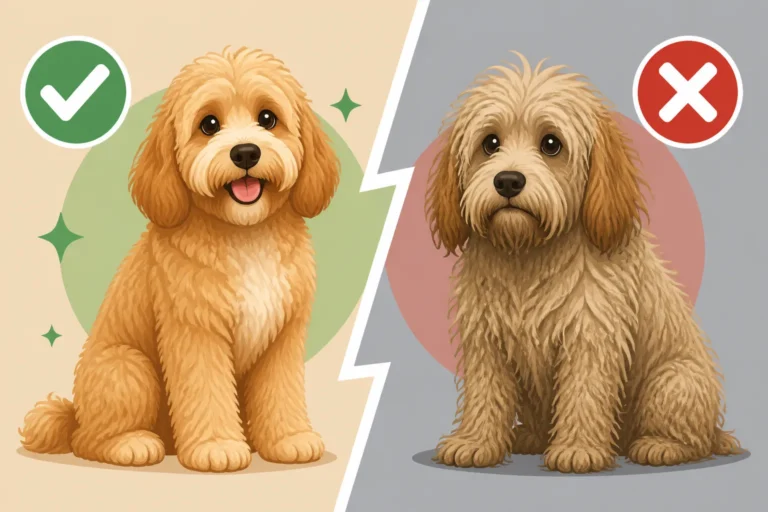
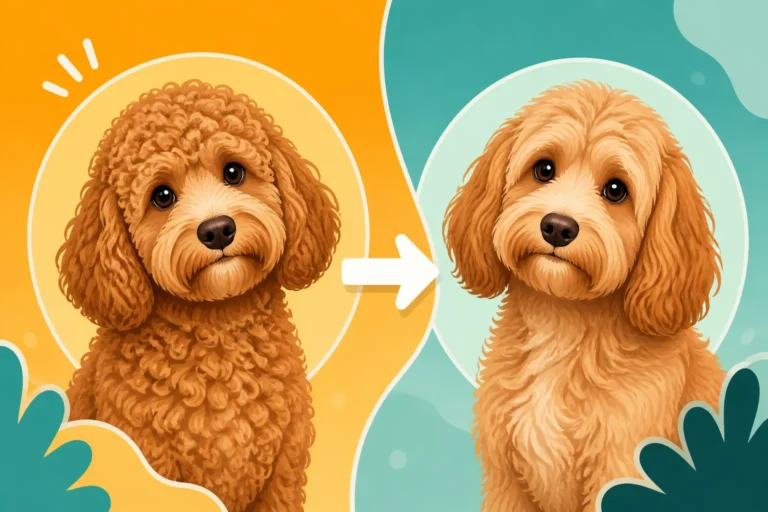
Then there's the wavy coat, which is perhaps the most iconic "Doodle" look. This coat is often described as shaggy or fleecy, with loose curls and a soft texture. These dogs usually have furnishings and are typically low-shedding, making them a popular choice. However, "low-shedding" doesn't mean "no-maintenance." Wavy coats are notorious for matting, especially behind the ears, under the legs, and in the armpits. Daily or every-other-day brushing is often a must, and professional grooming every 6-8 weeks is essential to keep it manageable. It's a beautiful coat, but don't underestimate the upkeep.
Finally, we have the curly coat, which closely resembles a Poodle's dense, tight curls. These coats are typically very low-shedding and often the best choice for people with severe allergies. They require the most intensive grooming, often needing daily thorough brushing and professional grooming every 4-6 weeks to prevent mats from forming deep within the dense curls. If not maintained, these coats can quickly become a solid pelt, causing discomfort and requiring a full shave-down. It's truly a full-time job for owners of these beauties. You can dive deeper into the grooming demands of each by checking out The Three Cockapoo Coat Types and Their Upkeep.
The "Hypoallergenic" Myth and Shedding Realities
Many people seek Cockapoos because they've heard they are "hypoallergenic." It's important to clarify that no dog is truly 100% hypoallergenic. Allergies are typically triggered by dander (dead skin cells) and saliva, not just hair. However, dogs that shed less release less dander into the environment, making them more tolerable for many allergy sufferers. This is where the furnished, curly or wavy coats come in. A flat-coated Cockapoo, lacking furnishings, will shed more and likely won't be a good fit for an allergic household.
This desire for a low-shedding coat is often the primary reason owners have a strong preference when approaching a breeder. It's not just about aesthetics; it's about managing allergies and the sheer amount of vacuuming! Therefore, understanding the genetic underpinnings of shedding is vital. A good breeder will be transparent about the likelihood of a particular coat type shedding, and certainly, if you have allergies in the family, this conversation needs to happen upfront. Keep in mind that even a non-shedding coat needs significant grooming to prevent mats, which can become painful for your dog. So while you might save on lint rollers, you'll be spending more time with a brush in hand, or with a professional groomer.
How Breeders Approach Coat Matching
Given the strong preferences owners often have, and the genetic variability, how do breeders actually go about matching puppies to families based on coat type? It's a complex dance between genetic prediction, puppy assessment, and careful communication with prospective owners.
The Breeder's Perspective on Puppy Placement
For most reputable breeders, the absolute top priority when placing a puppy is temperament. They want to ensure the puppy's personality and energy level are a good fit for the family's lifestyle. A calm puppy might not thrive in a boisterous household, just as an energetic puppy might languish in a quiet, sedentary home. Coat type, while important to many buyers, usually comes after temperament on a breeder's list of considerations.
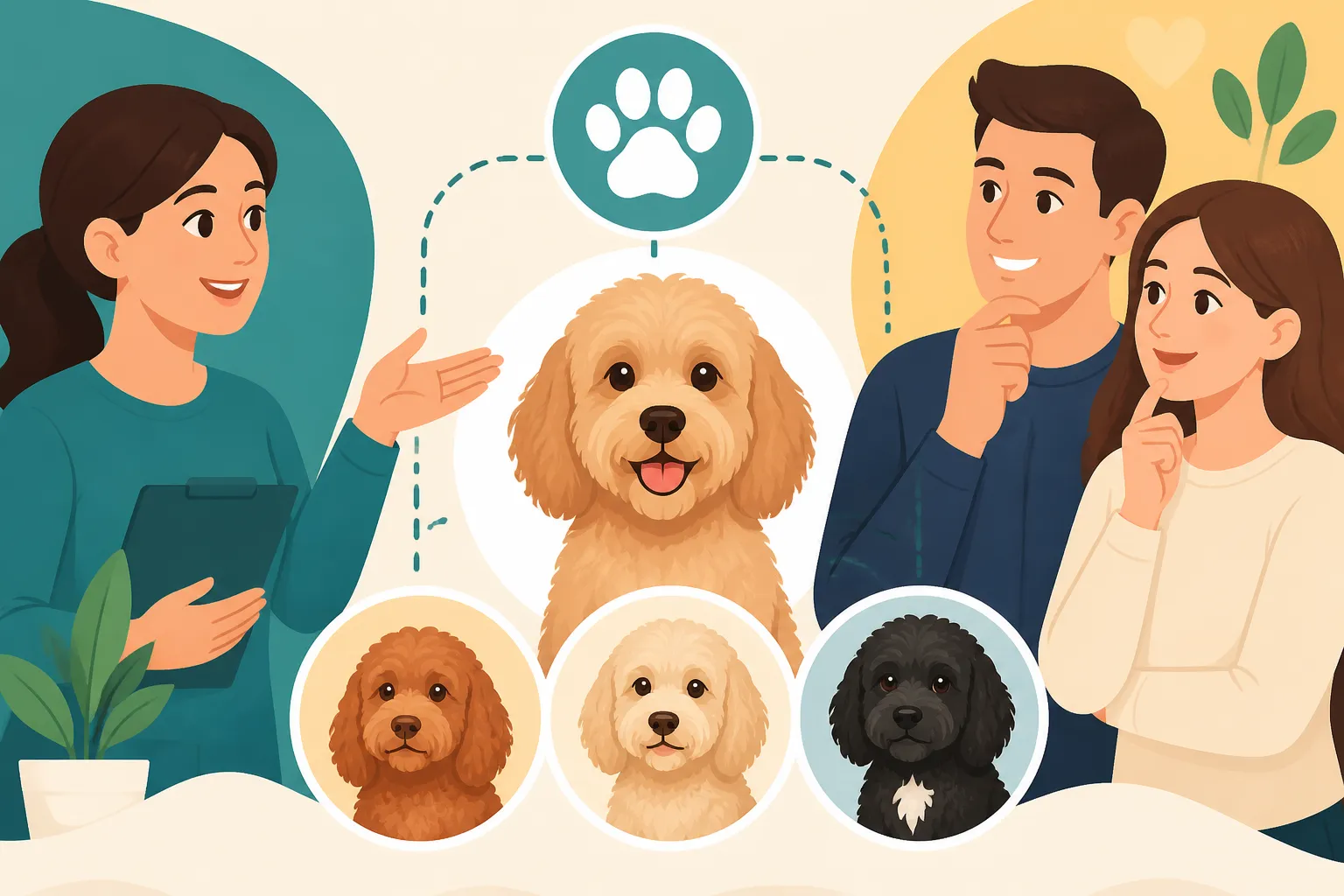
However, a good breeder will absolutely take your preferences into account, especially concerning allergies. If you’ve specifically told them you need a low-shedding dog, they’ll factor that into their recommendations. They understand that a puppy that causes constant allergic reactions or requires more grooming than you can handle might not be a happy match long-term. This is where their experience with previous litters and their knowledge of the parent dogs' genetics become invaluable. They're trying to create a successful, lasting bond between dog and family, and sometimes that means a slightly less "perfect" coat for a "perfect" personality match.
Tools and Information Breeders Use
Breeders aren't just guessing when it comes to coats. Responsible breeders use several tools to predict a litter's potential coat types, and to give buyers the most accurate information possible.
Firstly, they rely heavily on DNA testing of the parent dogs. There are specific genetic tests available for furnishings (RSPO2 gene) and curl (KRT71 gene). By testing both parents, a breeder can predict with a fairly high degree of accuracy what percentage of the puppies in a litter will carry certain coat traits. For example, if both parents are "FF" for furnishings (meaning they have two copies of the furnishing gene), all their puppies will also be furnished and likely low-shedding. If one parent is "FF" and the other is "Ff" (one copy of furnishings), some puppies might be "Ff" and some "FF." The results of these tests are incredibly helpful. You can learn more about this by exploring What a Cockapoo Coat Panel Actually Reports.
Secondly, breeders use their knowledge of the specific lines they breed. They know what kind of coats their parent dogs consistently produce in different pairings. This accumulated experience allows them to give educated predictions. If a particular pairing has always yielded mostly wavy-coated puppies, they can confidently tell you that the current litter will likely follow suit, though there are always exceptions with genetics.
Finally, they perform visual assessment of the puppies as they grow. While a puppy's coat can change significantly, certain indicators can be seen early on. For example, a puppy with a distinctly flat muzzle without much fuzz often suggests a lack of furnishings, meaning it will likely shed. Puppies with visibly curlier hair at a young age are more likely to develop a full curly coat. This isn't foolproof, as the true adult coat typically doesn't fully develop until after the "coat change" around 6-10 months, but it provides clues. For tips on early identification, see Telling a Furnished Cockapoo Puppy by Its Muzzle.
What a Breeder Can and Cannot Guarantee
This is where realism comes into play. A reputable breeder will be honest about what they can and cannot guarantee regarding a puppy's coat.
What they can often confidently predict:
- Presence of furnishings: With DNA testing, breeders can be very certain if a puppy will have furnishings (the beard and eyebrows that prevent shedding). If both parents are DNA-tested as 'FF' (meaning they carry two copies of the furnishing gene), then every puppy in that litter will also be 'FF' and, therefore, furnished and low-shedding. This is a solid guarantee for allergy sufferers.
- General curl type in later generations: If breeding F1bs or multigens where both parents have strong curly genes, they can be fairly confident the puppies will be wavy or curly.
What they cannot fully guarantee (and you should be wary if they do):
- Exact adult coat texture or curl: While they can predict general curl type (straight, wavy, curly), the exact texture, softness, or tightness of the curls can be hard to predict in a tiny puppy. A wavy puppy might become quite curly, or a seemingly curly puppy might relax into a looser wave. The coat also softens and changes after the puppy coat blows.
- Absence of any shedding: As mentioned, no dog is 100% hypoallergenic. While a furnished Cockapoo will be low-shedding, a stray hair now and then is not impossible. A breeder guaranteeing absolutely zero shedding might be overstating things.
- Coat color permanence: Cockapoo coats can fade, lighten, or "silver out" over time, especially in reds, apricots, and blacks. A breeder can't guarantee a puppy's vibrant red will stay exactly the same shade for its entire life.
- The "perfect" coat: Beauty is in the eye of the beholder, and what one person considers perfect, another might not. A breeder focuses on health, temperament, and ethical breeding practices, not producing a specific aesthetic for every buyer.
It’s crucial to ask a breeder for their parent dogs' DNA coat panel results. Reading a Cockapoo Coat Report Before You Choose can help you understand what those results mean for your potential puppy. If a breeder is open about this information, it's a good sign of their commitment to transparency and responsible breeding.
What You Can Do as a Prospective Owner
So, you have a coat preference. How do you approach this conversation with a breeder to maximize your chances of getting a puppy that fits your needs? It all comes down to clear communication, observation, and realistic expectations.
Communicating Your Coat Preferences
When you first contact a breeder, be upfront and clear about your coat preferences and, most importantly, why you have them. Don't just say "I want a wavy coat." Explain that you have mild allergies, or that you're prepared for daily grooming and prefer a curly, non-shedding look. This context allows the breeder to understand your needs better and offer more informed advice.
For example, you might say, "We are really hoping for a puppy with a low-shedding coat because my spouse has mild pet allergies. We understand this usually means a furnished, wavy or curly coat, and we're committed to the regular grooming this entails." This tells the breeder you've done your homework and have realistic expectations about grooming. If you simply say "I want a fluffy one," the breeder might not grasp the underlying necessity for a low-shedding coat.
Ask the breeder directly about their practices for coat prediction. "Do you DNA test your breeding dogs for furnishings and curl genes?" "What have past litters from this pairing typically produced in terms of coat type?" "At what age do you start to see indications of a puppy's coat type?" The more specific your questions, the more information you'll receive. Remember, a good breeder's goal is a happy, forever home, and an unmanageable coat can sometimes lead to rehoming. They want to avoid that as much as you do.
Observing the Litter
Once you're able to visit a litter, or view photos and videos provided by the breeder, pay close attention to the puppies' coats. While their puppy fur is often very soft and doesn't tell the whole story, you can still look for some early indicators.
- Muzzle Hair: As mentioned, puppies with furnishings will typically have a fuzzier, more developed beard and eyebrows. Those without might have a smoother, flatter muzzle. This is usually the most reliable early indicator for shedding potential.
- Body Hair Texture: Does the hair lie flat, have a slight wave, or already show tighter curls? Even subtle differences at 8 weeks can offer clues. Puppies that appear very smooth and straight are likely to remain so, while those with obvious waves or curls will likely lean towards those types as adults.
- Parental Coats: Observe the coats of the parent dogs, especially the mother, if she's on site. While not a guarantee, it provides a general idea of the genetic pool.
A breeder will typically offer guidance on which puppies might best suit your stated coat preferences, backing it up with their genetic knowledge and observations. They may not let you pick purely on coat, preferring to guide you based on temperament first, but they will consider your coat wishes. It's a balance!
Preparing for Any Coat Type
Ultimately, while you can express your preferences and a breeder can guide you, there's always an element of surprise with a hybrid breed like the Cockapoo. The most important thing is to be prepared for any coat type your puppy might develop. Every Cockapoo coat, from straight to curly, requires diligent grooming.
Invest in a good quality slicker brush, a metal comb, and perhaps a dematting tool from places like Chewy or Amazon. Start grooming your puppy early, making it a positive experience with treats and praise. This will get them accustomed to being handled and make future grooming sessions (either at home or with a professional) much easier. Even if your puppy starts with a manageable wavy coat, remember The Coat Change That Ambushes a Cockapoo Owner at Ten Months. This is when the soft puppy coat gives way to the denser adult coat, and matting can become a sudden, overwhelming challenge. Patience and consistent brushing are your best friends during this period.
Having a range of grooming products on hand, from gentle shampoos to leave-in conditioners, will also be beneficial. Some owners find that certain diets, like fresh food options from services like Ollie, can contribute to a healthier, more manageable coat, though results can vary. The main takeaway is that proactive grooming and preparation will serve you well, regardless of your Cockapoo's specific coat genetics.
The Lifelong Journey with Your Cockapoo's Coat
Bringing home a Cockapoo is a commitment, and a huge part of that commitment is understanding and managing their unique coat for their entire life. It's not just about the puppy stage; your dog's coat will evolve, and your grooming routine will need to adapt.
The Infamous Coat Change
If you're getting a Cockapoo with a wavy or curly coat, prepare yourself for the "coat change" or "blowing coat" phase, which typically happens between 6 and 14 months of age. This is when the soft puppy fur starts to be replaced by the coarser, denser adult coat. It often feels like overnight, your easy-to-manage puppy has turned into a matting machine! What was once a quick brush-through now turns into an hour-long battle against tangles and knots.
During this period, daily line brushing is absolutely non-negotiable. If you don't keep up with it, mats can form close to the skin, causing pain and requiring a professional groomer to shave down your dog. It can be a frustrating time for owners, leading some to feel overwhelmed or even regret their choice. But with patience, consistent effort, and maybe a good conditioning spray, you can navigate this phase. Many groomers recommend keeping the coat shorter during the coat change to make it more manageable. Don't be afraid to ask for advice from your groomer; they've seen it all before!
Adapting Grooming as Your Dog Matures
As your Cockapoo matures, their coat will settle, but grooming remains a constant. The frequency of professional grooms might depend on how long you like to keep their coat. A shorter "puppy cut" every 6-8 weeks is often easier to maintain at home between visits than a longer style. If you have a curly-coated Cockapoo, you might find yourself in the groomer's chair every 4 weeks to keep things tidy and mat-free. To understand the time commitment, consider topics like How many minutes a curly Cockapoo takes.
Even into their senior years, grooming is vital. Older dogs might be less tolerant of long grooming sessions or standing for extended periods, so you might need to adjust your approach or break up brushing into shorter sessions. Their skin can also become more delicate or prone to dryness, requiring different shampoos or conditioners. Your Cockapoo's coat is a living, breathing part of them, and it requires attention and adaptation throughout their entire life. It's a wonderful journey, but one that requires dedication to keep them comfortable, healthy, and looking their best.
Disclaimer
This article is for general informational purposes only and does not constitute professional advice. Laws, prices and regulations vary by location and change over time. Consult a qualified professional for guidance on your specific situation.