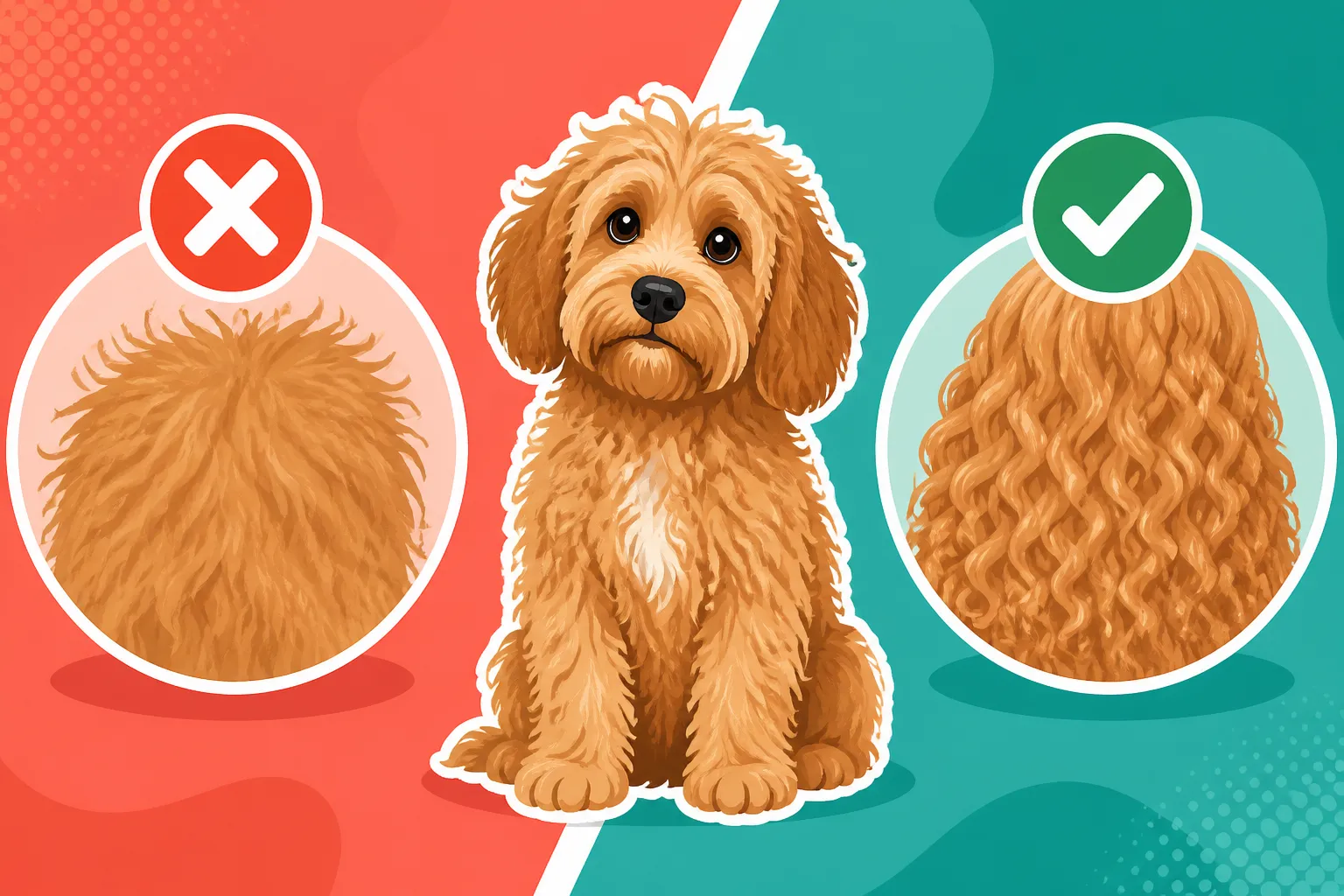
Whether an Improper Coated Cockapoo Is a Fault
It can be incredibly disheartening to bring home a Cockapoo puppy, envisioning that adorable, fluffy, low-shedding companion, only to realize a few months down the line that their coat is entirely different from what you expected – perhaps much flatter and shedding far more than you were led to believe. This often leads owners to wonder if their beloved pup has an "improper coat," and if so, what that really means for their dog's health and their family's expectations. This guide will delve into the genetics behind the Cockapoo coat, explain what an improper coat is, and address whether it truly constitutes a "fault" in this wonderful crossbreed.
Understanding the Genetics of a Cockapoo's Coat
When we talk about a Cockapoo's coat, we're really talking about a fascinating interplay of genes, primarily those inherited from their Cocker Spaniel and Poodle parents. The goal for many Cockapoo owners is that iconic Poodle-like coat that's often touted as low-shedding and more allergy-friendly. However, it's not always a guarantee, and understanding the underlying genetics helps clarify why.
The Furnishings Gene (Rspo2) and its Role
The most crucial gene when it comes to the Cockapoo's appearance and shedding characteristics is the Furnishings gene, scientifically known as Rspo2. This gene is responsible for producing the longer hair on a dog's face – the mustache, beard, and eyebrows – which is a hallmark of many Poodle and Doodle coats. These furnishings are what give a Cockapoo that distinct "teddy bear" look and, crucially, are directly linked to their low-shedding properties.
Without at least one copy of the dominant Furnishings allele (F), a dog will have what's known as an "improper coat." Poodles typically carry two copies of the dominant Furnishings allele (FF), meaning they are furnished and pass on at least one copy to all their offspring. Cocker Spaniels, on the other hand, can carry two copies of the recessive allele (ff), meaning they lack furnishings, or sometimes one of each (Ff). When a Poodle (FF) is bred with a Cocker Spaniel (ff), all the F1 (first generation) Cockapoo puppies will inherit one F from the Poodle and one f from the Cocker, making them Ff – they will have furnishings and be low-shedding. However, things get more complicated in later generations or if an unfurnished Cocker is used in the mix. For breeders, understanding What RSPO2 Testing Tells a Cockapoo Breeder is paramount in predicting litter coats.
What 'Improper Coat' Actually Means
Genetically, an "improper coat" (often abbreviated as IC) simply means that a Cockapoo has inherited two copies of the recessive 'f' allele (ff) for the Furnishings gene. This means they lack the genetic instruction to grow those characteristic facial furnishings. Instead of the wavy or curly, low-shedding coat most people associate with Cockapoos, an IC Cockapoo will typically have a flatter, smoother coat that resembles more of a Cocker Spaniel's coat.
Visually, What an Improper Coated Cockapoo Looks Like is quite different. They won't have the prominent eyebrows, mustache, or beard. Their coat will be sleek and often single-layered, rather than the double-layered, shaggy, or curly look of a furnished Cockapoo. The critical distinction is that these dogs will shed, and often quite a lot, much like a typical Cocker Spaniel. This can be a significant surprise and point of frustration for owners who specifically chose a Cockapoo for its perceived hypoallergenic qualities. Understanding the various The Three Cockapoo Coat Types and Their Upkeep can help manage expectations.
The Impact of an Improper Coat on a Cockapoo's Life
Discovering your Cockapoo has an improper coat can lead to a mix of emotions, especially if you were expecting a certain type of companion. While it doesn't diminish your dog's wonderful personality or health, it certainly impacts practical aspects of ownership, most notably shedding and grooming.
Shedding and Allergen Concerns
One of the primary reasons people are drawn to Cockapoos, and Doodles in general, is the promise of a low-shedding, allergy-friendly dog. The furnished coat traps loose hair, minimizing the dander and hair released into the environment, which is a blessing for many allergy sufferers. However, an improper coated Cockapoo negates this core benefit entirely.
An IC Cockapoo will shed hair regularly, often in quantities similar to or even greater than a purebred Cocker Spaniel. This means hair on your furniture, clothes, and floors. For individuals or families with allergies, this can be a serious issue, potentially leading to allergic reactions that were meant to be avoided by choosing a Cockapoo. It highlights why it's important to differentiate between genuinely low-shedding dogs and those marketed as such without proper genetic understanding. It's a common misconception that Whether Any Cockapoo Is Truly Non Shedding, but an improper coat certainly means more shedding.
Grooming and Maintenance Differences
The grooming routine for an improper coated Cockapoo will differ significantly from their furnished counterparts. While a furnished Cockapoo requires diligent brushing to prevent matting and regular trips to the professional groomer for trims, an IC Cockapoo's coat is generally much simpler to manage in terms of tangles. They won't develop those dense mats that furnished coats are prone to, because the hair structure is different.
However, "simpler" doesn't mean "no maintenance." You'll be dealing with shedding. Regular brushing will still be necessary to remove loose hair and keep their coat healthy and shiny, just like you would for a Cocker Spaniel. This regular brushing can help reduce the amount of hair floating around your home. You'll also likely find yourself needing a good vacuum cleaner with strong suction to keep up with the shed hair. For specific grooming tools, from brushes to de-shedding rakes, online retailers like Chewy and Amazon offer a wide array of options tailored to different coat types, even for those lovely smooth coats.
Breeder Perspectives and the 'Fault' Debate
The term "improper coat" itself can sound quite negative, almost like a condemnation. However, it's crucial to understand how breeders view this genetic trait and whether it truly constitutes a "fault" in the development of the Cockapoo.
Why Breeders Strive for Furnished Coats
Reputable Cockapoo breeders typically aim to produce puppies with furnished, low-shedding coats because that's what the vast majority of prospective owners are seeking. The primary appeal of a Cockapoo lies in that Poodle-derived coat, combined with the Cocker's sweet temperament. To meet this demand and fulfill the promise of a low-shedding companion, breeders utilize DNA testing to ensure their breeding pairs will produce furnished offspring. This usually means breeding two furnished dogs (FF or Ff) to ensure the puppies inherit at least one dominant F allele. If a breeder is unsure, Whether a Coat DNA Test Is Worth the Money can provide clear answers.
When an improper coat appears in a litter, it often indicates either a lack of genetic testing on the part of the breeder or a deliberate decision to breed a dog that carries the recessive 'f' allele, perhaps due to other desirable traits. For those breeders dedicated to the "Doodle" standard of low-shedding, an improper coat is undesirable because it goes against the very characteristic that defines the breed's popular appeal. This is why many reputable breeders will state that Whether a Breeder Can Guarantee a Cockapoo's Coat hinges heavily on genetic testing of the parents.
Is an Improper Coat Truly a 'Fault'?
In the world of purebred dogs, a "fault" is a deviation from the established breed standard that can impact a dog's function, health, or appearance. Since the Cockapoo is not a recognized breed with a universally accepted standard, the term "fault" is a bit more nebulous.
From a health perspective, an improper coat is absolutely not a fault. A Cockapoo with an improper coat is just as healthy, happy, and capable of being a wonderful companion as one with a furnished coat. The improper coat trait is purely cosmetic and relates to shedding, not to any underlying health condition. It doesn't mean your dog is "broken" or less valuable as a pet. It simply means they inherited a specific combination of genes that results in a different coat type.
However, from a buyer's perspective who specifically sought a non-shedding dog for allergy reasons, an improper coat can certainly feel like a "fault" because it fails to meet a core expectation. It's a disconnect between expectation and reality. For some breeders, it's a "fault" in the sense that it deviates from the ideal Cockapoo coat type they are striving for. This often leads to price differences, where improper coated puppies might be offered at a lower cost because they don't fit the typical market demand. Ultimately, Why an Improper Coated Cockapoo Sheds is simply genetics, not a defect.
Living with an Improper Coated Cockapoo
If you've welcomed an improper coated Cockapoo into your home, or you're considering adopting one, it's important to shift focus from what their coat isn't to appreciating the dog they are. An improper coat doesn't define their worth as a companion.
The Love for Your Unique Companion
At the end of the day, your Cockapoo's coat is just one aspect of who they are. Their playful personality, their affectionate nature, their intelligence, and their loyalty are far more important than whether they have a beard or shed a little more. Many owners of improper coated Cockapoos adore their dogs just as much as those with perfectly curly, non-shedding coats. They often have wonderful, soft, easy-to-care-for fur that doesn't mat and can be kept clean with regular baths.
Instead of focusing on the "improper" label, embrace the uniqueness of your dog. They might look a bit more like a Cocker Spaniel, but they still carry all the charm and intelligence of the Poodle side, making them a delightful blend. Every dog is an individual, and the bond you build with them transcends superficial characteristics like coat type. You'll find that their heart and spirit are what truly count.
Practical Management for IC Owners
Living with an improper coated Cockapoo means adjusting your expectations for shedding management. Here are a few practical tips:
- Regular Brushing: Even though they don't mat, regular brushing (daily or every other day) is key to controlling shedding. A good slicker brush or a deshedding tool can work wonders. Brands like Furminator offer effective deshedding tools you can find on Amazon or Chewy.
- Frequent Vacuuming: Be prepared for more frequent cleaning. High-quality vacuums with pet hair attachments will be your best friend.
- Protective Covers: Consider washable slipcovers for furniture where your dog likes to nap.
- Dietary Support: A healthy diet can contribute to a healthy coat, which may indirectly help with excessive shedding by ensuring less brittle hair. High-quality dog foods, available from places like Chewy or specialty brands like Ollie, often include omega fatty acids that support skin and coat health. While it won't stop shedding in an IC dog, it ensures the shedding hair is as healthy as possible.
- Professional Grooming (if desired): While less prone to matting, an IC Cockapoo can still benefit from occasional professional grooming for baths, tidying up, and nail trims. The groomer can also provide advice on effective deshedding techniques.
- Allergy Management: If allergies are a concern, even with an IC Cockapoo, consider air purifiers, frequent dusting, and keeping your dog out of bedrooms.
Remember, the appearance of a Cockapoo puppy's coat at eight weeks can be misleading, and What a Cockapoo Puppy's Coat Feels Like at Eight Weeks doesn't always predict the adult coat, especially if the genetic background for furnishings isn't clear. If you're looking for a specific coat type, asking about parental What an FF Result Means on a Cockapoo or Ff results for furnishings is essential before you commit to a puppy.
No matter their coat, a Cockapoo is a loving and spirited companion, and an improper coat simply means embracing a slightly different, but equally wonderful, version of this popular crossbreed.
Disclaimer
This article is for general informational purposes only and does not constitute professional advice. Laws, prices and regulations vary by location and change over time. Consult a qualified professional for guidance on your specific situation.