Whether a Cockapoo Can Be Trusted With a Full Bowl
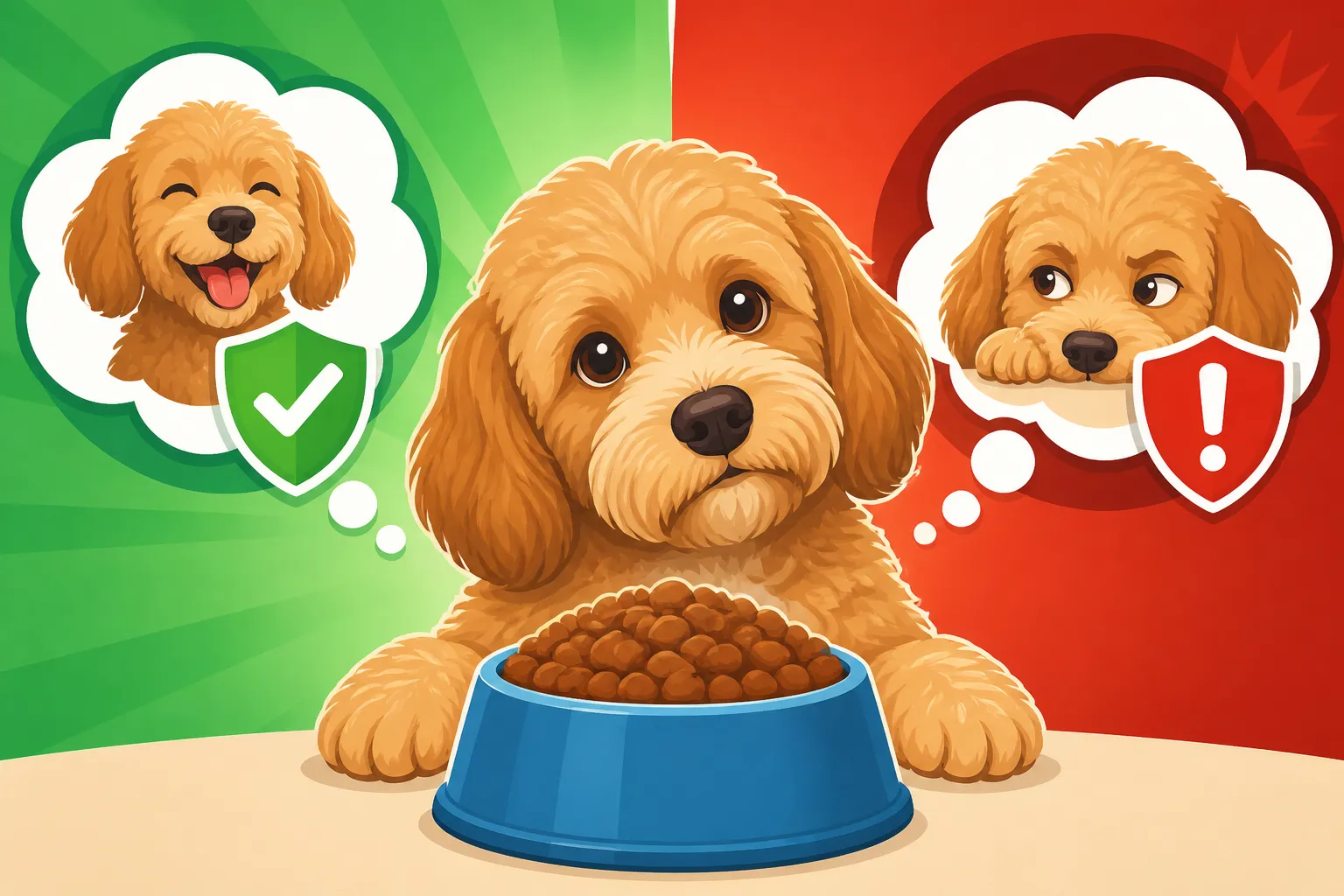
It’s a common scenario that can make any dog owner’s heart sink: you’ve just filled your beloved Cockapoo’s bowl, perhaps with a delicious meal from a brand like Ollie, and as you step back, you notice a subtle stiffness, a low growl, or even a snap as you reach near the dish. This unsettling behavior, known as resource guarding or food aggression, is a deeply frustrating and sometimes frightening issue for many dog parents. It’s not about your Cockapoo being "bad" or ungrateful; it's often rooted in instinct and can be managed and improved with understanding, patience, and consistent training, which is exactly what this guide will help you navigate.
Understanding Resource Guarding in Cockapoos
Resource guarding, at its core, is a natural canine behavior where a dog protects items they perceive as valuable from others. While it can manifest with toys, beds, or even people, food bowls are a particularly common trigger. For a Cockapoo, a breed known for its charming personality and affectionate nature, this behavior can feel especially confusing and out of character, leaving owners wondering where they went wrong.
What Does "Resource Guarding" Actually Mean?
Think of it from your dog's perspective. Resources – be it food, a comfy sleeping spot, or a favorite squeaky toy – are essential for survival. In the wild, animals fiercely protect what they have to ensure their well-being. Domestication hasn't entirely erased these ancient instincts. When your Cockapoo guards their bowl, they're communicating, "This is mine, and I don't want you to take it."
This isn't necessarily a sign of a vicious dog. Often, it's a display of anxiety and a lack of trust that their resource won't be taken away. It can range from subtle signals like freezing over their bowl, gulping food quickly, or eating in a corner, to more overt displays such as growling, snarling, snapping, or even biting if you or another pet approaches. The intensity can vary greatly, and it's important to recognize these signals before they escalate. It's a common misconception that a dog must be "dominant" to guard resources; often, it's actually born from insecurity.
Why Do Cockapoos Guard Their Food Bowl?
Several factors can contribute to a Cockapoo developing food guarding behaviors, and it's rarely just one simple cause.
First, consider their ancestral roots. Both Cocker Spaniels and Poodles, the parent breeds of your Cockapoo, have hunting heritages where competition for food could have been a factor in their distant past. While modern breeding has softened many of these traits, some instinctual behaviors can still surface. For instance, The Flushing Drive Still Alive in a Cockapoo might hint at a certain intensity or focus that, when misdirected, could contribute to guarding.
Second, early experiences play a massive role. Puppies who had to compete intensely with littermates for food, or those who experienced scarcity, might be more prone to guarding. If a puppy was routinely disturbed while eating, or had their food taken away without a fair trade, they learn that human hands near the bowl mean loss, not gain. Even unintentional actions, like a child accidentally tripping near the bowl or another pet trying to sneak a bite, can reinforce this insecurity.
Third, genetics can sometimes predispose a dog to certain behaviors, including resource guarding. While not a guarantee, some lines may have a stronger tendency towards anxiety or possessiveness. It's a valid question to ask if Whether Resource Guarding Runs in Cockapoo Lines when choosing a puppy.
Finally, a Cockapoo's personality itself can contribute. They are often intelligent and sensitive dogs. If they feel their boundaries aren't being respected, or if they haven't been taught a clear and consistent communication system around food, they might resort to guarding as their way of asserting control in a situation where they feel vulnerable.
Recognizing the Signs of Food Aggression
Before your Cockapoo escalates to a full-blown aggressive display, they often give off subtle signals. Learning to read these early warnings is crucial for prevention and intervention, helping you de-escalate a situation before it becomes dangerous. It’s all about understanding their language.
Subtle Cues Before a Growl
Dogs are masters of non-verbal communication, and their body language often speaks volumes before any vocalization occurs. When it comes to food guarding, look for these subtle signs:
- Freezing or Stiffening: Your Cockapoo might suddenly become rigid over their bowl, their body language tightening as you approach. Their tail might stop wagging, or tuck slightly.
- Eating Faster: They might gulp their food at an accelerated pace, as if trying to finish it before it can be taken away. This can be especially noticeable if bolting its dinner is a concern for other reasons.
- "Whale Eye": This is when you can see the whites of your dog's eyes, usually on the sides, as they quickly glance at you without turning their head away from the bowl. It's a clear sign of tension and potential discomfort.
- Low, Subdued Growl: This is often the first audible warning. It might be very quiet, almost a rumble, indicating deep discomfort rather than outright aggression.
- Body Blocking: Your Cockapoo might position their body between you and the bowl, physically shielding it. They might turn their back to you, or shift their weight to cover the food.
- Head Lowering: Their head might sink lower into the bowl, almost defensively, as if trying to hide the food.
- Lip Licking or Yawning: While sometimes signs of stress, these can also indicate mild anxiety or conflict in a situation, especially if combined with other guarding behaviors.
If you notice any of these signs, it's your cue to back off and reassess. Pushing past these early warnings only teaches your dog that their polite communication isn't working, potentially leading to more intense responses.
Escalation: Growling, Snapping, and Biting
If the subtle cues are ignored, or if your Cockapoo feels particularly threatened, the behavior can escalate quickly. This is where the situation becomes genuinely risky.
- Loud Growling and Snarling: This is an unmistakable warning. The growl will become more pronounced, often accompanied by a baring of teeth and a wrinkled muzzle.
- Snapping: Your Cockapoo might snap in the air or even make contact with your hand or arm without actually biting down hard. This is a clear "stay away" message.
- Lunging: They might lunge towards you, usually from a low posture over their bowl, indicating a strong intent to protect.
- Biting: This is the most serious form of escalation. A bite can range from a quick nip to a sustained hold, causing punctures or lacerations. Bites are usually a last resort for a dog who feels their earlier warnings have been ignored and their safety or resource is still threatened.
It's vital to remember that these escalated behaviors are often a desperate attempt by your Cockapoo to communicate their fear and protect what they deem essential. They are not acting out of spite, but often out of deep-seated anxiety. This is why punishment is rarely effective and can actually make the guarding worse, as it further associates your presence with negative consequences. Instead, the goal is to build trust and change their emotional response to your proximity around their food.
Proactive Steps to Prevent Food Guarding
Preventing food guarding starts from the moment you bring your Cockapoo puppy home. Even if you've adopted an older dog with no history of guarding, these strategies can help reinforce positive associations and build trust around food.
Starting Early: Puppyhood Socialization and Training
The foundation of preventing food aggression lies in positive early experiences. When you're bringing home a new puppy, especially during The First Week With a Cockapoo Puppy, you have a golden opportunity to shape their understanding of meal times.
- Hand-Feeding: For the first few weeks, consider hand-feeding a portion of your Cockapoo's meals. This directly associates your hands with providing delicious food, not taking it away. As they eat from your hand, gently stroke them. This teaches them that your presence during mealtime is a positive, comforting experience. You can even use a high-quality fresh food like Ollie for this, making it an even more enticing reward.
- "Trade Up" Game: This is perhaps the most powerful tool. While your puppy is eating from their bowl, approach and drop a higher-value treat near them (e.g., a small piece of cooked chicken, cheese, or a freeze-dried liver treat from Chewy). Immediately back away. The goal is for them to learn that your approach means more good things, not taking away what they have. Repeat this many times, always giving something better than what's in the bowl, and then leaving them to enjoy it. This is a crucial part of What a Cockapoo Puppy Should Learn First.
- Positive Interruptions: Instead of just putting the bowl down and walking away, practice briefly holding the bowl, letting your puppy eat a few mouthfuls, then gently lifting it, dropping a super high-value treat in, and immediately putting it back down. This reinforces the idea that your interaction with their bowl leads to something even better, not deprivation. Do this several times during a single meal.
Consistency is key. Every member of the household should practice these exercises to ensure your Cockapoo generalizes the positive association to everyone.
Creating a Safe Eating Environment
Where and how your Cockapoo eats can significantly impact their perception of mealtime security.
- Quiet, Undisturbed Space: Designate a quiet, low-traffic area for your Cockapoo to eat. This might be in a crate, a separate room, or a corner where they won't be constantly walked past, bothered by children, or challenged by other pets. Avoid feeding them in high-traffic hallways or open areas where they might feel vulnerable.
- Separate Feeding for Multiple Pets: If you have more than one dog, always feed them in separate rooms or crates to prevent competition and potential conflict. Even if they've never guarded before, the presence of another dog can trigger this instinct. This also applies to cats or other household animals.
- Consistent Schedule: Feed your Cockapoo at consistent times each day. Predictability helps reduce anxiety around food availability. If they know when their next meal is coming, they're less likely to feel the need to guard.
- Appropriate Bowls: Some dogs feel more secure with certain types of bowls. A heavy, non-slip ceramic or stainless steel bowl is generally better than a lightweight plastic one that can be easily pushed around. For dogs who eat too fast, a slow-feeder bowl can be beneficial, but ensure it doesn't cause frustration that could exacerbate guarding behaviors. You can find many options on Amazon.
Management Techniques for Established Guarding
If your Cockapoo already exhibits resource guarding, safety and careful management become paramount. The goal is to avoid triggers while simultaneously working on training.
- Avoid Triggers: Identify what specific actions or approaches trigger the guarding. Is it when you walk past? When you reach towards the bowl? When someone new enters the room? Once you know the triggers, actively avoid them. Do not confront or challenge your Cockapoo over their bowl. This can be incredibly dangerous and will likely worsen the behavior.
- Supervised Meal Times: Always supervise meals, especially if children or other pets are in the home. Ensure no one approaches the eating dog. Consider using a baby gate or crate to create a safe, undisturbed zone during mealtime.
- No Free Feeding: If your dog guards, free feeding (leaving food out all day) is usually not recommended. It can increase their perceived value of the food and make guarding more constant. Instead, offer meals at set times and pick up any uneaten food after 15-20 minutes.
- Seek Professional Help: For established or severe cases of food aggression, a certified professional dog trainer or a veterinary behaviorist is indispensable. They can assess your specific situation, help you implement a safe and effective training plan, and rule out any underlying medical conditions. Trying to tackle serious guarding without professional guidance can be risky and may inadvertently make the problem worse.
Training Strategies to Build Trust Around Food
Training is about changing your Cockapoo's emotional response to your presence near their food bowl. It's not about punishing them for guarding, which only exacerbates fear; it's about building trust and teaching them that humans are a source of good things, even when it comes to their most prized possessions.
The "Trade Up" Game
The "Trade Up" game is a cornerstone of addressing resource guarding. It's simple in concept but requires consistency and patience. The core idea is to teach your Cockapoo that giving up an item (even temporarily) results in receiving something better in return.
Here's how to play:
- Start with low-value items: Begin with toys or chew sticks that your Cockapoo doesn't value highly.
- Offer a trade: While your Cockapoo has the item, approach them calmly and offer a truly high-value treat (something they absolutely adore, like cooked chicken, cheese, or a bit of their favorite wet food from Ollie).
- Say "trade": As you present the treat, say your "trade" cue clearly.
- Exchange: Most dogs will drop the current item to take the higher-value treat. As soon as they do, pick up the original item.
- Return (sometimes): After they've eaten the treat, you can sometimes return the original item, reinforcing that giving it up isn't always permanent.
- Gradually increase value: Slowly work your way up to items your Cockapoo values more. Only when you have mastered this with many items should you consider trying it with their food bowl, and only if advised by a professional.
- Practice frequently: Short, frequent sessions are more effective than long, infrequent ones.
This game is incredibly powerful because it turns a potential conflict into a positive exchange. It teaches your Cockapoo that your hands near their valued items mean gain, not loss, helping to build a positive association that can be generalized to their food bowl.
Desensitization and Counter-Conditioning
This technique involves gradually exposing your Cockapoo to the triggers of their guarding behavior while simultaneously changing their emotional response from fear/anxiety to positive anticipation.
- Identify the threshold: Determine the distance at which you can approach your Cockapoo's food bowl without eliciting any guarding behavior (no freezing, stiffening, growling, etc.). This might be across the room, or just a few feet away.
- Positive association at a distance: While your Cockapoo is eating, position yourself at that safe distance. Every time you are at that distance, toss a high-value treat towards their bowl (but not in it, initially) and then immediately back away. The goal is for them to notice your presence and receive a treat, associating you with good things.
- Gradual reduction of distance: Over many sessions, slowly decrease the distance by a small amount (a foot or two) as long as your Cockapoo remains relaxed and doesn't show any guarding signs. Continue tossing treats and backing away.
- Approaching the bowl: Eventually, you should be able to approach the bowl, toss a treat into it, and back away, all without a negative reaction. Always aim to give something better than what's already in the bowl.
- Gentle touching (advanced): Only when your Cockapoo is completely comfortable with you tossing treats into their bowl and you have professional guidance, you might progress to gently touching the bowl, then lifting it a tiny bit, dropping a treat, and putting it back down. The key is extreme gradualness and stopping immediately if any guarding behavior appears.
This process can take weeks or even months, requiring immense patience. Never rush it, and always prioritize your Cockapoo's comfort and safety.
"Leave It" and "Drop It" Commands
While "Leave It" and "Drop It" are general obedience commands, they are invaluable tools in managing resource guarding situations, even if only as a safety net.
- "Drop It": This command teaches your Cockapoo to voluntarily release whatever is in their mouth. Practice this by offering a treat for releasing a low-value toy, then gradually increasing the value of the item. This can be incredibly useful if your dog picks up something inappropriate or if you need them to release an item they are guarding. You might even find sturdy, high-quality chews on Chewy that can be used for this training, ensuring they don't ingest something harmful.
- "Leave It": This command teaches your Cockapoo to ignore an enticing item on the ground. Start with a treat in your hand, covering it. Say "leave it," and when your dog looks away from the treat, reward them with a different, higher-value treat. Gradually progress to leaving a treat on the floor, on a table, and eventually, around their food bowl (but at a distance). This command can help prevent them from even initiating guarding behavior by teaching them to ignore items you designate as "off-limits."
These commands, once reliably learned, provide you with more control and communication with your Cockapoo, making interactions around food and other resources safer and more predictable. Remember, consistency and positive reinforcement are key for all training. If you're struggling, don't hesitate to consult a professional dog trainer who can offer personalized advice and support. Your Cockapoo wants to trust you; it's about showing them, through consistent, positive interactions, that you are a reliable provider, not a threat.
Disclaimer
This article is for general informational purposes only and does not constitute professional advice. Laws, prices and regulations vary by location and change over time. Consult a qualified professional for guidance on your specific situation.