Whether an F1 Cockapoo’s Coat Is a Coin Flip
Oh, the F1 Cockapoo coat! It's one of the biggest conversations I have with folks looking to bring one of these wonderful dogs into their lives. Many people arrive at the decision to get an F1, a first-generation cross, hoping for that perfect low-shedding, wavy "teddy bear" look, but deep down, there's a nagging question: is it all just a big coin flip? Will I end up with a smooth, shedding coat, or a tight curl that's a nightmare to groom? It’s a completely valid worry, and this guide is here to shed some light (pun intended!) on the genetics behind the F1 Cockapoo’s coat, helping you understand what’s predictable and what might still surprise you.
Deconstructing the F1 Cockapoo: What the "F1" Means for Coat
When we talk about an "F1" Cockapoo, we're simply referring to a first-generation cross. This means one parent is a purebred Cocker Spaniel and the other is a purebred Poodle. It's the original doodle combination, and it’s where all the magic (and sometimes the mystery) of their unique coats begins. Understanding this foundational genetic pairing is crucial to predicting what kind of fur coat your new best friend might be sporting.
The Basics of First-Generation Breeding
An F1 Cockapoo is the result of breeding a Cocker Spaniel directly with a Poodle. This is different from an F1b (an F1 bred back to a Poodle or Cocker) or a multigen (F2, F3, etc., breeding Cockapoo to Cockapoo). In an F1 pairing, you're getting a direct 50/50 genetic split from two distinct breeds. This genetic blend is often celebrated for "hybrid vigor," suggesting that mixing two purebreds can lead to healthier offspring, but it also creates interesting possibilities when it comes to coat traits. Think of it like mixing two different colors of paint – you know roughly what the outcome will be, but the exact shade might vary a bit.
Genetic Contributions from Each Parent
Both the Cocker Spaniel and the Poodle bring their own unique coat genes to the table. The Poodle is famous for its non-shedding, tightly curled coat, which is often hypoallergenic. The Cocker Spaniel, on the other hand, typically has a beautiful, flowing, often wavy or straight coat with "furnishings" (longer hair on the face, beard, eyebrows) but does shed. The Cocker's coat can also be quite prone to matting if not maintained. When these two distinct genetic blueprints combine, the dominant and recessive genes from each parent battle it out, so to speak, to determine the puppy's final appearance. It's a fascinating interplay that results in the wide range of Cockapoo coats we see.
Understanding Key Coat Genes: Furnishings and Curl
To really get a grip on the F1 Cockapoo coat, we need to talk about two major genes: Furnishings (RSPO2) and Curl (KRT71). These aren't the only genes influencing coat, but they are the rockstars when it comes to the traits most people associate with the "doodle look" – namely, the low-shedding quality and the curly or wavy texture. Furnishings dictate whether your dog has that characteristic beard and eyebrows, which in turn significantly impacts shedding. The Curl gene, as you might guess, determines how straight, wavy, or tightly curled the coat will be. Understanding these two genes is the first step in demystifying the F1 coat.
The Furnishings Gene: Why F1s Aren't a Shedding "Coin Flip"
This is often where a lot of confusion lies. Many prospective owners worry their F1 Cockapoo will shed like a purebred Cocker Spaniel. However, due to the genetics of the furnishings gene, this is actually highly unlikely for a true F1.
The Importance of Furnishings for the "Doodle" Look
"Furnishings" are the longer hair on a dog's face, specifically the mustache, beard, and eyebrows. Think of a Scottish Terrier or a Schnauzer; those distinct facial hairs are furnishings. In doodles, furnishings are intrinsically linked to the low-shedding trait. Dogs with furnishings have a different growth cycle for their hair, which means they hold onto their hair longer before it sheds, contributing to the "hypoallergenic" quality many people seek. Without furnishings, a dog will have a "flat" or "improper" coat (IC) and will shed much more, despite being a mix with a Poodle. This is the difference between that classic teddy bear look and a dog that looks more like a smooth-faced spaniel, but still a Cockapoo.
How F1 Cockapoos Inherit Furnishings
Here's the exciting part for F1 Cockapoo owners: the furnishings gene (RSPO2) has two main alleles, F (furnished) and IC (improper coat, or unfurnished). The F allele is dominant. Poodles are almost universally F/F, meaning they carry two copies of the furnishings gene. Most Cocker Spaniels are IC/IC, meaning they carry two copies of the improper coat gene, which results in their smooth face and shedding coat.
When you breed a Poodle (F/F) with a Cocker Spaniel (IC/IC), all of their F1 puppies will inherit one F gene from the Poodle and one IC gene from the Cocker. This makes every F1 puppy F/IC. Because the F gene is dominant, every F1 Cockapoo from this pairing will express furnishings. This means they will have that characteristic beard and eyebrows, and crucially, they will be low-shedding. So, for a truly first-generation Cockapoo, the presence of furnishings and the associated low-shedding trait is not a coin flip; it's a genetic certainty if the parents are tested or known to carry the typical traits. This is fantastic news for allergy sufferers or those simply hoping to avoid a house full of dog hair!
Debunking the Shedding Myth for F1s
Given what we just discussed, the idea that an F1 Cockapoo's shedding is a 50/50 chance is largely a myth, provided the parent breeds are typical. If both the Poodle parent is F/F and the Cocker parent is IC/IC (as is common for show line Cockers), then every single F1 puppy will be F/IC and therefore furnished and low-shedding.
However, "low-shedding" doesn't mean "no-shedding." All dogs shed at least a little bit. You might find a few hairs around the house, especially during seasonal changes or if the dog is under stress. The difference is vast compared to a full-shedding breed. It's more about hair getting caught in the coat and needing to be brushed out, rather than raining down on your furniture. If you ever come across an F1 Cockapoo that does shed significantly and has a smooth, unfurnished face, it’s usually an indication that one of the purebred parents was atypical for their breed regarding furnishings, or the dog isn't a true F1 from a properly understood genetic pairing. Always ask to see the parental genetic test results if this is a major concern for you.
The Curl Gene: Where the "Coin Flip" Feeling Comes From
While the shedding aspect due to furnishings is quite predictable in an F1, the type of coat texture – straight, wavy, or tightly curled – is where you might feel more of that "coin flip" uncertainty. This is determined by the Curl gene (KRT71).
Exploring the Different Curl Types
The KRT71 gene dictates the hair texture. Dogs typically have a straight coat, a wavy coat, or a curly coat. Poodles are known for their dense, tight curls, while Cocker Spaniels usually have a straighter or gently wavy coat. The exact alleles (versions of the gene) present in each parent will influence the likelihood of their F1 offspring having different curl types. It's not just a matter of "curly or not"; there's a spectrum, and each type comes with its own grooming demands.
Predicting Curl in F1 Litters: A Spectrum of Possibilities
Poodles generally carry two copies of the curly gene (C/C). Cocker Spaniels can vary more, carrying two copies for straight (c/c), one for straight and one for curly (C/c, resulting in a wavy coat), or even two for curly (C/C, though their curl is typically much looser than a Poodle's).
Here's where the variation comes in for F1s:
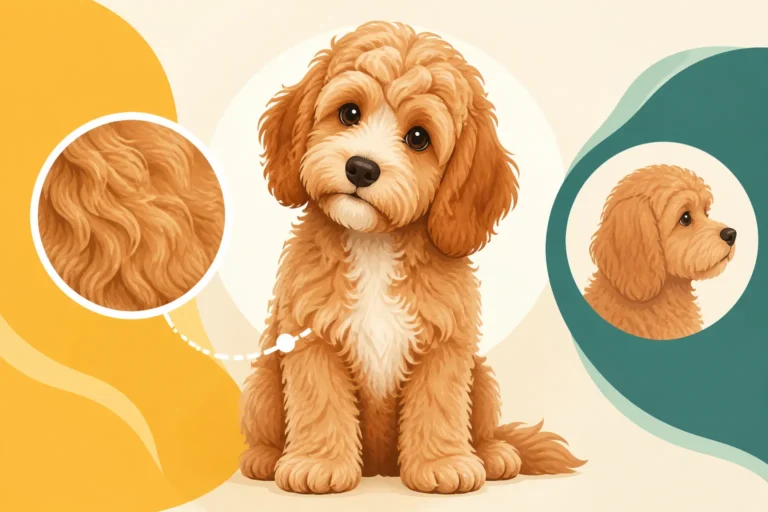
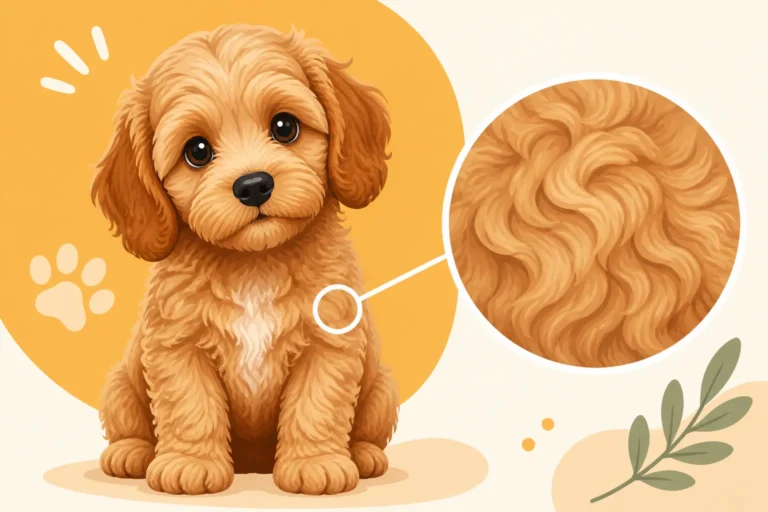
- Poodle (C/C) x Cocker (c/c, straight coat): All F1 puppies will be C/c, resulting in a wavy coat. This is often the coveted "F1 wavy fleece" coat.
- Poodle (C/C) x Cocker (C/c, wavy coat): F1 puppies could be C/C (curly) or C/c (wavy), a true genetic coin flip!
- Poodle (C/C) x Cocker (C/C, curlier coat): All F1 puppies will be C/C, likely resulting in a curlier coat, though still possibly looser than a pure Poodle due to other modifying genes.
As you can see, depending on the specific genetic makeup of the Cocker parent's curl gene, an F1 litter can produce puppies with anything from a loose wave to a tighter curl. This variability in texture is often what people are referring to when they talk about the "coin flip" nature of the F1 Cockapoo coat, as it's not always a guaranteed wavy outcome.
Grooming Implications of Wavy vs. Curly Coats
The degree of curl has significant implications for grooming.
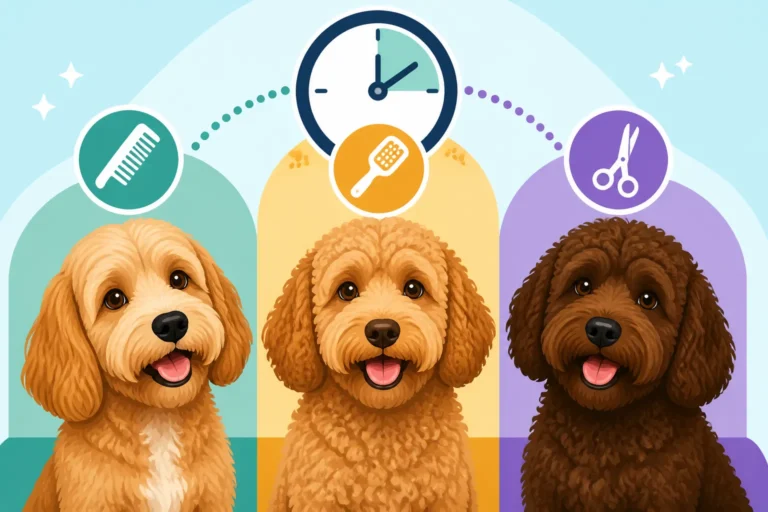
- Wavy Coated Cockapoos: Often described as "fleece" or "shaggy," these coats are soft and flowy. They require regular brushing, typically daily to every other day, to prevent mats from forming, especially behind the ears, in the armpits, and on the legs. The Hours a Wavy Cockapoo Takes Each Week gives a good overview of the commitment.
- Curly Coated Cockapoos: These coats are denser and more poodle-like, with tight, spiraling curls. While they tend to shed even less, their tight curl is a magnet for matting. They absolutely require daily, thorough line brushing down to the skin to avoid painful mats, and professional grooming every 6-8 weeks is essential. Why a Tight Curl Doubles a Cockapoo Owner's Week truly highlights the increased effort.
- Straighter Coated Cockapoos (Less Common in True F1s with typical parents): If an F1 happens to have a very straight or flat coat (which would likely mean the Cocker parent was c/c and the Poodle parent also carried a 'c' which is unusual for a purebred Poodle, or other genetic modifiers are at play), these dogs would shed more and might still require regular brushing to keep their longer hair tangle-free, though less prone to tight matting than a curly coat.
Regardless of the curl, all Cockapoos need consistent grooming. Investing in good quality tools from places like Chewy or Amazon, such as a slicker brush, a metal comb, and a de-shedding rake, is crucial.
Beyond the Genes: Other Factors Influencing F1 Coats
While the Furnishings and Curl genes are primary, they aren't the only players in the coat game. There are other subtle genetic modifiers, natural coat changes, and even environmental factors that can influence how an F1 Cockapoo's coat looks and feels throughout its life.
The "Unspecified" Genetic Modifiers
Beyond the well-known Furnishings and Curl genes, there are many other genetic modifiers that can subtly influence a dog's coat. These genes might affect the coat's density, silkiness, oiliness, or even how prone it is to matting. These are often less understood and not typically tested for, adding another layer of natural variation to an F1 litter. For example, some Cockapoos might have a slightly coarser texture despite having a wavy coat, while others might have a remarkably soft, cotton-like feel. This is why even within a single F1 litter, you might see subtle differences in coat quality that go beyond just curl and furnishings.
Coat Maturation and Changes Over Time
It's common for a Cockapoo puppy's coat to undergo significant changes as they mature. That soft, fluffy puppy coat isn't usually what they keep for life! Around 6 to 10 months of age, many Cockapoos enter what's often called the "coat change" or "transition coat" phase. During this time, the puppy fur starts to be replaced by the adult coat, and the textures can become incredibly tangled and matted almost overnight. This period is a prime time for matting, regardless of the ultimate adult curl type. A Cockapoo's Coat Through the Ten Month Change details this challenging period for many owners. It's a critical time to ramp up grooming efforts, sometimes even daily brushing, to prevent severe matting that can necessitate a full shave-down. Be prepared for your Cockapoo's coat to evolve, and remember that what you see at 8 weeks isn't necessarily what you'll have at 18 months.
Environmental Influences on Coat Health
A beautiful coat isn't just about genetics; it's also a reflection of overall health and environmental factors. A high-quality diet plays a huge role in coat condition. Dogs fed nutrient-deficient foods often have dull, dry, brittle coats that are more prone to breakage and matting. Look for dog foods with good protein sources and healthy fats like Omega-3 and Omega-6 fatty acids. Brands like Ollie (fresh dog food) or premium kibble available on Chewy often highlight these beneficial ingredients. Regular bathing with appropriate shampoos and conditioners, avoiding harsh chemicals, and ensuring proper drying can also keep the coat healthy and manageable. Even humidity levels and exposure to elements can play a part; a Cockapoo living in a dry climate might need more moisturizing care than one in a humid environment.
Navigating Coat Predictions and Breeder Choices
So, while the F1 Cockapoo's coat isn't entirely a "coin flip" for fundamental traits like furnishings and low-shedding, there's definitely variability in curl and other subtle qualities. This is where responsible breeder choices and clear communication become paramount.
The Value of Parental Coat DNA Testing
The best way to eliminate guesswork for both furnishings and curl is for breeders to perform DNA testing on their breeding dogs. A simple genetic test can confirm whether the Cocker Spaniel parent carries the 'IC' (improper coat) gene and what alleles both parents carry for curl (KRT71).
- Furnishings (RSPO2): A Poodle should be F/F. A Cocker Spaniel will most commonly be IC/IC for flat coat or F/F if bred from a furnished line (which is less typical for traditional show Cockers). If the Poodle is F/F and the Cocker is IC/IC, all F1 puppies will be F/IC, meaning they will have furnishings and be low-shedding. There is no coin flip here.
- Curl (KRT71): A Poodle is typically C/C (curly). A Cocker Spaniel can be C/C, C/c (wavy), or c/c (straight). Knowing the Cocker parent's KRT71 status is key to predicting the likelihood of wavy versus curly F1 offspring. If the Cocker is c/c, all F1s will be C/c (wavy). If the Cocker is C/c, then there's a 50/50 chance of curly (C/C) or wavy (C/c) puppies in the F1 litter.
Responsible breeders will have these genetic test results readily available. Reading a Cockapoo Coat Report Before You Choose provides further insights into understanding these reports. Knowing these genetic markers provides immense peace of mind and allows for more accurate predictions about the litter's potential coats.
What to Ask Your F1 Cockapoo Breeder
When you're looking for an F1 Cockapoo puppy, don't be shy about asking your breeder specific questions about their breeding stock and their approach to coat genetics.
- "Have the parent dogs been genetically tested for coat traits, specifically Furnishings (RSPO2) and Curl (KRT71)?" Ask to see the actual reports, not just take their word for it. This is a crucial step to ensuring predictability.
- "What are the furnishings and curl genetic results for both the Cocker Spaniel and Poodle parents?" Understanding the specific alleles (e.g., Poodle F/F C/C and Cocker IC/IC c/c) will give you a clear picture of what the F1 puppies will inherit.
- "Can you describe the typical coat texture you see in your F1 litters?" A breeder who consistently produces F1s should have a good sense of the range they get.
- "What are the grooming requirements for the coats you typically produce?" This shows they are knowledgeable and honest about the commitment involved.
A reputable breeder will be transparent about these details and be happy to educate you. They are usually proud to share The Five Certificates a Cockapoo Breeder Should Show, which often includes genetic testing results.
Embracing the Delightful Diversity of F1 Coats
Ultimately, while genetics give us a roadmap, nature always has its own subtle variations. An F1 Cockapoo's coat isn't truly a coin flip for low-shedding (if parents are chosen wisely), but there can certainly be a fun element of surprise when it comes to the exact texture and density of their wave or curl. Instead of fixating on a single, idealized coat type, try to embrace the delightful diversity that comes with the F1 generation. Focus on finding a healthy, well-socialized puppy from a responsible breeder who prioritizes temperament and health testing. A happy, healthy Cockapoo, regardless of whether their coat is a perfect fluffy wave or a slightly tighter curl, will bring immense joy to your life. Remember, the true beauty of the Cockapoo lies in their charming personality, intelligence, and loving nature, not just their hair!
| Coat Trait | Gene (Alleles) | Poodle (Typical) | Cocker Spaniel (Typical) | F1 Cockapoo (Likely Outcome) | Shedding Level (Typical F1) | Grooming Effort (Typical F1) |
|---|---|---|---|---|---|---|
| Furnishings | RSPO2 (F/IC) | F/F (Furnished) | IC/IC (Unfurnished) | F/IC (Furnished) | Low-Shedding | Moderate to High |
| Curl | KRT71 (C/c) | C/C (Curly) | c/c (Straight) or C/c (Wavy) | C/c (Wavy) or C/C (Curly) | Minimal | Moderate (Wavy) to High (Curly) |
Disclaimer
This article is for general informational purposes only and does not constitute professional advice. Laws, prices and regulations vary by location and change over time. Consult a qualified professional for guidance on your specific situation.