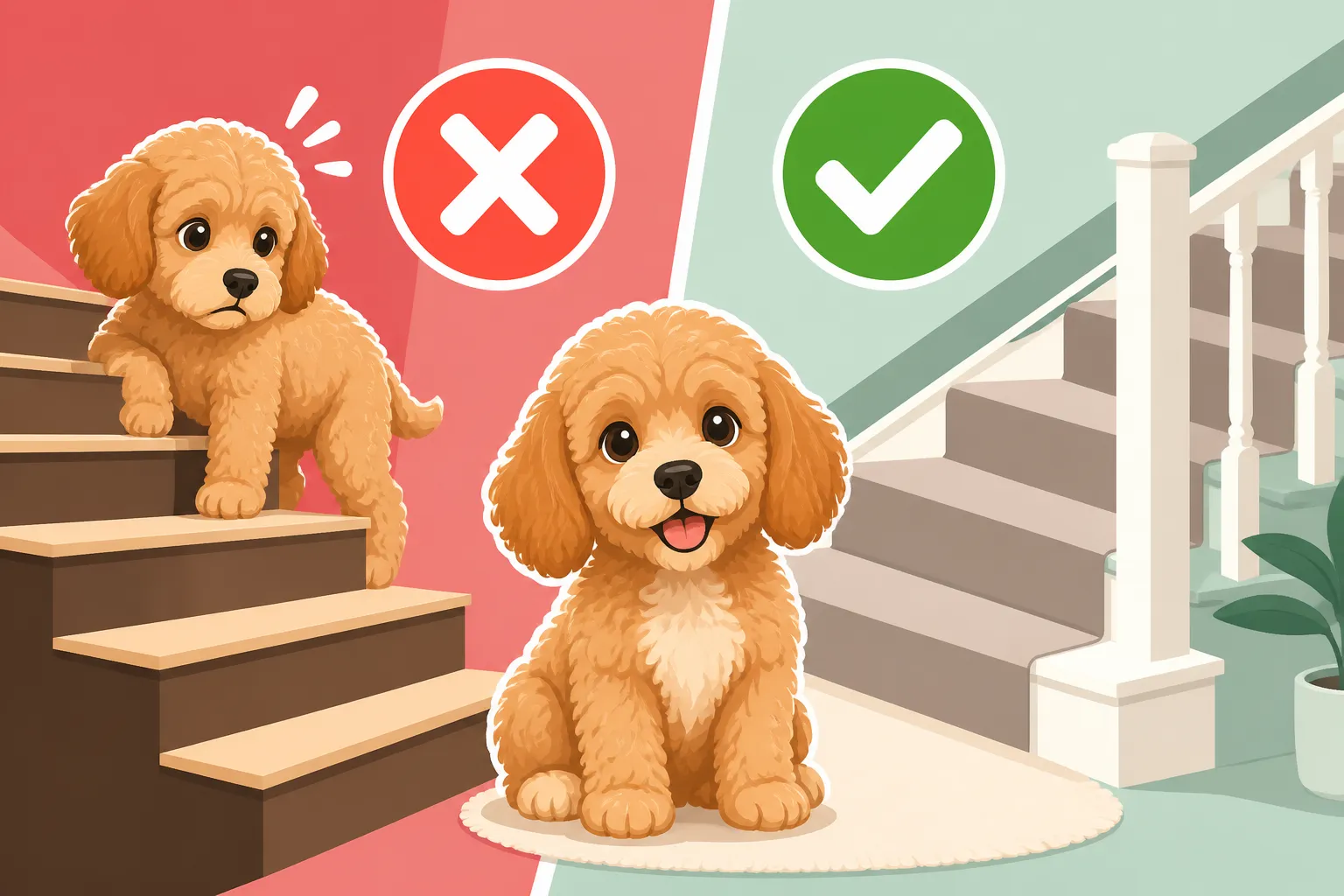
Whether Stairs Are Safe for a Cockapoo Puppy
Many new Cockapoo puppy owners often find themselves staring at a flight of stairs, a pit of worry forming in their stomach as they watch their tiny, clumsy bundle of fluff attempt to navigate them. It's an incredibly valid concern, as a puppy's bones, joints, and coordination are still in crucial stages of development. You want your precious Cockapoo to be safe, happy, and healthy for years to come, and knowing whether those stairs pose a risk is paramount. This guide will walk you through understanding the risks, when it's safe to introduce stairs, and how to teach your Cockapoo puppy to use them safely and confidently, without jeopardizing their long-term health.
The Developmental Stages of a Cockapoo Puppy's Joints and Bones
It’s easy to look at a bouncing, energetic Cockapoo puppy and assume they’re robust and ready for anything, but beneath that fluffy exterior, their skeletal system is still very much a work in progress. Understanding this foundational biology is key to making informed decisions about stair access.
Understanding Growth Plates and Vulnerability
Imagine your puppy's bones not as solid structures, but as a series of connecting pieces with soft, cartilaginous areas at each end. These are called growth plates, and they are where the magic of bone lengthening happens. In puppies, these growth plates are open, meaning they haven't yet fused into solid bone. They are significantly weaker than the mature bone, making them particularly vulnerable to injury.
When a puppy repeatedly experiences high-impact activities, such as jumping down stairs, running hard on pavement, or even jumping off furniture, these soft growth plates can be stressed or even fractured. A simple misstep or an awkward landing on a stair can cause a growth plate injury. Because Cockapoos come in various sizes, from Teacup to Maxi, the exact timing of growth plate closure can vary, but generally, smaller dogs mature a bit faster. Still, rushing them into activities that put undue stress on these delicate areas can lead to pain, improper bone development, and potentially lifelong issues like limping or arthritis. It’s a bit like building a house – you wouldn't put a heavy roof on before the foundation is fully set, would you? The same goes for your puppy's bones.
When Physical Maturity Kicks In
While your Cockapoo puppy might look like a miniature adult at six months, their skeletal system is still catching up. For most small to medium breeds like Cockapoos, full physical maturity, particularly the complete closure of growth plates, typically doesn't occur until they are between 12 to 18 months old. Some smaller Cockapoos might close a bit earlier, around 10-12 months, but it’s always better to err on the side of caution.
During this period, their bones are still hardening, and their ligaments and tendons are strengthening. Asking them to perform repetitive, high-impact movements like bounding up and down stairs before this maturation is complete can put excessive strain on their developing joints and soft tissues. It's not about preventing them from being active, but rather ensuring their activities are appropriate for their age and physical stage. Think about how children are encouraged to play but generally not expected to perform heavy weightlifting until their bodies are fully developed. Your puppy needs that same consideration. It's crucial to remember that while a Cockapoo might come from varying sizes, the underlying biological process of bone development remains the same across them all. For more on how their size influences their physical development, you can look into Joints in a Cockapoo Bred From Four Sizes.
The Importance of Gradual Exercise and Impact
Puppies need exercise, absolutely. It's vital for their physical and mental health. However, there's a huge difference between free play on a soft lawn or a gentle walk on flat ground, and the jarring, repetitive impact of navigating stairs. Natural puppy play – romping, chasing, wrestling – involves varied movements and generally less sustained, high-impact stress.
Stairs, on the other hand, force a specific, often high-impact motion. Going down stairs, in particular, places significant force on a puppy’s front legs and shoulders, as they absorb the impact of each step. Going up stairs can be demanding on their hindquarters. Over time, or with a single bad fall, this can lead to micro-traumas or more serious injuries that might not be immediately apparent. A well-intentioned owner might think they are just letting their puppy explore, but unknowingly, they could be setting the stage for future orthopedic problems. This isn't to say your Cockapoo will never be able to use stairs, but it's about choosing the right time and method to introduce them.
Assessing the Risks of Early Stair Use for Your Cockapoo Puppy
The desire to let your Cockapoo puppy explore every nook and cranny of your home is natural, but when stairs are involved, it's essential to weigh the immediate and long-term risks against that freedom.
Physical Injury and Trauma
The most immediate and obvious risk for a young Cockapoo puppy on stairs is physical injury. Puppies, especially those under six months, often lack the coordination and depth perception needed to safely navigate a flight of stairs. Their legs are still growing and might be disproportionate to their body, making them clumsy.
Imagine this scenario: your energetic little Cockapoo, caught up in the excitement of chasing a toy or following you, misjudges a step. Their tiny paw slips, or they lose their balance, and they tumble down. This isn't just a bump or bruise scenario. A fall down stairs can lead to serious injuries such as sprains, muscle strains, torn ligaments, or even fractures, particularly to those vulnerable growth plates mentioned earlier. These injuries can be incredibly painful, require expensive veterinary care, and might necessitate prolonged rest or even surgery. Beyond the acute trauma, a bad fall can also instill a deep fear of stairs, making future training much harder and creating a lifelong aversion. It’s a situation where a momentary lapse in judgment or an eager dash can have lasting repercussions. Some of these injuries can lead to conditions that manifest in a dog’s gait later in life, so keeping an eye on their movement is always wise. You might find more helpful context in The Gait That Gives Away a Cockapoo's Bad Hips.
Long-Term Orthopedic Concerns
While it’s rare for stairs alone to cause severe genetic orthopedic conditions, repeated stress on a developing puppy's joints can absolutely exacerbate pre-existing predispositions or contribute to degenerative joint disease later in life. Cockapoos, being a mix of Cocker Spaniel and Poodle, can inherit tendencies for certain orthopedic issues from either parent breed. These can include conditions like hip dysplasia, elbow dysplasia, and patellar luxation (slipping kneecaps).
If a puppy with a genetic predisposition to, say, Slipping Kneecaps in a Toy Cockapoo is constantly traversing stairs, the repeated impact and twisting motions can put undue strain on those already vulnerable knee joints. This can potentially accelerate the onset of symptoms or worsen the severity of the condition. Similarly, even if your Cockapoo doesn’t have a strong genetic predisposition, the consistent wear and tear from unmanaged stair use during their critical growth period can contribute to early-onset arthritis or other joint problems down the road. It’s about minimizing preventable stress on a body that's not yet designed to handle it. Many owners are surprised to learn that even smaller dogs can suffer from hip issues, so it’s important to understand Whether a Small Cockapoo Still Gets Hip Dysplasia.
Behavioral and Confidence Issues
Beyond the physical, there are significant psychological impacts to consider. A puppy that has a scary experience on stairs, whether it's a fall or just a repeated struggle, can develop a strong aversion or fear. This fear can manifest as refusal to use the stairs, barking at them, or even anxiety when they are near. This isn't just an inconvenience; it can be truly distressing for both the dog and the owner.
If your Cockapoo can't or won't use the stairs, it effectively limits their access to parts of your home, which can impact potty training (if the yard is on a different level), socialization with family members, or even their ability to feel fully integrated into the household. Imagine having to carry a growing Cockapoo up and down several flights of stairs multiple times a day for years! It becomes a burden for you and limits your dog’s independence. Building a puppy's confidence in all aspects of their environment, including navigating different terrains, is crucial for their overall well-being. A negative experience with stairs can quickly undo weeks of positive training elsewhere.
Safe Strategies for Navigating Stairs with Your Cockapoo Puppy
So, you've got stairs, and you've got a Cockapoo puppy. What's a responsible owner to do? The good news is there are plenty of safe and effective strategies to manage this challenge without compromising your puppy's health or happiness.
The "Carry and Crate" Method
For very young puppies, especially those under six months, the simplest and safest solution is often the "carry and crate" method. This means you physically carry your Cockapoo puppy up and down the stairs whenever they need to traverse them. When carrying, always support their hindquarters and chest, ensuring their body is stable. This might seem like a lot of effort, but it completely removes the risk of falls and stress on their developing joints.
To aid this, utilize baby gates or pet gates to block off stair access. These physical barriers are your best friends in puppy-proofing a multi-level home. You can find many effective options on Amazon, from pressure-mounted gates to hardware-mounted ones that are more permanent. The key is consistency: never let your puppy attempt the stairs unsupervised. When you can't actively supervise, keeping your puppy in a safe, enclosed area, like a crate or a playpen on one level, is a wise move. This not only prevents stair incidents but also aids in potty training and helps build their tolerance for being alone in a controlled way. For tips on how to properly use a crate, you might find Crate Time Settles a Cockapoo helpful.
Gradual Introduction and Training
Once your Cockapoo puppy is older, generally after 6-8 months (or even later, depending on their individual development and confidence), you can begin a very gradual introduction to stairs. This is not a race; patience is paramount. Start by selecting a time when your puppy is calm and receptive, not overly excited or tired.
The general advice is to start with going up stairs first. It’s usually less intimidating and less physically demanding on their joints than going down, as the impact is reduced. Begin with just one or two steps. Lure your puppy up with a high-value treat, praising them enthusiastically for each successful step. Keep these sessions extremely short – just a few repetitions at a time – and always end on a positive note. Brands like BAXTER & Bella emphasize positive reinforcement, and small, soft training treats work wonders for this kind of focused work.
Once they are confident with going up a few steps, you can slowly extend the number of steps. Only then, when they are consistently confident with ascending, should you introduce going down. This is often the trickier part, as it requires more balance and coordination. Again, start with just one or two steps. You can sit on the step below them, luring them down with a treat, or hold them securely while encouraging them to place one paw down. Some puppies find it easier to back down a few steps initially. Always use a leash during these training sessions to maintain control and prevent them from rushing or tumbling. Controlled descent is key. For building general control and focus, especially outdoors, Teaching a Cockapoo to Check In on a Walk offers some great guidance.
Creating a Safe Environment
Beyond the training itself, preparing the physical environment can make a huge difference in your Cockapoo puppy's safety on stairs. First, evaluate your stairs. Are they carpeted, or do you have slick hardwood or tile? Smooth surfaces offer very little traction, increasing the risk of slips and falls. If you have slick stairs, consider adding stair runners or non-slip treads to provide better grip.
Ensure the stairs are always clear of clutter. A dropped toy, a discarded shoe, or even a loose rug can become a tripping hazard for a clumsy puppy. Adequate lighting is also important, especially if your stairs are in a dimly lit area. Supervise your puppy closely during any stair interactions, especially in the early stages of training. Never assume they're "got it" and let them roam free. It’s about building muscle memory and confidence through controlled, positive experiences.
When to Seek Professional Advice
Sometimes, despite your best efforts, your Cockapoo puppy might struggle with stairs. If your puppy shows consistent fear, reluctance, limping, or any signs of pain when near or attempting stairs, it's crucial to consult your veterinarian. They can rule out any underlying medical conditions or injuries.
If there are no medical issues, but the fear or lack of coordination persists, a certified professional dog trainer or a canine behaviorist can provide invaluable guidance. They can assess your puppy's individual needs, offer tailored training plans, and help build confidence in a safe and supportive manner. Don't hesitate to reach out for help; sometimes a fresh perspective and expert techniques are all it takes to overcome a challenge.
Practical Tips for Training Your Cockapoo Puppy on Stairs
Teaching your Cockapoo puppy to navigate stairs safely is a journey, not a sprint. It requires patience, positive reinforcement, and a breakdown of the task into manageable steps.
Starting with a Single Step
Think of stair training like learning to ride a bike; you don't start on a steep hill. For puppies, the equivalent is starting with a single, low step. If you have a patio step, a curb, or even just one step leading into a room, that's your perfect training ground.
Begin by luring your Cockapoo puppy onto the first step with a highly appealing treat. Hold the treat just above their nose, encouraging them to lift their paws and step up. The moment all four paws are on the step, lavish them with praise and deliver the treat. Repeat this a few times until they confidently step up. Then, practice stepping down off that single step. Again, lure them, reward them, and keep it positive. Keep sessions very short, perhaps just 5-10 minutes, several times a day, to prevent boredom or frustration. Consistency over intensity is the rule here. The goal is to make it a fun game, not a chore. This foundation will make tackling a full flight much easier. For broader training principles, consider resources like What a Cockapoo Puppy Should Learn First.
Mastering "Up" Before "Down"
As mentioned earlier, the consensus among trainers is to teach going up stairs before going down. The mechanics of ascending are generally less jarring and require less complex coordination than descending. When a dog goes up, their rear legs push, and their front legs pull, with the body leaning forward into the incline. This distributes weight and impact more evenly and naturally.
To master "up," start at the bottom of a full flight of stairs. With your puppy on a leash (for safety and control, not to pull them), place high-value treats on each of the first few steps. Encourage your puppy to climb, praising them enthusiastically as they reach each treat. If they hesitate, gently guide them or hold the treat a little closer. Avoid picking them up unless they are truly stuck, as the goal is for them to learn the movement themselves. Once they've successfully climbed a few steps, turn them around and carry them back down. Do a few repetitions, always ending before they get tired or bored. Remember, a Cockapoo can be quite bright and eager to please, especially when there are treats involved! For early development and training, you can also check out Raising a Cockapoo Puppy and The First Week With a Cockapoo Puppy.
The Art of Going "Down" Safely
Teaching "down" requires more precision and confidence from your Cockapoo, as it puts more strain on their front end and demands better balance. Once your puppy is confidently going up a full flight, you can start working on the descent.
Begin with your puppy at the top of a few stairs. Sit a few steps below them, holding a tempting treat. Gently encourage them to place one paw down. This is where patience truly shines. Some puppies will naturally turn their body slightly sideways to navigate, which can be a safer way to distribute their weight. Reward them for every step taken correctly. If they try to leap or rush, gently block them with your hand or body, redirecting them to a slower, more controlled pace.
It's crucial that you remain calm and positive throughout. Any anxiety from you can transfer to your puppy. If they get overwhelmed, take a break. You might even consider practicing on a carpeted staircase first, as the traction is better and the impact softer. Never rush this process. A slow, steady, positive approach will build confidence and muscle memory, ensuring your Cockapoo puppy learns to use stairs safely for their entire life. Just like a good recall relies on consistent, positive training, so does stair navigation; Teaching a Cockapoo to Come Back From a Rabbit illustrates the power of positive reinforcement in safety-critical situations.
Here's a quick comparison of the approaches:
| Feature | Early Unsupervised Stair Use (Not Recommended) | Delayed and Trained Stair Use (Recommended) |
|---|---|---|
| Puppy Age | Any age | Generally 6-12+ months (individual variance) |
| Risk of Injury | High (falls, growth plate damage, sprains) | Low (controlled environment, proper technique) |
| Long-Term Joint Health | Potential for exacerbated orthopedic issues | Reduced risk of premature joint wear |
| Behavioral Impact | Fear, anxiety, aversion to stairs | Confidence, positive association with stairs |
| Effort for Owner | Less initial effort, but high potential for vet bills and stress | More initial effort in training and supervision |
| Learning Curve for Puppy | Steep, often negative | Gradual, positive, confidence-building |
| Primary Method | Puppy explores on its own | Carrying, gates, positive reinforcement training |
Disclaimer
This article is for general informational purposes only and does not constitute professional advice. Laws, prices and regulations vary by location and change over time. Consult a qualified professional for guidance on your specific situation.