Introducing a Cockapoo to a Newborn
Bringing a new baby home is one of the most exciting, yet utterly overwhelming, times in a person's life. If you're a Cockapoo parent, you’re probably already envisioning those adorable photoshoots of your furry best friend gently nudging the baby, but also, let's be real, you're likely a little anxious about how your beloved dog will react to this tiny, noisy, attention-demanding new arrival. It's a huge adjustment for everyone, especially for a dog whose world is about to be turned upside down. This guide is here to walk you through the process, offering realistic strategies to help your Cockapoo gracefully welcome your newborn, minimizing stress for both two-legged and four-legged family members.
Preparing Your Cockapoo Before the Baby Arrives
The key to a smooth introduction isn't waiting until the baby comes home; it's all about proactive preparation. Think of it as a gentle desensitization program for your Cockapoo, helping them adjust to the impending changes long before the baby makes their grand entrance. This groundwork can make all the difference in how your Cockapoo perceives their new sibling.
Gradual Changes to Routine and Environment
One of the biggest mistakes we make as pet parents is waiting until the last minute to change things up. Your Cockapoo thrives on routine, and sudden, drastic shifts can be incredibly unsettling. Start making small, subtle adjustments to their daily schedule weeks, or even months, before the baby arrives.
Perhaps you currently walk your Cockapoo at precisely 7 AM and 5 PM every day. With a newborn, those times are going to become far less predictable, dictated by feeding schedules and diaper changes. Begin varying walk times by 15-30 minutes, sometimes earlier, sometimes later. If your Cockapoo usually gets all your undivided attention in the evenings, start introducing periods where you're busy with other things, ignoring them gently for short bursts. This isn't about neglecting your dog; it's about helping them understand that your availability will shift.
Also, consider the physical changes in your home. The nursery will suddenly be off-limits, or certain areas might be cordoned off with baby gates. Introduce these barriers now. Let your Cockapoo get used to the baby gate across the nursery door, for instance. Don't just spring it on them when the crib is set up. Let them explore the new baby furniture, under supervision, if you're comfortable with it. Allowing them to sniff the new items – the crib, the changing table, the stroller – can help normalize these foreign objects. You want these items to be old news by the time the baby is using them.
Obedience Refresh and Behavior Management
A well-trained Cockapoo is a confident Cockapoo, and a confident Cockapoo is more likely to handle change with grace. Now is the perfect time for an obedience refresher. Focus on commands like "sit," "stay," "down," "come," and "leave it." These aren't just parlor tricks; they're vital tools for managing your dog's behavior safely around a newborn. Imagine needing your Cockapoo to stay calmly on their bed while you change a diaper or tend to a crying baby. That "stay" command will be priceless.
If your Cockapoo tends to jump up on people, now is the time to nip that in the bud. A jumping dog can inadvertently hurt a baby or a parent holding a baby. Practice greeting people calmly, perhaps asking them to sit down so your Cockapoo can greet them from a relaxed "sit" position. If your Cockapoo has a habit of following you room to room, you might need to gently discourage this in preparation for moments when you need to be alone with the baby behind a closed door.
Consider enrolling in a refresher obedience class or working with a certified professional dog trainer. Online platforms like BAXTER & Bella offer fantastic resources for this kind of foundational training and can provide guidance specific to introducing dogs to newborns. They often have modules on impulse control and polite greetings, which are essential when a baby is in the house. This isn't about demanding perfection, but about ensuring you have a reliable way to communicate with and direct your dog. Remember, a dog that understands expectations feels more secure. For more general training considerations, you might find What a Cockapoo Puppy Should Learn First helpful, even for an older dog needing a refresher.
Desensitization to Baby Sights, Sounds, and Smells
Babies come with their own unique sensory experience, and it can be a lot for a dog to take in all at once. Start desensitizing your Cockapoo to these new stimuli gradually.
Sounds: Get a baby sound machine or find recordings of baby cries, coos, and gurgles online. Play them at a low volume initially, while your Cockapoo is relaxed and engaged in a positive activity, like eating a meal or playing with a favorite toy. Gradually increase the volume over several weeks, ensuring your dog never shows signs of distress. The goal is for them to associate these sounds with normal, everyday life, not with alarm or fear. Whether a Cockapoo Copes in a Loud House could offer further insights into managing noise sensitivity.
Smells: Babies have a distinct scent from their lotions, powders, and even their dirty diapers. Before the baby comes home, start using baby products on yourself or carrying a baby blanket that has been pre-washed with baby detergent. This introduces the scent gradually. After the baby is born, but before they come home, have a partner or family member bring home a blanket or an item of clothing the baby has worn. Place it in a neutral area where your Cockapoo can sniff it at their leisure. Praise calm investigation and ignore frantic or overly excited reactions. The idea is to make these new smells part of the background, not something startling.
Sights: Practice pushing an empty stroller around your neighborhood, or even just around the house. If you have friends with babies, invite them over for short, controlled visits. This helps your Cockapoo get used to the presence of infants and the new equipment that comes with them. You can even set up the nursery and allow your Cockapoo to explore it (under supervision, of course) before it becomes "off-limits."
The First Introductions: A Step-by-Step Approach
The day the baby comes home is a huge moment. It's easy to get caught up in the excitement and forget your Cockapoo, but a thoughtful, calm introduction is crucial for setting a positive tone.
Scent Introduction Before the Home Arrival
Before your newborn even crosses the threshold, you can give your Cockapoo a critical head start on bonding. While you're still in the hospital, or even just after birth if you're doing a home birth, ask your partner or a close family member to bring home a soft blanket or a onesie that the baby has worn and smells strongly of them. This isn't just a cute gesture; it's an important step in canine communication.
Place this item somewhere accessible but not overwhelming for your Cockapoo, maybe on their dog bed or in a quiet corner of the living room. Let them approach it at their own pace. They’ll likely sniff it intently, gathering all sorts of information about this new tiny human. Observe their reaction. Is it curious? Calm? Anxious? Praise them gently for calm investigation. You don't want to make a huge fuss, just let them process this new, important scent. This pre-introduction allows your Cockapoo to register the baby's smell as part of the home environment before the actual human arrives, reducing the novelty and potential shock. This helps your Cockapoo understand, "Okay, this new smell belongs here."
Controlled First Meetings
The actual homecoming is the big moment. When you arrive home with the baby, it's natural for your Cockapoo to be overjoyed to see you. However, avoid walking in the door with the baby immediately. Instead, have your partner or another family member enter first, allowing your Cockapoo to greet them and get out some of that initial excitement. Your Cockapoo has probably missed you terribly!
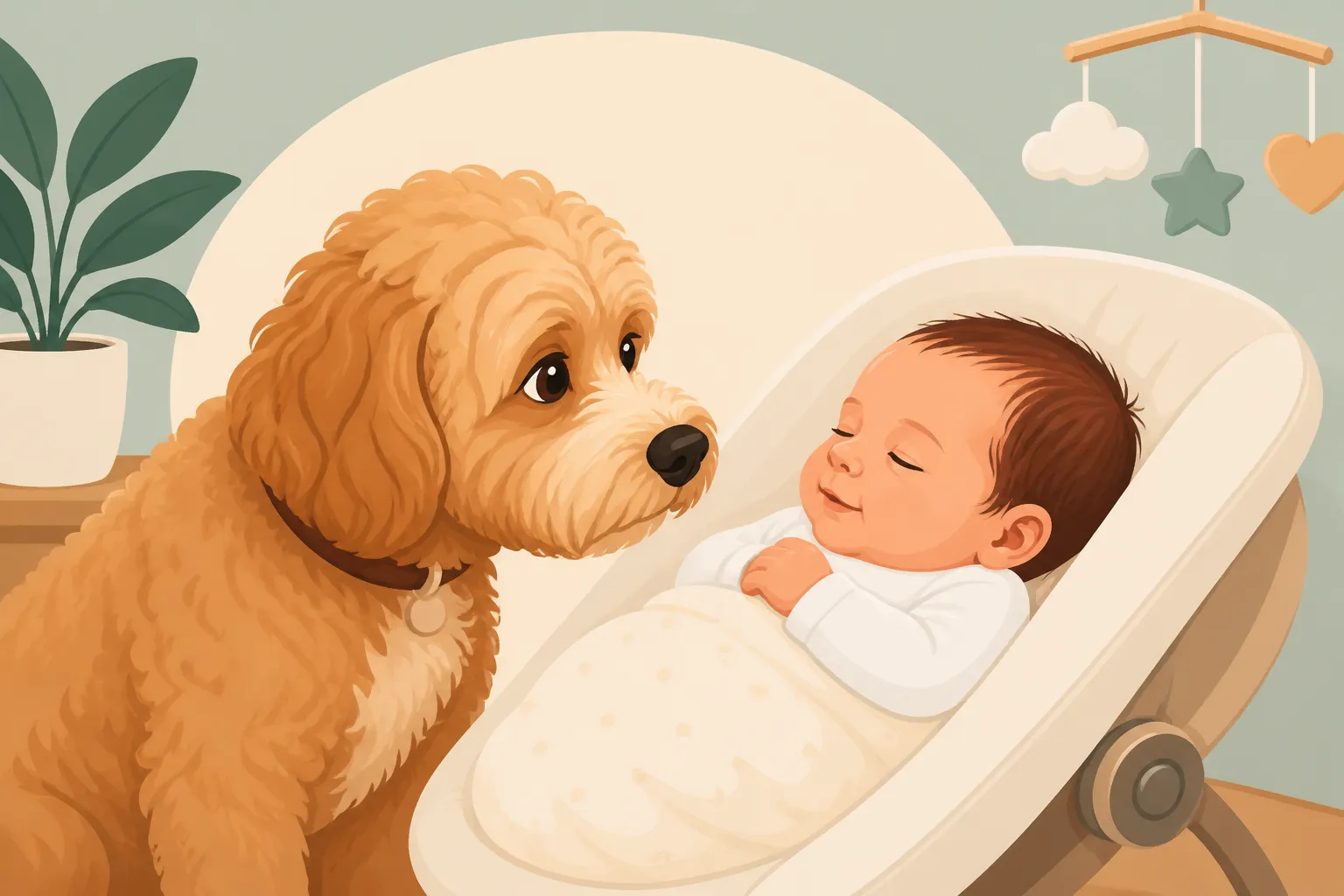
Once your dog has settled slightly, and you are calm, then it’s time for the introduction. Keep your Cockapoo on a leash, ideally held by your partner or another trusted adult, so you have full control. This isn't because you expect aggression, but because even an excited Cockapoo could accidentally knock a baby in their enthusiasm. Hold the baby securely, perhaps sitting down on a couch, and allow your Cockapoo to approach at a distance. Let them see and hear the baby from afar. Give calm, positive reinforcement for relaxed behavior.
Gradually, allow a closer approach. Keep interactions brief and positive. Allow supervised sniffing, perhaps of the baby's feet, while continuously monitoring your Cockapoo's body language. Look for relaxed postures, a loose tail wag, soft eyes, or a gentle sniff. If your Cockapoo seems overly aroused, anxious, or distressed (lip-licking, yawning, turning away, growling, fixed stare, stiff body), gently redirect them with a "leave it" command and create more distance. Never force an interaction. The goal is curiosity and calm acceptance, not immediate best friends. These first meetings should be short, positive, and always supervised, perhaps only lasting a few minutes before you praise your Cockapoo and offer a high-value treat.
Managing Interactions and Supervision
The introduction isn't a one-time event; it's an ongoing process. For the safety of your baby and the well-being of your Cockapoo, never leave your dog unsupervised with your newborn, not even for a second. This rule is paramount. Even the sweetest, most trustworthy dog can have an unpredictable reaction to a baby's cries, sudden movements, or novel smells. A good baby gate, easily found on Amazon, can be a lifesaver for creating safe boundaries.
When your Cockapoo is around the baby, ensure all interactions are positive and managed. Instead of scolding your dog for being too curious, redirect them gently with a toy or a "place" command. Always praise and reward calm behavior in the baby's presence. If your Cockapoo approaches calmly when the baby is in their bassinet, offer a treat. If they lie quietly on their bed while you're tending to the baby, reward that. You want your Cockapoo to associate the baby with good things.
It's helpful to understand dog body language. A low, slow wag of the tail, a loose body, soft eyes, and relaxed ears are good signs. A stiff body, whale eye (showing the whites of their eyes), lip-licking, excessive yawning, growling, or snapping are all signs of stress or discomfort and need immediate intervention. If you notice signs of stress, separate your dog and give them a break. For deeper understanding of canine anxiety, reading Signs a Cockapoo Is Anxious Rather Than Bored could be beneficial.
Living Together: Establishing Harmony in the Home
The initial introductions are just the beginning. Long-term harmony requires conscious effort to manage your Cockapoo's needs, set clear boundaries, and continue their education as your baby grows.
Maintaining Your Cockapoo's Well-Being
It's easy for your Cockapoo to feel displaced when a baby arrives. Suddenly, they're getting less attention, their routine is disrupted, and there's a new, intriguing (and sometimes scary) creature monopolizing their humans. It's crucial to proactively ensure your Cockapoo still feels loved and secure.
Dedicate specific, uninterrupted time to your Cockapoo every day. Even 10-15 minutes of one-on-one play, a focused training session, or a good cuddle can make a huge difference. This helps reinforce your bond and shows them they haven't been forgotten. Try to maintain some aspects of their old routine, even if modified. For instance, if you used to have a long morning walk, try to fit in a shorter, brisk walk, or supplement it with some indoor mental stimulation, like a puzzle toy or a sniff game.
Don't forget their exercise needs. A tired Cockapoo is a happy, well-behaved Cockapoo. Even with a baby, try to ensure they're still getting adequate physical activity. A good dog walker or a trusted friend/family member might be a lifesaver during those early, sleep-deprived weeks. Ensuring they have appropriate outlets for their energy can prevent them from developing undesirable behaviors out of boredom or frustration, like excessive barking (which you definitely don't need with a sleeping baby!) or destructive chewing. You might find guidance in The Miles a Cockapoo Wants Every Day for managing their energy levels.
Setting Boundaries and Safe Spaces
Boundaries are not mean; they are clear and provide security for everyone. Establish clear rules from day one about where your Cockapoo is allowed and not allowed to go, especially concerning baby areas. The nursery, for instance, might be a "baby-only" zone, or you might allow your Cockapoo in only under strict supervision. Use baby gates to create physical boundaries, ensuring your dog cannot access the baby’s space without you. This helps prevent accidents and allows your Cockapoo to have their own safe, calm space away from the baby, should they need it.
Your Cockapoo also needs a designated "safe space" where they can retreat and relax, undisturbed by the baby. This might be their crate, a cozy bed in another room, or a quiet corner. Teach your children (as they grow) to respect this space. This private retreat is vital for your dog’s mental well-being, providing an escape from the sometimes-overwhelming chaos of a household with a newborn. Ensure they have access to their favorite toys, chew items, and fresh water in this area.
When the baby is having "tummy time" on the floor, your Cockapoo should be on their bed or behind a gate. When the baby starts crawling, the game changes again. Your dog should never be seen as a mobile plaything or a giant chew toy. Consistency is key here. Every family member needs to be on board with these rules to avoid confusing your Cockapoo.
Continuing Education for Your Cockapoo
As your baby grows, your Cockapoo's understanding of them will also evolve. A newborn lying still is very different from a crawling infant or a toddling child who pulls on ears and grabs tails. Your Cockapoo's education, therefore, needs to be ongoing.
Continue reinforcing positive interactions. When your baby is older and learning to sit, teach your dog to calmly "sit" or "down" when the baby is near. As your child becomes mobile, teach them gentle hands. Always supervise their interactions, modeling calm behavior for both your dog and your child. For instance, you can use treats to reward your Cockapoo for moving away calmly when the baby approaches, rather than simply tolerating it. This proactive approach helps build positive associations.
Introduce "leave it" for any baby items that might be tempting to your Cockapoo, like dropped food or toys. Your Cockapoo will be curious, and they might want to mouth or investigate things with their teeth, especially during their needle-teeth phase, even if they are older. This is where consistent training truly shines. If you’re considering bringing another dog into the mix, or simply want to ensure your Cockapoo gets along with other dogs in the future, Introducing a Cockapoo to the Dog You Have might offer useful principles that can be adapted to this unique interspecies dynamic.
Remember, patience is paramount. Both your Cockapoo and your baby are learning and growing, and there will be bumps along the way. Celebrate small victories, remain consistent with your training and boundaries, and always prioritize safety and positive experiences for everyone involved.
| Preparation Stage | Key Actions for Your Cockapoo |
|---|---|
| Pre-Arrival | – Gradually adjust routine (walks, attention). |
| – Introduce baby gear and scents (lotions, blankets). | |
| – Practice obedience commands (sit, stay, leave it). | |
| – Desensitize to baby sounds. | |
| – Establish "baby-free" zones with gates. | |
| Homecoming | – Allow initial excitement greeting a non-baby carrier. |
| – Controlled, leashed introduction with baby held securely. | |
| – Supervise all initial sniffing and interactions. | |
| – Reward calm behavior with praise and treats. | |
| Ongoing Harmony | – Never leave unsupervised with baby. |
| – Dedicate one-on-one time daily. | |
| – Maintain exercise and mental stimulation. | |
| – Reinforce boundaries and safe spaces. | |
| – Continue training as baby grows and becomes mobile. | |
| – Monitor body language for signs of stress. |
Disclaimer
This article is for general informational purposes only and does not constitute professional advice. Laws, prices and regulations vary by location and change over time. Consult a qualified professional for guidance on your specific situation.