Whether Resource Guarding Runs in Cockapoo Lines
It’s a truly unsettling experience when your sweet, cuddly Cockapoo suddenly stiffens, growls, or even snaps when you simply try to take away a dropped sock or approach their food bowl. This behavior, known as resource guarding, can make you feel like you're walking on eggshells in your own home, questioning the loving bond you share. Many Cockapoo owners worry if this is a common trait or something they've inadvertently caused. This guide is here to shed light on why resource guarding happens, how to spot it, and most importantly, how to lovingly and effectively manage it in your beloved Cockapoo.
Understanding Resource Guarding in Cockapoos
Resource guarding is one of those behaviors that can really catch you off guard, especially with a breed as generally affable as the Cockapoo. You envision a companion who shares everything, and then suddenly, there's this invisible force field around their favorite chew toy or even their bed. It’s frustrating and can frankly be a little scary.
What Exactly is Resource Guarding?
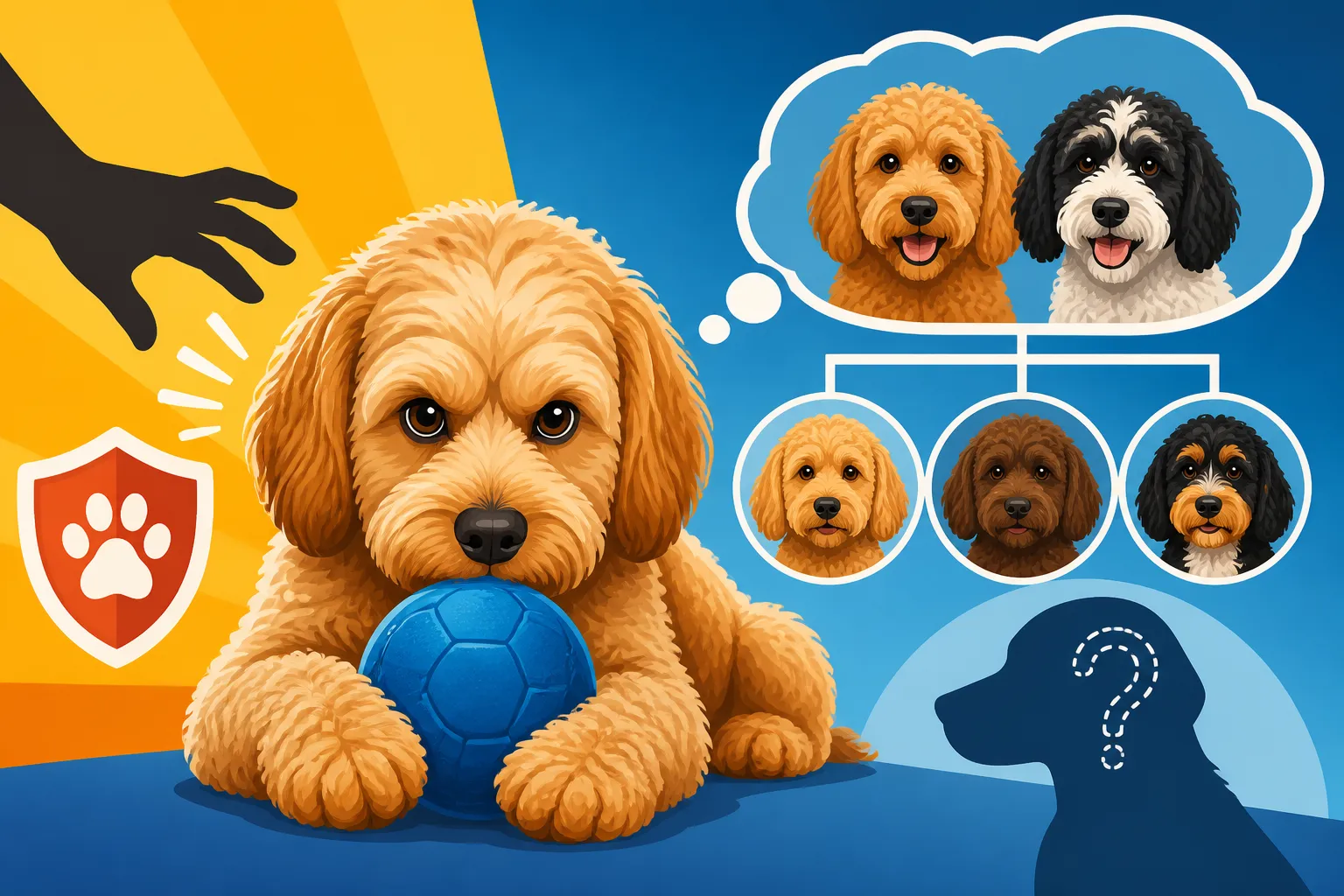
At its heart, resource guarding is a dog's way of saying, "This is mine, and I don't want you near it." It's a natural, instinctual behavior rooted in canine survival. In the wild, animals protect their food, mates, and den sites to ensure their survival and that of their offspring. While our Cockapoos aren't living in the wild, that primal instinct can still surface in a domestic setting. They see something as highly valuable – whether it's a gourmet treat, a favorite squeaky toy, or even a prime spot on the sofa – and they feel the need to defend it from perceived threats, which can unfortunately include you or other pets in the household.
This behavior isn't about being "dominant" or "mean" in the way some old-school training methods described it. It's often driven by fear, insecurity, or a learned response that has worked for them in the past. Your Cockapoo isn't trying to be a bad dog; they're simply communicating their discomfort and their desire to keep something they value. The "resource" can be anything from a special bone to a particular person's lap.
The Genetic Component: Cocker Spaniel and Poodle Influences
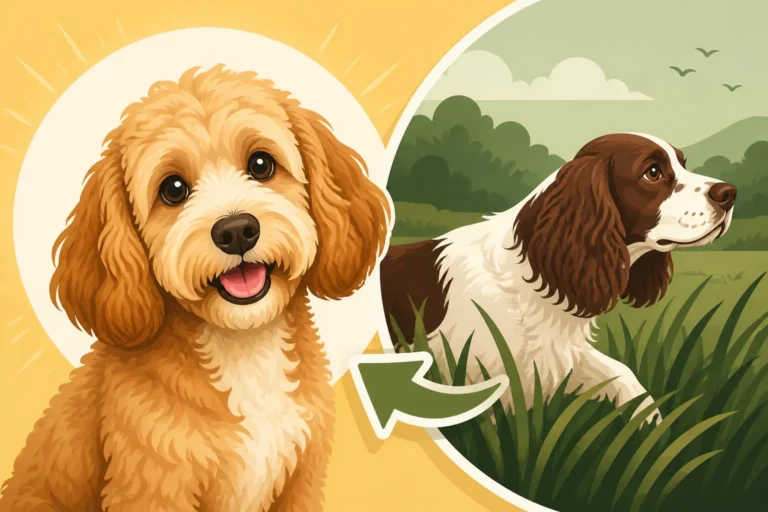
When we talk about inherited traits in our Cockapoos, we often focus on their delightful personalities, their cleverness, and perhaps their propensity for certain health issues like Familial Nephropathy and the Kidneys a Cockapoo Can Inherit or Progressive Retinal Atrophy in a Cockapoo. But genetics can also play a role in behavioral predispositions. Both parent breeds – the Cocker Spaniel and the Poodle – can, under certain circumstances, exhibit resource guarding, which means your Cockapoo might inherit a genetic tendency toward it.
Cocker Spaniels, particularly certain lines, have been known to exhibit what's sometimes called "rage syndrome" or more commonly, possessive aggression, although this is quite rare and often misdiagnosed. More typically, they can be prone to guarding food or favorite resting spots. Poodles, while often seen as refined and aloof, are intelligent and can be quite sensitive. If they feel insecure about their resources, they too can develop guarding behaviors. The combination of these two breeds in a Cockapoo means that while they generally have wonderful temperaments, a predisposition to guarding can sometimes surface. It's not a guarantee, but it's something to be aware of, especially if you know the history of the parent lines. Whether Seizures Are Recorded in Cockapoo Pedigrees is another example of a trait that can be inherited.
It's crucial to remember that a predisposition is not a destiny. Even if a Cockapoo has some genetic inclination, proper socialization, consistent positive reinforcement training, and a secure environment can significantly mitigate these behaviors. It's about understanding the potential and working with it, not against it.
Early Signs and Subtle Cues
One of the biggest mistakes owners make is missing the early, subtle signals of resource guarding. We often only react when a growl escalates or a snap occurs. But your Cockapoo is likely trying to tell you they're uncomfortable long before it reaches that point. Learning to read these early cues is vital for prevention and for keeping everyone safe.
Here’s a table outlining common escalation steps in resource guarding behavior:
| Stage of Guarding | Behavioral Cues (Subtle to Obvious) | Owner Interpretation |
|---|---|---|
| Mild / Early | Freezing, stiffening body, eating faster, turning head away from approaching person, slight lip lick or yawn (displacement behaviors). | "They're just focused on their food/toy." |
| Moderate | Low growl, hard stare, subtle body block (turning back to you, putting body over item), showing the whites of their eyes (whale eye). | "They're being a bit grumpy." |
| Elevated | Louder, more intense growl, snapping air, baring teeth, charging a short distance, lunging without contact. | "They're trying to warn me." |
| Severe | Biting (contact bite, sometimes inhibited, sometimes not), full-blown fight (if with another animal). | "They bit me/another dog." |
These cues can apply to various resources. For example, a Cockapoo might freeze or give a hard stare when you approach their bed, or quickly consume a treat if another dog walks by. Recognizing these signals, even the most subtle ones, allows you to intervene calmly and prevent the situation from escalating. Catching it early means you can adjust your approach and prevent your Cockapoo from feeling the need to guard further.
Why Your Cockapoo Might Be Resource Guarding
It’s easy to feel personally offended when your sweet Cockapoo guards something from you. You feed them, care for them, love them unconditionally! Why would they act this way? Understanding the "why" behind the behavior helps remove the emotional sting and allows you to approach the issue with empathy and an effective strategy.
Environmental Factors and Learned Behavior
Sometimes, resource guarding isn't necessarily about an inherent predisposition but is a learned response based on your Cockapoo's past experiences or the environment they're in. This is particularly true for rescue dogs, or those who may have come from less-than-ideal circumstances, like puppy mills where competition for food was high.
Consider a puppy from a large litter where food was scarce. The quickest, most assertive puppies got enough, while others learned to guard their small portion to survive. This competitive drive can carry over, even into a loving home where food is abundant. Similarly, if your Cockapoo has ever had a valuable item (like a favorite toy or treat) repeatedly taken away without a fair exchange, they might learn that they need to defend it. Every time they successfully guard something, the behavior is reinforced. "I growled, and they left me alone. Great! I'll do that again next time." This is why force or punishment is almost always counterproductive; it only teaches the dog that humans are indeed a threat to their resources, making them guard more intensely. Whether a Sharp Word Shuts a Cockapoo Down highlights why harsh methods are ineffective for sensitive dogs like Cockapoos.
The household dynamics can also play a role. If there are multiple pets, especially if there's a perceived hierarchy or a history of one pet stealing from another, a Cockapoo might feel the need to guard its own. It's not malicious; it's self-preservation in their world. You need to identify what triggers the behavior and work to change that specific environmental dynamic.
Lack of Trust and Insecurity
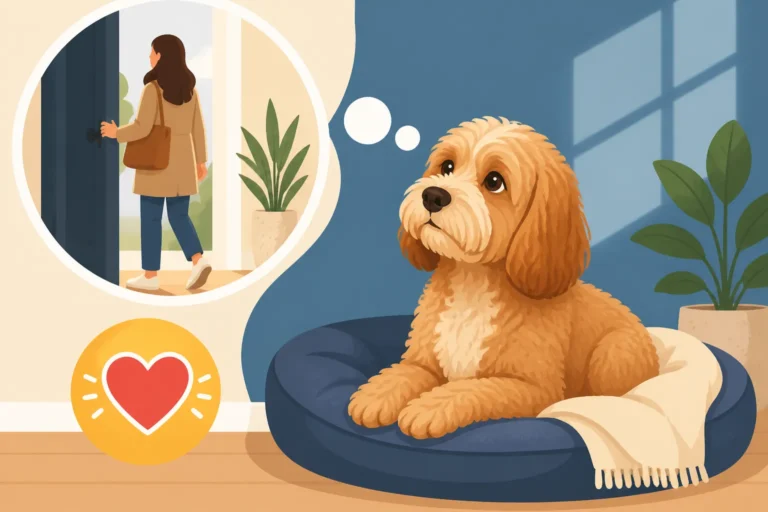
At its core, resource guarding is often a symptom of insecurity. Your Cockapoo might not fully trust that you (or another animal) won't take their valued possession away, or that they will always have enough. This isn't about you being untrustworthy in general, but about a specific perceived threat to a specific item. This feeling of insecurity can stem from a variety of sources. Perhaps they had a difficult start in life, or maybe they just have a naturally anxious personality. Signs a Cockapoo Is Anxious Rather Than Bored can give you more insight into generalized anxiety, which can sometimes underpin guarding behaviors.
A Cockapoo who feels secure and trusts their human companions to consistently provide for them, and not to unfairly remove cherished items, is less likely to guard. The goal isn't to remove their instinct entirely, but to build such a strong foundation of trust that they don't feel the need to act on that instinct in an aggressive way. This means making sure they understand that your approach usually means something good is about to happen, rather than something bad.
Common Items Cockapoos Guard
While food and high-value treats are frequently guarded, Cockapoos can become possessive over a surprising array of items, or even locations and people. It really comes down to what they perceive as valuable.
Here are some common resources a Cockapoo might guard:
- Food and Treats: This is the classic scenario. From their regular kibble bowl to a delicious chew like a bully stick. This is often where guarding first manifests.
- Toys: Especially favored toys, like a squeaky ball, a tug rope, or a particular soft toy they've become attached to. This can be tricky if you have children or other pets who might naturally want to play with the same toys.
- Sleeping Spots: Their crate, their dog bed, a specific spot on the sofa, or even your bed. If they've claimed a spot and you approach, they might offer a low growl or stiffen.
- People: Yes, some Cockapoos can guard their favorite human. This often manifests as growling or snapping at other family members or pets who try to get close to the "guarded" person, especially if that person is giving attention or cuddles. This can be very dangerous if a child is the one being guarded.
- Stolen Items: Paradoxically, a Cockapoo might guard an item they've stolen, like a remote control, a sock, or a tissue. They know they shouldn't have it, but they've got it, and now it's theirs. This is where a good "drop it" command becomes invaluable. Whether a Cockapoo Guards What It Has Stolen delves deeper into this specific behavior.
Identifying exactly what your Cockapoo guards is the first step in creating a targeted management and training plan. Observation is key; watch for those subtle cues around each of these potential resources.
Proactive Prevention and Management Strategies
The good news is that resource guarding is a highly manageable behavior, especially if addressed early and with consistency. It requires patience and a shift in perspective, focusing on building trust and changing your Cockapoo's emotional response to your approach.
Building Trust Through Positive Reinforcement
The cornerstone of managing resource guarding is to teach your Cockapoo that your presence near their valued items is a good thing, not a threat. This is where positive reinforcement shines. The goal is to create a positive association, turning potential conflict into an opportunity for reward.
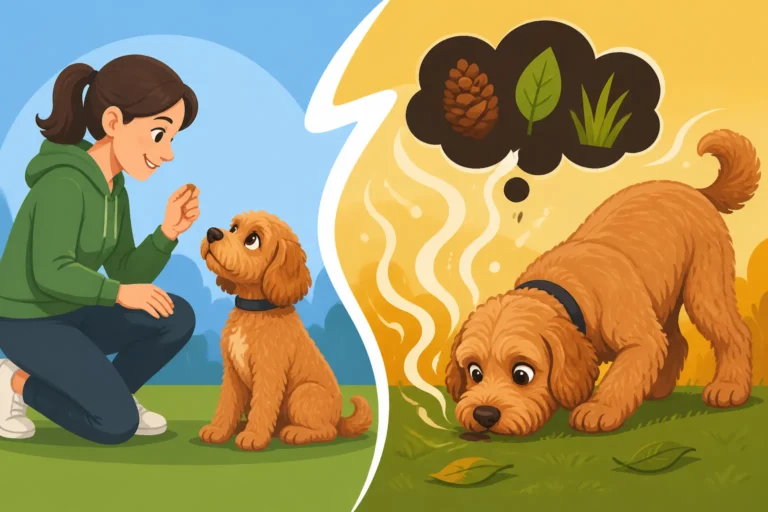
A fantastic technique is the "trade-off" game. When your Cockapoo has something they might guard (e.g., a chew toy), approach calmly and offer them an even higher-value treat. Something truly irresistible, like a piece of cooked chicken or cheese. As they take the treat, gently take the guarded item. Then, immediately return the original item, or a different equally good item, once they’ve finished the treat. This teaches them: "When the human approaches and takes my thing, something better happens, and I often get my original item back anyway!" You can find plenty of robust chew toys and delicious treats on Amazon to make these trade-offs appealing.
Hand-feeding is another excellent way to build trust around food. Instead of putting a full bowl down and leaving them to it, sit with your Cockapoo and hand-feed them portions of their meal. This teaches them that food comes from your hand, and your presence means nourishment, not deprivation. Start with less valuable food if they are very sensitive, then gradually work up to their regular kibble. This transforms your hand from a potential threat to a consistent source of good things.
Managing the Environment to Reduce Triggers
While training is crucial, managing your environment can prevent many guarding situations from even occurring, especially in the early stages of modifying the behavior. This is about making it easy for your Cockapoo to succeed and reducing their opportunities to practice guarding.
- Separate Feeding: If you have multiple pets, feed them in separate rooms or crates to eliminate competition and the need to guard food from each other.
- High-Value Item Protocol: Only give high-value chews or treats when your Cockapoo is alone in a designated, secure space (like their crate or a pet-proofed room) where no one will disturb them. This removes the "threat" of having it taken away or having to defend it.
- Secure Possessions: Don't leave items lying around that your Cockapoo is likely to steal and then guard (e.g., socks, tissues, children's toys). Keep these items out of reach to avoid accidental guarding scenarios.
- Children and Pets: Supervise interactions between children and your Cockapoo, especially when food or toys are involved. Teach children never to approach a dog while it's eating or resting with a valued item. A solid "leave it" command is not just for inanimate objects; it also applies to respecting your dog's space.
These management techniques aren't a replacement for training, but they provide a safe framework within which your training can be most effective. Think of it as setting your Cockapoo up for success.
Training Exercises to Address Resource Guarding
Beyond general trust-building and environmental management, specific training exercises can directly address resource guarding and replace it with more desirable behaviors. Consistency is absolutely paramount here. An online training program like BAXTER & Bella might offer specific modules or advice on dealing with resource guarding, providing structured exercises you can follow from home.
-
"Drop It" and "Leave It": These are foundational commands for any dog, but especially crucial for a resource guarder.
- "Drop It": Start by holding a less valuable toy. Present a higher-value treat. As your Cockapoo drops the toy to take the treat, say "Drop It!" Reward them. Practice this repeatedly. Gradually, you can reduce the value of the treat and then eventually get them to drop the item with just the command, always rewarding them generously for compliance.
- "Leave It": Place a low-value treat on the floor. Cover it with your hand. When your Cockapoo looks away from the treat (even for a second), say "Leave It!" and reward them with a different, higher-value treat from your other hand. Slowly increase the time they have to "leave it" and decrease the visibility of the low-value treat. This teaches impulse control and that ignoring something leads to a better reward.
-
Desensitization and Counter-Conditioning (Food Bowl Example):
- Start by approaching your Cockapoo's food bowl from a distance while they are eating. Drop a high-value treat near the bowl, then walk away. Repeat this several times. Your goal is for them to associate your approach with good things appearing, not things being taken away.
- Gradually decrease the distance. Eventually, you should be able to approach the bowl, drop a treat into the bowl, and then walk away.
- Never hover or make sudden movements. Keep your body language relaxed and friendly.
- The aim is to change their emotional response from "Oh no, they're coming for my food!" to "Yay, they're coming, that means extra treats!"
Remember, progress might be slow, especially with deeply ingrained guarding behaviors. Celebrate small victories and avoid rushing the process. If you ever feel unsafe or that the behavior is escalating, it's time to call in the professionals.
When to Seek Professional Help
While these strategies are incredibly effective for many Cockapoos, there are times when resource guarding goes beyond what a typical owner can safely manage on their own. It's important to recognize when the situation warrants professional intervention, not just for your peace of mind, but for the safety and well-being of everyone in your home.
Recognizing Escalation and Danger Signs
As we discussed, resource guarding exists on a spectrum. While a low growl or stiffening can be managed with consistent training, certain behaviors signal a more serious problem that requires immediate, expert attention.
- Biting: Any bite that breaks the skin, even a small puncture, is a serious red flag. An inhibited bite (where they nip but don't apply full pressure) is also a warning that their frustration or fear is escalating. If your Cockapoo has bitten you or another person/animal, you are in dangerous territory.
- Frequent or Intense Growling/Snapping: If your Cockapoo is growling or snapping regularly, especially at multiple household members or over a variety of items, the behavior is becoming generalized and harder to manage without expert guidance.
- Lack of Response to Training: If you've diligently applied positive reinforcement techniques for several weeks or months and see no improvement, or the behavior seems to be worsening, it's a sign that your current approach isn't sufficient.
- Injury to Another Pet or Person: This is the most critical sign. If another pet has been injured during a guarding incident, or if a person (especially a child) has been bitten, you absolutely must seek professional help immediately. The risk of recurrence and more severe injury is high.
Don't ignore these signs or try to "tough it out." Your Cockapoo isn't trying to be malicious, but their behavior indicates a deep-seated fear or insecurity that needs specialized intervention. It's not a failure on your part to seek help; it's a responsible act of love for your dog and your family.
The Role of a Certified Professional Dog Trainer or Behaviorist
When you identify these escalating or dangerous signs, the best course of action is to consult a Certified Professional Dog Trainer (CPDT) or, for more severe cases, a Certified Applied Animal Behaviorist (CAAB) or a Veterinary Behaviorist (Dip. ACVB). These professionals have specialized knowledge and experience in canine behavior modification.
- Assessment: A professional will conduct a thorough assessment of your Cockapoo's behavior, your household dynamics, and the specific triggers. They'll observe your dog in their environment and ask detailed questions to understand the root cause of the guarding.
- Customized Plan: Based on their assessment, they will develop a personalized training and management plan tailored to your Cockapoo's unique needs and your family's situation. This isn't a one-size-fits-all approach.
- Safe Handling Techniques: They will teach you how to safely manage situations, protect yourself, and work with your Cockapoo without instigating further aggression.
- Medication (Veterinary Behaviorist): In some severe cases, especially if underlying anxiety or fear is significant, a Veterinary Behaviorist might recommend medication in conjunction with behavior modification. This is never a standalone solution but can help reduce anxiety enough for the training to be more effective.
When looking for a professional, ensure they use positive, force-free training methods. Avoid anyone who suggests punishment, dominance theory, or "alpha" techniques, as these methods are not only outdated and inhumane but can also exacerbate fear-based behaviors like resource guarding. A good professional will empower you with the tools and knowledge to help your Cockapoo live a happier, more secure life.
Disclaimer
This article is for general informational purposes only and does not constitute professional advice. Laws, prices and regulations vary by location and change over time. Consult a qualified professional for guidance on your specific situation.