Teaching a Cockapoo to Bring the Ball Back
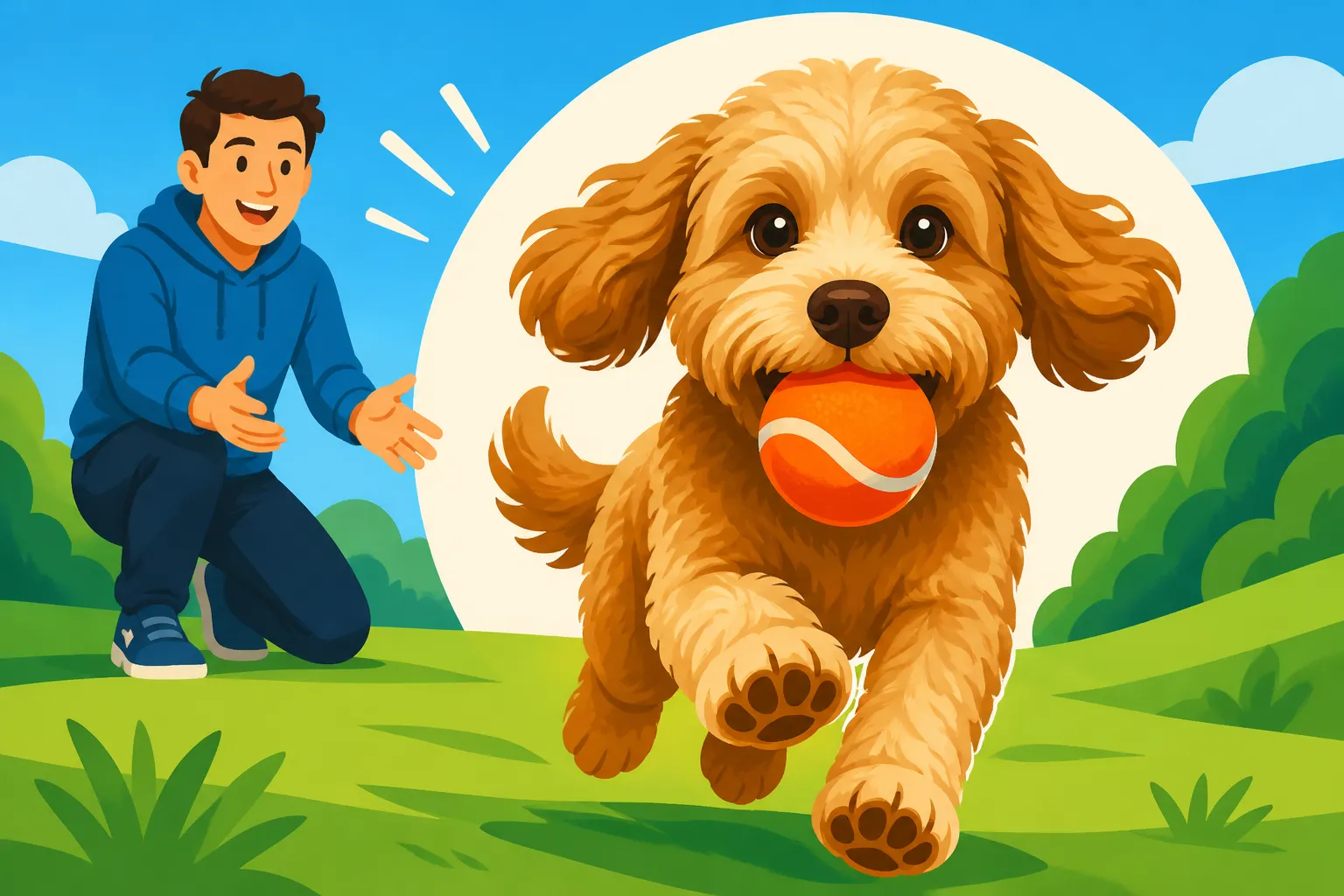
It’s a scenario many Cockapoo owners know all too well: you toss a favorite ball, your furry friend dashes after it with boundless enthusiasm, scoops it up, and then… proceeds to prance around just out of reach, initiating a game of chase they invented. Or perhaps they drop it, but a good distance away, expecting you to do all the work. It’s frustrating when you just want a good game of fetch, but fear not! This guide will walk you through teaching your clever Cockapoo to consistently and joyfully bring that ball right back to you.
Understanding Your Cockapoo's Natural Instincts for Fetch
Before we dive into the nitty-gritty of training, let's take a moment to appreciate the unique blend of traits that make your Cockapoo, well, your Cockapoo. They're a charming mix of Cocker Spaniel and Poodle, and both breeds bring distinct instincts to the game of fetch. Understanding these can help you tailor your approach and manage expectations.
The Cocker Spaniel's Drive to Retrieve
From their Cocker Spaniel heritage, Cockapoos often inherit a strong natural inclination to retrieve. Cocker Spaniels were originally bred as gun dogs, specifically "flushers" and "retrievers." This means they have an ingrained desire to find game, flush it out, and then bring it back to their handler, often with a soft mouth. This drive can be a huge asset in fetch training! Your Cockapoo might naturally love chasing and picking up objects. It's in their DNA to enjoy that part of the game.
However, the "bringing it back" part is where the fun often stops and the training begins. While they're keen to retrieve, the concept of a polite, immediate return to hand isn't necessarily hardwired. They might want to show it off, carry it around, or even guard it playfully. They are also incredibly sensitive dogs, and harsh corrections can quickly sour their enthusiasm for the game. Positive reinforcement is key to nurturing their natural drive without overwhelming them. You want to make fetching and returning the most rewarding thing they can do.
The Poodle's Intelligence and Playfulness
Then there's the Poodle side – highly intelligent, often keen to please, and sometimes, a little bit mischievous! Poodles were originally water retrievers, so they also possess a retrieving instinct, but their high intelligence means they can quickly learn routines and commands. This is fantastic for training, as they pick things up swiftly. However, their intelligence also means they're quick to figure out if there's a more "fun" game to be had, like "keep away" or "make mom/dad come get it."
Their playful nature can sometimes manifest as a desire to engage you in a different kind of game. They might bring the ball close, then dart away, tail wagging, inviting you to chase them. This isn't defiance; it's often a game to them, a way of interacting. Your job is to gently guide that intelligence and playfulness into the game you want to play. It’s about being smarter than your clever canine, in the kindest way possible. Consistency and making the desired behavior more rewarding than the alternative are your best tools.
Building the Foundation: Essential Commands for Retrieve
Before you can expect your Cockapoo to bring the ball back reliably, there are a couple of foundational commands that will make all the difference. These commands, "Drop It" and "Give," put you in control of the object and make the retrieve a collaborative effort rather than a tug-of-war.
Teaching "Drop It"
"Drop It" is a crucial command that tells your Cockapoo to release whatever is in their mouth. This isn't just for fetch; it's a vital safety command too, for those moments they pick up something they shouldn't.
Start by having two identical, highly desirable toys or balls. Play with your Cockapoo with one toy. While they have it in their mouth, present the second, equally exciting toy directly to their nose. As they open their mouth to investigate or take the second toy, say "Drop It!" in a clear, cheerful tone. The moment they drop the first toy, praise them enthusiastically ("Yes!" or "Good drop!") and let them have the second toy. Once they've engaged with the second toy, quickly pick up the first one and hide it. Repeat this process many times. The key is that they learn that dropping one toy immediately leads to a reward (the other toy) and not to the end of the fun.
Over time, you can transition to using high-value treats instead of the second toy. Practice in short, fun sessions, slowly increasing the distance you present the treat from their mouth. Eventually, you want them to drop the toy with just the verbal cue, even without the immediate visual of a new treat. Remember, consistency is everything. How Long a Cockapoo Works Before Its Nose Wins can give you an idea of their focus levels during training.
Mastering "Give"
While "Drop It" is about releasing an item, "Give" implies handing it over directly to you. This is particularly useful for a polite retrieve.
To teach "Give," have your Cockapoo hold a toy, perhaps one they aren't super possessive about. Offer a truly irresistible treat close to their nose. As they open their mouth to take the treat, gently take the toy from them, saying "Give!" at the exact moment they release it. Immediately reward with the treat and lavish praise. Repeat this many times. The goal is for them to associate giving you the toy with an even better reward.
You can then start holding your hand out for the toy without the treat visible initially, giving the "Give" command. If they offer it, reward immediately. If they hesitate, bring the treat back into play. The treat should be consistently higher value than the toy they are holding. Many Cockapoos, being intelligent and food-motivated, will pick up on this quickly. Websites like BAXTER & Bella often emphasize this kind of positive reinforcement, breaking down complex behaviors into small, rewarding steps.
Step-by-Step Guide to a Reliable Retrieve
Now that your Cockapoo understands "Drop It" and "Give," we can put it all together to build a consistent retrieve. Patience and positive reinforcement are your allies here.
Start Small and Close
Begin in a quiet, distraction-free environment, like your living room or a fenced yard. Sit on the floor with your Cockapoo. Show them the ball, get them excited, and toss it just a foot or two away. The moment they pick it up, encourage them to come back to you with cheerful sounds and pats on your leg. If they come close, immediately use your "Give" or "Drop It" command.
As soon as they release the ball, offer a high-value treat and enthusiastic praise. Don't chase them if they don't bring it all the way; instead, try to lure them closer with your voice and the promise of a treat. If they drop it too far, quietly retrieve it yourself and try again, making the toss even shorter next time. We want to set them up for success.
Gradually Increase Distance and Duration
Once your Cockapoo is reliably bringing the ball back from a short toss, slowly increase the distance. Toss it a bit further across the room, then across the yard. Always keep the atmosphere light and fun. If you notice them starting to play "keep away," immediately shorten the distance again. It's better to end a session on a high note with successful retrieves.
You can also introduce a long line at this stage, especially if you're practicing in a larger, unfenced area. A long line, available on platforms like Amazon, allows you to gently guide your Cockapoo back to you if they get distracted or decide to run off with the ball. Working a Cockapoo on a Long Line can provide more detail on this technique. You're not pulling them in harshly; it's just a gentle reminder and a way to prevent them from practicing the "keep away" behavior.
Introduce Different Environments and Distractions
After your Cockapoo is consistently retrieving in your home and yard, it's time to generalize the behavior. Start practicing in slightly more distracting environments, like a quiet park during off-peak hours. The key here is to start from scratch in the new environment – toss the ball a very short distance again, reward heavily for success, and gradually increase the challenge.
The presence of other dogs, people, or interesting scents can be very distracting for a Cockapoo. If they struggle, go back to a less distracting environment. Never punish them for getting distracted; simply guide them back to the task with patience and positive reinforcement. Their natural curiosity and love for scent can be strong, as discussed in The Flushing Drive Still Alive in a Cockapoo. You want the joy of retrieving and the reward from you to outweigh these distractions.
Consistency is Key
The most important element of any training is consistency. Everyone in the household needs to use the same commands and follow the same rules. If one person lets the Cockapoo play keep-away, it undermines all the training efforts. Short, frequent training sessions (5-10 minutes) are much more effective than one long, infrequent one. Keep it positive, keep it fun, and always end on a good note.
Troubleshooting Common Retrieve Problems
Even with the best intentions and training, you might encounter a few bumps in the road. Cockapoos are smart, and sometimes their cleverness can lead to habits we'd rather they didn't have. Here are some common problems and how to address them.
Problem: My Cockapoo Picks Up the Ball But Doesn't Bring It Back
This is arguably the most common issue. Your Cockapoo loves the chase, loves the retrieve, but wants to keep the prize!
Solution: This goes back to making you the most exciting part of the game.
- Re-evaluate the Reward: Is your treat truly high-value? Sometimes a piece of kibble isn't enough when there's a fun ball involved. Try small pieces of cooked chicken, cheese, or specialized training treats.
- Use Two Balls: As described earlier, having a second, identical ball can be incredibly effective. When they have the first ball, wiggle the second one enticingly. As they come closer to investigate or drop the first one, immediately praise and toss the second. This creates a cycle where returning the ball means more fun, not the end of it.
- Shorten the Distance Drastically: If they're consistently not bringing it back, you've asked for too much too soon. Toss the ball just a foot or two away. Literally right at your feet. Reward for any movement towards you with the ball.
- Practice "Come" and "Give" Separately: Reinforce your general recall command (Building a Recall a Cockapoo Answers) and "Give" command extensively without the fetch game. Then, integrate them slowly back into fetch.
Problem: My Cockapoo Drops the Ball Too Far Away
They bring it back, which is great, but then they drop it just out of your reach, forcing you to get up and get it. This is a subtle variation of "keep away."
Solution:
- Lure to Hand: When they approach with the ball, kneel down, open your hand, and wiggle a treat near your knee or shin, encouraging them to come all the way to your hand before dropping. As soon as they are within arm's reach and either drop it or allow you to take it with "Give," reward.
- Physical Boundary: If you're in a smaller space, you can use a barrier (like a baby gate) or even your own legs to create a "return zone." They have to enter this zone to get the treat.
- No Pick-Up, No Play: If they drop it too far away, simply stand still. Don't engage. Don't pick it up. Wait them out. They might nudge it closer, or bring it back again. As soon as they put it within reach, reward. This teaches them that you won't play until they return it properly.
Problem: My Cockapoo Gets Distracted and Doesn't Notice the Ball
You toss the ball, and they're off sniffing a bush or greeting another dog. This is common in more stimulating environments.
Solution:
- Go Back to Basics: If this happens, you've increased the distraction level too quickly. Return to a quieter environment where they are more focused on you.
- Use a High-Value Toy: Is the ball truly engaging? Some Cockapoos prefer squeaky toys, crinkly toys, or soft-mouthed toys. Experiment to find what excites them most. Brands like KONG offer a wide variety of interactive toys available on Amazon that might pique their interest.
- Engage Before the Toss: Before you even throw the ball, get their attention on you. Use their name, make eye contact, perhaps do a quick trick for a treat. Only toss the ball when you have their full focus.
- Enlist a Helper: In a safe, fenced area, have a friend stand a short distance away. You throw the ball, and if your Cockapoo gets distracted, your friend can gently guide them back towards you and the ball (without engaging in a chase themselves).
Problem: My Cockapoo Runs Away With the Ball
This is the classic "keep away" game. It's fun for them, frustrating for you.
Solution:
- Avoid Chasing: The absolute golden rule here is never chase your Cockapoo for the ball. Chasing is a reward for them; it's part of their game. If they run away, turn your back, walk away, or even jog in the opposite direction. Make yourself uninteresting.
- Become the "Treat Dispenser": If they run away, turn your back. If they come back close, quietly try to get their attention, offer a treat, and use "Give." If they release it, big praise, big treat, and immediately toss the ball again for another retrieve. You want them to think, "The ball disappears until I bring it to my human, then it reappears like magic!"
- Use a Long Line: A long line can be invaluable here. Attach it to their harness. If they run off, you can gently reel them in, rather than chasing. Once they're close, use "Give." Whether a Cockapoo Needs a GPS Collar might also be helpful if your dog has a strong urge to wander.
- End the Game: If they are consistently running away and refusing to bring it back, calmly end the game. Pick up the ball, put it away, and engage in a different activity. They need to learn that running away means the fun stops.
Helpful Training Aids and Toys
Choosing the right equipment can make a difference in your training success.
| Training Aid/Toy Type | Best Use For | Cockapoo Considerations |
|---|---|---|
| Soft Fetch Balls | Gentle retrieves, won't hurt teeth | Good for puppies or Cockapoos with soft mouths. Less likely to become a high-value "guard" item. |
| High-Value Treats | Rewarding "Drop It" and "Give" | Crucial for motivation. Experiment with different treats to find your Cockapoo's favorite. |
| Long Line | Practice in open spaces, prevent 'keep away' | Ensures safety and helps guide your Cockapoo back without chasing. |
| Two Identical Toys | Teaching "Drop It" smoothly | Helps create a seamless exchange, reinforcing the idea that dropping leads to more fun. |
| Clicker | Precision timing for rewards | Can be very effective for intelligent Cockapoos to mark the exact moment of desired behavior. |
| Interactive Toys | Maintaining engagement | Toys that squeak or have interesting textures can keep a Cockapoo's attention during training. |
Remember, your Cockapoo is incredibly smart and eager to please, even if they sometimes get sidetracked by their instincts. With patience, consistency, and a whole lot of positive reinforcement, you'll have them bringing that ball back like a pro in no time. Then you can focus on other fun activities, like Scent Work That Satisfies a Cockapoo!
Disclaimer
This article is for general informational purposes only and does not constitute professional advice. Laws, prices and regulations vary by location and change over time. Consult a qualified professional for guidance on your specific situation.