Whether a Cockapoo Chases Squirrels
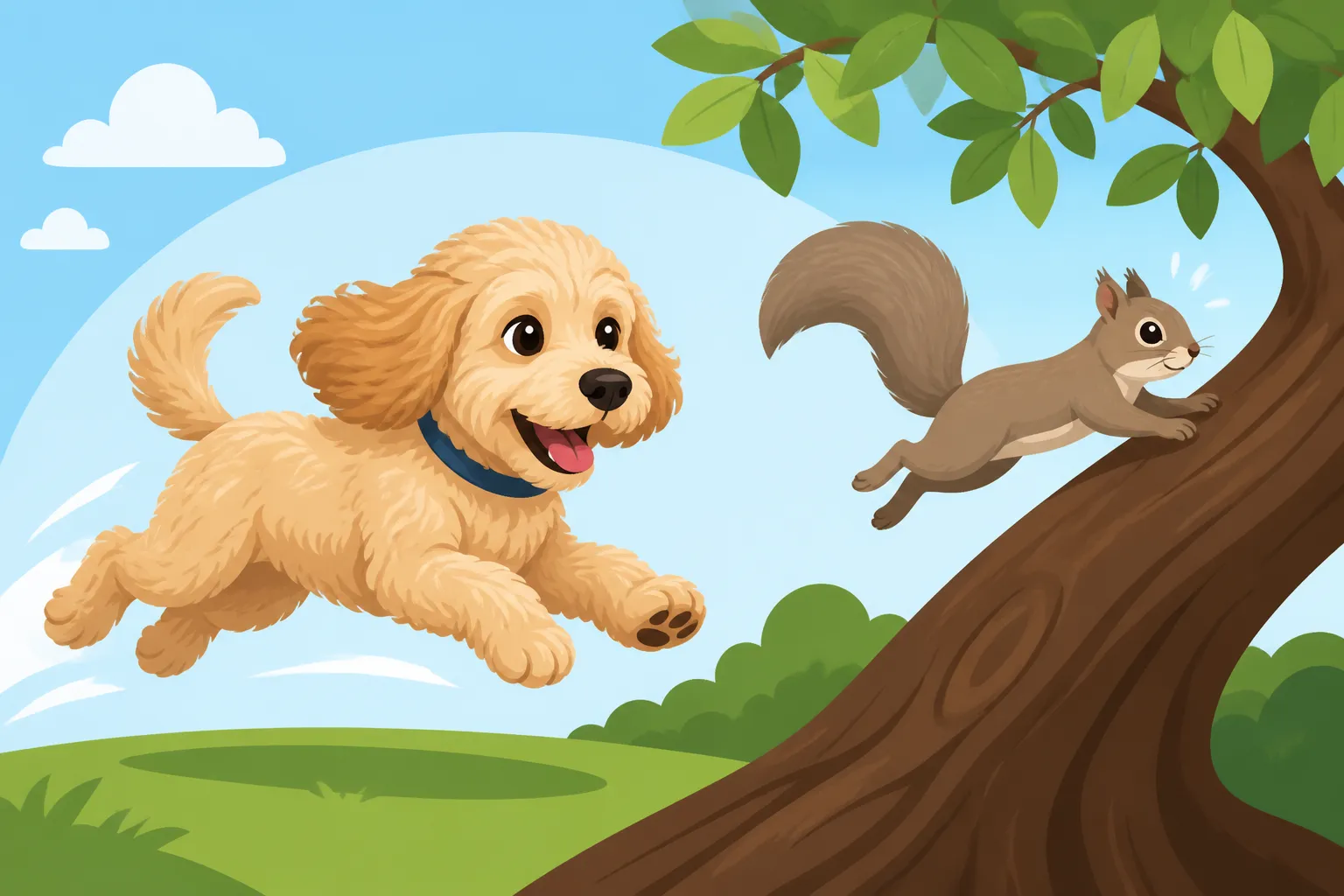
It’s a scene many Cockapoo owners know all too well: you’re enjoying a peaceful walk, your furry friend trotting happily beside you, when suddenly, a flash of grey fur darts up a tree. In an instant, your calm companion transforms into a determined predator, pulling with all their might, barking, and completely ignoring your pleas. This guide is here to unravel why your delightful Cockapoo has such an intense fascination with squirrels and provide actionable strategies to manage this powerful, inborn drive.
Understanding the Cockapoo's Instinctual Drive
The Cockapoo, a beloved crossbreed, inherits a fascinating mix of traits from its parent breeds: the Cocker Spaniel and the Poodle. Both breeds bring their own unique contributions to the table when it comes to instinctual behaviors, particularly those related to hunting and prey drive. Understanding these foundational traits is key to managing your Cockapoo's squirrel-chasing tendencies.
The Spaniel's Legacy: Flushing and Chasing
From the Cocker Spaniel side, your Cockapoo inherits a strong legacy of flushing and retrieving. Cocker Spaniels were originally bred to be gun dogs, specifically to "flush" game birds from cover, forcing them into the air for hunters to shoot. This job required them to be energetic, tenacious, and to have a keen nose and eye for movement. They weren't necessarily bred to catch the game, but to find and push it out.
This means that a Cockapoo often possesses an inherent drive to investigate rustling bushes, dart into tall grass, and, yes, chase after anything that moves quickly. They are hardwired to pursue. The sight or sound of a squirrel is like a siren call, activating centuries of selective breeding. This isn't naughtiness; it's instinct. They're simply doing what their ancestors were bred to do, even if in a suburban park, it translates into a frantic dash towards an oak tree.
The Poodle's Contribution: Intelligence and Energy
The Poodle, too, has a history rooted in hunting, originally bred as water retrievers. They are incredibly intelligent, athletic, and possess a surprisingly strong prey drive, especially for water fowl. While often perceived as sophisticated show dogs, Poodles are working dogs at heart, capable of bursts of speed and sustained effort.
When you combine this Poodle athleticism and intelligence with the Cocker Spaniel's flushing drive, you get a highly capable and motivated pursuer. The Poodle's intelligence means your Cockapoo might quickly learn patterns, like where squirrels tend to appear or which trees offer the best escape routes. Their energy levels contribute to the stamina required for a good chase, and their desire to retrieve might translate into a powerful urge to 'catch' whatever they are pursuing. This combination can make for a formidable squirrel patrol unit in your own backyard!
What This Means for a Cockapoo's Prey Drive
The blend of these two breeds results in a Cockapoo that typically has a moderate to high prey drive. They are often highly motivated by movement, scent, and the thrill of the chase. This isn't a flaw; it's a fundamental part of their genetic makeup. Expecting a Cockapoo to completely ignore a squirrel is often unrealistic. Instead, our goal as owners is to manage this drive, channel it appropriately, and ensure it doesn't lead to dangerous situations.
Understanding this allows us to approach training with empathy and realistic expectations. We're not trying to extinguish a core part of who they are, but rather to teach them impulse control and offer acceptable alternatives. This strong prey drive is also why activities like Scent Work That Satisfies a Cockapoo can be incredibly enriching for them, providing an outlet for those natural instincts in a controlled and positive way.
Why Squirrels Are Such an Alluring Target
For your Cockapoo, a squirrel isn't just a furry creature; it's a dynamic, multi-sensory experience that triggers their deepest instincts. There's a whole cocktail of reasons why these bushy-tailed acrobats hold such an irresistible charm.
Movement and Scent: The Irresistible Triggers
Imagine being a dog with thousands of times the scent receptors of a human, and eyes that are incredibly adept at detecting motion. A squirrel provides a feast for these senses. First, there's the movement: the quick, jerky darts, the sudden stops, the scampering up a tree trunk. This erratic, high-speed motion is a primal trigger for any dog with a hunting heritage. It screams "prey!" to their brain.
Then there's the scent. Squirrels leave behind a distinct odor, especially when they've been foraging on the ground or marking their territory. Even when you don't see one, your Cockapoo's nose might have already picked up the lingering scent trail, sending them into high alert. The combination of visual stimulation (a flash of movement) and olfactory cues (the smell of squirrel) creates an almost irresistible urge to investigate and pursue. This is why you might see your Cockapoo suddenly pull towards a tree even when no squirrel is visible – they're following the ghost of one that was there moments before.
The Thrill of the Chase: Self-Reinforcing Behavior
The act of chasing itself is incredibly rewarding for a dog. It taps into their natural endorphin release, making it a highly self-reinforcing behavior. Every time your Cockapoo spots a squirrel and gives chase, whether they catch it or not (which, let's be honest, they rarely do!), their brain releases feel-good chemicals. This biological reward hardens the behavior into a habit.
This means that even if the chase ends with the squirrel safely up a tree, your Cockapoo still got the "thrill" of the pursuit. They learned that chasing is fun and exciting. This is why it can be so difficult to interrupt. Your voice, your treats, your commands often pale in comparison to the immense satisfaction derived from a full-throttle sprint after a furry target. It’s their equivalent of an adrenaline rush, and it’s a powerful motivator that needs consistent and clever counter-conditioning to manage.
The "What If" Factor: Catching the Uncatchable
While most domestic dogs aren't actually looking to kill a squirrel, there's an inherent "what if" factor at play. That instinct to chase is driven by the potential for a successful hunt, no matter how small. For a Cockapoo, the uncatchable nature of a squirrel might even heighten the allure. The challenge of it, the constant near-misses, can make them even more determined.
This isn't about cruelty; it's about ancient programming. Your Cockapoo isn't being malicious; they're simply responding to a very strong, evolutionarily ingrained impulse. This persistent drive means that simply telling them "no" isn't enough. We need to acknowledge the power of this instinct and provide them with alternative outlets and clear boundaries, rather than expecting them to switch off a fundamental part of their being.
Training Strategies to Manage Prey Drive
Managing your Cockapoo's squirrel-chasing isn't about punishing the instinct, but rather about building a strong relationship, teaching alternative behaviors, and developing solid impulse control. It requires patience, consistency, and understanding.
Foundation Training: Recall and "Leave It"
The absolute bedrock of managing any prey-driven dog is a rock-solid recall and a reliable "leave it" command. Your Cockapoo needs to understand that returning to you is the most rewarding choice, even when a squirrel is doing its best impression of a tiny, furry rocket. Start practicing recall in low-distraction environments, gradually increasing the challenge. Use high-value treats and enthusiastic praise. Building a Recall a Cockapoo Answers early on will pay dividends.
The "leave it" command is equally vital. Begin indoors with a treat on the floor, blocking access with your hand if necessary, and reward them when they disengage. Gradually extend this to toys, then to outdoor items, and eventually, to squirrels (from a distance). The goal is for your Cockapoo to associate ignoring the tempting object (the squirrel) with receiving an even better reward from you. Consistency is key here; every time they choose to leave something, they should be profusely rewarded.
Desensitization and Counter-Conditioning
Since squirrels are everywhere, simply avoiding them isn't a long-term solution. Desensitization and counter-conditioning are powerful tools. This involves exposing your Cockapoo to squirrels at a distance where they notice them but aren't yet reacting with a full chase response. At this threshold, immediately reward them with high-value treats. The idea is to change their emotional response from "OMG SQUIRREL! CHASE!" to "OMG SQUIRREL! Where's my human? They usually have a treat!"
Gradually, as your Cockapoo becomes more accustomed to seeing squirrels without reacting, you can decrease the distance. This is a slow process, often requiring many repetitions over weeks or months. You might even consider having a friend gently toss a toy squirrel (available on Amazon) in a park while you practice. The goal isn't to make them indifferent, but to make them capable of choosing to not chase, even when the temptation is present.
Engaging Alternative Behaviors and Scent Work
Since the chase instinct is so strong, it's beneficial to offer your Cockapoo acceptable and enriching outlets for these natural drives. Scent work is a fantastic option. Activities like nose work or "find it" games allow them to use their incredible sense of smell, fulfill their desire to "hunt" and find something, and provide mental stimulation that tires them out just as much, if not more, than physical exercise. Scent Work That Satisfies a Cockapoo can transform their focus from squirrels to searching for hidden treats or toys.
You can create simple scent games at home using cardboard boxes and treats, or look into formal classes. BAXTER & Bella, for example, offers online programs that can guide you through teaching your dog various foundation skills, including impulse control around distractions and channeling energy into positive activities. Fetch is another great alternative, channeling their retrieving instinct. Make sure these alternative activities are even more rewarding than chasing a squirrel in the moment.
Managing the Environment for a Squirrel-Chasing Cockapoo
While training is paramount, managing your Cockapoo's environment is equally important to prevent opportunities for unwanted chasing and to keep them safe.
Leash Management and Equipment
For a Cockapoo with a strong prey drive, good leash management and appropriate equipment are non-negotiable. A standard collar might not be enough if they lunge unexpectedly, potentially causing injury or allowing them to slip free. Consider a well-fitting front-clip harness, like those widely available on Amazon, or a head halter. These tools give you more control and can redirect their pulling power back towards you, making walks safer and more enjoyable for both of you.
Always use a sturdy leash, and avoid retractable leashes, which can encourage pulling and make it harder to maintain control if your Cockapoo suddenly spots a squirrel. A longer, fixed-length leash can still offer some freedom while keeping them secure, especially when you're Working a Cockapoo on a Long Line in a safe, open area to practice recall without the risk of them bolting. Remember, prevention is key; if they can't reach the squirrel, they can't practice the chase.
Secure Yard and Outdoor Safety
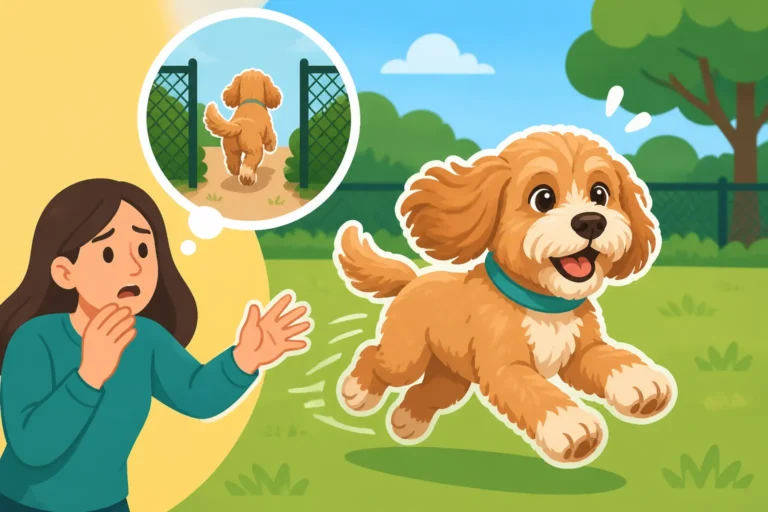
If you have a yard, ensuring it's completely secure is vital. Cockapoos, with their athleticism and curiosity, can be surprisingly good at finding weak spots in fences or even jumping over lower ones, especially if a squirrel is on the other side. Check for gaps, loose panels, or areas where they might dig under. The thrill of the chase can override any learned boundaries.
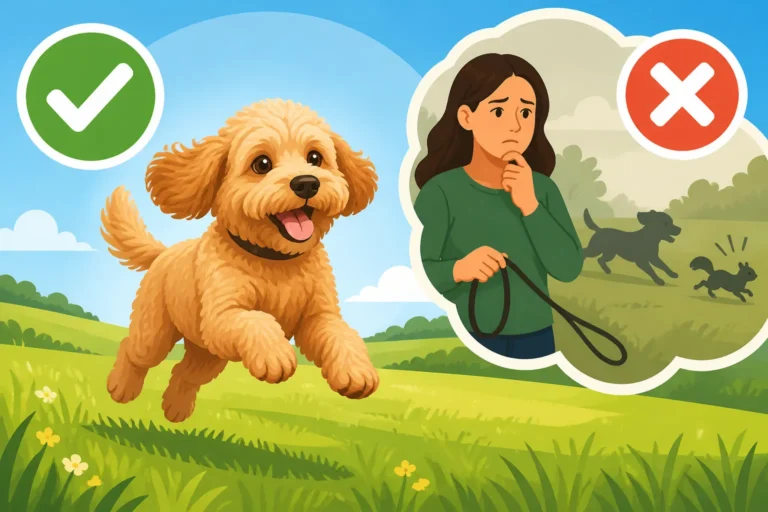
When you're out and about, especially in areas known for wildlife, it's generally best to keep your Cockapoo on a leash. Whether a Cockapoo Is Safe Off Leash on Open Ground is a serious consideration. Even if your Cockapoo has a decent recall in a low-distraction environment, the adrenaline rush of a squirrel chase can make them "go deaf" to your commands. This isn't just about losing them; it's about potential hazards like busy roads, aggressive dogs, or encountering other wildlife that could injure them.
Enrichment to Satisfy Instincts Indoors
A bored Cockapoo is more likely to create their own excitement, and that often involves focusing intently on outdoor stimuli like squirrels. Providing ample mental and physical enrichment indoors can significantly reduce their obsessive focus on backyard wildlife. Puzzle toys, snuffle mats, and engaging chew toys can keep their minds busy. Even simple games of hide-and-seek with their favorite toy can burn mental energy.
Rotate their toys regularly to keep things fresh and exciting. If they spend time alone, consider leaving on a dog-friendly classical music station or a TV channel with calming visuals. Think about how you can replicate the challenge of hunting or foraging in a safe, indoor setting. This can include hiding treats around the house for them to find, using lick mats with peanut butter, or providing food-dispensing toys that require them to work for their meal. A satisfied Cockapoo, whose natural drives are being met, is often a calmer Cockapoo.
When to Seek Professional Help
While many Cockapoo owners can make significant progress with consistent training and environmental management, there are times when professional guidance is invaluable. Don't feel ashamed to reach out for help; it shows you're committed to your dog's well-being and safety.
Persistent, Unmanageable Chasing
If, despite all your efforts in foundation training, desensitization, and environmental management, your Cockapoo's squirrel-chasing remains intense, frequent, and impossible to interrupt, it might be time for professional intervention. This is particularly true if their prey drive is so strong that it interferes with their quality of life, your ability to walk them safely, or if they seem overly stressed or frustrated by their inability to chase.
A professional trainer or a veterinary behaviorist can observe your specific situation, identify triggers you might be missing, and develop a customized training plan tailored to your Cockapoo's individual temperament and your lifestyle. They can provide hands-on guidance, help you refine your techniques, and introduce advanced strategies you might not have considered. Sometimes, an objective third party with experience can spot subtle nuances that make all the difference.
Safety Concerns for Your Dog or Wildlife
The safety of your Cockapoo and other animals is paramount. If your dog's chasing behavior puts them at risk (e.g., darting into traffic, getting into fights with other dogs, escaping the yard) or poses a threat to local wildlife (even if unintended, the stress of constant chasing can be harmful to small animals and birds), then professional help is strongly advised. A serious prey drive can lead to injury for your dog or others.
For example, a Cockapoo that consistently bolts after birds or other small animals, showing no inclination to return, might need specialized training to understand the boundaries and the importance of recall in high-stimulus situations. A trainer can help implement strategies like an emergency recall or teach you how to read your dog's body language to intervene before the chase impulse takes over.
Finding the Right Professional
When looking for a professional, seek out certified positive reinforcement trainers or veterinary behaviorists. Avoid anyone who suggests punitive or aversive methods, as these can damage your Cockapoo's trust in you and may actually exacerbate anxiety and reactivity around squirrels. Look for trainers who emphasize relationship-building, reward-based training, and a deep understanding of canine behavior.
Ask for references, inquire about their methods, and ensure they have experience with prey-driven dogs. Organizations like the Certification Council for Professional Dog Trainers (CCPDT) or the International Association of Animal Behavior Consultants (IAABC) can be good starting points for finding qualified professionals in your area. Remember, investing in professional help is an investment in a safer, happier life for both you and your beloved Cockapoo.
| Strategy | Description | Key Benefits | Tools & Resources |
|---|---|---|---|
| Foundation Training | Building strong recall and "leave it" commands in various environments. | Immediate safety, builds trust, forms basis for other training. | High-value treats, clicker, consistent practice, BAXTER & Bella online courses |
| Desensitization | Gradual exposure to squirrels at a distance, paired with positive reinforcement. | Changes emotional response, builds tolerance, reduces reactivity. | Treats, quiet parks, controlled scenarios, possibly a friend with a toy squirrel |
| Counter-Conditioning | Replacing the unwanted behavior (chasing) with a desired one (looking at you for a treat). | Creates a positive association with triggers, teaches impulse control. | Super high-value treats (chicken, cheese), focus games. |
| Scent Work/Enrichment | Providing acceptable outlets for natural hunting instincts through nose games and puzzles. | Mental stimulation, reduces boredom, channels energy, prevents destructive behavior. | Snuffle mats, puzzle toys (Amazon), scent kits, "find it" games. |
| Leash & Equipment | Using appropriate harnesses and leashes to maintain control and prevent escapes. | Physical safety, prevents practice of unwanted behavior, greater control on walks. | Front-clip harness, head halter, sturdy non-retractable leash. |
Disclaimer
This article is for general informational purposes only and does not constitute professional advice. Laws, prices and regulations vary by location and change over time. Consult a qualified professional for guidance on your specific situation.