Slipping Kneecaps in a Toy Cockapoo
It's absolutely heartbreaking when you notice your bouncy, playful toy Cockapoo suddenly skip, hold up a leg, or even cry out in pain after what seemed like a normal jump. This isn't just a fleeting ache; it's often the first worrying sign of a condition called luxating patella, more commonly known as a slipping kneecap. This guide is here to walk you through everything you need to know about slipping kneecaps in toy Cockapoos, from understanding what's happening internally to managing the condition and ensuring your furry friend lives as comfortably as possible.
Understanding Luxating Patella in Toy Cockapoos
When we talk about "slipping kneecaps," it sounds a bit vague, but for a tiny toy Cockapoo, it can be a really significant issue. This condition, medically known as patellar luxation, is unfortunately quite prevalent in smaller breeds, and our beloved Cockapoos, with their delightful mix of Poodle and Cocker Spaniel genetics, are definitely on that list. It's not just a minor inconvenience; it can cause discomfort, pain, and, if left unaddressed, lead to more serious joint problems down the line.
What Exactly is a Slipping Kneecap?
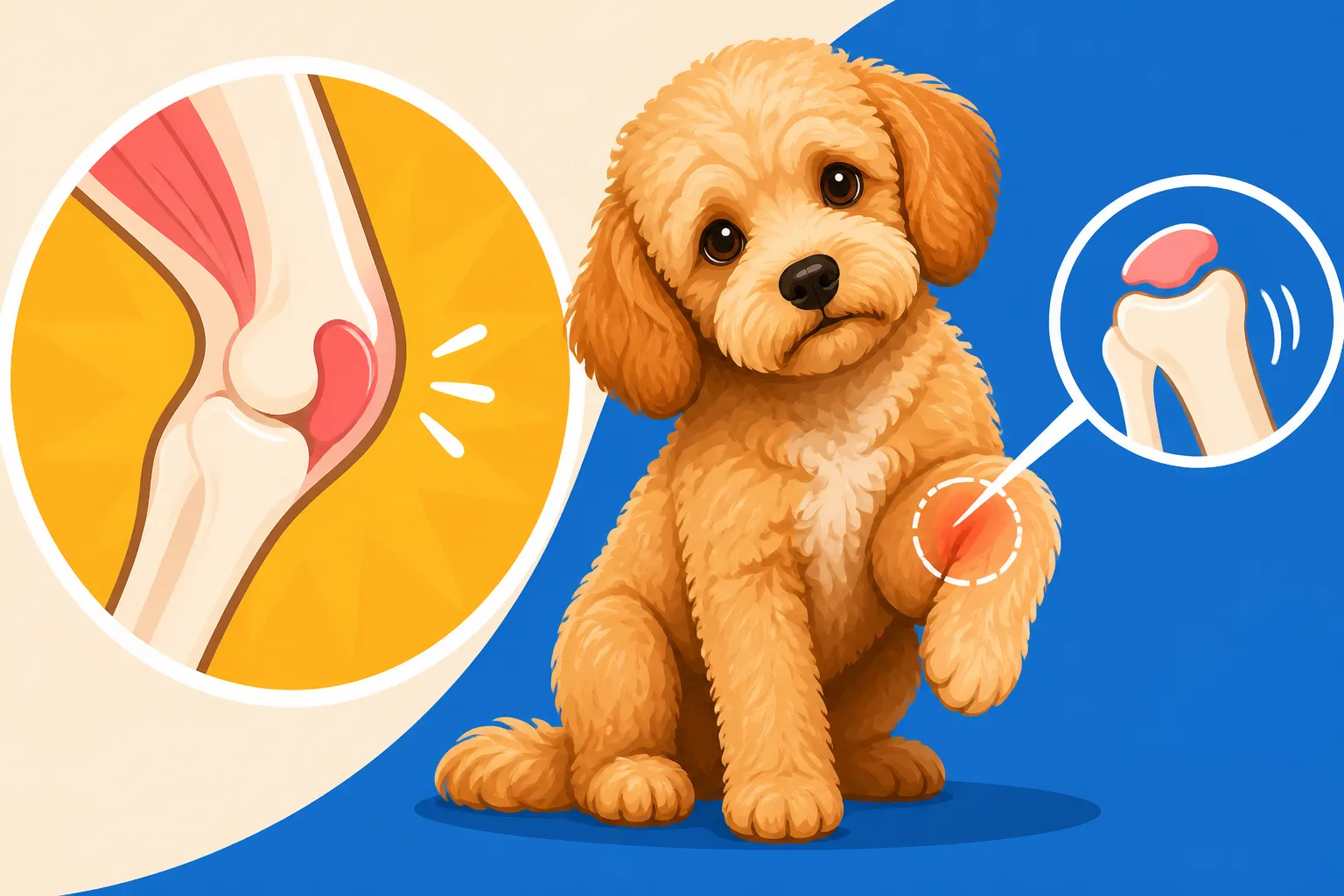
Let's break down what's happening inside your Cockapoo's knee. Imagine your kneecap, or patella, as a small bone that sits in a groove at the end of the thigh bone (femur). This groove is called the trochlear groove. The patella is held in place by ligaments and tendons and its job is to help the leg straighten by acting as a pulley for the quadriceps muscle. In a healthy knee, the patella glides smoothly up and down this groove as your dog flexes and extends its leg.
With luxating patella, that smooth ride goes off course. "Luxating" simply means "dislocating" or "slipping out of place." So, a luxating patella is a kneecap that, instead of staying in its designated groove, pops out. It can slip either to the inside (medial luxation, which is far more common in small dogs like Cockapoos) or to the outside (lateral luxation) of the leg. This dislocation can happen intermittently or become a permanent fixture. When it slips, it can cause immediate pain and a temporary inability to put weight on the leg, leading to that characteristic hop or skip you might observe. The anatomy of a small dog's leg, particularly the angle of their femur and tibia, often predisposes them to this misalignment.
Why Toy Cockapoos Are More Prone
It's a tough truth, but certain breeds are just more genetically inclined to develop luxating patella, and toy breeds, including the adorable toy Cockapoo, are unfortunately among them. This predisposition stems from the genetics they inherit from both the Poodle and Cocker Spaniel sides of their family tree. Both parent breeds have a documented history with patellar luxation, meaning that when you combine them, the likelihood of passing on genes that contribute to improper joint formation increases.
Specifically, the bone structure in smaller dogs often includes a shallower trochlear groove or an abnormal alignment of the bones in the leg (femur, tibia, and patella) that encourages the kneecap to slip out. This isn't due to injury in most cases, but rather a developmental issue. While a specific genetic marker isn't always easily identified, the hereditary component is widely recognized among veterinarians and breeders. It's one of the reasons that responsible breeders will go to great lengths to screen their breeding dogs, which we'll discuss more later. This genetic lottery means that even if a toy Cockapoo isn't jumping off high furniture, the structural issue can still manifest, sometimes becoming evident even in puppyhood. It's a key reason why it's so vital for owners to be aware and vigilant.
The Different Grades of Patellar Luxation
Understanding the "grade" of patellar luxation is crucial because it helps veterinarians determine the severity of the condition and the best course of action. It’s not a simple yes or no answer; there’s a spectrum. The grades range from I to IV, with Grade I being the mildest and Grade IV the most severe.
-
Grade I: This is the mildest form. The kneecap can be manually displaced from its groove but pops back into place on its own. Your dog might show no clinical signs, or only an occasional, almost imperceptible skip. Sometimes you might not even notice it without a vet feeling for it. Despite its mildness, it's still something to keep an eye on, as it can progress.
-
Grade II: With Grade II, the kneecap luxates (slips out) more frequently. It might slip out on its own, especially when the dog flexes its knee, and it often stays out for a short period before spontaneously reducing (slipping back into place). This is where you'll start to see that characteristic "skip" in your Cockapoo's gait more regularly. The dog might hold the affected leg up for a few steps before putting weight back on it. While it still reduces spontaneously, the cartilage and bone can start to show wear and tear over time.
-
Grade III: This is a more serious stage. The kneecap is luxated most of the time. It can be manually put back into the groove, but it quickly reluxates once pressure is released. Dogs with Grade III luxation often have a persistent limp, an abnormal crouched stance, or may be reluctant to engage in activities like jumping or running. The constant dislocation can lead to significant changes in the bone structure and increasing arthritis.
-
Grade IV: This is the most severe form. The kneecap is permanently luxated and cannot be manually returned to its normal position in the trochlear groove. Dogs with Grade IV patellar luxation often experience chronic pain and severe lameness. Their leg muscles may atrophy, and their limb might be severely deformed. This grade usually requires extensive surgical correction and can significantly impact a dog's quality of life.
Here's a quick reference table to summarize the grades:
| Grade | Description | Clinical Signs | Manual Reduction | Spontaneous Reduction |
|---|---|---|---|---|
| I | Luxates with manual pressure | Occasional, barely noticeable skip; often none | Yes, easily | Yes |
| II | Luxates frequently, especially with knee flexion | Intermittent skip, holding leg up for a few steps | Yes, but may reluxate | Yes, but delayed |
| III | Luxated most of the time | Persistent limp, abnormal crouch, reluctance to move | Yes, but reluxates quickly | No |
| IV | Permanently luxated | Severe lameness, chronic pain, limb deformity | No | No |
Recognizing the Signs and Symptoms
As a Cockapoo owner, you become attuned to every little nuance of your dog's behavior and movement. When it comes to something like a slipping kneecap, early recognition of the signs can make a huge difference in managing the condition and potentially preventing it from worsening. It's not always a dramatic sudden event; sometimes, it's subtle changes you might dismiss until they become more frequent or pronounced.
The Characteristic "Skip" or "Hop"
This is probably the most iconic and often the first symptom that catches an owner's eye. Your toy Cockapoo will be running or walking normally, and then suddenly, they'll pick up one hind leg for a step or two, giving a noticeable "skip" or "hop" in their stride. It looks almost like they've briefly forgotten how to use that leg, or perhaps stepped on something sharp. Then, just as quickly, they'll put the leg back down and carry on as if nothing happened.
This skipping behavior occurs because the kneecap has momentarily slipped out of its groove. When it's dislocated, the quadriceps muscle effectively "locks" the leg in a flexed position, preventing the dog from extending it properly. Once the kneecap pops back into place (either spontaneously or with a quick shake of the leg), normal movement resumes. While it might look cute or funny at first, especially if your dog seems unfazed, it's a clear indicator that something isn't right with their knee. In toy Cockapoos, this skip can be intermittent and might only happen after certain movements, like getting up from a nap or after a burst of zoomies in the yard. Paying attention to these subtle changes in gait is critical.
Other Telltale Indicators of Discomfort
Beyond the distinctive skip, there are several other signs that your Cockapoo might be experiencing discomfort or pain due from a luxating patella. These can be more generalized but, when coupled with a skip, paint a clearer picture. You might notice your dog is reluctant to jump, for instance. Previously, they might have enthusiastically leapt onto the sofa or into the car, but now they hesitate, ask for help, or avoid it altogether. This is because jumping puts significant strain on the knee joints, and if a kneecap is prone to slipping or causing pain, they'll naturally try to avoid activities that exacerbate it.
Another indicator is a general decrease in activity level. A normally energetic Cockapoo might become less keen on long walks or playtime. They might even become irritable or sensitive if you touch their affected leg, especially around the knee area. Sometimes, you'll observe them frequently licking or chewing at their knee or paw on the affected side, an instinctual response to pain or discomfort. In more advanced cases (Grade III or IV), you might notice a persistent limp, a bowed appearance of the leg, or even muscle wastage (atrophy) in the affected limb due to disuse. These signs, while not always exclusive to patellar luxation, should prompt an immediate visit to your veterinarian to investigate. You don't want to let a potential problem escalate, and prompt intervention can make a world of difference for your dog's comfort.
When a Cockapoo's Knee Has Slipped
It's one thing to observe a brief skip, but what if your Cockapoo's knee seems to have truly "slipped" and isn't popping back into place? This can be a distressing sight for any owner. If your dog suddenly cries out, cannot bear weight on a leg, and the limp doesn't resolve within a few minutes, it could indicate that the patella has luxated and stayed luxated, or perhaps that another injury has occurred, such as a Torn Cruciates in a Cockapoo.
While some mild luxations (Grade I or II) might spontaneously reduce, a persistent lameness or pain needs immediate veterinary attention. This isn't just about comfort; a kneecap that remains out of place can stretch and damage the surrounding soft tissues, and the constant friction of the bone outside its groove can accelerate the development of arthritis. An acute, painful luxation might lead to your dog holding the leg stiffly, refusing to bend it, or even trembling from discomfort. In such cases, it's best to contact your vet right away. They can assess the situation, gently manipulate the kneecap back into place if possible, and provide pain relief. They'll also be able to fully diagnose the grade of luxation and discuss next steps, whether that involves conservative management or considering surgical options. Thinking about potential vet bills can be daunting, but pet insurance from providers like Healthy Paws can offer peace of mind, covering unexpected expenses for conditions like this.
Diagnosis and Initial Management
Once you suspect your toy Cockapoo might have a slipping kneecap, the next logical step is a visit to the veterinarian. It's a journey many small dog owners go through, and understanding the diagnostic process and initial management options can help you feel more prepared and confident in advocating for your pet.
What to Expect at the Vet
When you bring your Cockapoo in for a suspected luxating patella, your veterinarian will first perform a thorough physical examination. This isn't just a quick peek; they'll carefully palpate your dog's legs, feeling the knee joint while your dog is standing, sitting, and lying down. They'll gently flex and extend the knee, trying to manually push the kneecap out of its groove to assess if it luxates and how easily it does so. This manual manipulation is key to determining the grade of luxation. Your vet will be looking for that telltale "pop" as the patella shifts. They might also check for signs of pain, swelling, or muscle atrophy.
Beyond the physical exam, X-rays are often recommended. While X-rays don't directly show the kneecap luxating (it's soft tissue that doesn't always show up clearly out of place), they are incredibly useful for evaluating the overall bone structure of the leg. They can reveal:
- The depth of the trochlear groove (is it too shallow?).
- Any rotation of the tibia (shin bone) relative to the femur (thigh bone).
- Signs of existing arthritis or bone deformation caused by chronic luxation.
- Rule out other concurrent conditions that might cause similar symptoms, such as Legg Calve Perthes in a Small Cockapoo or The Gait That Gives Away a Cockapoo's Bad Hips.
This comprehensive assessment helps your vet formulate an accurate diagnosis and treatment plan, tailored specifically to your Cockapoo's condition.
Conservative Management Options
For Cockapoos with lower-grade luxating patella (Grade I or often Grade II) or those who are not experiencing significant pain or lameness, conservative management might be the initial approach. The goal here is to minimize discomfort, prevent progression, and support overall joint health without resorting to surgery.
Key components of conservative management include:
- Weight Management: Keeping your toy Cockapoo at an ideal weight is paramount. Excess weight puts additional strain on all joints, including the knees, making luxation more likely and potentially more painful. Your vet can help you determine the ideal weight and recommend a suitable diet.
- Controlled Exercise: While exercise is essential for muscle tone, high-impact activities like intense jumping, sudden stops, or quick turns can exacerbate patellar luxation. Instead, focus on low-impact activities like steady walks on a leash, swimming, or gentle playtime. This helps build and maintain muscle mass around the knee, which can offer some natural support to the joint.
- Joint Supplements: Many veterinarians recommend joint supplements containing ingredients like glucosamine, chondroitin, and MSM. These compounds are believed to support cartilage health and reduce inflammation. While not a cure, they can contribute to overall joint comfort. We'll dive deeper into this later, but remember, consistency is key when it comes to supplements like these. Whether Glucosamine Helps a Cockapoo is a common question, and for many dogs with early-stage joint issues, it can provide noticeable benefits.
- Anti-inflammatory Medication: During periods of acute discomfort or inflammation, your vet might prescribe non-steroidal anti-inflammatory drugs (NSAIDs) to manage pain and reduce swelling. These are typically short-term solutions to improve comfort.
Conservative management requires ongoing commitment from you, the owner, to monitor your Cockapoo's symptoms and maintain their lifestyle adjustments. Regular check-ups with your vet will also be important to assess the effectiveness of these strategies and monitor for any progression of the condition.
The Patella Grade at Which a Cockapoo Is Operated
Deciding whether or not to pursue surgery for a slipping kneecap in a toy Cockapoo is a big decision, and it’s not always straightforward. Generally, surgical intervention is considered for Cockapoos with Grade II, III, or IV patellar luxation, especially if they are experiencing consistent pain, lameness, or if the condition is significantly impacting their quality of life.
Here's a breakdown of the typical considerations:
- Grade II: For Grade II, surgery is often recommended if the luxation is frequent, causing significant pain, or if there's evidence of cartilage damage or early arthritis. If your Cockapoo only has an occasional skip and no pain, conservative management might be tried first. However, many vets advocate for earlier surgical intervention for Grade II to prevent worsening issues and the development of severe arthritis over time. This is especially true if the dog is young and has many active years ahead.
- Grade III: Surgery is almost always recommended for Grade III patellar luxation. The kneecap is luxated most of the time, leading to persistent lameness and a high likelihood of developing severe arthritis and limb deformities if left untreated. Surgical correction can dramatically improve comfort and function for dogs at this stage.
- Grade IV: For Grade IV, surgery is essential. The kneecap is permanently dislocated, causing severe lameness and often significant anatomical deformities. These cases often require more complex surgical techniques to realign the entire limb. Without surgery, these dogs face a life of chronic pain and severe mobility issues.
The decision also takes into account your Cockapoo's age, overall health, and your family's ability to commit to post-operative care and rehabilitation. Your vet will discuss all these factors with you, providing a realistic prognosis and helping you make the best choice for your beloved pet. It's an investment, not just of money (though pet insurance like Healthy Paws can help with these costs), but of time and dedication to your dog's recovery.
Surgical Intervention and Recovery
When conservative management isn't enough, or if the luxation is severe, surgery becomes the most effective path to restoring proper knee function and alleviating pain for your Cockapoo. While the thought of surgery can be intimidating, understanding the procedures and what to expect during recovery can help ease your mind.
Types of Surgical Procedures
The goal of surgery for luxating patella is to ensure the kneecap stays securely within its trochlear groove, allowing for smooth, pain-free movement. There isn't a single "one size fits all" operation; rather, the veterinary orthopedic surgeon will select a combination of techniques based on your Cockapoo's specific anatomical issues.
The most common surgical techniques include:
- Trochlear Wedge or Block Recession: This is often the primary procedure. If the trochlear groove is too shallow, the surgeon will deepen it. This involves carefully removing a wedge or block of bone and cartilage from the groove, then replacing it in a deeper position. This creates a more substantial "track" for the patella to run in, preventing it from slipping out.
- Tibial Crest Transposition: Often, the point where the patellar tendon attaches to the tibia (the tibial crest) is misaligned, pulling the kneecap off to one side. In this procedure, the surgeon carefully cuts a section of the tibial crest, moves it to a more appropriate position to realign the patella, and then reattaches it with pins. This corrects the rotational forces that contribute to luxation.
- Capsular Overlap/Release: Sometimes, the soft tissues (joint capsule) on one side of the knee are too tight, pulling the patella out, while the tissues on the other side are too loose. The surgeon may tighten the loose side (capsular overlap) and/or release the tight side (capsular release) to balance the tension around the joint.
- Femoral Osteotomy: In severe cases, where the femur itself is significantly bowed or twisted, a more complex procedure called a femoral osteotomy might be necessary. This involves cutting and reshaping the femur to correct its alignment, then stabilizing it with plates and screws. This is less common but crucial for Grade IV cases or those with severe angular limb deformities.
Your vet surgeon will explain which combination of these procedures is best suited for your Cockapoo, aiming for the most stable and functional outcome. The cost of such procedures can be substantial, making a good pet insurance plan invaluable for covering a significant portion of the expense.
Post-Operative Care and Rehabilitation
Surgery is only half the battle; the recovery period is equally critical for a successful outcome. Expect a dedicated period of rest, medication, and rehabilitation for your Cockapoo after surgery.
- Immediate Post-Op: Your dog will likely stay at the veterinary hospital for a day or two for pain management and initial monitoring. When they come home, they'll often have a bandage or a soft cast on the leg, and possibly an Elizabethan collar (the "cone of shame") to prevent them from licking or chewing the incision site.
- Strict Rest: The most important instruction you'll receive is usually strict rest. This means no running, jumping, stairs, or rough play for several weeks, typically 6-8 weeks, sometimes longer. Leash walks for potty breaks will be slow and controlled. Whether Furniture Jumping Wrecks a Toy Cockapoo's Knees is especially relevant here, as even before surgery, such impacts can worsen the condition, and post-surgery, they can completely derail recovery. Crate rest or confining your Cockapoo to a small, safe area in the house is usually recommended to limit movement.
- Medication: Your vet will prescribe pain relievers and anti-inflammatory medications to keep your Cockapoo comfortable during the initial healing phase. Make sure to follow the dosage instructions precisely.
- Physical Therapy: As healing progresses, your vet will likely recommend a rehabilitation program. This might start with gentle passive range-of-motion exercises at home, where you carefully bend and straighten your dog's leg. Later, it can progress to more active exercises, hydrotherapy (underwater treadmill), or therapeutic exercises with a certified canine rehabilitation specialist. These therapies are crucial for regaining strength, flexibility, and muscle mass, ensuring the best long-term function of the knee.
- Follow-up Appointments: Regular follow-up visits, including X-rays, will be necessary to monitor healing and assess the stability of the joint.
This recovery period requires immense patience and commitment from you. But by diligently following your vet's instructions, you'll give your Cockapoo the best chance at a full and pain-free recovery.
Long-Term Outlook After Surgery
For most toy Cockapoos, surgical correction of a luxating patella offers an excellent long-term prognosis. Success rates are generally very high, often exceeding 90-95%, especially for Grades II and III luxations. Many dogs go on to live active, comfortable lives with no further issues with the operated knee.
However, it's important to manage expectations and understand potential factors:
- Arthritis: While surgery aims to prevent or minimize arthritis, dogs who have had chronic luxation, especially higher grades, may already have some degree of arthritic changes. Even with successful surgery, these changes might progress over time, though usually at a much slower rate. Lifelong joint supplements and weight management can help mitigate this.
- Complications: As with any surgery, there are potential complications, though rare. These can include infection, implant failure (if pins/plates were used), or recurrence of luxation (especially if the initial repair wasn't robust enough or if there was severe underlying bone deformity).
- Second Knee: It's quite common for patellar luxation to affect both knees, even if only one shows severe symptoms initially. So, if one knee is operated on, keep a watchful eye on the other, as it might require surgery down the line.
- Activity Levels: After full recovery and rehabilitation, most Cockapoos can return to a normal activity level. However, very high-impact sports might need to be approached with caution, and continued monitoring of joint health is advisable. Regular check-ups with your vet, potentially including yearly X-rays as your dog ages, can help catch any issues early.
Ultimately, while surgery is a significant undertaking, it often provides the best solution for improving your Cockapoo's quality of life and preventing chronic pain associated with a slipping kneecap. A robust pet insurance policy, like those offered by Healthy Paws, can certainly help alleviate the financial strain that comes with such specialized veterinary care, ensuring you can focus on your pet's recovery without added stress.
Preventing and Living with Luxating Patella
While some aspects of luxating patella are beyond our control due to genetics, there's quite a lot we can do as responsible Cockapoo owners to minimize its impact, prevent its worsening, and support our dogs' joint health throughout their lives. It's about being proactive and making informed choices.
Responsible Breeding and Genetic Screening
This is perhaps the most crucial preventative measure for a condition with a strong hereditary component. When looking for a Cockapoo puppy, it is absolutely vital to choose a responsible breeder who prioritizes health and screens their breeding stock. Responsible breeders will perform specific orthopedic evaluations on their breeding dogs to assess their knees.
Key things to look for and ask for:
- Orthopedic Foundation for Animals (OFA) or PennHIP Certifications: For patellar luxation, breeders should have their breeding dogs evaluated and certified by organizations like the OFA. The OFA assigns a grade to each knee (Normal, Grade I, II, or III). Responsible breeders will only breed dogs with "Normal" patella ratings.
- Proof of Testing: Don't just take a breeder's word for it. Ask to see the actual OFA certificates for both parent dogs. This transparency is a hallmark of an ethical breeder.
- Understanding Pedigrees: While not directly for patella, understanding The Five Certificates a Cockapoo Breeder Should Show in general indicates a breeder's commitment to health.
- Avoiding Puppy Mills: Unfortunately, the popularity of Cockapoos means they are often bred in puppy mills where profit is prioritized over health. These operations rarely perform health testing, contributing to the prevalence of genetic conditions like luxating patella. Always visit the breeder's facility, meet the parent dogs, and ask lots of questions.
By supporting breeders who actively screen against conditions like luxating patella, you're not only increasing your chances of getting a healthier puppy but also contributing to the overall improvement of the Cockapoo breed's health.
Environmental Modifications for Joint Health
Even if your Cockapoo has been diagnosed with luxating patella, or even after surgery, making certain adjustments to their living environment can significantly support their joint health and minimize strain. For a toy Cockapoo, small things can make a big difference.
- Ramps or Steps: Whether Furniture Jumping Wrecks a Toy Cockapoo's Knees is a critical concern. Repeated jumping off and onto furniture can exacerbate knee issues. Provide pet-friendly ramps or steps to help your Cockapoo access sofas, beds, or even get into the car. This reduces the impact and stress on their knees.
- Non-Slip Surfaces: Slippery floors, like hardwood or tile, can cause your dog to splay out, putting awkward strain on their joints. Consider placing rugs or runners in high-traffic areas or investing in non-slip socks or paw pads for your dog.
- Avoid Excessive Stair Climbing: While short bursts are usually fine, constantly going up and down long flights of stairs can put unnecessary strain on a vulnerable knee. If possible, limit stair access or carry your toy Cockapoo up and down.
- Appropriate Exercise: As mentioned under conservative management, focus on controlled, low-impact exercise. Short, regular walks are better than sporadic, intense bursts of activity. If your Cockapoo loves to play fetch, keep it on level ground and avoid abrupt stopping and starting.
- Warmth and Comfort: Provide a comfortable, supportive dog bed that keeps them off cold floors and provides good cushioning for their joints. In colder weather, a dog coat can help keep their muscles warm and flexible during walks.
These simple environmental adjustments can help protect your Cockapoo's knees and contribute to their overall comfort and well-being, whether they are managing a mild condition or recovering from surgery.
Nutritional Support and Supplements
What goes into your Cockapoo's bowl plays a vital role in their overall health, including their joints. A balanced, high-quality diet is the foundation, but certain supplements can provide additional support, especially for dogs predisposed to or affected by luxating patella.
- High-Quality Diet: Ensure your Cockapoo is eating a complete and balanced dog food appropriate for their life stage and size. Look for reputable brands with real meat as the primary ingredient and avoid excessive fillers. Maintaining an ideal weight is crucial, so choose a food that helps them stay lean.
- Omega-3 Fatty Acids: Omega-3s, particularly EPA and DHA found in fish oil, are renowned for their anti-inflammatory properties. They can help reduce joint pain and stiffness, which is particularly beneficial for dogs with existing arthritis or inflammation from a slipping kneecap. Many vets recommend daily fish oil supplements.
- Glucosamine and Chondroitin: These are probably the most well-known joint supplements. Glucosamine is a building block for cartilage, and chondroitin is believed to help prevent cartilage breakdown and improve its elasticity. While the effectiveness can vary, many owners report a noticeable improvement in their dog's comfort and mobility with consistent use. Whether Glucosamine Helps a Cockapoo is a question often answered with a cautious "yes" by many veterinary professionals for early-stage support.
- MSM (Methylsulfonylmethane): Often found in combination with glucosamine and chondroitin, MSM is another compound believed to have anti-inflammatory and pain-relieving effects, further supporting joint health.
- Antioxidants: Vitamins E and C, along with other antioxidants, can help combat oxidative stress in the joints, which is a factor in arthritis progression.
Always discuss any supplements with your veterinarian before introducing them to your Cockapoo's diet. They can recommend appropriate dosages and ensure there are no interactions with other medications or existing health conditions. Integrating these nutritional strategies can be a powerful way to support your Cockapoo's joint health, alongside regular vet check-ups. It's all part of the journey of owning these wonderful dogs, and planning for their health with tools like pet insurance from Healthy Paws can truly help manage those long-term care needs, including medication or supplement costs.
Disclaimer
This guide is intended for informational purposes only and should not be considered a substitute for professional veterinary advice. If you suspect your Cockapoo has a luxating patella or any other health concern, please consult with a qualified veterinarian for an accurate diagnosis and personalized treatment plan.