Whether One Cockapoo Club Refuses F2 Registration
Bringing a Cockapoo into your life is an exciting journey, but it often comes with a surprising amount of confusion, especially when you start looking into pedigrees, generations, and what different breed clubs actually mean for your furry companion. Many prospective owners find themselves scratching their heads, wondering if the "F2" Cockapoo they're considering will be recognized by a club, and what that even implies for their dog's future. This guide aims to clear up the mystery surrounding Cockapoo generations and registration policies, focusing specifically on whether one of the prominent clubs has a different stance on F2 dogs.
Understanding Cockapoo Generations and Their Characteristics
Before we dive into the nitty-gritty of club registration, it's really helpful to get a grasp on what all those "F" numbers mean in the world of Cockapoos. It can feel like a secret code at first, but these generational classifications are simply a way to describe how far removed a Cockapoo is from its purebred Cocker Spaniel and Poodle parents. Understanding these distinctions is crucial, not just for breeders, but also for owners trying to anticipate traits like coat type, temperament, and even potential health predispositions.
The Foundation: F1 and F1b Cockapoos
The journey begins with the F1 Cockapoo, which is the very first generation. This is a direct cross between a purebred Cocker Spaniel and a purebred Poodle. Think of it as the ultimate blend, a 50/50 split of genetic material from each parent breed. Owners often seek F1s for their hybrid vigor, which suggests a reduced chance of inheriting genetic issues common to either purebred parent, though it's not a guarantee. The coat can be quite varied in an F1, ranging from more Cocker-like shedding to the low-shedding, wavy coat many people associate with doodles. The Curl Gene and Where a Cockapoo's Coat Lands delves deeper into these coat possibilities.
An F1b Cockapoo, on the other hand, takes things a step further. This is a backcross, meaning an F1 Cockapoo is bred back to one of the original purebred parent breeds – typically a Poodle, to enhance the non-shedding, curly coat characteristics. For families with allergies, or those who simply prefer less shedding, an F1b often feels like a safer bet. This generation will have a higher percentage of Poodle genetics, often around 75% Poodle and 25% Cocker Spaniel, which strongly influences their physical traits and often their intelligence and drive.
The Next Step: F2 and Subsequent Generations
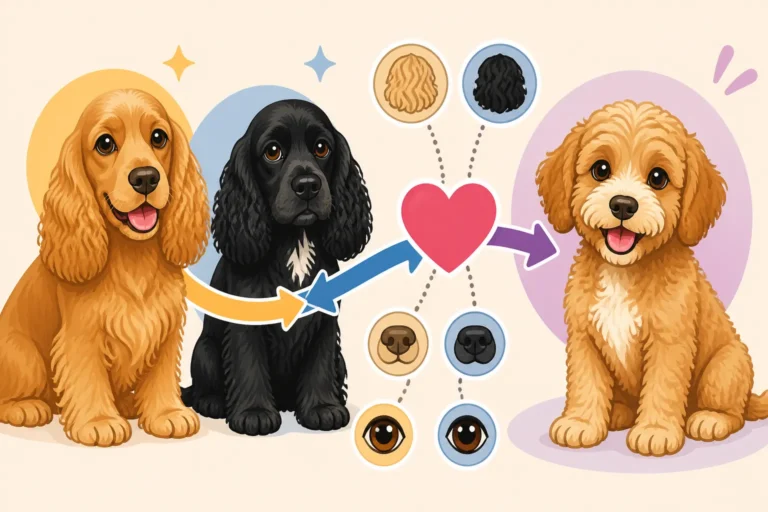
Now, let's get to the heart of the matter: the F2 Cockapoo. An F2 is the result of breeding two F1 Cockapoos together. This is where things can become a bit more unpredictable and where club registration questions frequently arise. When you breed two F1s, the genetic lottery really kicks in. While both F1 parents are 50/50, their offspring can express a much wider range of traits. You might see puppies in the same litter that look very Poodle-like, others that resemble a Cocker Spaniel more closely, and some that hit that classic "doodle" look right in the middle.
Beyond F2, you enter the realm of F3 and "Multigen" Cockapoos. An F3 is typically the result of breeding two F2 Cockapoos, or an F1 to an F2, and so on. Multigen simply refers to any generation beyond F2, where Cockapoos are bred to other Cockapoos for several generations. The goal of multi-generational breeding is often to stabilize desired traits, such as a consistent coat type or temperament, and to create a more "true breeding" line. This is a long process, though, and requires careful selection and health testing from breeders. Whether a Multigen Cockapoo Breeds True is an excellent resource if you want to learn more about the complexities of this type of breeding.
The Role of Cockapoo Clubs in Defining the Breed
It’s easy to assume that when a breed has clubs, those clubs universally define and regulate every aspect of that breed, including registration. However, the world of the Cockapoo is a bit unique. Unlike fully recognized purebreds with long-standing kennel club standards, Cockapoos are still a developing hybrid. This means the two main clubs, the Cockapoo Club of America (CCA) and the American Cockapoo Club (ACC), play a crucial role in trying to bring some order and consistency to the breed. They aim to promote responsible breeding practices and the overall health and welfare of Cockapoos.
Why Breed Clubs Matter for Cockapoos
For many dog breeds, clubs exist to maintain the breed standard, keep studbooks, and host events. For Cockapoos, whose journey began informally in the 1950s, the clubs are primarily focused on encouraging ethical breeding, providing a framework for health testing, and offering a sense of community for owners and breeders. They are working towards what many hope will one day be full breed recognition, but it’s a marathon, not a sprint. Why the Cockapoo Has Been Sixty Years Becoming a Breed provides a fascinating historical context for this ongoing effort.
These clubs provide resources and guidelines that, while not universally enforced by law, offer a benchmark for responsible breeders. For an owner, purchasing a puppy from a club-registered breeder often means a higher likelihood that health testing has been performed and that the breeder adheres to a code of ethics. This is particularly important with a breed that, due to its popularity, has unfortunately attracted less scrupulous individuals. It's about trying to ensure the healthy future of the breed.
Navigating the Differences Between Clubs
It's important to understand that the two main Cockapoo clubs, while sharing the common goal of promoting healthy Cockapoos, aren't identical in their approaches or their specific rules. They each developed with slightly different philosophies and priorities. This is where the confusion around F2 registration often stems from. Owners and breeders alike need to look closely at the specific requirements and standards set forth by each organization, as they might influence breeding decisions and registration eligibility. Whether the Two Cockapoo Clubs Disagree offers further insight into these foundational differences and how they impact the breed's development.
These distinctions mean that a Cockapoo eligible for registration with one club might not be with the other, depending on its generational background or parentage. It’s a landscape that requires a bit of homework from prospective owners to ensure they’re aligning with a breeder whose practices and affiliations match their expectations for their future pet.
The Cockapoo Club of America (CCA) and F2 Registration
The Cockapoo Club of America (CCA) has historically taken a very specific stance on how it approaches the registration of Cockapoo generations. Their rules reflect a particular vision for the development of the breed, emphasizing stability and careful progression. When it comes to F2 Cockapoos, their guidelines are often the source of discussion and sometimes misunderstanding among those new to the Cockapoo community.
CCA's Focus on Breed Progression
The CCA's foundational principles often lean towards promoting what they consider to be the most consistent and desirable traits in the Cockapoo, with an eye towards establishing a recognizable breed standard over time. This includes careful consideration of what generations they deem most suitable for contributing to the breed's future and for registration. Their approach aims to prevent the wide variations that can occur in early generational crosses, especially as the breed matures. What the Cockapoo Club of America Set in 1999 outlines the club's early efforts in establishing these guiding principles.
This focus means that the CCA encourages a breeding strategy that systematically moves towards more predictable outcomes. While they certainly appreciate the charm of every Cockapoo, their registration policies are designed to support breeders who are working towards a consistent phenotype and genotype within the breed. This long-term vision affects which generations they are willing to register as part of their official records.
The Specifics of CCA F2 Registration Policy
Historically, the Cockapoo Club of America (CCA) has been particular about which Cockapoo generations it accepts for full registration, and this has included a nuanced approach to F2 dogs. While their guidelines can evolve, their emphasis has often been on ensuring that registered dogs are part of a deliberate and healthy breeding program that moves towards a stable "breed type." This careful approach means that F2 dogs, resulting from the breeding of two F1s, have sometimes faced specific conditions or limitations for registration compared to F1 or F1b dogs.
It's worth noting that the CCA's specific rules around F2 registration can depend on various factors, including the health clearances of the F1 parents and the overall quality of the litter as determined by their standards. They might require proof of extensive health testing on both F1 parents, often beyond what some casual breeders might undertake. This is rooted in their dedication to improving the breed's health lineage. This rigor is part of their commitment to safeguarding the health of future generations. Whether Two Registries Have Made Cockapoos Healthier touches upon how club standards, like those of the CCA, aim to improve overall breed wellness.
The reason for this careful approach is tied to the genetic unpredictability mentioned earlier. Because F2 litters can throw such a wide variety of traits, some of which may not align with the emerging Cockapoo "look" or temperament that the club advocates, the CCA has historically sought to guide breeders towards more predictable pairings for official registration. This isn't to say F2s are inherently lesser, but rather that the club exercises discretion in how they include them in their lineage records.
The American Cockapoo Club (ACC) and F2 Registration
On the other side of the coin, we have the American Cockapoo Club (ACC). While sharing the common goal of promoting healthy and well-adjusted Cockapoos, the ACC has often been perceived as having a slightly different, and perhaps more inclusive, philosophy regarding generational crosses, particularly when it comes to F2 dogs. Their approach also stems from a desire to formalize the breed, but with potentially different pathways.
ACC's Approach to Breed Development
The American Cockapoo Club (ACC) has also been instrumental in shaping the perception and development of the Cockapoo breed. Their philosophy, as often observed, tends to be quite welcoming to various generational crosses, focusing on the individual dog's health, temperament, and adherence to a more broadly defined "Cockapoo type" rather than strict generational lines. They understand that the journey to becoming a recognized breed involves many steps and that early generations all have a role to play. The Standard the American Cockapoo Club Wrote provides a good overview of their written guidelines and how they might differ in emphasis.
This approach acknowledges the diverse genetic pool of the Cockapoo and aims to build a registry that supports a wide range of responsible breeding efforts. They often emphasize education for breeders and owners, encouraging thorough health testing and responsible placement of puppies, regardless of their specific generational designation. This is about fostering a large, healthy population of Cockapoos that can contribute to the breed's future.
The Inclusivity of ACC F2 Registration
The ACC has generally adopted a more inclusive stance on F2 Cockapoo registration, allowing them into their registry provided certain health and parentage requirements are met. This means that if you have an F2 Cockapoo whose F1 parents were properly health tested and the breeder followed ethical practices, you are more likely to find a pathway to registration with the ACC. They typically require documentation of the parentage and the health screening results of the F1 parents, ensuring that even with the genetic variability of an F2, a foundation of health and responsible breeding is still present.
This more open policy reflects a belief that all healthy, well-bred Cockapoos, regardless of being an F1, F1b, or F2, can contribute to the growth and recognition of the breed. It provides a means for breeders to continue their lines and for owners to have their dogs formally acknowledged within the club's framework. This can be particularly reassuring for owners who might otherwise feel their F2 Cockapoo is somehow "less valid" if another club has stricter rules.
Here's a quick comparison of general approaches (always check individual club websites for the most current and specific rules, as policies can evolve):
| Feature | Cockapoo Club of America (CCA) | American Cockapoo Club (ACC) |
|---|---|---|
| Primary Goal | Focus on breed standardization and predictability over time. | Broader inclusion, emphasizing responsible breeding and health. |
| Stance on F2s | Historically more cautious, may have specific conditions or limitations for full registration. | Generally more inclusive, accepting F2s with proper health and parentage documentation. |
| Breeding Philosophy | Encourages methodical progression towards consistent traits. | Supports a wider range of responsible generational breeding. |
| Health Testing | Strong emphasis and often stringent requirements for parents of registered dogs. | Strong emphasis on health testing as a core component of responsible breeding. |
| Breed Recognition Path | Aims for a highly standardized breed, potentially slower progression. | Inclusive approach, building a larger base of registered dogs. |
Why F2 Registration Matters to Owners and Breeders
You might be thinking, "Does it really matter if my dog is registered as an F2 or not?" And for many pet owners, the direct impact on their daily lives might seem minimal. Your Cockapoo will still be your beloved companion, regardless of its club status. However, for breeders, and for owners who have a keen interest in the future of the breed, registration, especially for F2s, carries significant weight. It's about more than just a piece of paper; it touches on legitimacy, lineage, and the very foundation of breed development.
For Breeders: Lineage, Reputation, and Breed Development
For breeders, registration with a recognized club is often a hallmark of their commitment to ethical practices and the health of their breeding stock. When a club accepts F2 registration, it provides a structured path for breeders to continue their lines beyond the first generation. This is vital for selective breeding programs aimed at refining desirable traits, improving health, and moving towards a consistent Cockapoo type. Without a clear path for F2s, breeders might feel limited in their ability to continue their efforts to solidify the breed.
Furthermore, registration can enhance a breeder's reputation. Knowing that a breeder's dogs are recognized by a club can offer reassurance to prospective puppy buyers, signaling that the breeder adheres to certain standards. This transparency is key in building trust, especially in a breed that can sometimes attract less reputable operations. When a breeder has to meet club standards, including health testing and ethical guidelines, it reflects positively on their commitment. Asking a Cockapoo Breeder for the FN Certificate and Asking for a Cockapoo's Eye Certificates highlight the importance of asking for health documentation, which clubs often require for registration.
For Owners: Peace of Mind and Information Access
For the average Cockapoo owner, registration might not be a top priority, but it offers a certain peace of mind. Knowing your dog's lineage is recognized by a club can mean that its parents (and sometimes grandparents) underwent specific health screenings. This gives you a better understanding of potential genetic predispositions, which can be invaluable for preventative care. For instance, if you're concerned about Familial Nephropathy and the Kidneys a Cockapoo Can Inherit, a registered lineage gives you a starting point for discussion with your vet.
Moreover, club membership and registration can grant access to a community of like-minded individuals and resources. These clubs often host events, share educational materials, and provide support for owners. If you ever have questions about your Cockapoo's unique needs, whether it's related to grooming, training, or health, being part of a larger, organized community can be incredibly helpful. You might even find breed-specific advice or products on platforms like Chewy, which can cater to the unique needs of different Cockapoo generations.
Navigating Registration Decisions and Choosing a Breeder
So, you're looking for a Cockapoo, and you've learned about F1s, F2s, and the different club stances. Now what? The most important thing is to make an informed decision that aligns with your priorities, whether that's a specific coat type, a known health history, or simply supporting a breeder whose philosophy you admire. It's a journey that requires careful thought and a bit of detective work on your part.
The Importance of Breeder Transparency
Regardless of whether a breeder registers F2s with one club or another, their transparency should be your number one priority. A good breeder will be open about their breeding practices, the health testing they conduct, and which generations they are breeding. They should be able to clearly explain why they choose to breed F1s to F1s for F2s, or backcross for F1bs, and what their goals are for those litters. Don't be afraid to ask direct questions about their club affiliations and what those affiliations entail regarding registration. The Five Certificates a Cockapoo Breeder Should Show offers a great checklist to ensure you're getting all the necessary information.
They should also be able to show you the parents of the puppy, or at least provide extensive information and pictures if the parents aren't on-site. Observe the parents' temperament, their living conditions, and ask about their health history. A truly responsible breeder will be happy to answer all your questions and provide documentation, recognizing that you're investing in a new family member.
Making an Informed Choice for Your Family
Ultimately, the choice of whether to pursue an F1, F1b, F2, or multigen Cockapoo, and whether club registration is a critical factor for you, comes down to personal preference and priorities. If a non-shedding coat is absolutely paramount due to severe allergies, you might lean towards an F1b with a higher Poodle percentage, potentially from a breeder who aligns with a club known for rigorous standards in that area. If you're fascinated by the idea of owning a dog from a developing breed line and are less concerned about absolute predictability, an F2 from a breeder who thoughtfully registers with the ACC might be a wonderful fit.
Think about what aspects of Cockapoo ownership are most important to you. Are you looking for a companion for agility, scent work, or just a cuddly friend for the couch? Do you have specific concerns about coat maintenance, size, or temperament? These considerations should guide your discussions with potential breeders. Remember, a reputable breeder wants to place their puppies in the right homes, so they should be asking you just as many questions as you're asking them. They can also advise on what supplies you'll need, from appropriate dog food to grooming tools, many of which can be found conveniently on platforms like Chewy.
What Cockapoo Clubs Mean by F1 and F1b
The terms F1, F1b, F2, and so on, are simply shorthands used by breeders to describe the generation of a Cockapoo. They are not official recognition by a kennel club, but rather a way to indicate the parentage and therefore the likely genetic makeup of the dog. What the Cockapoo Clubs Mean by F1 and F1b further clarifies these terms.
While clubs establish their own registration requirements, these generational labels provide a common language within the Cockapoo community. Understanding them empowers you to have more meaningful conversations with breeders and to better anticipate the traits your potential puppy might exhibit. It’s all part of becoming a well-informed Cockapoo owner.
Conclusion: Deciphering the Nuances of Cockapoo Club Policies
The world of Cockapoo club registration, particularly around F2 generations, can certainly seem a bit like navigating a maze. As we've explored, the answer to whether one Cockapoo club refuses F2 registration isn't a simple yes or no; it's a nuanced picture reflecting the differing philosophies and approaches of the Cockapoo Club of America (CCA) and the American Cockapoo Club (ACC). While the CCA has historically exercised more caution or applied specific conditions to F2 registration, the ACC has generally been more inclusive, provided responsible breeding practices and health testing are met.
Ultimately, these differences highlight the ongoing journey of the Cockapoo from a beloved hybrid to a potentially recognized breed. For prospective owners, the key takeaway is not necessarily to choose one club over the other, but to prioritize working with a transparent, ethical breeder who conducts thorough health testing and openly discusses their breeding program and club affiliations. Your focus should always be on the health, temperament, and responsible care of your future Cockapoo, understanding that generational labels and club registrations are tools to help achieve those goals. Armed with this knowledge, you can confidently navigate the Cockapoo landscape and find the perfect furry family member.
Disclaimer
This article is for general informational purposes only and does not constitute professional advice. Laws, prices and regulations vary by location and change over time. Consult a qualified professional for guidance on your specific situation.