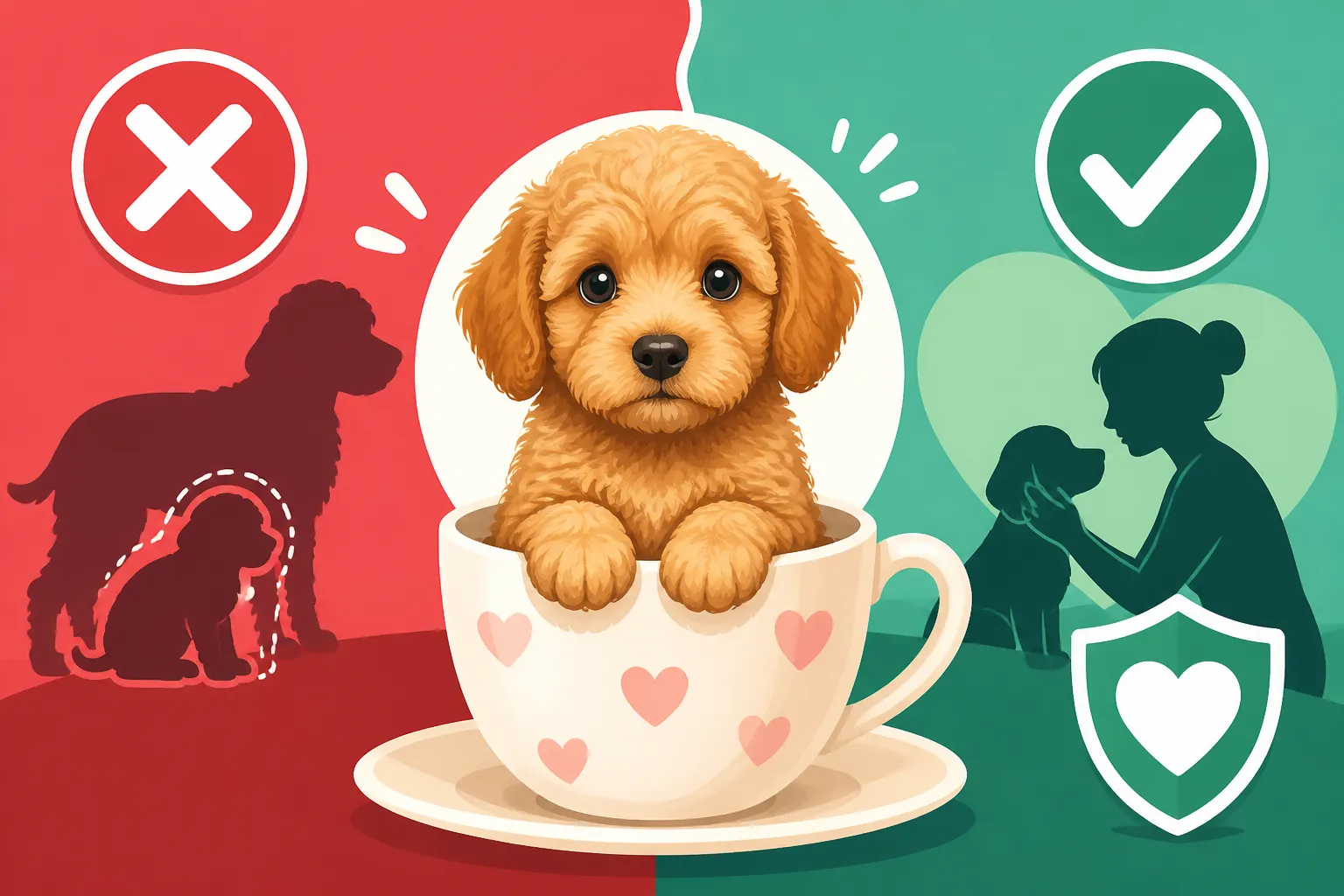
Whether a Teacup Cockapoo Should Be Bred at All
The desire for an impossibly tiny, perpetually puppy-like companion is something many dog lovers can understand. The thought of a Cockapoo small enough to fit in a teacup, carrying all that adorable charm, can be incredibly tempting. However, the reality of breeding for such extreme smallness often comes with significant welfare concerns for the dogs themselves. This guide will delve into the complex considerations surrounding the breeding of "Teacup Cockapoos," exploring the health, ethical, and behavioral implications to help you make an informed decision about these minuscule canine companions.
The Elusive "Teacup" Cockapoo: Understanding the Lure and the Reality
There's no denying the magnetic appeal of a truly tiny dog. They fit easily into smaller homes, can be carried almost anywhere, and seem to embody an eternal cuteness. But when we talk about a "Teacup Cockapoo," it's important to understand that we're often stepping into a realm where marketing terminology can overshadow genetic health and responsible breeding practices. This section explores what defines these exceptionally small dogs and why their appeal is so potent.
What Defines a Teacup Cockapoo
First and foremost, it’s crucial to know that "Teacup" is not a recognized size classification by any reputable kennel club or official breed registry. There's no breed standard for a "Teacup Cockapoo" because the Cockapoo itself isn't yet a fully recognized breed with a universal standard. Instead, "Teacup" is a marketing term, typically applied to Cockapoos that weigh less than 6-7 pounds as adults, or stand under 10 inches tall. These are essentially the smallest end of the "Toy Cockapoo" spectrum, sometimes even smaller than the smallest Poodle parent, which is usually a Toy Poodle.
This extreme smallness is often achieved by breeding the smallest possible individuals together, sometimes even those that are "runts" of their litter, or by using Miniature Poodles with particularly small English or American Cocker Spaniels. The goal is to produce offspring that are dramatically smaller than what would typically be considered a healthy Toy Cockapoo. The unpredictable nature of a mixed breed like the Cockapoo means that even when attempting to breed for extreme smallness, a breeder can't guarantee uniform size or health across a litter. For more on their expected size, you might want to read How Big a Teacup Cockapoo Stays.
Why the Demand for Tiny Dogs?
The intense demand for tiny dogs, including those labeled "Teacup Cockapoos," stems from several factors. Part of it is undoubtedly aesthetic – their small size makes them incredibly endearing, reminiscent of puppies even into adulthood. They are often seen as portable companions, perfectly suited for urban living or lifestyles where a larger dog might be impractical. People envision carrying them in bags, taking them on airplanes, and having them as constant, unobtrusive companions.
Beyond aesthetics, there's a cultural fascination with miniature versions of everything, and pets are no exception. The rise of social media has also played a significant role, with tiny, "cute" dogs often garnering immense attention and popularity. This high demand, unfortunately, can sometimes drive breeders, particularly less scrupulous ones, to prioritize size above all else, often overlooking crucial health and ethical considerations. Buyers, drawn in by the undeniable charm, might not fully understand the potential challenges or costs associated with such delicate creatures, which we'll explore in detail in the following sections.
The Health Minefield: Why Breeding for Extreme Smallness Can Be Detrimental
While a tiny Cockapoo might be adorable, the reality is that breeding for such diminutive sizes often comes at a steep price: the health and well-being of the dog. Many genetic and physiological issues are exacerbated or directly caused by reducing a dog's size beyond what is natural for its breed lines. Owners of "Teacup" varieties frequently face a heartbreaking array of veterinary challenges.
Fragile Bones and Increased Injury Risk
One of the most immediate and apparent concerns with exceptionally small dogs is their sheer fragility. A Teacup Cockapoo’s bones are often far more delicate than those of a standard Toy or Miniature Cockapoo. A seemingly innocuous fall from a couch, a clumsy step by a child, or even jumping off a bed can result in serious fractures. Their tiny frames offer less protection for internal organs, making them highly susceptible to injury from even minor impacts. This means owners must live in a constant state of vigilance, meticulously "puppy-proofing" their homes to an extreme degree and often limiting their dog's interactions with other pets or young children, which can be isolating for a social breed like the Cockapoo.
Furthermore, small dogs are often prone to patellar luxation, or "slipping kneecaps," where the kneecap dislocates from its groove. While this can affect Cockapoos of various sizes, it's often more prevalent and severe in very small individuals. A tiny Cockapoo struggling with patellar luxation might require expensive surgery, impacting their mobility and quality of life. For more on joint health in smaller Cockapoos, you might find Slipping Kneecaps in a Toy Cockapoo helpful.
Organ and Dental Problems
The miniaturization process doesn't just affect bone structure; it can also lead to a host of internal organ issues. Organs like the heart, liver, and kidneys may not develop correctly or function efficiently in such tiny bodies. For example, portosystemic shunts (PSS), a liver condition, can be more common in smaller breeds, where blood bypasses the liver, leading to a buildup of toxins. Kidney issues, while often associated with specific inherited conditions like Familial Nephropathy, can be compounded in very small, fragile dogs.
Dental problems are also a major concern. Tiny jaws often don't have enough space for all 42 adult teeth, leading to severe dental crowding. This crowding traps food particles, encourages plaque buildup, and significantly increases the risk of periodontal disease, tooth decay, and infections. These issues can cause considerable pain, make eating difficult, and, if left untreated, lead to systemic health problems as bacteria from dental infections spread through the bloodstream. Regular dental care, including professional cleanings, is a must for these dogs, and often involves extractions. See Dental Crowding in a Small Cockapoo for more detailed information.
Hypoglycemia and Temperature Regulation
Teacup Cockapoos are highly susceptible to hypoglycemia (low blood sugar), especially as puppies. Their small bodies have less fat and muscle reserves, meaning they can't store glucose as effectively as larger dogs. This makes them prone to sudden drops in blood sugar, which can lead to lethargy, disorientation, tremors, seizures, and even death if not promptly addressed. Owners often need to feed them frequent, small meals throughout the day, sometimes as often as every few hours, and always carry a source of quick sugar, like Nutri-Cal or karo syrup, as an emergency measure. Chewy offers a range of high-calorie supplements suitable for very small puppies and dogs prone to hypoglycemia, which can be invaluable for these delicate creatures.
Beyond blood sugar, their tiny size also makes it difficult for them to regulate their body temperature. They can get cold very quickly in even moderately cool environments and overheat rapidly in warm ones. This means they often require sweaters or coats for outdoor excursions in cooler weather and need to be protected from direct sunlight or strenuous activity during warmer months. This constant need for environmental control adds another layer of demanding care for their owners. It highlights the inherent vulnerability that comes with extreme miniaturization.
Beyond the Cuteness: Ethical Implications of Breeding Teacup Cockapoos
The demand for "Teacup Cockapoos" raises significant ethical questions for both breeders and potential buyers. When size becomes the primary breeding goal, other critical factors like health, temperament, and genetic diversity can take a backseat, often to the detriment of the dogs themselves.
Responsible Breeding Practices
A truly responsible breeder prioritizes the health and welfare of their dogs above all else. This means conducting extensive health testing on parent dogs for genetic conditions relevant to both Cocker Spaniels and Poodles, such as hip and elbow dysplasia, eye conditions (like Progressive Retinal Atrophy and glaucoma), and kidney disease (Familial Nephropathy). They aim to produce dogs that conform to a healthy standard, not extreme variations that compromise well-being. The Five Certificates a Cockapoo Breeder Should Show offers a good guide to what to look for.
When it comes to "Teacup" breeding, this ideal often gets severely compromised. Breeders focused solely on producing the smallest puppies might not perform adequate health screenings, or they might deliberately breed undersized animals, even "runts," knowing the potential health risks. Breeding two very small dogs together can concentrate genetic weaknesses, leading to litters with exacerbated health problems. A responsible breeder would typically advise against breeding for such extremes, recognizing the inherent fragility and health issues that can arise from pushing the boundaries of natural size. They understand that What Breeding Ever Smaller Costs a Cockapoo is often paid for in canine suffering.
The Role of Buyer Demand
It’s easy to point fingers at breeders, but as buyers, we also play a crucial role in shaping the market. The high demand for "Teacup" dogs, fueled by their undeniable cuteness and portability, creates a strong incentive for breeders to continue producing them. If there wasn't a market for these extremely small dogs, there would be less financial motivation for breeders to undertake such practices. Education is key here. Prospective owners need to understand the potential health problems and increased care requirements associated with "Teacup" sizes before committing to purchase.
By asking critical questions about parent health, researching average weights and heights for healthy Toy Cockapoos, and being wary of breeders who emphasize "teacup" size above all else, buyers can help shift demand towards more ethical breeding practices. Looking for a breeder who clearly outlines the expected adult size, and prioritizes health and temperament, will go a long way. Checking reputable online pet supply retailers like Chewy for breed-specific diets and accessories can also give you an idea of the range of sizes typically catered to, often indicating what's considered a healthy, sustainable size.
Potential for Backyard Breeding and Puppy Mills
Sadly, the lucrative market for "Teacup" dogs makes them prime targets for backyard breeders and large-scale commercial operations, often referred to as puppy mills. These individuals or operations are typically driven by profit with little regard for animal welfare. They often breed animals indiscriminately, without proper health testing, veterinary care, or attention to genetics. In these environments, parent dogs are often kept in substandard conditions, bred repeatedly, and puppies may be taken from their mothers too early, leading to socialization issues and further health problems.
"Teacup" puppies from such sources are often advertised at higher prices due to their perceived rarity and demand, but they are far more likely to come with hidden health issues that will result in significant veterinary bills and emotional distress for their new families. The initial low cost of a puppy from a mill or backyard breeder can quickly spiral into astronomical veterinary expenses in the dog’s first few years, which can be a devastating realization for new owners. Be extremely cautious of any breeder advertising "Teacup" puppies without verifiable health clearances for both parents and a willingness to show you where the puppies are raised and interact with the parent dogs.
A Tiny Dog's Big Personality: Temperament and Behavioral Challenges
While physical health is often the most discussed aspect of breeding for extreme smallness, the impact on a Teacup Cockapoo's temperament and behavior is equally important. Their diminutive size can inadvertently shape how they interact with the world, sometimes leading to unique challenges for owners.
Nervousness and Socialization Challenges
Due to their fragile nature, Teacup Cockapoos often experience the world from a very vulnerable perspective. They can easily be overwhelmed by larger dogs, boisterous children, or even loud noises. This can lead to increased anxiety and nervousness. Instead of being confident and outgoing, as many Cockapoos are known to be, a very small individual might develop fear-based behaviors, such as excessive barking, trembling, or even nipping when feeling threatened or cornered.
Proper socialization is crucial for any puppy, but for a Teacup Cockapoo, it requires extra care and caution. Exposing them to a variety of sights, sounds, people, and well-behaved, gentle dogs from a young age is vital, but it must be done in a controlled and safe manner to avoid overwhelming them or causing injury. Owners might find themselves constantly protecting their tiny dog, which, while well-intentioned, can inadvertently reinforce fearful behaviors or prevent the dog from developing confidence. This delicate balance means owners need to be particularly attuned to their dog's emotional state. Whether a Cockapoo Copes in a Loud House explores how these dogs react to different environments.
House Training Difficulties in Tiny Dogs
House training can be a particularly challenging endeavor with Teacup Cockapoos. Their tiny bladders mean they simply cannot hold their urine for very long, especially as puppies. This requires incredibly frequent trips outside – sometimes as often as every 15-30 minutes during active periods, and certainly after every nap, play session, or meal. Owners need to be exceptionally patient and diligent, accepting that accidents are likely to happen far more frequently than with a larger dog.
Furthermore, their small size means that a puddle of urine or a pile of feces can go unnoticed more easily, especially in a busy household, which can set back training progress. They also have less "capacity" for understanding the consequences of holding it, and can develop a habit of going indoors if not consistently taken out. Some owners resort to pee pads long-term, which can be a double-edged sword: it offers a convenient solution but can also delay full outdoor training. How Long a Cockapoo Takes to Stop Having Accidents can vary greatly depending on the dog's size and individual learning curve. This intense need for consistent bathroom breaks is a significant commitment that needs to be considered before bringing a Teacup Cockapoo home.
Finding the Right Fit: Healthier Alternatives to the Teacup Cockapoo
If the charming personality and hypoallergenic potential of a Cockapoo appeal to you, but the significant health and ethical concerns surrounding "Teacup" sizes give you pause, rest assured that there are wonderful, healthier alternatives. You don't have to compromise on companionship or the essential Cockapoo traits to ensure your dog has the best possible start in life.
Considering a Toy or Miniature Cockapoo
Instead of specifically seeking out a "Teacup" Cockapoo, consider focusing on a well-bred Toy or Miniature Cockapoo from a reputable breeder. These sizes still offer the convenience of a smaller dog but are generally less prone to the extreme health fragilities associated with the "Teacup" label. Toy Cockapoos typically weigh between 6 and 12 pounds, while Miniatures fall into the 13-18 pound range. These dogs are still small enough to be portable and suitable for apartment living, but their slightly larger frames offer more resilience against accidental injury and often present fewer challenges with organ development and temperature regulation.
A reputable breeder will be able to tell you the expected adult size of their puppies based on the parent dogs' sizes and pedigrees. They'll prioritize health and temperament, ensuring their breeding dogs have passed all recommended genetic health screenings. While a Toy Cockapoo is still a smaller breed and requires careful handling, the risk profile is significantly lower than for an ultra-miniaturized "Teacup" version. You might find it helpful to look into The Toy Cockapoo and The Miniature Cockapoo to understand the typical characteristics and needs of these size categories.
Adopting a Small Adult Cockapoo
Another fantastic option is to consider adopting a small adult Cockapoo from a rescue organization. While "Teacup" Cockapoos are relatively rare in rescues, you'll often find Toy or Miniature Cockapoos in need of loving homes. Adopting an adult dog comes with several distinct advantages:
- Known Size and Temperament: With an adult dog, their full size and general temperament are already established. You won't have to guess how big they'll get or what their basic personality will be like. Rescue organizations spend time assessing their dogs, so they can provide valuable insights into their behavior, energy levels (The Miles a Cockapoo Wants Every Day), and suitability for your home.
- Health Assessment: Many rescues provide a thorough veterinary check-up, and sometimes even address existing health issues before adoption. This means you’ll often know about any pre-existing conditions upfront, rather than discovering them unexpectedly in a young "Teacup" puppy.
- Reduced Training Burden: While all dogs benefit from ongoing training, an adult dog may already be house-trained, understand basic commands, and be past the intense puppy chewing phase.
- Giving a Second Chance: Opening your home to an adult Cockapoo in need is an incredibly rewarding experience. You provide a loving "forever home" to a dog that might otherwise struggle to find one.
Choosing a slightly larger, well-bred Cockapoo or adopting an adult dog offers the joy of Cockapoo companionship without the heightened risks and ethical dilemmas associated with the "Teacup" label. This approach ensures you're bringing home a dog that has a better chance at a long, healthy, and happy life.
| Feature | "Teacup" Cockapoo (Marketing Term) | Toy Cockapoo (Recognized Size) | Miniature Cockapoo (Recognized Size) |
|---|---|---|---|
| Adult Weight | Under 6-7 lbs | 6-12 lbs | 13-18 lbs |
| Adult Height | Under 10 inches | 10-12 inches | 13-15 inches |
| Fragility Risk | Very High (prone to injury) | Moderate to High (needs careful handling) | Moderate |
| Hypoglycemia Risk | High (especially as puppy) | Moderate (as puppy, less as adult) | Low to Moderate (as puppy) |
| Dental Crowding | Very High | High | Moderate |
| Temperature Control | Challenging | Can be challenging in extremes | Generally easier |
| Temperament Impact | Higher risk of nervousness/fear | Generally confident and outgoing | Generally confident and outgoing |
| Breeding Ethics | Often associated with less ethical practices | Reputable breeders exist | Reputable breeders exist |
| Food Needs | Specialized diets, frequent feeding (Feeding a Teacup Cockapoo) | Quality small breed kibble | Quality small breed kibble |
| Overall Health | Higher potential for health complications | Good potential with responsible breeding | Good potential with responsible breeding |
Understanding the True Cost
It's tempting to think that a smaller dog will be less expensive to own, but the opposite is often true for "Teacup" varieties. While the initial purchase price for a "Teacup Cockapoo" can be remarkably high, the ongoing costs, particularly for veterinary care, can be staggering. The frequent need for dental procedures due to crowding, the potential for emergency care due to injuries, or the management of chronic conditions like hypoglycemia or organ issues all add up significantly. What a Teacup Cockapoo Costs might seem like just the purchase price, but the lifetime financial commitment can far exceed expectations for these delicate dogs.
Even routine care for an extremely small dog can be more specialized. Finding the right tiny harnesses, specialized kibble, or even appropriate toys often requires careful selection. Retailers like Chewy do an excellent job offering a wide variety of products for small dogs, including specialized foods for tiny mouths, but these items can sometimes carry a premium. It’s important to budget not just for the puppy, but for the potentially extensive medical care and specialized supplies they might require throughout their lives, right up until The Point a Cockapoo's Owner Has to Decide.
Bringing a Cockapoo into your life should be a joyous and fulfilling experience, and choosing a dog that is bred for health and longevity rather than extreme size is a fundamental step in ensuring that joy lasts for many years to come.
Disclaimer
This article is for general informational purposes only and does not constitute professional advice. Laws, prices and regulations vary by location and change over time. Consult a qualified professional for guidance on your specific situation.