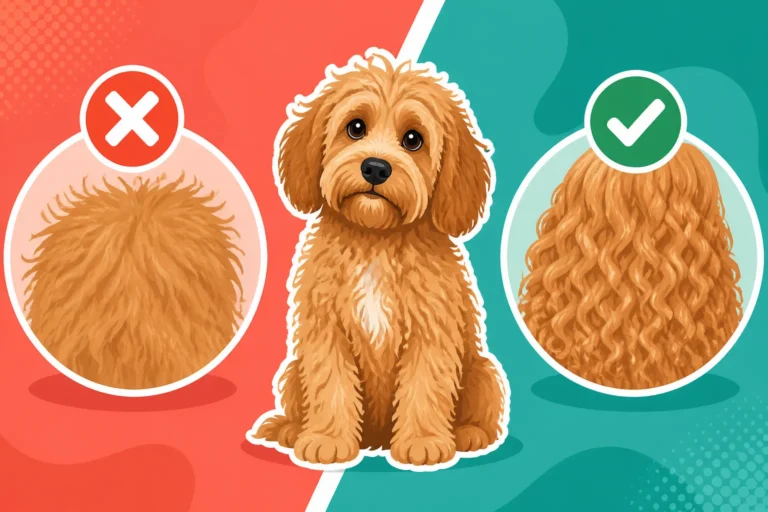
What the Curl Gene Does in a Cockapoo
Many prospective Cockapoo owners dream of that perfect wavy or curly, low-shedding coat, often envisioning a specific look long before their puppy even comes home. It can be incredibly disheartening, and frankly, confusing, when your adorable fluffy puppy starts to change, and their coat ends up far straighter, or even far curlier and more prone to matting, than you ever expected. This guide is all about unraveling that mystery, specifically diving into what the "curl gene" does in a Cockapoo, how it impacts their appearance, and what it means for you as an owner.
Decoding the KRT71 Gene: The Master of Cockapoo Curl
When we talk about the "curl gene" in a Cockapoo, we're really focusing on a specific genetic marker known as KRT71. This gene plays a starring role in determining the texture and curl pattern of your dog's coat. It’s not just about a general "curly" or "straight" vibe; KRT71 dictates the very structure of the hair follicle, which in turn influences how much the hair kinks and twists. Think of it like a tiny architect designing the individual strands of hair.
There are different variations, or alleles, of the KRT71 gene. For simplicity, let's call them 'C' for curly/wavy and 'c' for straight. Every Cockapoo inherits two copies of this gene, one from each parent. The combination of these two copies, known as the genotype, is what ultimately determines the outward appearance, or phenotype, of their coat. It’s a bit like getting two slips of paper, each with a letter, and those two letters together spell out your dog's destiny when it comes to curl.
So, if a Cockapoo inherits two 'C' alleles (CC genotype), they are likely to have a very pronounced, tight curl. This is the kind of coat many people associate with the Poodle side of their heritage, often described as a fleecy or woolly texture. On the other hand, a Cockapoo that inherits one 'C' and one 'c' allele (Cc genotype) will typically develop a wavy or loose curl coat. This is often the desired "doodle" look – a soft, flowing wave that still has some bounce. Finally, if a Cockapoo inherits two 'c' alleles (cc genotype), their coat will be straight. This might surprise some owners who expected a curl, but it's a perfectly natural outcome given the genetic lottery. Understanding What KRT71 Says About a Cockapoo's Curl is truly the first step in understanding your dog's unique coat.
It’s crucial to remember that while the KRT71 gene is primarily responsible for curl, other genes, like the furnishings gene (RSPO2), also play a massive role in whether a Cockapoo is truly low-shedding or not. A dog with a curly coat but no furnishings will still shed like crazy! The curl gene mainly impacts the texture and appearance of the coat. This intricate genetic dance is why no two Cockapoos are exactly alike, even from the same litter. It's why some puppies that look identical at eight weeks can mature into vastly different looking adults.
From Puppy Fluff to Adult Fleece: When the Curl Gene Reveals Itself
One of the biggest surprises for new Cockapoo owners is the phenomenon known as the "coat change." You bring home your adorable eight-week-old puppy, and their coat is a soft, often relatively straight or slightly wavy fluff. You might even think, "Oh, this is going to be easy to groom!" But then, around six to ten months of age, that soft puppy coat starts to shed out, making way for the denser, more mature adult coat. This transition period can be messy and often leads to the dreaded matting if you're not prepared. Many owners are genuinely shocked at how dramatically their Cockapoo's coat can transform during this time, and the curl gene is a major player in that transformation.
A puppy that had a loose wave at eight weeks might suddenly develop a much tighter curl, or conversely, a puppy that seemed a bit wavy could end up with a straighter coat as their adult hair grows in. This is why looking at a young puppy's coat and trying to predict its adult texture can be a bit like reading tea leaves. The true expression of the KRT71 gene often doesn't become fully apparent until after this major coat change. For a deeper dive into these transformations, you might find A Cockapoo's Coat at Eight Weeks and A Cockapoo's Coat Through the Ten Month Change incredibly helpful.
This uncertainty is precisely why responsible breeders increasingly rely on DNA testing. A simple cheek swab from the parent dogs, or even the puppies themselves, can reveal their exact KRT71 genotype (CC, Cc, or cc) long before their adult coat fully develops. This means a breeder can tell you with a high degree of certainty what kind of curl to expect. For example, a breeder aiming for those signature wavy "doodle" coats would typically pair a Poodle parent with a CC genotype with a Cocker Spaniel parent, which are generally cc (straight). The resulting F1 Cockapoo puppies would all be Cc, predicting a wavy coat. If you're serious about knowing your future Cockapoo's coat type, asking about DNA test results is paramount. Considering Whether a Coat DNA Test Is Worth the Money can truly save you surprises down the road.
Without DNA testing, it's essentially a gamble. While an experienced breeder might have a good idea based on the parent coats and past litters, genetics aren't always straightforward. This is especially true in multi-generational Cockapoos (F2, F3, etc.) where a wider range of KRT71 genotypes can pop up in a single litter, leading to a mix of straight, wavy, and curly coated siblings.
Here's a quick overview of how the KRT71 gene typically correlates with coat appearance:
| KRT71 Genotype | Expected Curl Type | Grooming Effort (General) | Potential for Shedding (if Furnishings present) |
|---|---|---|---|
| CC | Tight Curl / Woolly | High | Low |
| Cc | Wavy / Loose Curl | Moderate to High | Low |
| cc | Straight | Low to Moderate | Moderate to High |
Note: This table assumes the furnishings gene (RSPO2) is also present, which prevents shedding regardless of curl. A straight-coated Cockapoo (cc) without furnishings would shed significantly more.
Living with the Curl: Grooming Realities for Each KRT71 Outcome
Understanding your Cockapoo's curl genotype isn't just about managing expectations for their looks; it's absolutely vital for preparing for their grooming needs. Each curl type brings its own set of challenges and routines, and frankly, ignoring these can quickly lead to painful mats and expensive trips to the groomer. This is where the reality of Cockapoo ownership really hits home.
Let's break down the practical implications:
The Tight Curl (CC Genotype)
If your Cockapoo has inherited two copies of the curl gene (CC), you're looking at a coat that is dense, often described as woolly or tightly curled. This coat type, while often very desirable for its non-shedding qualities, is a magnet for mats. Those tight curls weave together incredibly easily, especially in high-friction areas like behind the ears, armpits, and under the collar. You'll need a dedicated grooming routine. This means daily line brushing, using a slicker brush and a metal comb to get right down to the skin, making sure no knots are forming. Failure to do so even for a few days can result in mats that are impossible to brush out without causing pain to your dog. Many owners with this coat type opt for shorter clips to make management easier. For these dogs, knowing How Many Minutes a Curly Cockapoo Takes for grooming will definitely help you budget your time.
The Wavy or Loose Curl (Cc Genotype)
This is perhaps the most sought-after Cockapoo coat, striking a lovely balance between curl and manageability. However, don't let the "loose" part fool you into thinking it's low maintenance. The wavy coat, inheriting one curl gene and one straight gene, still demands regular attention. Those waves can easily tangle and mat, particularly during the coat change period around adolescence when puppy fluff mixes with emerging adult hair. You'll likely need to brush your wavy Cockapoo several times a week, ideally every other day, to prevent mats from forming. Again, a slicker brush followed by a metal comb is your best friend. Areas like the tail, legs, and chest are particularly prone to matting with this type of coat. You might find that products available on Chewy, like detangling sprays and leave-in conditioners, become staples in your grooming kit to help keep those waves smooth and knot-free. For this coat type, How Many Minutes a Wavy Cockapoo Takes is a good benchmark to consider.
The Straight Coat (cc Genotype)
While less common, some Cockapoos inherit two straight coat genes (cc), resulting in a coat that is much flatter and straighter, resembling more of their Cocker Spaniel heritage. This coat type generally requires less rigorous brushing to prevent matting compared to its curly counterparts. However, don't mistake "less matting" for "no grooming." Straight coats can still tangle, especially if they are long, and they often shed more than a curly or wavy coat (unless they also carry the furnishings gene, which affects shedding more directly). Regular brushing will help remove loose hair, distribute natural oils, and keep the coat healthy and shiny. You might find you need to vacuum a bit more often, but your brushing sessions will likely be quicker.
Regardless of your Cockapoo's curl type, finding a groomer who understands doodle coats is invaluable. They can offer advice on specific products and techniques, and help maintain a healthy coat between your at-home sessions. You can often find great grooming tools and even specialized dog foods designed to support coat health (like some fresh food options from Ollie) on platforms like Amazon. Remember, grooming is a bonding experience and an essential part of keeping your Cockapoo comfortable and healthy. Understanding The Three Cockapoo Coat Types and Their Upkeep is key to a happy and healthy dog.
Making Informed Choices: What to Ask Your Breeder About the Curl Gene
Choosing a Cockapoo puppy is an exciting time, and understanding the curl gene can really empower you to make an informed decision, especially if you have specific coat preferences or allergy concerns. It's not about being overly demanding; it's about being a responsible pet owner who wants to be fully prepared for the commitment. Asking the right questions upfront can save you a lot of surprises and potential frustration down the line.
When you're speaking with a breeder, don't be shy about inquiring about the genetic testing they perform. A transparent and ethical breeder will be happy to discuss their health testing protocols, and increasingly, coat testing is becoming part of that package. Specifically, you want to ask about KRT71 testing. They should be able to tell you the KRT71 genotype of both parent dogs and, ideally, explain what that means for the puppies in the litter. For example, if both parents are tested as CC (curly) or one is CC and the other Cc (wavy), you can expect a litter with a higher likelihood of significant curl. If one parent carries the 'c' (straight) allele, there's a chance some puppies could have straighter coats, even if the other parent is curly.
It’s completely reasonable to ask for copies of the DNA test results for the KRT71 gene (and other important health tests, of course). These results are typically provided by reputable genetic testing labs and will clearly state the genotype. This isn't just about predicting curl; it also helps ensure you understand the potential shedding characteristics, especially in combination with the furnishings gene. Being able to read A Cockapoo Coat Report Before You Choose will equip you with the knowledge to understand what those certificates actually mean.
A breeder who is knowledgeable about genetics and willing to share this information is a strong indicator of responsible breeding practices. They understand that transparency builds trust and helps match the right puppy with the right family. If a breeder is vague, dismissive, or claims that all their Cockapoos are "guaranteed non-shedding" without offering any genetic evidence, that should raise a red flag. While some breeders may not test every puppy, knowing the parents' genetics provides a strong indication. Never feel pressured to accept vague assurances. You're bringing a family member into your home for potentially The Fourteen to Eighteen Years a Cockapoo Lives, and their coat care will be a significant part of that journey. Knowing Whether a Breeder Can Guarantee a Cockapoo's Coat is a crucial part of your due diligence.
Disclaimer
This article is for general informational purposes only and does not constitute professional advice. Laws, prices and regulations vary by location and change over time. Consult a qualified professional for guidance on your specific situation.