Stopping a Cockapoo Puppy Jumping at Faces
That moment your sweet, fluffy Cockapoo puppy greets you or a visitor with a full-body leap, aiming straight for the face, can be both endearing (because, well, puppy!) and incredibly frustrating. It's a common behavior, driven by excitement and a desire for attention, but if left unaddressed, it quickly becomes an unwelcome habit, especially as your Cockapoo grows bigger and stronger. This guide will walk you through understanding why your Cockapoo puppy jumps, and more importantly, how to consistently and kindly teach them that four paws on the floor is the best way to say hello.
Understanding Why Your Cockapoo Puppy Jumps
It’s easy to get annoyed when your Cockapoo puppy launches itself at you, but it’s important to remember that they aren't doing it to be naughty. Jumping is a perfectly natural canine behavior, especially for puppies, and understanding the roots of it is the first step towards changing it. Think of it from their perspective: they’re trying to communicate, and usually, they’re getting some kind of response, even if it’s negative.
Puppy Excitement and Attention Seeking
One of the biggest drivers for a jumping Cockapoo puppy is pure, unadulterated excitement and a craving for attention. When you come home, or a new person enters, your puppy is overjoyed. They want to be close to your face, to lick you, to engage with you. In their puppy world, jumping up is a direct path to getting noticed. Every glance, every "no," every push-down can inadvertently reinforce the behavior. They learn that jumping works to get a reaction, which is exactly what they're after, positive or negative.
Imagine arriving home after a long day. Your Cockapoo puppy is beside itself with joy, wiggling its whole body. It leaps up, paws hitting your leg or chest. Your natural reaction might be to gently push it down, say "off," or even just make eye contact. To your puppy, that brief moment of physical contact and vocalization, even if it's a reprimand, registers as attention. They might think, "Ah, this is how I get my human to interact with me!" They're not understanding the nuance of "stop," they're just getting a payoff in the form of your engagement. This is why consistency in teaching an alternative behavior is so crucial.
Instinct to Greet at Face Level
Dogs, particularly puppies, often greet each other by sniffing faces and mouths. When they interact with humans, they instinctively try to reach our faces, which are, of course, much higher than their own. This can lead to jumping as they attempt to get to eye or mouth level with us, just as they would with another dog. They're trying to communicate in their own language.
This instinct is deeply ingrained. If you've ever watched puppies interact, you'll see them pawing at each other, nuzzling, and attempting to get close to the other's head. It's a social gesture, a way to say hello and gather information. When they do this to us, it’s not malicious; it’s an attempt to engage socially in a way that makes sense to them. The issue arises because human greetings don't typically involve nose-to-nose contact while standing, and a Cockapoo's nails can be quite sharp, or they can knock a child over.
Lack of Alternative Greeting Behaviors
Often, puppies jump because they simply haven't been taught an alternative way to greet people politely. They don't know that "four on the floor" is the preferred method. It's our job to clearly communicate what we do want them to do, rather than just punishing what we don't. Without a clear signal or reward for a desired behavior, they will continue to fall back on their natural, albeit inconvenient, instincts.
This is where proactive training comes into play. Instead of waiting for the puppy to jump and then reacting, we need to anticipate the jumping trigger (like someone walking through the door) and guide the puppy into a desired action, such as sitting. If a puppy has a strong "sit" command, and that sit is rewarded heavily when people approach, they will quickly learn that a polite sit earns them praise, treats, and petting, whereas jumping earns them absolutely nothing. This clear distinction is key for their learning.
Starting Early: Foundation Training to Prevent Jumping
The best time to address jumping is when your Cockapoo is a tiny puppy. Early intervention is always more effective than trying to break an ingrained habit later on. Laying a strong foundation of good manners from the very beginning will make a world of difference. Consistency is your superpower here, and every member of the household needs to be on the same page. When Raising a Cockapoo Puppy, focus on these core principles.
The Power of "Sit" and "Stay"
Teaching a reliable "sit" and "stay" command is your absolute best defense against jumping. These aren't just tricks; they're essential tools for impulse control and polite greetings. Start practicing these commands in quiet environments with minimal distractions, gradually increasing the challenge. Reward heavily with high-value treats and enthusiastic praise when your puppy performs them correctly.
For example, when you first start working on "sit," hold a treat above your Cockapoo's head, slowly moving it backward towards their tail. As their nose follows the treat, their rear end will naturally lower into a sit. The moment their bottom touches the floor, say "Yes!" or click a clicker, and give them the treat. Repeat this many times a day in short, fun sessions. Once "sit" is solid, you can add "stay." Have them sit, take one small step back, say "stay," count to one, then step forward, say "release," and reward. Build up distance and duration gradually. This teaches them that calm, controlled behavior earns them rewards, setting the stage for polite greetings. You can even find comprehensive online programs like those offered by BAXTER & Bella that walk you through these steps with video tutorials and support.
Ignoring the Jump, Rewarding "Four on the Floor"
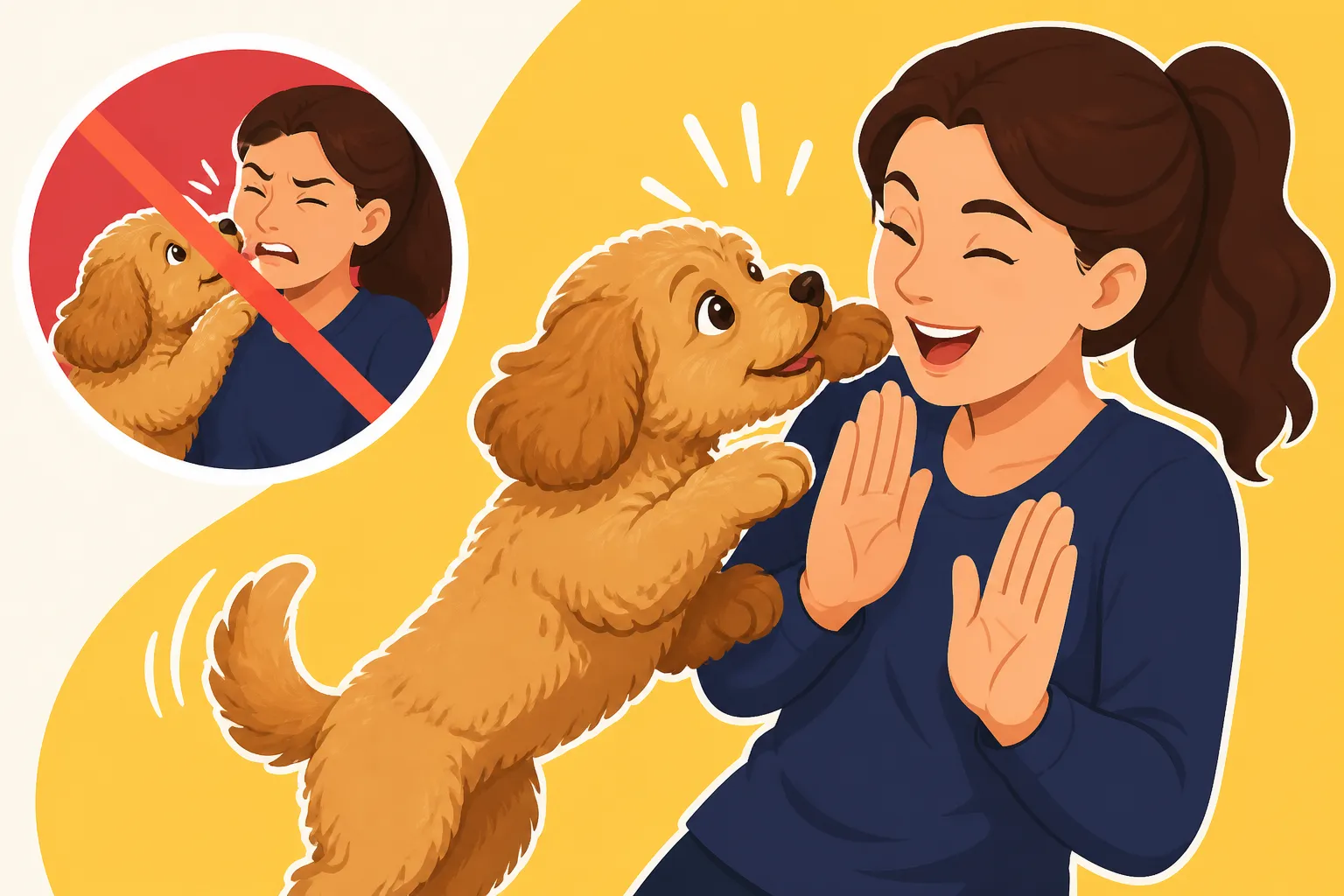
This is perhaps the most critical component of stopping jumping. Any attention, even negative attention, can reinforce the behavior. When your Cockapoo puppy jumps, turn your back, cross your arms, and completely ignore them. No eye contact, no speaking, no touching. The moment all four paws are on the floor, then immediately turn around, praise them calmly, and offer a gentle pet or a small treat. This teaches them that jumping gets them nothing, but calm behavior earns them what they want – your attention.
It sounds simple, but it requires incredible discipline from you and everyone in your home. Imagine a friend comes over. Your Cockapoo puppy jumps. Your friend instinctively reaches out. This is where you need to interject, "Please turn your back on him if he jumps. He'll learn faster that way." The puppy needs to learn that jumping makes the fun human disappear, but sitting or standing calmly makes the fun human reappear and offer nice things. This consistent "no reward for jumping, reward for calm" strategy is powerful. Remember, What a Cockapoo Puppy Should Learn First often revolves around these basic manners.
Management and Prevention
While you're actively training, managing your environment to prevent jumping is key to avoiding accidental reinforcement. If your puppy is prone to jumping when guests arrive, have them on a leash when visitors come over, or use a baby gate to create a temporary barrier. This prevents them from practicing the unwanted behavior and gives you more control to set them up for success.
Think about triggers. Do they jump when you first come home? As you open the door, step inside, and immediately turn your back if they jump. Wait for a moment of calm, then greet them. Do they jump on the couch? Keep them off until they can reliably stay down. You can use tools like a house line (a lightweight leash that drags on the floor, not for walks) to gently guide them off or to a "place" command. Puppy gates, available on platforms like Amazon, are invaluable for managing space and preventing unwanted access or overly enthusiastic greetings. Prevention is half the battle; every time they successfully jump, the habit gets stronger.
Practical Strategies for Redirecting Jumpy Greetings
Once you've got the basics down, you can start proactively redirecting your Cockapoo puppy's jumping impulses into more acceptable forms of greeting. This is about giving them a job to do that is incompatible with jumping, and making that job highly rewarding.
The "Consent Test" for Affection
Instead of reaching out to pet a jumping puppy, implement the "consent test." When your puppy is calm with all four paws on the floor, slowly reach your hand out to pet them. If they remain calm, continue petting. If they start to get excited and look like they might jump, immediately pull your hand away. This teaches them that calm body language invites interaction, while excitement and jumping make it stop.
This approach is highly effective because it puts the power of receiving affection directly in the puppy's paws. They quickly learn that the only way to get those lovely scratches behind the ears or a tummy rub is to keep themselves grounded. It’s a very clear cause-and-effect relationship that even a young puppy can grasp. Practice this with everyone who interacts with your Cockapoo. Encourage gentle, calm interaction from visitors too.
Using Lures and Rewards
Lures can be incredibly helpful for teaching your Cockapoo puppy what to do instead of jumping. When someone approaches, hold a high-value treat at your puppy's nose, then lower it to the floor or guide them into a sit. As soon as their paws are on the ground and they're in the desired position, mark the behavior (with a "yes!" or a clicker) and immediately give the treat. Over time, fade the lure, replacing it with a hand signal or verbal cue.
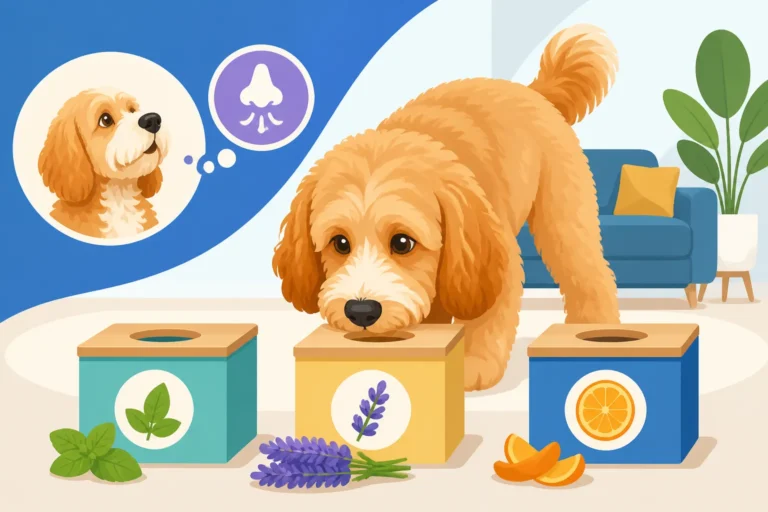
This strategy capitalizes on your Cockapoo's natural motivation – food! By associating the presence of people with getting a delicious treat only when their paws are on the floor, you're building a strong positive association with polite behavior. You can start this by having family members walk into the room, and as soon as they appear, you lure your puppy into a sit and reward. Gradually, the person becomes the cue for the polite greeting, rather than the jumping. Whether a Cockapoo Works Harder for Scent Than Food can be a factor here, so find what truly motivates your individual pup!
The "Place" Command for Door Greetings
The "place" command teaches your Cockapoo puppy to go to a specific spot (like a dog bed or mat) and stay there until released, even with distractions. This is invaluable for managing greetings at the front door. Teach your puppy to go to their place and remain there while visitors enter. This keeps them from jumping and gives them a clear, calm alternative.
To teach "place," start by luring your puppy onto their designated mat or bed, rewarding them once they're on it. Gradually add duration and distance, using a release cue like "okay" or "free." Once they're proficient, start practicing with minor distractions, then incorporate the arrival of a "visitor" (a family member pretending to be a guest). Your puppy learns that the doorbell, or a knock, means "go to your place" and wait patiently for their turn to greet, which will always be a calm, four-on-the-floor greeting.
| Behavior Observed | What Your Puppy Learns | Your Response | Outcome Desired |
|---|---|---|---|
| Jumps on visitor | Jumping gets attention | Turn back, ignore | Visitor leaves/disappears |
| Four paws on floor | Calmness gets attention | Praise, treat, calm petting | Visitor stays/engages |
| Jumps on you | Jumping gets nothing | Ignore, walk away | You leave/disappear |
| Sits/Stays calmly | Calmness gets you | Praise, treat, calm petting | You engage/stay |
Managing Real-World Scenarios and Visitor Interactions
Training in a controlled environment is one thing, but real-world situations, especially with excited visitors, can be a whole different ballgame. It's crucial to prepare for these moments and ensure your Cockapoo puppy's polite manners hold up under pressure. This is where the true test of your consistent training comes in.
Preparing for Guests
Before guests arrive, make sure your Cockapoo puppy has had plenty of exercise to burn off some of that pent-up energy. A tired puppy is a good puppy! Review your "sit," "stay," and "place" commands. Have high-value treats ready near the door. Consider putting your puppy on a leash or using a baby gate if they're particularly prone to jumping on new people. Inform your guests in advance about your training plan and ask for their cooperation.
It's really important to empower your guests to help, rather than hinder, your training efforts. Explain to them, "Fluffy is learning not to jump. If she jumps on you, please just turn your back and ignore her until her paws are on the floor. Then, you can calmly pet her." This way, everyone is sending the same message. If you have guests who are truly uncomfortable with this, or children who struggle to be consistent, it might be better to manage your puppy with a leash or in a separate area initially, gradually introducing them to polite greetings. For situations involving very young children, you might want to review Introducing a Cockapoo to a Newborn or Teaching Children to Handle a Cockapoo.
Greeting Etiquette with Visitors
When guests arrive, keep the initial greeting calm and controlled. If your puppy is on their "place" or behind a gate, that's ideal. If they're loose, immediately ask for a "sit" as guests enter. If they jump, the guest should immediately turn their back and withdraw all attention. Only when the puppy is calm and has all four paws on the floor should the guest offer a quick, calm pet. Avoid overly enthusiastic greetings that can escalate excitement.
Remember, the goal is to teach your Cockapoo that polite behavior is what earns them interaction. If your guest keeps giving attention while the puppy is jumping, it undermines all your hard work. It takes a village, as they say, to raise a well-mannered puppy. Have those treats handy, and encourage your guests to give them after a successful, calm greeting. You could even have a small bowl of puppy-safe treats by the door for this purpose. If you've been working with a platform like BAXTER & Bella, they often have great advice on managing these scenarios.
Consistency is Key
This cannot be stressed enough: consistency is absolutely paramount. Every single person who interacts with your Cockapoo puppy must follow the same rules, every single time. One inconsistent interaction can set your training back significantly. It takes time, patience, and repetition for a puppy to truly understand and internalize new behaviors. Don't get discouraged if there are setbacks; just calmly return to your training methods.
Think of it like learning a new language. Your puppy is trying to understand what you want. If one person speaks one language and another speaks a different one, it's incredibly confusing. So, gather your family, explain the rules, and make sure everyone is on board. This includes visitors too. The more consistent the message, the faster your Cockapoo puppy will learn that polite, four-on-the-floor greetings are the only way to get the loving attention they crave. Remember, The First Week With a Cockapoo Puppy sets the stage for all future training, and establishing these boundaries early is vital.
Disclaimer
This article is for general informational purposes only and does not constitute professional advice. Laws, prices and regulations vary by location and change over time. Consult a qualified professional for guidance on your specific situation.