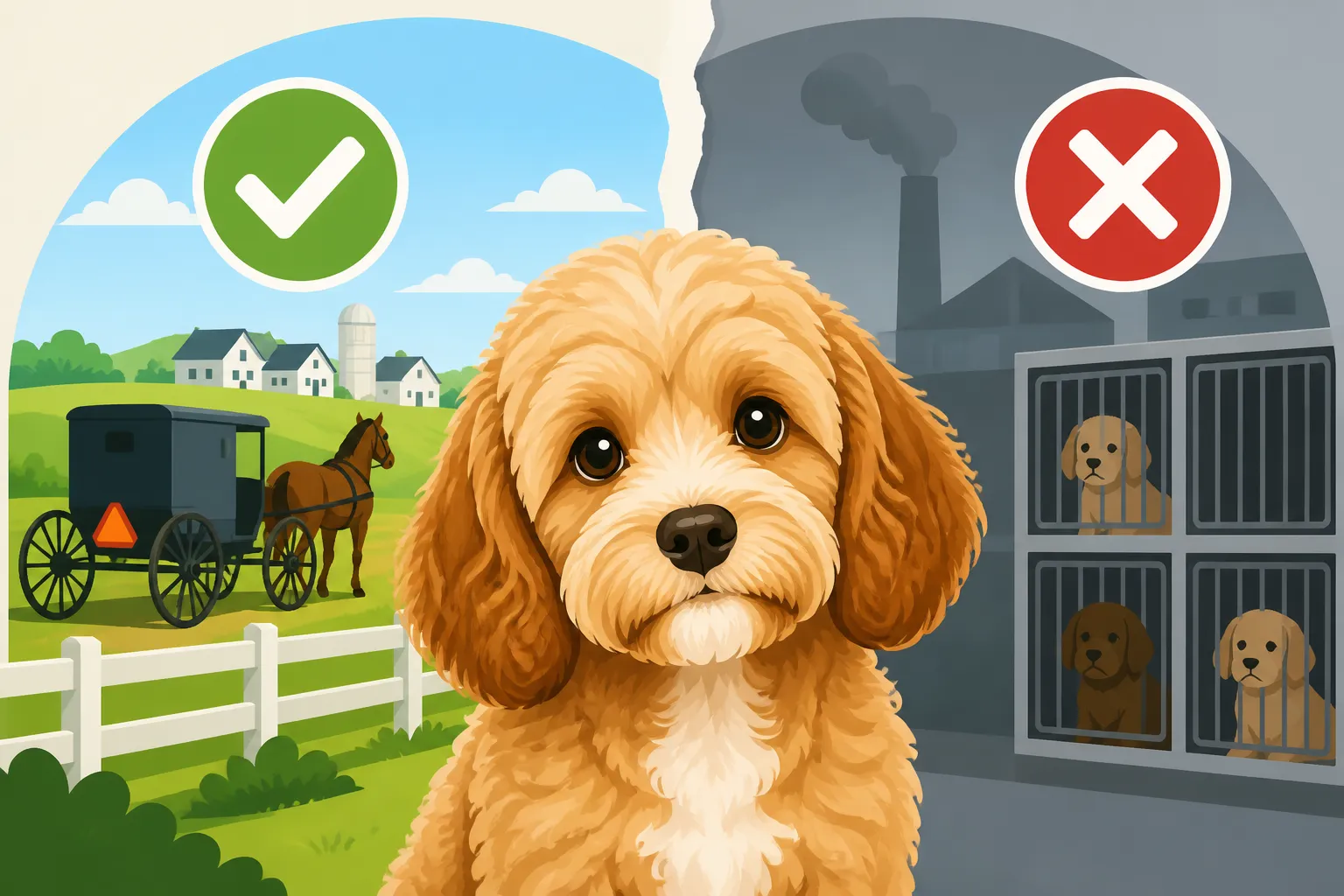
Whether a Lancaster County Cockapoo Is Mill Bred
The thought of bringing a fluffy Cockapoo puppy into your home is incredibly exciting, but the journey to find the right one can sometimes feel like navigating a minefield. Many aspiring owners have heard the phrase "Lancaster County puppy" associated with concerning breeding practices, and it's a completely valid worry that leaves people feeling anxious and unsure of where to turn. This guide is here to shed light on why Lancaster County has gained this reputation, what to look for in a responsible Cockapoo breeder no matter their location, and how to confidently avoid unknowingly supporting a puppy mill.
The Unfortunate Reputation of Lancaster County for Puppy Mills
Let's address the elephant in the room right away: the concern about puppy mills in Lancaster County, Pennsylvania, is rooted in a very real, well-documented history. This region, unfortunately, became a hub for large-scale commercial breeding operations, often operating with minimal oversight and prioritizing profit over animal welfare. When you hear "puppy mill," it typically refers to a commercial dog breeding facility that emphasizes quantity over quality, often at the expense of the dogs' health and well-being.
The unique agricultural zoning in some parts of Lancaster County, combined with a historical lack of stringent regulations for kennels, created an environment where high-volume breeding could flourish largely unchecked for many years. These operations might house hundreds of breeding dogs, often kept in overcrowded, unsanitary conditions with inadequate veterinary care, nutrition, and socialization. The adult dogs used for breeding often live their entire lives in small cages, never feeling grass under their paws or knowing the love of a family. Their puppies, while sometimes appearing healthy at first glance, often carry the physical and psychological scars of their origins. It's a heartbreaking reality that has cast a long shadow over the entire region, making any mention of a "Lancaster County puppy" a significant red flag for discerning buyers.
The challenge for prospective Cockapoo owners is that not every breeder in Lancaster County is a puppy mill, but the sheer concentration of these operations means that extra vigilance is absolutely necessary. It's not about condemning an entire geographical area, but rather about equipping yourself with the knowledge to distinguish between the few good apples and the many bad ones. This distinction is crucial because the impact of a mill-bred puppy can be devastating, leading to significant emotional and financial strain down the line.
What Defines a Responsible Cockapoo Breeder (Anywhere, Including Lancaster County)
Finding a truly responsible Cockapoo breeder, whether they're in Lancaster County or across the country, boils down to a few core principles: transparency, dedication to health, and a genuine love for their dogs. These breeders are passionate about the Cockapoo breed – the combination of the Cocker Spaniel and Poodle – and they commit themselves to producing healthy, well-adjusted puppies that will thrive in their new homes. This isn't just about selling a puppy; it's about making a lifelong match and supporting the breed's future.
Comprehensive Health Testing and Pedigree Awareness
A paramount characteristic of a responsible breeder is their commitment to extensive health testing for both parent dogs. This isn't just a quick vet check; it involves specific genetic screenings and evaluations to rule out heritable diseases common in Cocker Spaniels and Poodles. For Cockapoos, this means looking for clear results for conditions like Progressive Retinal Atrophy (prcd-PRA), Familial Nephropathy (FN), and potentially Patellar Luxation, hip and elbow dysplasia, and certain heart conditions. A good breeder understands that simply being a "mixed breed" doesn't automatically confer superior health; genetic problems can and do pass down. They will readily provide documentation for these tests, often from reputable veterinary specialists or certified testing labs.
They also understand the pedigrees of their breeding dogs, even if Cockapoos aren't a recognized purebred breed. They know the lines their dogs come from and can speak to the temperament and health history of previous generations. They’re not just throwing two dogs together; they're making thoughtful decisions about genetic compatibility and breed improvement. You should be able to ask them about Whether both Cockapoo parents must be prcd-PRA clear or The FN DNA test a Cockapoo breeder runs and expect a knowledgeable, detailed answer, complete with proof.
Optimal Environment and Socialization
Beyond health, a responsible breeder provides an enriching and clean environment for their breeding dogs and puppies. This means the parent dogs are cherished family members, living inside the home or in very clean, spacious, and stimulating kennels, not confined to small, outdoor runs. Puppies are raised in a home environment, exposed to typical household sights and sounds, and handled frequently by humans from an early age. This early socialization is absolutely critical for developing a confident, well-adjusted adult dog.
A breeder dedicated to socialization will introduce puppies to various textures, sounds, and gentle interactions. They might follow specific puppy curriculum programs to ensure their pups are well-prepared for life outside the litter. They’ll usually keep the puppies with their mother and littermates until at least 8 weeks of age, allowing them vital time for developmental learning. This early foundation is invaluable; a puppy that has spent its first weeks in a sterile, deprived environment will often struggle with fear, anxiety, and behavioral issues later in life.
Transparency and Ongoing Support
Transparency is a non-negotiable trait. A good breeder will welcome questions, invite you to meet the parent dogs (at least the mother, if not both), and show you where the puppies are raised. They should have a comprehensive contract that outlines health guarantees and their expectations for you as a new owner. They will also be genuinely interested in your lifestyle and experience, asking you questions to ensure their puppy is a good fit for your home. They understand that placing a puppy is a big responsibility, not just a transaction.
Furthermore, a responsible breeder doesn't disappear once the sale is made. They offer lifelong support and are available to answer questions about training, nutrition, grooming, and health as your Cockapoo grows. They want their puppies to succeed and are invested in their well-being for their entire lives. They often have a clause in their contract stating the puppy must be returned to them if you can no longer care for it, demonstrating their commitment.
How to Vet a Cockapoo Breeder and Avoid a Mill-Bred Puppy
The key to avoiding a mill-bred Cockapoo, especially if you encounter breeders advertising from regions known for them like Lancaster County, is thorough due diligence. Don't be swayed by adorable puppy photos alone; dig deeper to uncover the truth behind the cuteness. This process might feel like a lot of work, but it's an investment in a healthy, happy companion and avoids potential heartbreak and massive vet bills down the line.
Ask the Right Questions
When you first contact a breeder, come prepared with a list of questions. A responsible breeder will appreciate your thoroughness. Ask about their breeding philosophy, the health testing they conduct, and how they socialize their puppies. Don't shy away from asking pointed questions about conditions.
Here's a table of questions to get you started and what good answers look like:
| Question for Breeder | What a Responsible Breeder Will Answer/Provide | Red Flags to Watch For |
|---|---|---|
| Can I see the puppy's parents? | Yes, at least the mother, sometimes the father. They live on-site, are friendly. | No, only the puppies. Parents aren't available/on-site. |
| What health tests do the parents have? Can I see the certificates? | Detailed list of breed-specific tests (prcd-PRA, FN, hips, elbows, patellas, eyes). Will provide verifiable certificates (e.g., OFA, Paw Print Genetics results). | "My vet checks them." "They're healthy." No specific tests or documentation. |
| Where are the puppies raised? | In a clean, home environment, exposed to household sounds and people. | In a separate building, barn, outdoor kennel, or garage. |
| What is your socialization process for the puppies? | Describes exposure to sounds, textures, different people, early training. | "They play with their littermates." No structured socialization. |
| How long have you been breeding Cockapoos? | Provides history, mentors, dedication to the breed. | "Just started." "I breed many types of dogs." |
| What is included with the puppy? (Vet check, shots, microchip, etc.) | Detailed list, often a vet health certificate, vaccination record, microchip registration. | Few details, vague answers, leaves many things for you to do. |
| What is your return policy or health guarantee? | Clear, written guarantee for genetic health. Will take the dog back if issues arise. | No guarantee, or only for a very short period (e.g., 48 hours). |
| Can you provide vet references? | Yes, willing to give contact info for their veterinarian. | Refuses or acts defensive. |
| What do you feed your dogs and puppies? | Specific high-quality food (e.g., Ollie for fresh food, or a premium kibble available on Chewy). | Generic answers like "whatever is on sale" or no specific brand. |
| What happens if I can no longer keep the dog? | Contract states the dog must be returned to them. | No interest in the dog's future after purchase. |
Observe During Your Visit (Virtual or In-Person)
If you're able to visit, pay close attention to the environment and the dogs themselves. Are the premises clean and well-maintained? Do the adult dogs look healthy, have good temperaments, and interact positively with the breeder? Are the puppies bright, alert, and playful, or do they seem timid, withdrawn, or unwell? Observe their coats, eyes, and overall demeanor. Any signs of neglect, fear, or unsanitary conditions are huge red flags.
If an in-person visit isn't possible, a reputable breeder will be happy to do video calls, allowing you to see the puppies and their environment virtually. They should also provide plenty of photos and videos. Be wary of breeders who insist on meeting in a neutral location like a parking lot or who refuse to let you see where the puppies are raised. This is a classic puppy mill tactic to hide their unsanitary operations. You want to see the mother with her puppies, ideally in a home setting. Remember, Asking a Cockapoo breeder for the FN certificate and other health proofs is your right as a prospective buyer.
Consult Registries and Reviews
While Cockapoos don't have AKC registration, there are clubs like the Cockapoo Club of America (CCA) or the American Cockapoo Club (ACC) that maintain breeder directories and codes of ethics. While membership doesn't guarantee perfection, it's a step in the right direction. Check online reviews and forums, but be discerning. Look for consistent positive feedback and be wary of any breeder with numerous complaints. Sometimes, a lack of online presence can even be a good sign – it suggests they don't need extensive marketing because their reputation speaks for itself. Understand that a Cockapoo club registered puppy costing more is often a reflection of the care and testing involved.
The Long-Term Impact of a Mill-Bred Cockapoo
Choosing a puppy from a mill, even unknowingly, can lead to a lifetime of challenges for both the dog and the owner. The initial "bargain" price quickly evaporates when confronted with the myriad of issues that often plague these unfortunate animals. It's a cruel truth that What a mill bred Cockapoo costs you later far outweighs any upfront savings.
Health Problems Galore
Mill-bred puppies are often riddled with health problems, both genetic and environmental. Due to lack of health testing in parent dogs, they are prone to inheriting serious conditions. We're talking about expensive, debilitating issues like hip and elbow dysplasia, Glaucoma from the Cocker side of a Cockapoo, Phosphofructokinase Deficiency in a Cockapoo, or even more severe conditions like Familial Nephropathy and the kidneys a Cockapoo can inherit. Early-onset kidney failure or severe vision problems could mean a dramatically shortened lifespan and require costly, continuous veterinary care that pet insurance like Healthy Paws might help with, but won't cover pre-existing conditions.
Beyond genetic predispositions, poor living conditions contribute to rampant infections, parasites, and malnourishment. Puppies from mills frequently arrive with kennel cough, giardia, coccidia, or other gastrointestinal parasites. Their immune systems are often compromised, making them more susceptible to illness throughout their lives. You might find yourself at the vet constantly, trying to treat chronic ear infections (especially common in Cockapoos), skin issues, or recurring digestive problems.
Behavioral and Temperamental Challenges
The lack of early socialization, combined with genetic predispositions from unvetted parents, can lead to significant behavioral and temperamental issues. Mill puppies often exhibit extreme shyness, fear, or aggression due to their traumatic early experiences. They might struggle with house-training because they were forced to live in their own waste. Separation anxiety is incredibly common, as they've never learned to cope with being alone.
These issues can manifest as constant barking, destructive chewing (even when provided with appropriate chew toys from Chewy), or difficulty integrating into a family dynamic. Training a mill-bred puppy often requires immense patience, professional intervention from a certified dog trainer, and a deep understanding of canine behavior. It can be emotionally draining and financially costly, turning the joyful experience of puppy ownership into a stressful ordeal. Sometimes, these dogs end up in rescue shelters because their owners simply cannot cope, contributing to Why so many Cockapoos end up in rescue.
The Emotional Toll
Ultimately, the emotional toll on owners is immense. Watching your beloved Cockapoo suffer from chronic health problems or struggle with deep-seated fears is heartbreaking. The guilt of unknowingly supporting a cruel industry can weigh heavily. Many owners invest thousands of dollars and countless hours trying to rectify these issues, only to face ongoing challenges. The dream of a healthy, happy companion quickly turns into a heavy burden. This is why being meticulous in your search for a breeder is not just about your peace of mind, but about ensuring a fair and loving start for your future furry family member.
Disclaimer
This article is for general informational purposes only and does not constitute professional advice. Laws, prices and regulations vary by location and change over time. Consult a qualified professional for guidance on your specific situation.