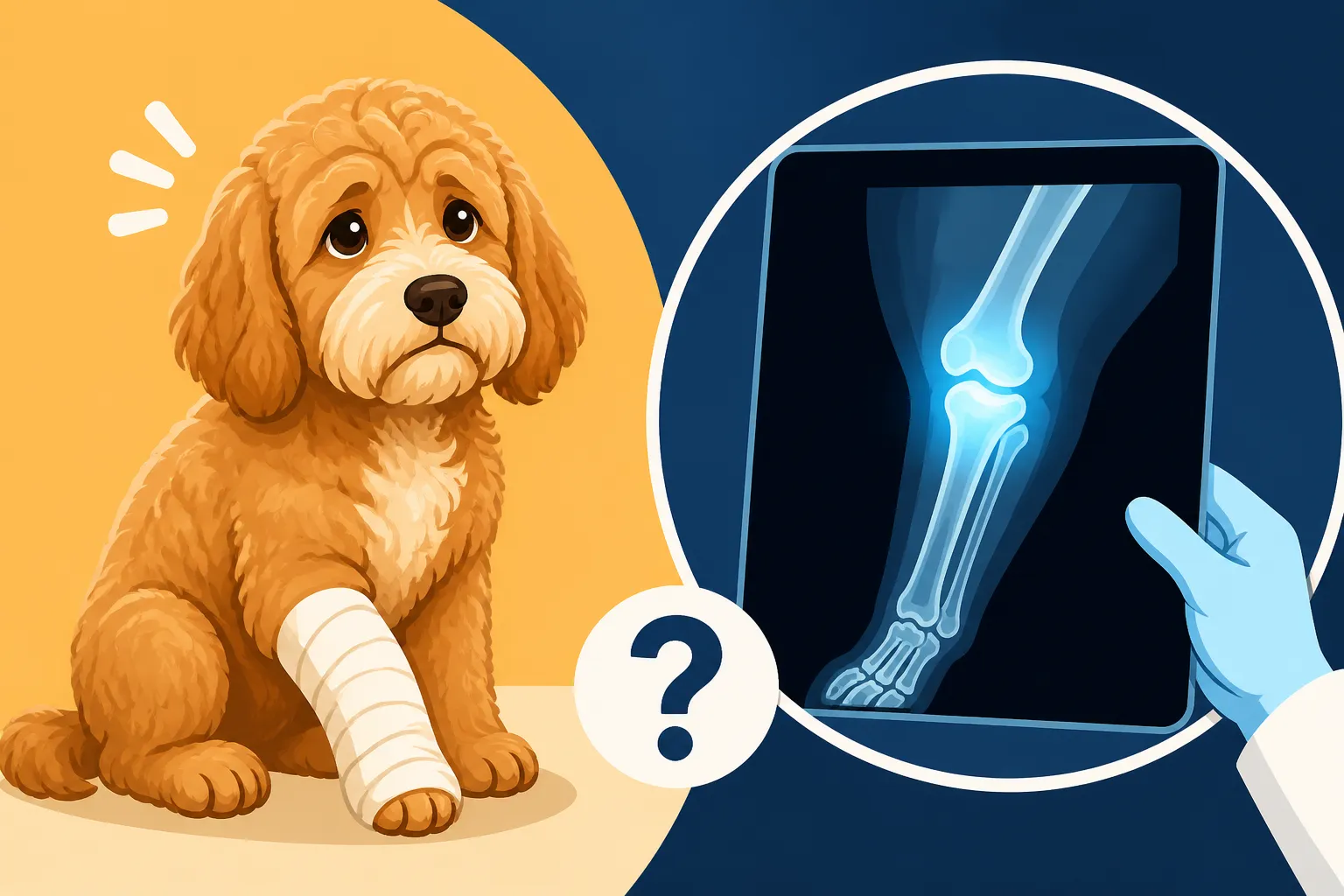
Whether a Lame Cockapoo Needs X Rays
When your beloved Cockapoo suddenly starts limping or holding up a paw, it's a gut-wrenching feeling that immediately fills you with worry. You might wonder if they just stepped on something, twisted an ankle, or if it's a sign of something much more serious brewing beneath their curly coat. This guide is here to walk you through the nuances of lameness in Cockapoos, focusing on when an X-ray might be necessary and what to expect from your vet.
Understanding Lameness in Cockapoos and When to Worry
Lameness in dogs, including our charming Cockapoos, simply means an inability or unwillingness to properly use one or more limbs. It can range from a subtle skip or a slight favoring of a leg to a complete inability to bear weight. The tricky part is figuring out the cause, as it could be anything from a minor bruise to a significant orthopedic issue.
Common Causes of Limping in Cockapoos
Cockapoos, being a mix of Cocker Spaniel and Poodle, inherit a blend of traits and, unfortunately, some predispositions to certain health conditions that can cause lameness. It's not always a dramatic injury that causes a limp; sometimes it's a subtle, ongoing discomfort.
For minor incidents, think of everyday occurrences: a thorn in the paw, a small cut from walking on rough terrain, or a minor muscle strain from an enthusiastic game of fetch. These types of injuries often resolve with a bit of rest and careful observation. You might notice your Cockapoo licking their paw excessively or showing a mild reluctance to put full weight on it for a day or two. Similarly, a sprain from an awkward jump can cause temporary soreness. Sometimes, something as simple as an ingrown nail or a bee sting can cause enough pain for a Cockapoo to limp.
However, Cockapoos can also inherit conditions that manifest as lameness. Patellar luxation, often described as "slipping kneecaps," is a common one, especially in smaller breeds like the Toy or Miniature Poodle side of their lineage. You might notice a sudden skip in their gait, where they hold up a leg for a few steps before putting it down again as if nothing happened. This can be subtle at first but can worsen over time. Slipping Kneecaps in a Toy Cockapoo touches on this more deeply. Hip dysplasia, while more commonly associated with larger breeds, can also affect Cockapoos, particularly those bred from larger Poodles or Cocker Spaniels. This condition involves the malformation of the hip joint, leading to instability and painful arthritis. Less common but equally serious conditions include Legg-Calve-Perthes disease, which affects the hip joint in smaller breeds, and even bone tumors in older dogs, which can cause persistent, unexplained lameness.
Signs Your Cockapoo's Lameness is Serious
While it’s easy to overreact to every little limp, there are definite red flags that signal a trip to the vet is absolutely essential, and often quickly. These aren't the "wait-and-see" kind of symptoms; they require immediate professional attention.
One of the most concerning signs is sudden, severe lameness where your Cockapoo cannot put any weight on a limb at all. If they are hopping on three legs or dragging a limb, that's an emergency. This could indicate a fracture, a severe dislocation, or a torn ligament, all of which are incredibly painful and require urgent care. You might also notice intense vocalization, like yelping or growling, if you try to touch the affected limb.
Persistent lameness is another major concern. If your Cockapoo's limp doesn't improve after a day or two of rest, or if it seems to be getting worse, it's time to see the vet. A limp that comes and goes but never fully resolves could indicate an underlying chronic condition, like early-onset arthritis or a developing orthopedic issue that needs to be addressed before it progresses.
Visible swelling, heat, or deformity around the affected area points to a significant problem. Swelling could mean inflammation, fluid accumulation, or even a soft tissue tear, while heat can indicate infection or severe inflammation. Any unnatural angle or obvious deformity of the limb almost certainly means a fracture or dislocation.
Finally, if lameness is accompanied by other systemic signs of illness, such as fever, loss of appetite, lethargy, or reluctance to move generally, it could indicate a more widespread issue, such as an infection, an autoimmune disease, or even certain types of cancer. For instance, The Autoimmune Diseases a Cockapoo Can Inherit might cause generalized pain and weakness that could present as lameness. These accompanying symptoms elevate the seriousness of the situation beyond a simple sprain. If you notice any of these signs, don't hesitate; call your vet immediately.
The Role of X-Rays in Diagnosing Lameness
When your Cockapoo is limping and the cause isn't immediately obvious, X-rays often become one of the most crucial diagnostic tools a veterinarian has. They allow a peek inside the body, offering invaluable information about bone structure and density.
What X-Rays Can Reveal and What They Can't
X-rays, also known as radiographs, are fantastic for visualizing bone structures. They use radiation to create images where dense materials like bone appear white, and less dense tissues like muscle or fat appear darker. For a limping Cockapoo, this means X-rays are excellent for detecting:
- Fractures and breaks: This is often the first thing a vet looks for in acute lameness. An X-ray can clearly show even tiny hairline fractures or complete breaks in any bone of the limb.
- Dislocations: When a joint's bones are no longer properly aligned, an X-ray will show the displacement. This is critical for conditions like hip or elbow dislocations.
- Arthritis and degenerative joint disease: While X-rays don't show cartilage directly, they can reveal changes in bone structure around joints that indicate arthritis, such as bone spurs (osteophytes), joint space narrowing, and changes in bone density. This is particularly relevant for conditions like hip or elbow dysplasia, where early signs might be subtle changes in the joint. Understanding how these conditions manifest can help you prepare for what to expect, as discussed in Whether a Maxi Cockapoo Grows Into Bad Hips.
- Bone tumors: Abnormal bone growths, whether benign or malignant, can often be identified on an X-ray. These can cause persistent, worsening pain and lameness.
- Growth plate issues: In younger Cockapoos, X-rays can identify problems with growth plates, which are still developing.
- Foreign objects: Sometimes a foreign object, like a piece of metal, can become lodged in a paw or leg and be visible on an X-ray, although soft tissue foreign bodies might be missed.
- Legg-Calve-Perthes Disease: In smaller breeds, this condition (avascular necrosis of the femoral head) involves the degeneration of the hip joint's ball, which X-rays can clearly show.
However, it's important to understand that X-rays have their limitations. They are not ideal for soft tissue visualization. This means they generally cannot directly show:
- Ligament tears: Such as a torn cruciate ligament, which is a common cause of hind-leg lameness. While a vet might infer a ligament tear from secondary signs (like fluid accumulation in the joint or changes in bone position), the ligament itself won't be visible. Torn Cruciates in a Cockapoo highlights the challenges of diagnosing these without advanced imaging.
- Muscle strains or tears: These are purely soft tissue injuries and will not appear on a standard X-ray.
- Cartilage damage: While severe cartilage loss can be inferred from bone-on-bone contact, the cartilage itself isn't seen.
- Nerve damage: Neurological causes of lameness will not be seen on an X-ray.
- Inflammation: General inflammation in soft tissues isn't directly visible.
For these soft tissue issues, your vet might recommend further diagnostics like ultrasound, MRI, or CT scans, which offer a different level of detail.
Preparing Your Cockapoo for X-Rays
Getting X-rays done for your Cockapoo isn't quite like getting one for yourself. Dogs rarely understand the concept of "hold still," especially when they're in pain or feeling anxious. Because of this, sedation or light anesthesia is very often required.
Before the X-rays, your vet will discuss whether sedation is needed. For a simple paw X-ray on a calm dog, it might not be. But for clearer images of joints like hips or elbows, especially if multiple angles are needed, sedation becomes almost essential. It allows the veterinary team to safely position your Cockapoo precisely for the best diagnostic images without causing them stress or discomfort, and critically, without the blurring that can come from movement.
If sedation or anesthesia is recommended, your vet will likely ask you to fast your Cockapoo for a certain number of hours beforehand – typically 8-12 hours for food, though water is usually allowed until shortly before the procedure. This is a crucial safety measure to prevent aspiration (inhaling vomit) if your dog becomes nauseated during or after sedation. They may also run some pre-anesthetic bloodwork to ensure your Cockapoo's organs are functioning properly and can handle the medication. This is especially important for older dogs or those with known health issues.
During the X-ray process, your Cockapoo will be carefully positioned by trained veterinary technicians. They use specialized restraints or sandbags to keep the dog still and in the correct alignment, which is absolutely vital for obtaining clear, diagnostic-quality images. The vet staff will also wear lead aprons and gloves for radiation safety. Afterward, your Cockapoo will be monitored as they recover from the sedation, and once fully awake and stable, they can usually go home, often with specific instructions for continued rest and observation.
When Your Vet Will Recommend X-Rays
Deciding whether a Cockapoo needs X-rays for lameness isn't a snap decision. It's a careful process involving a thorough physical exam, observation, and consideration of the dog's history and symptoms.
Initial Examination and Triage
When you bring your limping Cockapoo to the vet, the first thing they'll do is a comprehensive physical examination. This isn't just a quick look; it's a detective mission. Your vet will want to know all the details: when did the lameness start? Was it sudden or gradual? Has it gotten worse, better, or stayed the same? Does your Cockapoo have any other symptoms? This is where your detailed observations as an owner become invaluable.
Next comes the hands-on part. The vet will perform a gait analysis, which means observing your Cockapoo walk and trot, often from different angles. They'll look for subtle changes in how they bear weight, how they move their limbs, and whether they favor one side. Sometimes, having a video of your dog limping at home can be incredibly helpful, as they might behave differently in the vet clinic.
Then, the vet will carefully palpate (feel) each limb, joint, and muscle. They'll gently flex and extend the joints to check the range of motion, listening and feeling for any clicks, pops, or grinding sensations. They'll also be assessing for pain, swelling, heat, or any muscle atrophy. By systematically examining from the toes up to the hip or shoulder, they can often localize the source of the pain to a specific area. For instance, if your vet suspects something like Legg Calve Perthes in a Small Cockapoo, they will pay close attention to the hip joint and the dog's reaction to its manipulation.
Based on this initial examination, the vet will form a differential diagnosis – a list of possible causes for the lameness. If the examination strongly suggests a bone or joint issue that isn't just a simple soft tissue strain, or if the pain is severe and unexplained, that's when X-rays will likely be recommended. If it seems like a very minor strain, they might suggest a period of rest and anti-inflammatory medication first, and then re-evaluate if the lameness persists.
Specific Scenarios Warranting Immediate X-Rays
While the initial exam guides the decision, certain situations almost always mean X-rays are a priority to get to the bottom of your Cockapoo's lameness quickly and accurately.
Obvious signs of trauma or injury: If your Cockapoo was hit by a car, fell from a height, or suffered any other significant impact, X-rays are crucial. Even if there's no visible wound, internal damage can be severe. A broken bone, even if it's not poking through the skin, needs immediate identification to ensure proper treatment and prevent further injury. Similarly, if your dog's leg looks visibly deformed or positioned at an unnatural angle, an X-ray is the fastest way to confirm a fracture or dislocation.
Inability to bear weight: If your Cockapoo simply cannot put any weight on a limb, it suggests severe pain and likely a major structural problem like a complete fracture, a severe tear in a crucial ligament (like an ACL), or a joint luxation. In these cases, waiting isn't an option, as delayed treatment can lead to worse outcomes.
Persistent or worsening lameness despite conservative treatment: Let's say your vet initially suspected a minor sprain and prescribed rest and anti-inflammatory medication. If, after a few days or a week, your Cockapoo's limp hasn't improved, or even seems to be getting worse, then X-rays become the next logical step. It indicates that the initial diagnosis might have missed an underlying bone or joint problem that isn't responding to simple care. This is especially true if the lameness is intermittent but chronic, suggesting a progressive condition like early arthritis. For example, if you've been managing a mild limp and then suddenly your Cockapoo experiences Arthritis in a Cockapoo at Eleven, X-rays can confirm the extent of joint degeneration.
Suspected developmental orthopedic diseases in young Cockapoos: Conditions like hip or elbow dysplasia, Legg-Calve-Perthes disease, or severe patellar luxation often have genetic components and can present in young, growing dogs. If your vet suspects one of these based on your Cockapoo's breed background, age, and gait, X-rays are essential for early diagnosis and intervention, which can significantly impact their long-term comfort and mobility.
The Cost and Consideration of X-Rays
Let's be real, veterinary care, especially diagnostics like X-rays, can be a significant expense. It's a common worry for pet parents, and it's completely valid to consider the financial aspect. The cost of X-rays for a Cockapoo can vary quite a bit depending on where you live, the veterinary clinic's pricing, and how many views are needed. Generally, you can expect to pay anywhere from $150 to $400 or more, especially if sedation or multiple X-rays of different body parts are required.
Beyond the initial X-ray fee, you also need to factor in potential additional costs if sedation is used, such as pre-anesthetic bloodwork, the anesthesia itself, and monitoring fees. If the X-rays reveal a serious issue that requires specialized interpretation by a veterinary radiologist, there might be an additional charge for that expert review.
So, how do you weigh the benefits against the cost?
First, think about the diagnostic value. An X-ray, despite the cost, can provide definitive answers that save you money in the long run by avoiding prolonged, ineffective treatments based on guesswork. It can identify serious conditions early, allowing for timely intervention that could prevent further pain or permanent damage.
Second, consider your Cockapoo's comfort and quality of life. If they are in significant pain or their lameness is impacting their daily activities, finding the cause quickly is paramount to getting them relief. While X-rays can be expensive, they are a crucial step toward restoring your dog's comfort.
Third, explore pet insurance options. Many pet insurance plans, like those offered by Healthy Paws, can cover a significant portion of diagnostic costs, including X-rays, for accidents and illnesses. If you have pet insurance, it can ease the financial burden and allow you to make decisions based purely on what's best for your Cockapoo's health, rather than your wallet. If you're considering insurance, understanding what it covers for diagnostics is key.
Finally, always have an open conversation with your vet about the estimated costs and your budget. They can often provide a range of options, discussing the pros and cons of proceeding with X-rays versus a trial of conservative management. Sometimes, staging the diagnostics or focusing on the most likely affected area first can help manage costs.
Alternative and Supplementary Diagnostic Tools
While X-rays are incredibly valuable, they're not the only tool in the veterinary diagnostic toolbox. Sometimes, to get a complete picture of what's causing your Cockapoo's lameness, your vet might need to look beyond bones.
Beyond X-Rays: Advanced Imaging Options
When X-rays don't provide a clear answer, or if soft tissue damage is strongly suspected, your vet might recommend more advanced imaging techniques. These are typically more expensive and often require referral to a specialist veterinary hospital, but they offer unparalleled detail.
- Magnetic Resonance Imaging (MRI): This is the gold standard for soft tissue imaging. An MRI uses powerful magnets and radio waves to create detailed images of organs, muscles, tendons, ligaments, and nerves. If your Cockapoo's lameness is suspected to be due to a torn ligament (like a cranial cruciate ligament tear), a muscle injury, or a spinal cord issue causing nerve pain and lameness, an MRI can provide the definitive diagnosis. It's also excellent for detecting subtle changes in bone marrow that might not show up on an X-ray, such as early stages of certain bone diseases or hidden fractures.
- Computed Tomography (CT) Scans: CT scans use X-rays taken from many different angles to create cross-sectional images of the body, which are then compiled by a computer to form detailed 3D images. While X-rays are 2D, a CT offers a much better view of complex bony structures, especially in areas like the spine, skull, or elbow joint. They are fantastic for assessing bone tumors, complex fractures, and early stages of conditions like elbow dysplasia where subtle bone changes are present. CT scans can also show some soft tissue detail, though generally not with the same clarity as an MRI.
- Ultrasound: This technique uses sound waves to create real-time images of soft tissues. While less common for initial lameness diagnosis compared to X-rays, ultrasound can be incredibly useful for examining specific joints (like the shoulder or stifle) for fluid accumulation, ligament/tendon tears, or soft tissue masses. It's often used when a particular soft tissue injury is suspected based on the physical exam. It's also less invasive and doesn't require radiation or typically as much sedation as MRI or CT.
Each of these advanced imaging techniques provides different information, and your vet will recommend the most appropriate one based on the suspected cause of your Cockapoo's lameness.
Bloodwork and Other Tests
Lameness isn't always purely an orthopedic issue. Sometimes, systemic diseases or conditions affecting the entire body can manifest as pain or weakness, leading to a limp. That's where bloodwork and other laboratory tests come in.
- Complete Blood Count (CBC): A CBC can reveal signs of infection (elevated white blood cells), inflammation, or anemia. If your Cockapoo's lameness is accompanied by lethargy, fever, or pale gums, a CBC can help rule out underlying infections or immune-mediated diseases. For instance, The Age Autoimmune Anemia Strikes a Cockapoo can sometimes cause generalized weakness or muscle pain that might resemble lameness.
- Chemistry Panel: This panel assesses organ function (kidneys, liver), electrolyte balance, and blood glucose levels. While not directly diagnostic for lameness, abnormal results could indicate metabolic diseases that cause muscle weakness, bone fragility, or generalized malaise contributing to reluctance to move.
- Tick-borne disease testing: In areas where ticks are prevalent, your vet might recommend testing for diseases like Lyme disease, Anaplasmosis, or Ehrlichiosis. These diseases are notorious for causing shifting leg lameness, joint pain, and fever in dogs, and often won't show up on X-rays. A simple blood test can confirm their presence.
- Joint Fluid Analysis: If the vet suspects an infection within a joint or an immune-mediated arthritis, they might perform an arthrocentesis, which involves drawing a small amount of fluid from the joint for analysis. This can identify inflammatory cells, bacteria, or other abnormalities.
These tests are often used in conjunction with physical exams and imaging to build a complete picture of your Cockapoo's health and accurately diagnose the cause of their lameness. They help rule out systemic issues that might be mimicking or complicating an orthopedic problem.
Managing Lameness and Recovery After Diagnosis
Once your Cockapoo's lameness has been thoroughly diagnosed with the help of X-rays and potentially other tests, the focus shifts to treatment and recovery. This can be a long road, but with the right care, many Cockapoos can return to a happy, active life.
Treatment Options Based on X-Ray Findings
The treatment plan will depend entirely on what the X-rays and other diagnostics reveal. There's no one-size-fits-all approach when it comes to orthopedic issues.
- Conservative Management: For minor sprains, strains, or early-stage arthritis, conservative management is often the first line of defense. This typically includes strict rest, which means limiting activity, no jumping, and often leash walks only. Your vet will likely prescribe anti-inflammatory medications (NSAIDs) to reduce pain and swelling, and possibly pain relievers. Joint supplements like glucosamine and chondroitin, often mentioned in discussions like Whether Glucosamine Helps a Cockapoo, might also be recommended to support joint health, particularly for conditions like arthritis. This approach allows the body to heal itself with support.
- Immobilization: If a simple fracture or stress fracture is identified, the limb might be immobilized with a cast or splint. This keeps the bone stable while it heals, preventing further damage and promoting proper alignment. Regular check-ups and X-rays will be needed to monitor healing progress.
- Surgery: For more severe issues, surgery becomes necessary. This includes:
- Fracture repair: Complex fractures often require surgical intervention with plates, screws, or pins to stabilize the bones for proper healing.
- Ligament repair/replacement: A common example is cranial cruciate ligament (CCL) repair, where surgical techniques like TPLO (Tibial Plateau Leveling Osteotomy) or TTA (Tibial Tuberosity Advancement) are used to stabilize the knee joint after a tear.
- Joint reconstruction: For severe hip or elbow dysplasia, various surgical options exist, from FHO (Femoral Head Ostectomy) to total joint replacement, aiming to alleviate pain and restore function. In cases of severe patellar luxation, surgery might involve deepening the trochlear groove or realigning the quadriceps mechanism.
- Tumor removal: If a bone tumor is found, surgical removal, sometimes combined with other treatments like chemotherapy, might be an option depending on the type and stage of the cancer.
- Amputation: In very severe cases of irreparable injury, advanced cancer, or intractable pain where other treatments have failed, amputation might be considered as a last resort to improve the dog's quality of life and eliminate pain.
The decision for surgery is always made after a thorough discussion with your vet, considering your Cockapoo's age, overall health, the severity of the condition, and your family's circumstances.
Supporting Your Cockapoo Through Recovery
Recovery after an orthopedic injury or surgery is a journey that requires dedication and patience from you as the owner. It's not just about the medical treatment; it's about providing a supportive and safe environment for your Cockapoo to heal.
- Pain Management: Your vet will prescribe pain medication, and it's vital to administer it exactly as directed. Keeping your Cockapoo comfortable is crucial for their well-being and helps facilitate healing. Never give human pain medication without veterinary guidance, as many are toxic to dogs.
- Rest and Activity Restriction: This is arguably the most challenging part for many active Cockapoos! Strict rest means no running, jumping, or rough play. Leash walks for potty breaks only, often in a harness, are usually all that's permitted initially. A crate or small, confined space can be invaluable for managing their activity levels, especially if you have a high-energy pup. This controlled environment is key, whether they've had surgery for Torn Cruciates in a Cockapoo or are recovering from a fracture.
- Physical Rehabilitation (Physiotherapy): For many orthopedic conditions, especially post-surgery, physical therapy can make a world of difference. This might include hydrotherapy (underwater treadmill), therapeutic exercises, massage, passive range of motion exercises, and even modalities like laser therapy. A certified canine rehabilitation therapist can tailor a program to help your Cockapoo regain strength, flexibility, and proper gait, speeding up recovery and preventing muscle atrophy.
- Home Modifications: Simple changes around your house can greatly aid recovery. Non-slip rugs on hard floors can prevent slips and falls, especially for dogs with weak or painful limbs. Ramps can help them get onto furniture or into cars without jumping. If they need help with balance, a support harness can be a lifesaver. Ensure their food and water bowls are easily accessible without straining.
- Monitoring and Follow-up: Regular follow-up appointments with your vet are essential. They will assess your Cockapoo's progress, adjust medications, and might recommend follow-up X-rays to check bone healing. Don't hesitate to contact your vet if you notice any setbacks, increased pain, or new symptoms.
By diligently following your vet's instructions and providing a loving, supportive environment, you give your Cockapoo the best possible chance for a full and comfortable recovery from lameness.
Lameness Symptoms and Diagnostic Needs
| Symptom Description | Immediate Action Needed | Potential Diagnostic Needs |
|---|---|---|
| Mild, intermittent limp (e.g., occasional skip) | Observe for 1-2 days, restrict activity. | Vet exam, possibly rest. |
| Mild limp, no weight bearing on paw after a walk | Check paw for injury (thorn, cut). Rest. | Vet exam, possibly X-rays if no external injury. |
| Sudden, severe non-weight bearing lameness (e.g., hopping) | Emergency vet visit. | X-rays, often sedation, possibly surgery. |
| Limping that worsens over days/weeks | Vet exam. | X-rays, possibly bloodwork. |
| Visible swelling, heat, or deformity of a limb | Urgent vet visit. | X-rays (often immediate), possibly advanced imaging. |
| Lameness with fever, lethargy, loss of appetite | Urgent vet visit. | Bloodwork, X-rays, tick panels. |
| Intermittent "skip" or "bunny hop" in hind leg | Vet exam. | X-rays of knees (patellar luxation). |
| Stiffness, difficulty getting up, reluctance to jump | Vet exam. | X-rays of hips/elbows (arthritis, dysplasia). |
| Pain upon palpation of a specific area | Vet exam. | X-rays of suspected area. |
Disclaimer
The information provided in this article is for general educational purposes only and should not be considered a substitute for professional veterinary advice, diagnosis, or treatment. Always seek the advice of your qualified veterinarian with any questions you may have regarding a medical condition or treatment options for your Cockapoo.