Whether a Heavy Cockapoo Tears a Knee Ligament
It's heartbreaking to see your beloved Cockapoo suddenly lame, hesitant to put weight on a leg, or struggling to do the zoomies they usually adore. Many of us worry about our dogs' joints, and when you have a Cockapoo that might be carrying a few extra pounds, the concern about something as serious as a torn knee ligament becomes very real. This guide is here to shed light on cranial cruciate ligament (CCL) tears in Cockapoos, focusing on how weight plays a crucial role and what you can do to protect your furry friend.
Understanding Cranial Cruciate Ligament Tears in Dogs
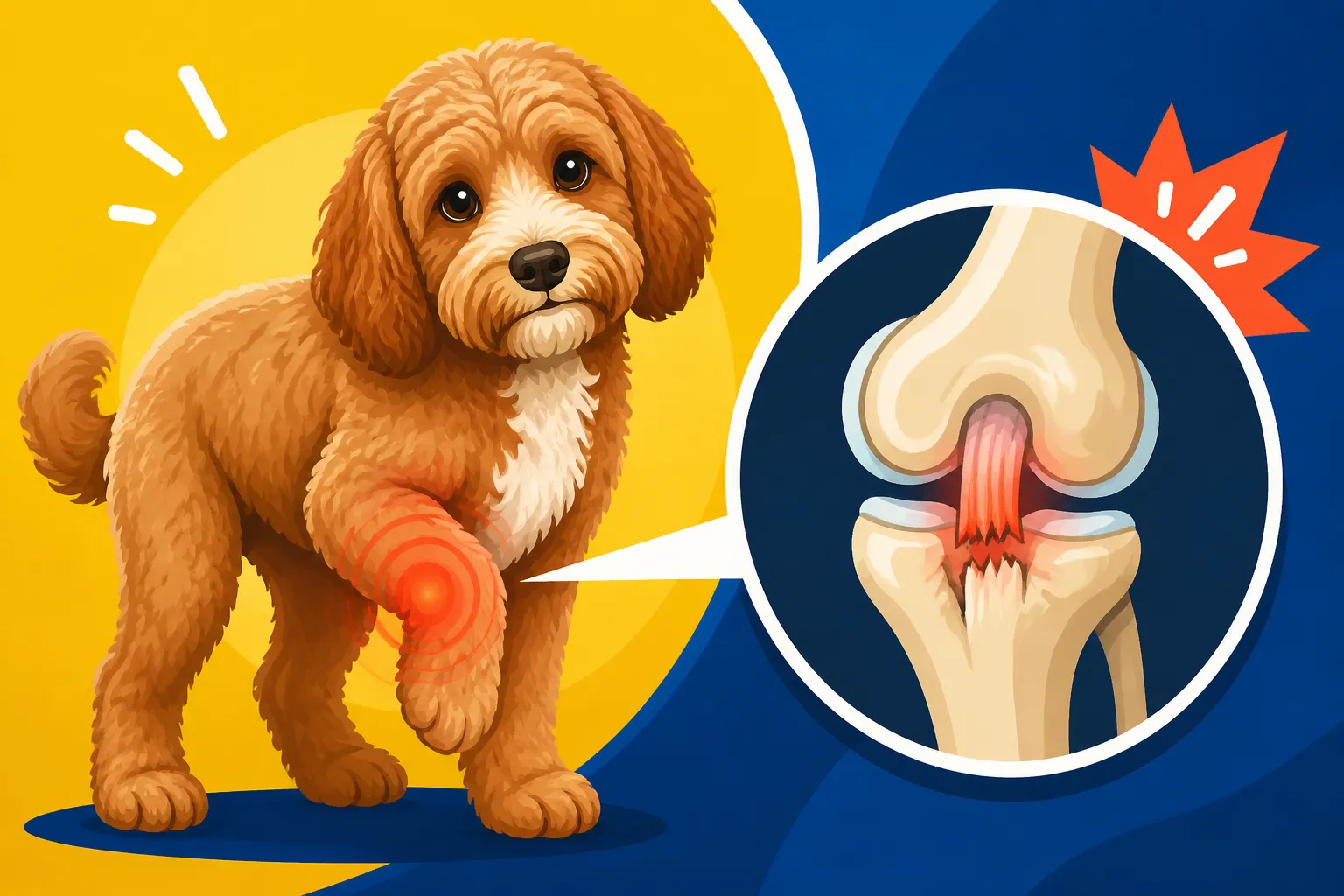
When we talk about a "torn knee ligament" in dogs, we're almost always referring to the cranial cruciate ligament (CCL). It's the equivalent of the anterior cruciate ligament (ACL) in humans, and just like in people, an injury to this vital structure can be incredibly painful and debilitating for our four-legged companions. It’s a common issue that many dog owners, especially those with active breeds or dogs carrying extra weight, eventually face.
The Anatomy of a Dog's Knee and the Crucial Role of the CCL
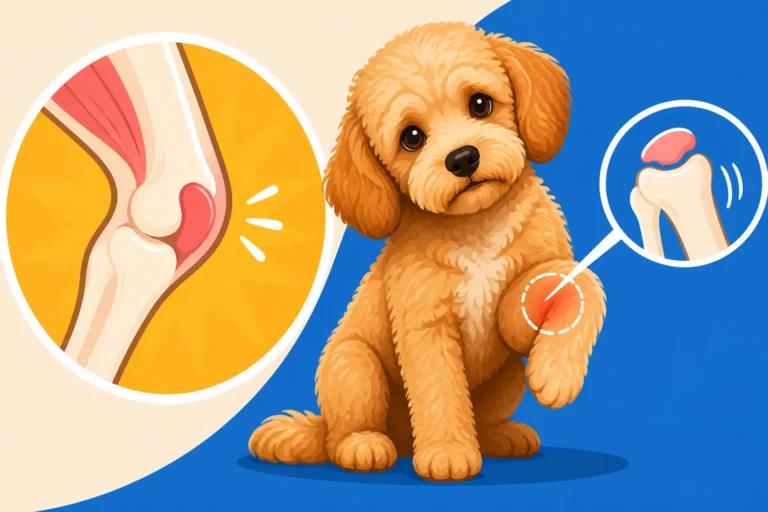
Imagine your dog's knee joint, or stifle, as a complex hinge that allows for bending and straightening of the leg. Inside this hinge are several important structures, and two of the most critical are the cruciate ligaments – the cranial (anterior) and caudal (posterior) ligaments. These two ligaments cross over each other, forming an "X" shape, providing stability to the knee by preventing the tibia (shin bone) from sliding forward relative to the femur (thigh bone), and also limiting internal rotation.
The cranial cruciate ligament is particularly susceptible to injury because it bears a significant amount of the knee's load and is constantly under tension, especially when your Cockapoo runs, jumps, or makes quick turns. When this ligament tears, whether partially or completely, the knee becomes unstable. This instability causes pain, inflammation, and can lead to secondary problems like meniscal tears (damage to the cartilage pads in the knee) and osteoarthritis over time. It's a progressive and often frustrating condition that can severely impact your Cockapoo's quality of life. Understanding this foundational anatomy helps us grasp why maintaining healthy joints is so critical, something you might also think about when considering your dog's overall Joints in a Cockapoo Bred From Four Sizes.
Why Ligaments Tear: Factors Beyond Sudden Injury
While we often associate ligament tears with a sudden, dramatic injury – like a wrong jump during a frisbee catch or a slip on ice – the reality for many dogs, including Cockapoos, is often much more insidious. Most CCL tears are actually the result of chronic degeneration, meaning the ligament weakens and frays over time, much like a worn rope. This weakening can be due to a combination of genetic predispositions, conformation (the way a dog is built), chronic inflammation, and, yes, excessive weight.
For some dogs, a seemingly innocuous movement, like stepping off the couch or turning quickly in the yard, is simply the "last straw" for an already compromised ligament, leading to a sudden rupture. In other cases, the tear can be partial and worsen gradually, with owners noticing intermittent lameness that seems to come and go. It’s a frustrating scenario because there isn’t always a clear, singular event to point to. Instead, it’s often a culmination of factors that slowly erode the integrity of this crucial knee stabilizer. This is why paying attention to any subtle changes in your Cockapoo's gait, even if they don't seem like much, is so important.
The Impact of Excess Weight on Your Cockapoo's Knees
It’s no secret that carrying extra weight isn't healthy for humans, and the same absolutely applies to our canine companions. For a Cockapoo, a breed known for its playful energy, even a few extra pounds can put undue strain on their delicate joints, significantly increasing their risk of knee ligament tears and other orthopedic issues.
How Extra Pounds Stress the Joints
Imagine carrying a backpack filled with bricks everywhere you go, all day, every day. That's essentially what it's like for your dog when they're overweight. Every step, every jump, every movement places additional stress on their joints, especially the knees. This chronic overload accelerates the wear and tear on the CCL, contributing to the degenerative process we discussed earlier. The increased forces on the knee joint can cause micro-traumas to the ligament fibers, leading to inflammation and weakening over time. Eventually, the ligament becomes so compromised that it can no longer withstand even normal daily activities, leading to a partial or complete tear.
Beyond the mechanical stress, excess body fat is also metabolically active and produces inflammatory chemicals. These chemicals can circulate throughout the body, including the joints, contributing to chronic inflammation that further degrades the health of ligaments and cartilage. So, it's not just the physical burden; it's also a systemic issue that impacts overall joint health. Keeping an eye on your Cockapoo's weight is truly one of the most impactful things you can do to safeguard their long-term mobility. It's a factor that also influences other joint issues, such as Slipping Kneecaps in a Toy Cockapoo, which can be exacerbated by extra weight.
The Cockapoo's Predisposition: A Mix of Active Breeds
Cockapoos are a delightful blend of two active and intelligent breeds: the Cocker Spaniel and the Poodle. Both parent breeds contribute certain genetic predispositions that can influence joint health. Cocker Spaniels, for instance, can be prone to certain orthopedic issues, and while Poodles are generally robust, the smaller varieties used in Cockapoos (Miniature and Toy Poodles) sometimes carry predispositions for conditions like luxating patellas (slipping kneecaps), which can, in turn, put extra stress on the CCL.
Because Cockapoos are typically energetic and playful, they are often involved in activities that naturally put stress on their knees – sudden stops, quick pivots, jumping up and down from furniture, or chasing squirrels in the park. If a Cockapoo is also overweight, this combination becomes a recipe for increased risk. The active nature combined with the potential for inherited joint weaknesses means that weight management isn't just a good idea; it's a critical component of preventative care for these wonderful dogs. Understanding this helps you appreciate why a careful breeding program is vital, seeking out breeders who prioritize genetic health testing.
Recognizing the Signs and Seeking Diagnosis
When your dog suddenly isn't their usual bouncy self, it's natural to feel a pang of worry. With knee ligament tears, the signs can sometimes be subtle at first, making it easy to dismiss them as just a "tweak." However, knowing what to look for can make all the difference in getting your Cockapoo the timely care they need.
Spotting the Subtle (and Not-So-Subtle) Symptoms
A torn CCL can manifest in various ways, from a sudden, dramatic limp to a more gradual, intermittent lameness. Here’s what you should keep an eye out for:
- Sudden Lameness: This is the most obvious sign. Your Cockapoo might suddenly stop putting weight on one of their hind legs, or hold it up entirely after a playful burst. This can happen if the ligament ruptures completely.
- Toe-Touching: They might try to walk, but only lightly touch their toes to the ground, avoiding full weight-bearing on the affected leg.
- Reluctance to Play or Jump: If your usually enthusiastic Cockapoo suddenly seems hesitant to jump onto the couch, climb stairs, or engage in their favorite games, it could be due to knee pain.
- Stiffness After Rest: You might notice they are very stiff when getting up after a nap, but seem to "warm out of it" a bit after moving around. This is common with partial tears or early stages of degeneration.
- Swelling Around the Knee: In some cases, you might be able to feel some swelling around the knee joint.
- Muscle Atrophy: Over time, if the leg isn't being used properly, the muscles in the affected thigh might start to waste away, appearing thinner than the healthy leg.
- "Sitting Sideways" or "Positive Sit Test": A dog with a CCL tear often avoids flexing the injured knee fully when sitting. Instead of sitting squarely, they might extend the affected leg out to the side. This is a classic, though not always present, indicator.
It’s crucial not to ignore these signs, even if they seem to improve temporarily. Dogs are masters at masking pain, and what looks like a minor issue could be the precursor to something more serious. If you notice a change in your Cockapoo's mobility, a call to your vet is definitely in order. Sometimes, a subtle change in your dog's stride is also an indicator of hip issues, similar to "The Gait That Gives Away a Cockapoo's Bad Hips."
What to Expect at the Vet: Diagnosis Steps
When you bring your Cockapoo in for suspected knee pain, your veterinarian will perform a thorough physical examination. This typically involves:
- Observation: The vet will watch your dog walk, stand, and sit to assess their gait and posture.
- Palpation: They will gently feel the knee joint, looking for swelling, instability, and pain.
- Cranial Drawer Test: This is the hallmark diagnostic test for CCL tears. The vet will try to manually move the tibia forward relative to the femur. If the CCL is torn, there will be abnormal "drawer motion" or laxity.
- Tibial Compression Test: Another common test where the vet flexes the ankle joint, which causes the gastrocnemius muscle to push the tibia forward. If the CCL is torn, the tibia will move abnormally forward.
- Sedation: Often, for an accurate diagnosis, especially in muscular or tense dogs, the cranial drawer and tibial compression tests need to be performed under light sedation. This allows the muscles to relax, making it easier to detect subtle instability.
- X-rays (Radiographs): While X-rays don't directly show the ligament (ligaments are soft tissue and don't show up well), they are invaluable for several reasons:
- They can rule out other bone injuries, such as fractures or bone tumors.
- They can show signs of chronic arthritis, which often develops after a CCL tear.
- They help the vet assess the overall joint health and plan for potential surgery.
- They can reveal changes in joint fluid or bone spurs indicative of long-standing instability.
Receiving a diagnosis of a torn CCL can be overwhelming, but remember that many treatment options are available, and your vet will guide you through the best course of action for your Cockapoo.
Treatment and Recovery Options for a Torn CCL
Discovering your Cockapoo has a torn knee ligament is tough news. It’s a painful condition, and the path to recovery often requires significant commitment from both you and your dog. Thankfully, veterinary medicine offers several effective approaches, from surgical repairs to comprehensive non-surgical management, designed to get your Cockapoo back on their paws.
Surgical Interventions: When and Why
For most dogs, especially those over 25-30 pounds, surgical repair is considered the gold standard for treating a torn CCL. This is because non-surgical management alone often leads to continued instability, pain, and the accelerated development of debilitating osteoarthritis. There are several surgical techniques, each with its own benefits and considerations:
- Tibial Plateau Leveling Osteotomy (TPLO): This is one of the most common and successful procedures. The surgeon cuts and rotates the top part of the tibia (the tibial plateau) to change the angle of the joint. This effectively neutralizes the forces that cause the tibia to slide forward, making the knee stable without relying on the damaged CCL. TPLO offers excellent long-term results, especially for larger or more active dogs, and often has a faster return to function compared to some other surgeries.
- Tibial Tuberosity Advancement (TTA): Similar to TPLO, TTA also aims to change the biomechanics of the knee. In this procedure, the front part of the tibia (tibial tuberosity) is advanced forward, altering the pull of the quadriceps muscle to stabilize the joint. It's often considered for certain anatomical conformations.
- Lateral Suture (Extracapsular Repair): This is a traditional technique where a strong suture material is placed outside the joint capsule to mimic the function of the torn CCL, providing stability. It's generally less invasive and less expensive than TPLO or TTA. While it can be effective, especially for smaller, less active dogs (like some Cockapoos), or those with partial tears, it may not provide the same long-term stability for larger, more active, or overweight dogs as the bone-altering surgeries.
The choice of surgery will depend on several factors: your Cockapoo's size, age, activity level, overall health, the extent of the tear, and your veterinarian's or orthopedic surgeon's expertise. It's a significant decision, both emotionally and financially, especially considering What Patella Surgery Costs on a Cockapoo (though CCL surgery often carries a higher price tag).
Non-Surgical Approaches and Supportive Care
While surgery is often recommended, especially for larger dogs or complete tears, non-surgical management can be an option for very small, less active dogs, those with partial tears, or when surgery isn't feasible due to other health concerns. It typically involves:
- Strict Rest and Activity Restriction: This is paramount. Weeks, sometimes months, of limited activity (leash walks only, no jumping, running, or stairs) are necessary to allow the knee to stabilize, often through the formation of scar tissue.
- Anti-inflammatory Medications: Non-steroidal anti-inflammatory drugs (NSAIDs) will be prescribed to manage pain and reduce inflammation.
- Joint Supplements: Supplements containing glucosamine, chondroitin, and omega-3 fatty acids can help support joint health and reduce inflammation. These are often recommended for long-term use, and you might wonder Whether Glucosamine Helps a Cockapoo even without a diagnosed tear.
- Weight Management: This is critical, as we've discussed. Reducing excess weight dramatically reduces the load on the injured knee and improves the chances of success with non-surgical management.
- Physical Rehabilitation: Once initial pain is controlled, gentle physical therapy, including passive range of motion exercises, controlled walks, and eventually hydrotherapy, can help maintain muscle mass and joint function.
It’s important to have realistic expectations with non-surgical management. While some dogs can do well, others may continue to experience lameness and progressive arthritis. This approach usually requires a longer and more dedicated commitment to strict activity modification and often leads to a less robust recovery compared to surgical options.
The Road to Recovery: Post-Op Care and Rehabilitation
Regardless of the treatment path chosen, recovery from a torn CCL is a marathon, not a sprint. Surgical recovery typically involves:
- Strict Confinement: For the first few weeks, your Cockapoo will need to be confined to a crate or a small, restricted area to prevent them from putting too much stress on the healing joint.
- Controlled Leash Walks: Gradually, very short, controlled leash walks will be introduced to encourage gentle weight-bearing and muscle use.
- Medication Management: Pain medications and anti-inflammatories will be crucial in the initial post-operative period.
- Physical Rehabilitation: This is key for optimal recovery. A certified canine rehabilitation therapist can guide you through exercises like passive range of motion, balance work, controlled inclines, and eventually, hydrotherapy (swimming or underwater treadmill). This helps rebuild muscle mass, improve range of motion, and restore proprioception (awareness of limb position).
- Long-Term Monitoring: Even after full recovery, ongoing monitoring for signs of arthritis and managing weight will be important to maintain joint health. Many dogs who tear one CCL are also at a higher risk of tearing the CCL in the other knee, sometimes within a year or two.
The recovery period can be challenging, requiring patience and dedication. But with proper care and rehabilitation, most Cockapoos can return to a good quality of life, enjoying their usual activities, albeit sometimes with some modifications.
Proactive Steps: Protecting Your Cockapoo's Joints
Preventing a torn CCL is always better than treating one. While we can't eliminate all risks, especially those rooted in genetics, there are significant steps you can take as a Cockapoo owner to promote healthy joints and reduce the likelihood of this painful injury.
Maintaining an Ideal Weight
This cannot be stressed enough: weight management is perhaps the single most important preventative measure for joint health. For a Cockapoo, who typically ranges from 12 to 30 pounds depending on whether they're Toy, Miniature, or Maxi, even a few extra pounds can make a huge difference to the load on their knees.
How do you know if your Cockapoo is at an ideal weight?
- Rib Check: You should be able to easily feel their ribs with light pressure, but not see them prominently.
- Waistline: They should have a noticeable waist when viewed from above, tapering in after the rib cage.
- Abdominal Tuck: From the side, their abdomen should tuck up slightly, rather than hanging low or appearing straight across.
If your Cockapoo is overweight, work with your vet to create a safe and effective weight loss plan. This will likely involve reducing calorie intake and increasing appropriate exercise. Remember, portion control is key, and those extra treats add up quickly! Making sure your dog is at an ideal weight is a cornerstone of ensuring they can enjoy The Fourteen to Eighteen Years a Cockapoo Lives to the fullest.
Smart Exercise and Nutrition Strategies
Beyond weight, the type and amount of exercise, along with a balanced diet, play a crucial role in joint health.
- Appropriate Exercise: Cockapoos are energetic and love to play, but intense, high-impact activities, especially on slippery surfaces, can put sudden stress on ligaments. Instead, focus on consistent, moderate exercise. Regular walks, playful romps in the yard (avoiding extreme twisting or jumping), and controlled swimming are excellent low-impact options. If your Cockapoo loves to chase, try to manage their movements to reduce sudden stops and starts. Think about what The Miles a Cockapoo Wants Every Day entails, and how you can meet that need safely.
- Warm-Up and Cool-Down: Just like human athletes, dogs benefit from a warm-up before intense play and a cool-down afterward. A few minutes of gentle walking before a run and after can help prepare muscles and joints.
- Nutrition for Joint Health: Feed a high-quality dog food appropriate for your Cockapoo's age, size, and activity level. Some foods are formulated with joint-supporting ingredients. For some dogs, a veterinarian may recommend specific joint supplements like glucosamine, chondroitin, or omega-3 fatty acids, which have anti-inflammatory properties and can support cartilage health. Always consult your vet before adding supplements to your dog's diet.
The Role of Preventative Care and Pet Insurance
Regular veterinary check-ups are vital. Your vet can monitor your Cockapoo's weight, assess their gait, and discuss any early signs of joint issues. Catching problems early often leads to better outcomes and can sometimes prevent a full-blown crisis.
Pet insurance is another important consideration. The cost of diagnosing and surgically treating a torn CCL can be substantial, often ranging from $3,000 to $7,000 or more per knee, depending on the chosen surgical procedure, location, and post-operative rehabilitation. Having a comprehensive pet insurance plan, such as one from Healthy Paws, can significantly alleviate the financial burden of these unexpected expenses. Policies typically cover diagnostics, surgery, medications, and rehabilitation, allowing you to make medical decisions based on what’s best for your Cockapoo, rather than solely on your wallet. It's wise to investigate plans and understand their coverage for orthopedic conditions before your dog ever shows symptoms, as most plans won't cover pre-existing conditions. Many owners realize the true value of pet insurance only after facing a major health issue, and a CCL tear is definitely one of those. Consider researching What Insuring a Cockapoo Runs Monthly to factor this into your budget.
Disclaimer
The information provided in this article is for general informational purposes only and is not a substitute for professional veterinary advice. Always consult with a qualified veterinarian for any health concerns or before making any decisions related to your pet's health and treatment.