What the Cockapoo Clubs Mean by F1 and F1b
Navigating the world of Cockapoos can feel a bit like learning a secret language, especially when breeders start tossing around terms like "F1" and "F1b." For prospective owners, this can be incredibly confusing, leading to uncertainty about what kind of dog you're actually getting. This guide aims to demystify these generational labels, explaining exactly what they mean and why they're important for understanding your Cockapoo's potential traits, from coat type to temperament.
Understanding the Basics of Cockapoo Generations
When you're looking for a Cockapoo, you're looking at a crossbreed that has been around for decades, even predating the popular "doodle" craze we see today. The Doodle That Predates the Word means there's a bit of history to these designations. The generational labels are essentially a shorthand way to describe the parentage of a Cockapoo, indicating how far removed a specific dog is from its purebred Cocker Spaniel and Poodle ancestors. It's not just a fancy term; it tells you a lot about the genetic blend you're bringing home.
What "F1" Truly Means in the World of Doodles
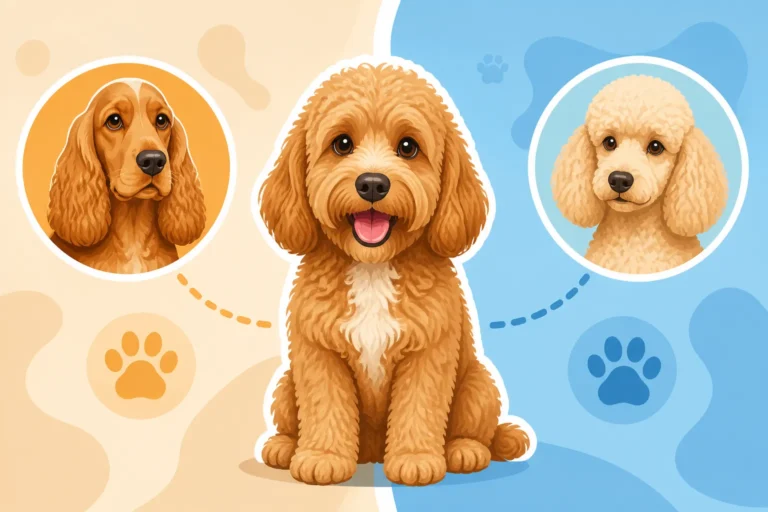
An "F1" Cockapoo stands for "first generation." This means the puppy is the direct offspring of two purebred parents: a Cocker Spaniel and a Poodle. Think of it as the original mix, a 50/50 split of genes from each parent breed. This is the foundation of the Cockapoo, where the characteristics of both the Cocker Spaniel and the Poodle come together for the very first time in that particular lineage.
When you're looking at an F1 litter, you're often seeing a wide variety in puppy appearance and temperament, simply because the genetic dice are being rolled in a new way. Each puppy in that litter will inherit a unique combination of traits from its purebred parents. Some might lean more towards the Cocker Spaniel side with a slightly wavier coat and a more pronounced spaniel muzzle, while others might display more Poodle characteristics like tighter curls and a longer, leaner build. It's truly a genetic lottery in the best way, making each F1 Cockapoo a distinct individual.
The Importance of Parent Breeds in F1 Cockapoos
The quality and health of the purebred parents are paramount for an F1 Cockapoo. Since this is the first cross, any genetic predispositions from either the Cocker Spaniel or the Poodle parent will have a direct impact on the F1 offspring. A responsible breeder will have thoroughly health-tested both parent dogs for conditions common to their respective breeds, such as hip dysplasia, eye conditions like PRA, and other inherited diseases. Whether Both Cockapoo Parents Must Be prcd-PRA Clear is a crucial question to ask any breeder, as is understanding Familial Nephropathy and the Kidneys a Cockapoo Can Inherit.
The specific type of Cocker Spaniel (American or English) and Poodle (Toy, Miniature, or Standard) used also plays a significant role in the F1 Cockapoo's potential size, coat, and temperament. For example, a Cockapoo bred from an English Cocker Spaniel might have a slightly different build and energy level than one from an American Cocker. Similarly, a Miniature Poodle parent will produce a different size of Cockapoo than a Toy Poodle. These choices by the breeder are fundamental to the characteristics of the F1 puppies, and understanding them helps you anticipate your puppy's adult traits.
Diving Deeper into F1b Cockapoos
Once you move beyond the F1 generation, you enter the realm of backcrossing, which is where the "b" in F1b comes into play. This generation is often sought after for specific reasons, particularly regarding coat type and shedding. It represents a more targeted approach to breeding, aiming to solidify certain desired traits that might be more variable in an F1 litter.
Decoding the "b" in F1b: Backcrossing Explained
An "F1b" Cockapoo is the result of breeding an F1 Cockapoo back to one of the original purebred parent breeds. Most commonly, an F1 Cockapoo is bred with a purebred Poodle. So, an F1b Cockapoo is typically 75% Poodle and 25% Cocker Spaniel. The "b" quite literally stands for "backcross." This deliberate breeding strategy is employed to amplify certain traits, usually those associated with the Poodle, such as the non-shedding, hypoallergenic coat qualities.
The reason for backcrossing to a Poodle is usually to increase the likelihood of a curlier, lower-shedding coat. While F1 Cockapoos can have a range of coats, from wavy to curly, F1b Cockapoos often exhibit a more consistently curly coat. This makes them a popular choice for individuals or families with allergies or those who simply prefer minimal shedding. It’s a purposeful step in breeding to help steer the genetic outcome towards a more predictable set of characteristics.
The Purpose and Potential Outcomes of F1b Breeding
The primary purpose of F1b breeding is to reinforce desirable Poodle traits, mainly the coat. If you're someone who is very sensitive to dog dander or simply doesn't want to deal with much shedding, an F1b might be a more predictable choice than an F1. However, it's important to remember that genetics are never 100% guaranteed. While the likelihood of a non-shedding, hypoallergenic coat is higher in an F1b, there's always a slight chance for variation.
The outcomes of F1b breeding can also extend beyond just the coat. With a higher percentage of Poodle genetics, an F1b Cockapoo might also display more Poodle-like intelligence, energy levels, and even certain physical characteristics. They might be a bit more slender or have a more refined muzzle compared to some F1 Cockapoos. It's about understanding that you're leaning more heavily into one side of the genetic equation, and with that comes a shift in the typical Cockapoo profile. Always discuss these potential outcomes thoroughly with your breeder.
Why Generation Matters to Cockapoo Owners
Understanding the difference between F1 and F1b isn't just academic; it has real-world implications for your life with a Cockapoo. From how often you'll be grooming to what kind of personality quirks you might encounter, the generational designation offers valuable clues. This information helps you make an informed decision and ensures you're prepared for the specific needs of your future furry family member.
Coat Types and Shedding Potential Across Generations
This is often the biggest deciding factor for many potential Cockapoo owners. The "furnishings" gene, which gives Cockapoos their signature teddy bear look and contributes to their low-shedding qualities, is key here. The Furnishings Gene That Decides a Cockapoo's Face is present in Poodles and often in Cockapoos. In F1 Cockapoos, you can see a wide spectrum of coats. Some might have a straighter, wavier coat that sheds a bit more, while others will have a curlier coat with minimal shedding. It's truly a coin flip, and sometimes people are surprised by how much their F1 sheds. Whether an F1 Cockapoo's Coat Is a Coin Flip accurately describes this variability.
F1b Cockapoos, with their higher Poodle percentage (usually 75%), are generally bred to have a curlier coat, significantly reducing the chances of shedding. This makes them a preferred choice for individuals with allergies or those who desire a truly low-shedding dog. However, that curlier coat comes with its own set of demands; it's often more prone to matting and requires diligent grooming. You'll likely spend more time brushing an F1b to keep tangles at bay, and regular professional grooming appointments will be essential. Products available at places like Chewy can help keep their intricate coats in top condition between grooms.
Temperament and Health Considerations in F1 vs. F1b
While coat is a major differentiator, temperament and health are also influenced by generational breeding. F1 Cockapoos, being a true 50/50 mix, tend to embody a balanced blend of both parent breeds. They often inherit the intelligence and trainability of the Poodle, combined with the eager-to-please, affectionate nature of the Cocker Spaniel. This can result in a well-rounded dog that adapts well to various family dynamics.
With F1b Cockapoos, having a higher percentage of Poodle genetics can sometimes mean a slight leaning towards Poodle traits in terms of energy and intellect. Poodles are incredibly smart and can be quite active, so an F1b might require a bit more mental stimulation and exercise to stay happy and out of mischief. When it comes to health, both generations benefit from careful breeding and health testing of the parents. Responsible breeders will perform genetic screening for common conditions affecting both Cocker Spaniels and Poodles. Always inquire about The Five Certificates a Cockapoo Breeder Should Show for either an F1 or F1b puppy. Regardless of generation, a Cockapoo's health is intrinsically linked to the diligence of its breeder.
The Role of Cockapoo Clubs in Defining Generations
It's easy to assume that all Cockapoo breeders follow a single, universally accepted rulebook, but the reality is a little more nuanced. Because the Cockapoo is not recognized by major kennel clubs like the AKC, organizations dedicated to the breed have emerged to provide guidance and structure. These clubs play a crucial role in establishing definitions for generational breeding, though their approaches might vary.
How Clubs Categorize and Track F1 and F1b Litters
Cockapoo clubs, such as the Cockapoo Club of America (CCA) and the American Cockapoo Club (ACC), have stepped in to provide some much-needed structure and standards for the breed. Two Clubs and Two Definitions of a Cockapoo makes it clear that while both aim for the betterment of the breed, their specific rules and definitions for generations might have subtle differences. Generally, these clubs meticulously track the lineage of parent dogs to correctly classify litters as F1, F1b, or even further generations.
Breeders who are members of these clubs will typically submit documentation proving the purebred status of the Cocker Spaniel and Poodle parents for F1 litters, or the F1 status of one parent and purebred status of the other for F1b litters. This tracking is vital for maintaining transparency and helping prospective owners understand the genetic makeup of their puppy. It also helps uphold a certain level of breeding ethics, ensuring that breeders are not misrepresenting their puppies' heritage. If you're purchasing items like toys or food from an online retailer like Chewy, knowing your dog's generation can sometimes help guide choices specific to potential coat or temperament needs.
Expectations and Guidelines from Reputable Clubs
Reputable Cockapoo clubs establish specific guidelines for breeders, which often include health testing requirements for parent dogs, ethical breeding practices, and clear definitions for generational crosses. For example, What the Cockapoo Club of America Set in 1999 provided early clarity on these matters. These guidelines are designed to promote the health and well-being of Cockapoos and to help maintain consistency within the breed, even without formal recognition from larger kennel clubs.
A club-registered F1 or F1b Cockapoo often comes with the assurance that the breeder has adhered to these standards. This might mean that the parent dogs have undergone specific health screenings, ensuring a lower risk of inherited diseases for the puppies. While Whether Either Club's Standard Is Authoritative can be debated since they are not unified, adhering to any club's rigorous standards generally indicates a more responsible and transparent breeder. Always ask to see proof of registration and adherence to club guidelines when considering a puppy.
Navigating the Purchase: Questions for Breeders
Choosing a Cockapoo puppy, whether F1 or F1b, is a significant decision. The breeder you choose is paramount, as their practices directly impact the health, temperament, and overall quality of your future companion. Asking the right questions is not just about being thorough; it’s about protecting yourself and ensuring you bring home a happy, healthy dog. Don't be shy about digging deep and getting all the information you need.
Essential Inquiries for F1 Cockapoo Breeders
When you're considering an F1 Cockapoo, your questions should focus heavily on the purebred parents. You're looking for evidence that both the Cocker Spaniel and Poodle parents are healthy, well-tempered, and have been thoroughly health-tested. Ask to see the health certificates for both parents. This includes hip and elbow scores, eye certifications (like OFA or CERF), and genetic testing for conditions like Progressive Retinal Atrophy (PRA) and Familial Nephropathy (FN). The FN DNA Test a Cockapoo Breeder Runs and Asking for a Cockapoo's Eye Certificates are absolutely critical.
Beyond health, inquire about the temperament of the parent dogs. Are they friendly, calm, and well-socialized? Remember, the F1 generation is a fresh genetic mix, so understanding the foundation stock is key. Ask about their living conditions and if you can meet them. A good breeder will be transparent and proud to show you their facilities and dogs. They should also be able to explain their breeding philosophy and how they chose these specific parent dogs for their F1 litter. Reputable breeders are often passionate about matching their puppies to the right homes and will ask you questions too.
What to Ask About F1b Cockapoo Parents
For an F1b Cockapoo, your questions will build upon those for an F1, but with a specific focus on the F1 parent and the purebred Poodle parent. You'll want to see the health clearances for the purebred Poodle, just as you would for an F1 parent. Additionally, you need to ask for the health clearances of the F1 Cockapoo parent. This means ensuring that the F1 Cockapoo was also bred from health-tested purebred parents, effectively extending the health screening back two generations.
Inquire about the F1 Cockapoo parent's coat type and shedding level, as this will give you an even better indication of what to expect in the F1b puppies. Ask to see photos or videos of the F1 parent and its purebred parents, if possible. A breeder should also be able to explain why they chose to backcross to a Poodle (or Cocker Spaniel, though less common for F1b) and what specific traits they were aiming to achieve. For instance, they might be targeting a very specific curl pattern or an even lower shedding rate, which can influence your grooming routine with products from Chewy. Don't hesitate to ask for references from previous puppy buyers.
Comparing F1 and F1b Cockapoos
To help solidify your understanding, here's a quick comparison of the key differences and similarities between F1 and F1b Cockapoos. This table aims to summarize the most common characteristics, but remember that individual dogs can always vary.
| Feature | F1 Cockapoo (Cocker x Poodle) | F1b Cockapoo (F1 Cockapoo x Poodle) |
|---|---|---|
| Genetic Makeup | Approximately 50% Cocker Spaniel, 50% Poodle | Approximately 25% Cocker Spaniel, 75% Poodle |
| Shedding Level | Variable; can be low to moderate. Some shed more than others. | Generally very low shedding; higher likelihood of non-shedding. |
| Coat Type | Variable; can range from wavy to loose curls. | More consistently curly, often tighter curls. |
| Grooming Needs | Moderate to high, depending on curl. Regular brushing essential. | High; requires diligent daily brushing to prevent matting, regular professional grooms. |
| Allergy Friendliness | Varies; may trigger allergies in sensitive individuals. | More suitable for allergy sufferers due to higher Poodle genetics. |
| Temperament | Balanced blend of both parent breeds. | May lean slightly more towards Poodle traits (intelligence, energy). |
| Predictability | Less predictable in terms of coat and shedding. | More predictable for low shedding and curly coat. |
Beyond F1 and F1b: Other Generations to Consider
While F1 and F1b are the most commonly discussed Cockapoo generations, the breeding landscape can extend to F2, F2b, and even multi-generational (Multigen) Cockapoos. Each subsequent generation involves further crossing within the Cockapoo lines or backcrossing to purebreds, often with the goal of solidifying desired traits or further reducing variability.
What F2 and F2b Mean for Cockapoos
An "F2" Cockapoo is the result of breeding two F1 Cockapoos together. This generation often presents even more genetic variability than an F1. Because both parents carry a mix of Cocker Spaniel and Poodle genes, the combination of these genes in the offspring can be quite diverse. You might see a wider range of coat types, colors, and even temperaments within an F2 litter. While some F2s will have that ideal wavy or curly coat, others might revert to a straighter, more shedding coat. This variability is why some breeders and owners prefer F1 or F1b.
An "F2b" Cockapoo, similar to the F1b concept, involves backcrossing an F2 Cockapoo to a purebred Poodle. This is typically done to introduce more Poodle genetics back into the line, aiming for a more consistent non-shedding, curly coat, similar to the F1b but starting from an F2 base. It's another attempt to guide the genetic outcome towards specific, desired characteristics, often for allergy sufferers or those seeking a very particular coat type. Understanding these deeper generations helps you appreciate the complexities of responsible breeding.
The Rise of Multi-Generational Cockapoos
"Multi-generational" or "Multigen" Cockapoos are those whose lineage extends beyond the F2 or F2b generations, often involving several generations of Cockapoo-to-Cockapoo breeding. The goal of Multigen breeding is to create a more consistent "type" of Cockapoo, where traits like coat, size, and temperament become more predictable within the line. This is a step towards potentially establishing the Cockapoo as a recognized breed, with its own specific standards. Whether Multigen Breeding Is Making a Cockapoo Breed is a big question in the community.
Breeders of Multigen Cockapoos often focus on refining desirable characteristics and minimizing undesirable ones through selective breeding over several generations. This can lead to a more uniform litter compared to early generations. However, it also requires an even deeper commitment to health testing and careful selection of breeding pairs to avoid inadvertently concentrating genetic health issues. For pet supplies like food, beds, and grooming tools, platforms like Chewy cater to all Cockapoo generations, providing diverse options for their varying needs.
Disclaimer
This article is for general informational purposes only and does not constitute professional advice. Laws, prices and regulations vary by location and change over time. Consult a qualified professional for guidance on your specific situation.