What an FF Result Means on a Cockapoo
When you're embarking on the exciting journey of finding a Cockapoo puppy, it’s natural to feel overwhelmed by all the terminology breeders use, especially when it comes to coat genetics. You might hear about DNA tests and different 'results,' and one that often pops up is "FF" in relation to coat type. It can feel like you need a genetics degree just to understand what you're looking at, and it’s frustrating when you just want to know what kind of fur baby you're bringing home. This guide is here to demystify what an FF result means for a Cockapoo, helping you understand its impact on shedding, grooming, and what you can expect from your future furry companion.
Decoding the Furnishings Gene
Let's start by breaking down what "furnishings" actually are in the world of doodles and why they're such a big deal. When we talk about furnishings, we're referring to those lovely, longer hairs that give Cockapoos their signature teddy bear look: the prominent beard, mustache, and eyebrows. These aren't just cosmetic; they play a huge role in how much a dog sheds and how their coat behaves.
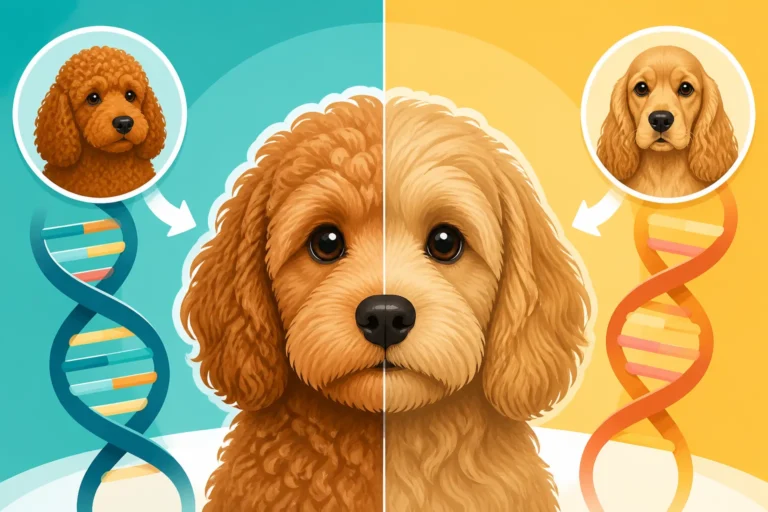
The presence or absence of these furnishings is determined by a specific gene, often referred to as the R-Spondin 2 (RSPO2) gene, but for simplicity, we usually talk about the 'F' gene. Every dog inherits two copies of this gene, one from each parent. The 'F' allele (for furnished) is dominant, and the 'f' allele (for unfurnished, sometimes called 'improper coat') is recessive.
- FF (Homozygous Furnished): This is what your "FF result" refers to. It means your Cockapoo has inherited two copies of the dominant 'F' gene (F from one parent, F from the other). This genotype guarantees that your dog will have furnishings. They will have that lovely facial hair, and this is generally considered the ideal genotype for a low-shedding doodle coat.
- Ff (Heterozygous Furnished): A Cockapoo with an Ff result has inherited one 'F' gene and one 'f' gene. Because 'F' is dominant, these dogs will also have furnishings. They will look just like an FF dog, complete with a beard and eyebrows. However, since they carry a recessive 'f' gene, they can pass that 'f' gene on to their offspring if they are ever bred.
- ff (Improper Coat or Unfurnished): This means the Cockapoo has inherited two copies of the recessive 'f' gene (f from one parent, f from the other). Dogs with this genotype will not have furnishings. They will have a smoother face, often looking more like a Cocker Spaniel or Poodle without the characteristic doodle facial hair. These dogs are often referred to as having an "improper coat," and they will typically shed more than their furnished counterparts.
Understanding these genetic combinations is crucial because it helps you, as a prospective owner, make an informed decision, especially if you're hoping for a low-shedding dog. You can learn more about What an Improper Coated Cockapoo Looks Like if you're curious about the 'ff' outcome.
What an FF Result Promises for Your Cockapoo's Coat
So, you've got a Cockapoo with an FF result. What does that actually mean for the coat you'll be living with every day? In essence, an FF result is a strong indicator that your Cockapoo will possess the hallmark "doodle look" with distinct facial furnishings. Think of that adorable, fluffy face that drew you to the breed in the first place – that's what FF helps ensure.
The most significant promise of an FF result is the presence of those specific longer hairs on the muzzle, around the eyes, and on the legs. This is what differentiates the Cockapoo's coat from a flatter, more spaniel-like coat. Without furnishings, a Cockapoo tends to have a smoother face and a shorter-haired muzzle, resembling more of its Cocker Spaniel parent. With FF, you can expect that charming, fluffy expression.
From a practical standpoint, this strongly points to a low-shedding coat. Furnishings are intimately linked with the texture that traps loose hair rather than releasing it into your home. This is a huge relief for many owners who are hoping to minimize vacuuming and reduce the amount of dog hair clinging to their clothes and furniture. If you're someone who is prone to allergies, an FF result is a vital piece of the puzzle, as these coats are generally better tolerated by individuals with sensitivities. We'll delve deeper into that, but it's important to remember that it's not the only factor.
However, an FF result doesn't tell the whole story about the coat's curl or texture. You could have an FF Cockapoo with a wavy coat or a tightly curled one. Both will have furnishings, but their grooming needs will differ. A wavy FF coat, for instance, might be easier to brush through than a tightly curled FF coat, which can be more prone to matting if not maintained diligently. But regardless of the curl, the presence of furnishings means you'll have that distinct, desirable Cockapoo appearance. You can explore The Curl Gene and Where a Cockapoo's Coat Lands to understand how curl works alongside furnishings.
The Practical Implications of an FF Coat in Daily Life
Living with an FF Cockapoo means enjoying many of the characteristics that make this breed so popular, but it also comes with its own unique set of care responsibilities. Let's talk about what this means for your daily routine.
Grooming Routine for a Furnished Cockapoo
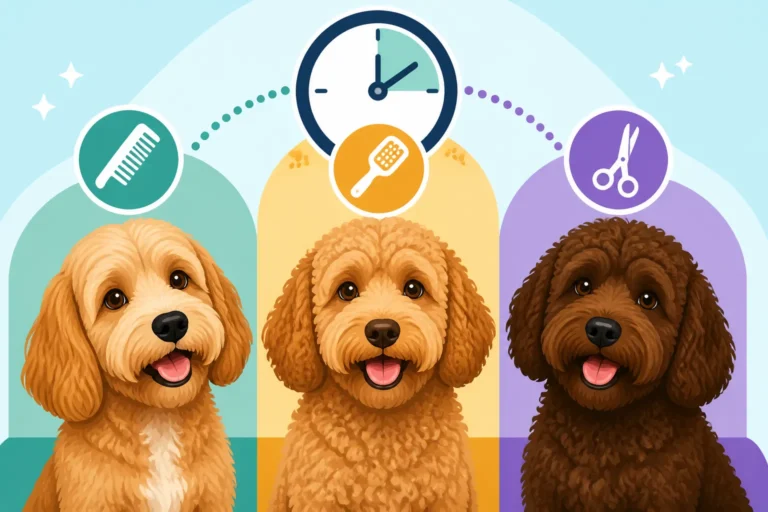
The presence of furnishings, while wonderful for low shedding, means a more involved grooming routine. Those longer hairs on the face, ears, and body are prone to matting and tangling if not brushed regularly. You'll likely be spending a good amount of time each week with a slicker brush and a comb. For instance, the beard and mustache areas are notorious for collecting food and getting wet when your pup drinks water, which can lead to mats and even skin irritation if not kept clean and dry. A detangling spray can be your best friend, especially after walks where your Cockapoo might pick up burrs or debris in their longer leg furnishings.
Many owners opt for professional grooming every 6-8 weeks to keep the coat manageable and mat-free. Your groomer will appreciate a well-maintained coat, as it allows them to achieve that adorable "teddy bear" trim without having to shave out mats. They’ll trim the facial hair to keep it tidy and out of your Cockapoo's eyes, and those lovely long ears will need attention to prevent mats behind them and to ensure good air circulation to prevent infections. Curious about the time commitment? Check out The Weekly Hours Each Cockapoo Coat Type Takes.
Managing Shedding and Allergies
While an FF coat generally means very low shedding, it's a common misconception that no shedding occurs. All dogs, including Cockapoos, shed to some degree. However, with an FF coat, the shed hairs tend to get caught within the curly or wavy coat rather than falling out onto your floor or furniture. This is fantastic for keeping your home cleaner, but it's also why regular brushing is so important: you're essentially brushing out those trapped hairs.
For those with allergies, an FF Cockapoo is often a much better fit than an unfurnished dog. The dense, furnished coat produces less dander, which is the primary allergen for many people. However, it's vital to remember that no dog is 100% hypoallergenic. Individual people can react differently to different dogs, even within the same breed. It's always a good idea for allergy sufferers to spend time with the specific puppy or its parents before committing. You might want to read Whether a Furnished Cockapoo Suits an Allergic Home for more insights on this topic.
Feeding and Everyday Tidiness
The facial furnishings can indeed present a bit of a challenge at meal times. Your Cockapoo's beard and mustache can become quite messy with wet food, and often drip water after drinking. You might find yourself needing to wipe their face after every meal and drink. Some owners find that feeding a fresh, softer diet, like that offered by Ollie, can make cleaning a little easier than sticky kibble. Alternatively, specialized bowls designed for long-eared dogs can help keep the beard out of the water bowl. You can find a variety of these on Amazon. Regular cleaning of the beard area is crucial to prevent staining, odor, and even skin infections.
Coat Health and Vet Visits
During routine vet check-ups, your vet will likely examine your Cockapoo's coat and skin. A healthy, well-maintained FF coat is a sign of good overall health. However, if mats are severe or if the skin underneath is irritated, it can be a red flag. Mats can hide skin infections, parasites, or other issues that your vet will want to address. Maintaining a clean and brushed coat allows for easy detection of any lumps, bumps, or skin changes that might occur, especially as your Cockapoo ages.
What an FF Result Doesn't Tell You
While an FF result is incredibly informative and often desired by prospective Cockapoo owners, it's essential to understand that it's not the only piece of the genetic puzzle when it comes to predicting your dog's coat characteristics. Thinking that FF alone tells you everything would be like judging an entire book by its cover – you're missing a lot of the story!
The Role of Curl Type and Texture
An FF result tells you that your Cockapoo will have furnishings, but it doesn't specify what kind of furnishings or how curly the rest of their coat will be. The actual curl of a Cockapoo's coat is determined by a different gene, the KRT71 gene. This gene dictates whether your Cockapoo will have a straight, wavy, or tightly curled coat.
For example, an FF Cockapoo with a straight or loosely wavy coat (due to its KRT71 genotype) might still shed a noticeable amount, though significantly less than an unfurnished (ff) dog. The hairs, while longer and present on the face, might not be as effective at trapping shed fur as a curlier coat. On the other hand, an FF Cockapoo with a tight, poodle-like curl will generally be the lowest shedding of all, with its coat structure adeptly holding onto loose hairs. So, while FF gives you the beard, the KRT71 gene gives you the overall texture and curl, which greatly influences shedding and grooming requirements. This is why Picking the Puppy in a Cockapoo Litter That Will Shed Least involves looking beyond just furnishings.
Coat Color and Pattern
Another aspect that an FF result has absolutely no bearing on is your Cockapoo's coat color or pattern. Whether your pup is a rich chocolate, a vibrant red, a classic black, or a playful parti-color, the FF gene is completely independent of these traits. Coat color genetics are complex and involve multiple different genes (like E locus, B locus, A locus, etc.) that determine the pigments and patterns expressed. So, an FF black Cockapoo will have the same low-shedding potential and facial hair as an FF apricot Cockapoo, assuming all other coat genes are similar.
Temperament and Health
It might seem obvious, but it's worth stating clearly: coat genetics like the FF result tell you nothing about a Cockapoo's temperament, health, or potential longevity. These crucial aspects are influenced by a completely different set of genes, environmental factors, and the overall breeding practices of the parents. A healthy, well-socialized Cockapoo comes from responsible breeding that prioritizes health testing and early socialization, not just a specific coat type. When choosing a puppy, always prioritize health screenings for common Cockapoo conditions, such as eye diseases and joint issues, and inquire about the parents' temperaments. A good breeder will always share The Five Certificates a Cockapoo Breeder Should Show for health testing.
Breeder Transparency and DNA Testing
Responsible breeders will often conduct DNA panels on their breeding dogs, which include tests for furnishings (RSPO2) and curl (KRT71), among other genetic health concerns. They should be transparent about these results and be able to explain what they mean for the puppies in a litter. Asking for proof of these tests, perhaps through a certificate from a reputable lab, is a smart move. A breeder committed to healthy, predictable puppies will welcome your questions and be happy to share their knowledge and documentation. You can dive deeper into What a Cockapoo Coat Panel Actually Reports to understand the full scope of these tests.
Cockapoo Furnishings Genotype Comparison
| Genotype | Description | Facial Hair (Beard/Eyebrows) | Typical Shedding Level | Ideal for Allergy Sufferers? | Grooming Needs (Facial) |
|---|---|---|---|---|---|
| FF | Homozygous Furnished (two copies of 'F' gene) | Prominent, guaranteed | Very Low | Generally Yes | Regular brushing/trimming |
| Ff | Heterozygous Furnished (one 'F', one 'f' gene) | Prominent, guaranteed | Very Low | Generally Yes | Regular brushing/trimming |
| ff | Unfurnished / Improper Coat (two copies of 'f' gene) | Absent, smooth face | Moderate to High | Less Likely | Minimal (facial) |
Understanding the nuances of coat genetics helps set realistic expectations for your Cockapoo's grooming needs and potential impact on allergies. The FF result is a wonderful indicator of that classic low-shedding, furnished look, but always remember to consider the full picture of their genetic makeup and the overall health and temperament of the parents.
Disclaimer
This article is for general informational purposes only and does not constitute professional advice. Laws, prices and regulations vary by location and change over time. Consult a qualified professional for guidance on your specific situation.