Telling a Furnished Cockapoo Puppy by Its Muzzle
Reading a puppy’s muzzle for furnishings, the eyebrows, mustache and beard linked to the dominant RSPO2 gene, to predict a low-shedding coat.

Reading a puppy’s muzzle for furnishings, the eyebrows, mustache and beard linked to the dominant RSPO2 gene, to predict a low-shedding coat.
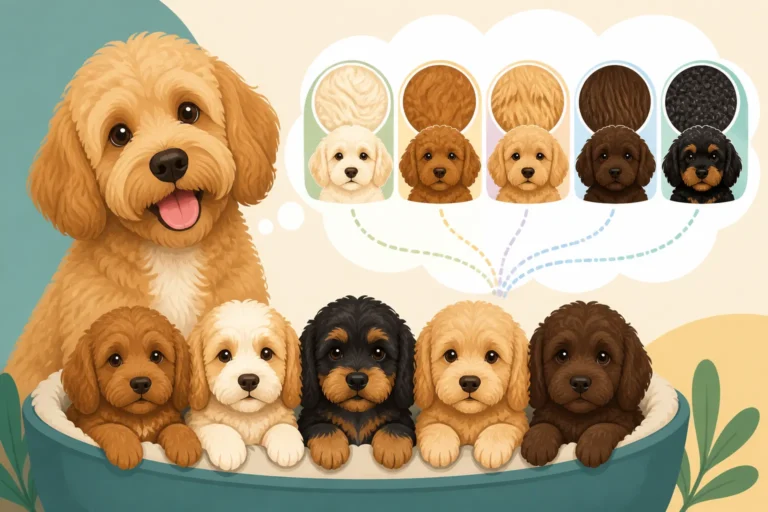
Cockapoo coat genetics and the RSPO2 gene explain why a single litter can produce puppies with very different coat types.

Genetic testing of Cockapoo parents explains inherited health risks and probabilities for conditions like Progressive Retinal Atrophy.

Multigenerational Cockapoo genetics determine whether appearance, temperament, and low-shedding coats are predictable across multiple generations of breeding.

F1b Cockapoo backcross genetics and the RSPO2 furnishings gene guarantee seventy five percent Poodle lineage and a low shedding coat.

Cocker Spaniel genetics and the dominant furnishings gene explain Cockapoo face traits, shedding levels, and adult coat types.

Cockapoo facial furnishings and low shedding coats depend on two copies of the dominant RSPO2 gene carried by the Poodle.

Cockapoo coat genes and skin health connections explain how furnishings and curls cause matting risks, hot spots, and painful skin infections.

Cockapoo coat test results explain puppy shedding traits, helping owners predict genetics, maintenance, and allergy impacts.

Cockapoo coat panel genetics explain how the Rspo2 furnishings gene and KRT71 curl gene determine shedding and fur texture.