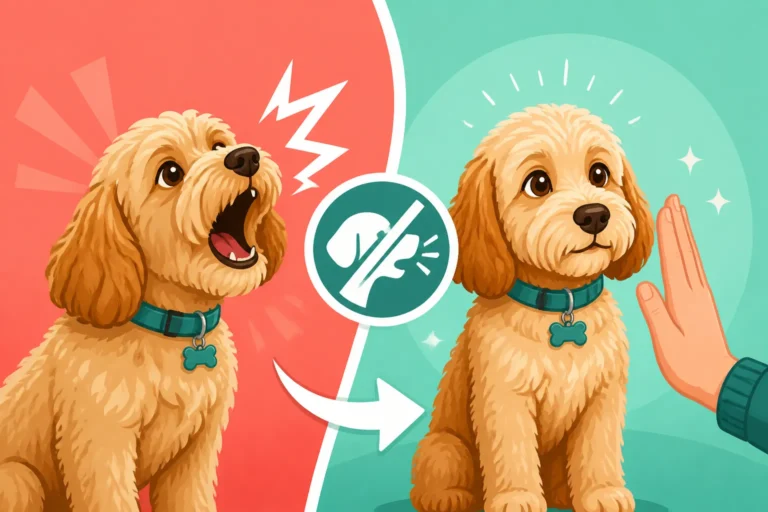
Whether a Whistle Recall Beats a Voice on a Cockapoo
Ah, the classic Cockapoo conundrum: you call their name with all the love in your heart, but your adorable companion seems to develop selective hearing the moment a squirrel twitches or an interesting scent hits the breeze. It's incredibly frustrating when your dog, usually so responsive, suddenly seems to forget their name entirely, leaving you feeling helpless. This guide is all about tackling that very issue, exploring whether adding a whistle to your recall toolbox can make a profound difference in getting your Cockapoo to reliably come back to you, especially when the world is full of tempting distractions.
The Lure of the Outdoors: Why Cockapoos Ignore Voice Commands
It's not that your Cockapoo wants to ignore you; it's often that their natural instincts and the sheer wonder of the world around them are just so incredibly compelling. You might feel personally offended when they turn a deaf ear, but understanding the root causes can help us find better solutions.
The Cockapoo's Inner Hunter
Let's be honest, those soulful eyes and fluffy ears can make us forget that a Cockapoo is a blend of two working breeds: the Cocker Spaniel and the Poodle. Both were bred for jobs, and that means they have innate drives that are hardwired. The Cocker Spaniel, in particular, is a flushing dog. Their job was to dive into dense cover, flush birds out for hunters, and then retrieve them. This means they are inherently programmed to follow their nose, often with a singular focus that makes them temporarily oblivious to the outside world.
Imagine you're walking in a park, and your Cockapoo, with their sensitive nose, catches the faintest whiff of a rabbit trail from hours ago. To them, it's like a thrilling mystery novel unfolding right under their nose. Their spaniel ancestry kicks in, and suddenly, that trail becomes the most important thing in their universe. Your voice, no matter how urgent, becomes just background noise, easily drowned out by the siren call of the chase. You might shout "Come!" with increasing desperation, but their mind is already miles away, mentally tracking that scent. This isn't disobedience; it's instinct. It’s The Flushing Drive Still Alive in a Cockapoo asserting itself.
Distractions, Distractions Everywhere
Beyond the deep-seated hunting instincts, the great outdoors is a sensory overload for a dog. Think about all the things competing for your Cockapoo's attention:
- Sight: A distant jogger, a bicycle whizzing by, another dog playing fetch, a flock of pigeons taking flight. Their eyes are constantly scanning for movement and novelty.
- Sound: The chirping of birds, the rustle of leaves, children laughing, traffic noise, other dogs barking. These sounds can easily mask your voice, especially if your Cockapoo is a bit further away.
- Scent: Oh, the scents! Every blade of grass, every tree trunk, every patch of dirt tells a story. The intoxicating aroma of a deer that passed through earlier, the fresh urine mark from a territorial rival, or even just the lingering smell of someone's picnic lunch can create an irresistible pull.
When your Cockapoo is engrossed in sniffing a fascinating patch of grass, their brain is utterly absorbed. Your voice, no matter how familiar, is just one more sound in a symphony of distractions. If you've been practicing Building a Recall a Cockapoo Answers in your quiet living room, the park is a whole different ballgame. The challenge is immense, and it’s no wonder so many owners feel their Cockapoo goes "deaf on command" in these situations.
The Problem with Overused Voice Commands
We've all done it: we call our dog, they don't come, so we call them again, perhaps louder, or with a slightly more exasperated tone. Each time we use a recall word like "Come!" or "Here!" and our dog doesn't respond, that word loses a tiny bit of its power. It becomes diluted. If "Come!" means "sometimes I come, sometimes I don't, and sometimes you just keep yelling," then it's not a strong command.
Moreover, if "Come!" often signals the end of fun – the end of sniffing, the end of playing, the end of a walk – then your Cockapoo isn't dumb; they're smart enough to associate the command with something they don't want. They learn that ignoring you for a few extra seconds might buy them more freedom. This creates a vicious cycle where the command becomes less appealing and less effective over time. This is especially true if you are often pulling them off a scent, as Whether a Cockapoo Ignores You Once It Scents Something highlights.
The Unique Advantages of a Whistle Recall for Your Cockapoo
Given the challenges of voice commands in a distracting world, a whistle can be a game-changer for many Cockapoo owners. It brings a new level of clarity and consistency that our human voices simply can't match.
Cutting Through the Clutter: Why a Whistle Stands Out
Think about it: the human voice is part of the natural soundscape. Birds chirp, people talk, dogs bark – these are all sounds your Cockapoo hears regularly. Your voice, even when raised, can blend into this background noise, especially if you're a bit away or if there's significant environmental noise.
A dog whistle, however, emits a sound that is distinct. It’s often a high-frequency tone that travels well and stands apart from the typical sounds your dog encounters. It doesn't sound like another dog, or a person chatting, or a squirrel chattering. It's a novel sound, which makes it more likely to grab your Cockapoo's attention, even when they're deeply engrossed in a scent trail or fixated on a distant movement. It cuts through the auditory clutter, acting like a unique doorbell ringing only for them. For a Cockapoo that might go A Cockapoo That Goes Deaf on a Trail, this distinct sound can be invaluable.
Consistency is Key: The Unchanging Whistle Sound
Our voices are incredibly expressive, which is great for human communication but less so for a consistent dog command. When you're happy, your voice might be light and playful. When you're frustrated, it might be sharp and impatient. When you're tired, it might be softer. Your Cockapoo picks up on these nuances, and the 'come' command can mean subtly different things depending on your emotional state.
A whistle, on the other hand, produces the exact same sound every single time. It doesn't carry your frustration, your joy, or your fatigue. It's an objective, consistent signal. This consistency makes it much clearer for your Cockapoo. They don't have to interpret your tone; they just hear the signal, which always means one thing: "Come back to me now, something good is about to happen!" This unwavering consistency helps build a strong, unambiguous association.
The Emergency Signal
One of the most powerful uses for a whistle recall is as an emergency signal. Because it's so distinct and consistent, you can reserve it for those critical moments when immediate recall is absolutely vital. Imagine your Cockapoo suddenly spots a deer across a busy road or starts heading towards a potentially dangerous situation. In these instances, you don't want them to hesitate or to have to decipher your tone. You need an instant, ingrained response.
By training the whistle recall to be an "absolute must come" command, always paired with the highest value rewards, you build a powerful association. If you rarely use the whistle, and when you do, it always results in something fantastic (like a super tasty treat or a fun game), then your Cockapoo will be much more likely to drop whatever they're doing and bolt back to you. It's a tool that can literally save their life, especially if you often find yourself Working a Cockapoo on a Long Line and need to transition to off-leash freedom.
Training Your Cockapoo for a Rock-Solid Whistle Recall
So, you're convinced a whistle recall might be beneficial. Fantastic! Now, how do you actually teach your Cockapoo to respond to it? It's all about positive reinforcement, consistency, and gradual progression.
Starting Indoors: Building the Foundation
The secret to a bomb-proof recall, whether voice or whistle, is to start in the easiest environment possible and build up from there.
- Choose Your Whistle: Dog whistles come in various types – some are silent to humans, some are audible. The key is to find one that produces a consistent sound that you and your dog can hear. A pea-less whistle is often recommended for consistency.
- Introduce the Sound Positively: In a quiet room, with your Cockapoo nearby but not right next to you, give a short, consistent whistle blast (e.g., two short peeps or one long one – choose a pattern and stick to it!). The instant your Cockapoo turns their head or acknowledges the sound, reward them with a high-value treat (something they love, like tiny pieces of chicken or cheese) and enthusiastic praise. Don't call them yet; just reward for hearing the sound.
- Build the Association: Repeat this many, many times over several short sessions. Whistle, reward. Whistle, reward. You want your Cockapoo to think, "That sound means delicious things are about to appear!"
- Add Movement: Once they reliably look at you after the whistle, start backing away a step or two before you whistle. Whistle, and as they turn to you, encourage them with a cheerful voice ("Yes! Good boy/girl!") and reward them when they reach you. Keep it low-pressure and fun. This is about building a strong positive emotional response to the whistle.
- Practice Often, Keep it Short: Five minutes, three times a day, is far more effective than one long, boring session. Always end on a high note.
Gradual Progression to Outdoor Environments
Once your Cockapoo is consistently responding indoors, it's time to take it outside. This is where the real work begins, and it needs to be slow and controlled.
- Low-Distraction Outdoor Area: Start in your fenced yard or a very quiet park where you know there won't be many distractions. Keep your Cockapoo on a long line – at least 15-30 feet. This gives them a sense of freedom while still giving you control. How Long a Long Line a Cockapoo Needs is an important consideration here. You can find excellent quality long lines on platforms like Amazon, offering different lengths and materials to suit your training needs.
- Begin Again: Just like indoors, start with your Cockapoo a few feet away, sniffy around. Give your chosen whistle signal. The moment they turn, reel them in with positive encouragement, and reward them lavishly when they reach you.
- Increase Distance and Distraction Slowly: As they succeed in the low-distraction environment, gradually increase the distance you let them roam on the long line. Then, slowly introduce more distractions. This might mean practicing when a distant dog is walking by, or when there are a few people around.
- Always Set Them Up for Success: Don't whistle when you know they're too far gone, like halfway across a field chasing a rabbit. That's setting them up to fail, and each failure weakens the command. Use the long line to prevent them from getting into situations where they might ignore you.
- Make Coming Back the Best Thing Ever: When your Cockapoo responds to the whistle, make their return a party! High-value treats, a quick game of tug, lots of praise. Immediately release them back to explore if appropriate, so they don't associate coming back with the end of fun. This helps in Teaching a Cockapoo to Check In on a Walk.
Maintaining the Magic: Keeping the Whistle Special
A powerful whistle recall isn't a "one-and-done" training exercise. It requires ongoing maintenance.
- Don't Overuse It: The whistle should be reserved for recall, and perhaps one or two other distinct commands if you're doing advanced work. Don't use it for casual attention-grabbing or to simply check in. The more you use it for non-recall purposes, the more diluted its meaning becomes.
- Always Reward: Every single time your Cockapoo comes back to the whistle, they should receive a reward. Not always a high-value treat, but always something. Sometimes it's a piece of kibble, sometimes a quick belly rub, sometimes a short game of fetch. This reinforces the positive association.
- Vary Rewards: Keep your Cockapoo guessing and excited by varying the rewards. One day it's chicken, the next it's cheese, the next it's their favorite squeaky toy. This keeps them engaged and eager to find out what amazing thing awaits them when they respond.
- Practice in Different Places: To generalize the behavior, practice your whistle recall in various locations – different parks, different trails, even friends' backyards. The more diverse the environments, the stronger the recall will be everywhere.
- Use it for Actual Recall: Don't just practice; use it when you actually need to call your dog back. But remember rule #3 from the outdoor progression: only whistle when you genuinely believe they will come. If there's doubt, get closer or use your long line.
Combining Whistle and Voice: A Hybrid Approach
Many Cockapoo owners find that a combination of voice and whistle commands offers the most robust recall system. It's not about choosing one over the other, but rather understanding how to leverage the strengths of both.
When to Use Each Command
Think of your voice recall as your everyday, informal command, and your whistle recall as your "super recall" or emergency button.
- Voice Recall (e.g., "Come!"): This is great for when your Cockapoo is close by, not heavily distracted, or when you just want them to politely check in with you. Perhaps they're just sniffing calmly in a safe, fenced area, and you want them to come for a quick pat before continuing their exploration. It's a softer, more conversational interaction. For day-to-day interactions and proximity, your voice is perfectly adequate.
- Whistle Recall: This is for those moments when your voice might fail. Your Cockapoo has spotted something tantalizing in the distance, they're heading towards a potential hazard, or they're simply too far away for your voice to carry clearly. The whistle cuts through the noise and distractions, signaling an urgent, non-negotiable request for their immediate return. This becomes critical if you want your Cockapoo to be Whether a Cockapoo Is Safe Off Leash on Open Ground.
Using both selectively helps maintain the power of each. If you always use your whistle, it might eventually lose its 'emergency' status. If you only rely on your voice, you might find yourself frustrated too often.
Reinforcing Both Commands
The key to a successful hybrid approach is that both commands are consistently reinforced positively.
- Positive Association: Every time your Cockapoo responds to either your voice or your whistle, something good should happen. This could be a treat, a favorite toy, a game, or even just effusive praise and a happy pet. The positive reinforcement builds and strengthens the desired behavior.
- Never Punish Coming Back: This is a golden rule for recall. No matter how long it took them to come, or how annoyed you might be, never scold or punish your Cockapoo when they finally return. If coming back means getting yelled at, they will quickly learn to avoid coming back altogether. Always make their return a positive experience.
- Practice Both Regularly: Just like any skill, recall requires practice. Regularly incorporate both voice and whistle recall into your walks and play sessions. Short, fun, frequent sessions are far more effective than long, infrequent ones.
Practical Tools for Training
Having the right tools can make all the difference in training your Cockapoo, especially for recall.
- High-Value Treats: These are non-negotiable. Think cooked chicken, cheese, hot dogs – something your Cockapoo wouldn't get otherwise and finds absolutely irresistible. When training recall, especially in distracting environments, your treat needs to be more appealing than whatever distraction they've found.
- A Long Line: As mentioned, a long line is crucial for safely practicing recall in distracting environments. It allows your dog freedom to explore while ensuring you can intervene if they fail to respond. Working a Cockapoo on a Long Line is often the bridge to reliable off-leash adventures. You can find durable and comfortable options for long lines from retailers like Amazon.
- A Reliable Whistle: Invest in a good quality dog whistle that produces a consistent sound. Experiment with different types (pea-less, silent) to see what works best for you and your dog.
- Dog Training Programs: For a structured approach, consider online training resources. Programs like BAXTER & Bella offer comprehensive online courses that guide you step-by-step through training, including robust recall. They often break down complex behaviors into manageable chunks, making it easier for owners to implement consistent training methods at home.
- Patience and Persistence: This isn't a tool you can buy, but it's the most important one. Training a reliable recall takes time, especially with a Cockapoo's natural drives. Celebrate small victories, and don't get discouraged by setbacks. Every Cockapoo is an individual, and some will pick it up faster than others.
Ultimately, a whistle recall doesn't necessarily "beat" a voice recall; it enhances it. By giving you a powerful, unambiguous tool for those high-stakes situations, it makes your overall recall system more robust, reliable, and safer for your adventurous Cockapoo.
| Feature | Voice Recall | Whistle Recall |
|---|---|---|
| Sound Consistency | Varies with handler's emotion, fatigue, distance | Consistent pitch and tone every time |
| Audibility | Can be masked by environmental noise, distance | Cuts through noise, travels well, distinct |
| Emotional Impact | Can convey frustration, urgency, or joy | Neutral, objective, purely a signal |
| Association | Can be diluted by overuse or negative experiences | Easier to keep as a high-value, specific command |
| Urgency Signal | Can be perceived as less urgent if overused | Ideal for emergency, attention-grabbing situations |
| Learning Curve | Generally easier for daily interaction | Requires deliberate, consistent positive training |
| Use Case | Everyday check-ins, close proximity, casual calls | High-distraction environments, emergencies |
Disclaimer
This article is for general informational purposes only and does not constitute professional advice. Laws, prices and regulations vary by location and change over time. Consult a qualified professional for guidance on your specific situation.