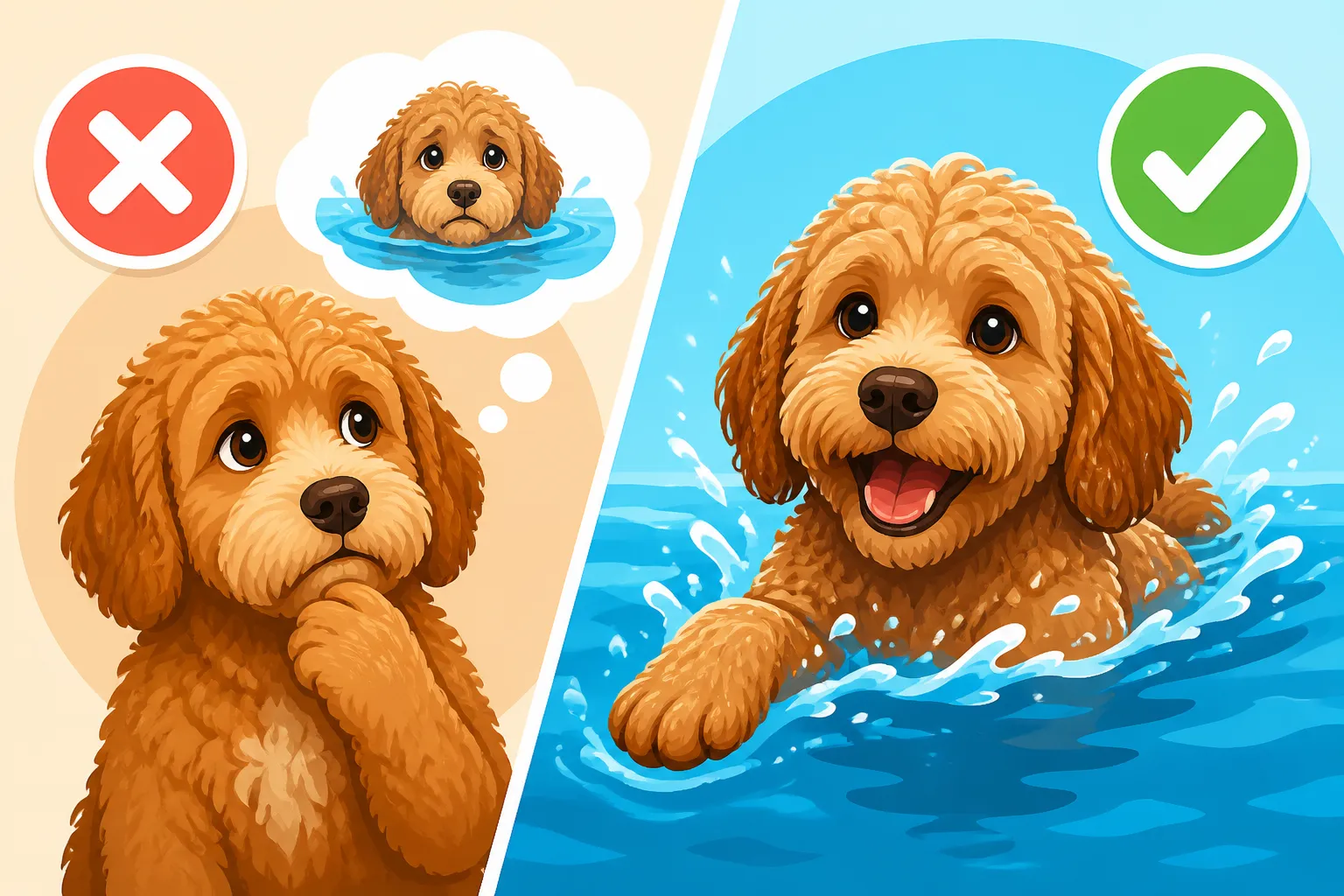
Whether a Cockapoo Swims Without Being Taught
It's a common and totally understandable assumption that most dogs are born knowing how to swim, gliding through the water with effortless grace. We see it in movies and social media all the time, right? But the truth is, for many dogs, including our beloved Cockapoos, swimming isn't an innate skill, and for some, it can even be a source of anxiety. You might wonder if your fluffy companion will just naturally take to the lake or pool, but often, it takes patience, gentle introduction, and careful supervision to help them feel comfortable and safe in the water. This guide will explore whether Cockapoos are natural swimmers and, more importantly, how to ensure their safety and enjoyment if you plan to introduce them to the aquatic world.
The Genetic Mix: Instincts for the Water from Cocker and Poodle
When you look at a Cockapoo, you're looking at a delightful blend of two distinct breeds: the Cocker Spaniel and the Poodle. Both parent breeds have historical connections to water, but their roles and natural instincts around it are quite different, which can lead to varied responses in their Cockapoo offspring. It's not a simple case of "dog equals swimmer," but rather a fascinating genetic lottery that plays out in each individual pup.
The Cocker Spaniel's Water Heritage
American and English Cocker Spaniels were originally bred as gun dogs, specifically for flushing out and retrieving game birds, often from dense cover, marshes, and even water. Their compact, sturdy bodies and strong legs made them adept at navigating challenging terrain. Historically, they could swim, and many still have a love for water, but it wasn't always their primary function in the same way it was for a full-on retriever. Their dense double coats, while lovely, can become heavy when wet, which can be a bit of a hindrance if they're not strong swimmers.
Think about a typical Cocker Spaniel: they're enthusiastic, merry, and generally up for an adventure. This zest for life often extends to water. Many Cockers will happily splash in puddles or paddle at the edge of a stream. However, their swimming style might be more of an energetic, all-paws-flailing effort rather than a smooth, efficient glide. They often enjoy the activity of being around water more than the act of swimming long distances. So, a Cockapoo leaning more towards its Cocker genetics might show enthusiasm but require a bit more physical effort and perhaps less inherent grace in the water. They might need more help with endurance due to their body shape and coat density.
The Poodle's Aquatic Prowess
On the other side of the family tree, we have the Poodle, a breed whose very name, deriving from the German "Pudel" (meaning "to splash in water"), speaks volumes about its origins. Poodles were originally water retrievers, used to fetch fallen birds for hunters. Their distinctive curly, dense, and water-resistant coat isn't just for show; it's highly functional, protecting them from cold water and dense underbrush. Their athletic build, powerful hind legs, and long necks are perfectly suited for efficient swimming.
A Poodle's natural swimming technique is usually much more refined than a Cocker's. They typically paddle strongly with all four legs, keeping their body relatively level in the water, and often appear to enjoy the sensation of gliding through it. This innate ability and comfort with water are strong traits that a Cockapoo can inherit. If your Cockapoo takes after its Poodle parent more, you might find them to be a more confident, natural swimmer, perhaps even showing an eagerness to dive right in. Their lighter, often less dense, single coat (when properly groomed) also tends to be less cumbersome when wet compared to a heavy double coat. Whether the Cocker or the Poodle Shows Up in Training often dictates a lot about a Cockapoo's natural inclinations, including their comfort level with water.
The Cockapoo's Mixed Bag of Instincts
So, what does this mean for your Cockapoo? It means there's no single, definitive answer. You could have a Cockapoo that cannonballs into the pool with reckless abandon, a true water baby inherited from its Poodle lineage. Or you might have one that views a kiddie pool with deep suspicion, preferring to keep its paws firmly on dry land, perhaps influenced by a less water-centric Cocker ancestor or simply a unique personality trait. Some might be enthusiastic splashers but not strong swimmers, while others might be hesitant initially but, with gentle encouragement, become quite proficient. It’s truly a mixed bag, and it's essential not to force the issue if your individual Cockapoo shows reluctance. Just like people, some dogs love swimming, some tolerate it, and some would rather do anything else.
Safe Introductions: Making Water a Positive Experience
Since a Cockapoo's natural swimming ability can vary so widely, a careful, positive introduction to water is absolutely key. You don't want to create a fear or aversion by pushing them too hard, too fast. Building confidence is a gradual process, and it's far more effective than simply tossing them in and hoping for the best (which, by the way, is a definite no-no!). The goal is to make water a fun, rewarding experience, not a scary one.
Starting Small and Shallow
The first steps should always involve very shallow water. A kiddie pool in your backyard, a gentle slope at the edge of a calm lake, or even just letting the hose run slowly into a shallow dish can be great starting points. The key is to keep the water level low enough that they can stand comfortably with all four paws on the bottom. This allows them to explore the sensation of water without feeling overwhelmed or out of their depth – literally.
Imagine you're at a local park with a shallow creek. You wouldn't just throw your Cockapoo into the deepest part. Instead, you'd find a spot where the water barely covers their paws. Let them walk in on their own terms. Toss a favorite floating toy just a few feet away, or perhaps a treat. Praise and reward them lavishly for any interaction with the water, no matter how small. If they just dip a toe, that's a win! The goal here is curiosity and positive association. Avoid any abrupt movements or loud noises that might startle them. A gentle splash of water on their paws is fine, but spraying them with a hose or pushing them in will likely set you back. Some Cockapoos might surprise you and just wade in, while others might need several sessions of simply sniffing the water's edge before they're brave enough to step in.
Gradual Progression and Building Confidence
Once your Cockapoo is comfortable in shallow water, you can gradually introduce them to slightly deeper areas. This might be taking them to a dog-friendly beach with a very gradual incline or introducing them to a few more inches of water in the kiddie pool. Always accompany them into the water. Your presence provides reassurance and demonstrates that it's safe. Use a long lead, perhaps one you use for practicing Working a Cockapoo on a Long Line, so they feel secure but still have freedom to explore.
Consider bringing along another dog who is a confident swimmer, if you know one. Dogs often learn by observing, and seeing another dog happily paddling around can be a huge confidence booster for a hesitant Cockapoo. If you don't have a canine swimming buddy, you can lead by example. Wade into the water yourself and call them to you with an encouraging voice. Keep the sessions short and sweet, ending on a positive note before they get tired or bored. You want them to associate water with fun, not exhaustion or fear. This step-by-step approach ensures they build positive memories and develop their swimming skills at their own pace.
Essential Gear and Supervised Learning for Water Safety
When it comes to water activities, safety should always be your top priority. Even if your Cockapoo turns out to be a natural swimmer, accidents can happen, and having the right gear and knowledge can make all the difference. Think of it like teaching a child to ride a bike – you wouldn't send them out without a helmet, right?
The Importance of a Dog Life Vest
This is non-negotiable, especially when you're first introducing your Cockapoo to deeper water, or if you plan on taking them boating, kayaking, or to open water. A well-fitting dog life vest provides buoyancy, helps keep their head above water, and often has a handle on the back, which is invaluable for guiding them or pulling them out of the water if needed. Not all life vests are created equal, so look for one with good support under the belly and around the chest, and bright colors for visibility. Brands found on platforms like Amazon often have a wide selection, so you can read reviews and find one that's perfect for your Cockapoo's size and shape.
A life vest helps even those who can swim, preventing fatigue and making the experience more enjoyable. For instance, if you're taking your Cockapoo out on a paddleboard, the life vest not only helps them stay afloat if they fall in but also makes it much easier to lift them back onto the board. Whether a Cockapoo's Ears Should Be Tied Back to Swim might be a question for grooming, but a life vest addresses the more immediate concern of preventing accidental drowning or exhaustion. Even strong swimmers can get caught in currents, fall off a boat unexpectedly, or become disoriented. A life vest is their safety net.
Structured Training and Positive Reinforcement
Teaching your Cockapoo to swim isn't just about getting them in the water; it's about teaching them how to swim efficiently and safely. This involves positive reinforcement and gentle guidance. When they're in deeper water with their life vest, support them gently under their belly. Encourage them to paddle with all four paws. Many dogs instinctively use only their front paws, forgetting their powerful hind legs. Gently guide their hind legs to paddle, helping them understand that all four limbs are for propulsion.
- Praise and Treats: Always use enthusiastic praise and high-value treats (waterproof ones, if possible!) when they are doing well.
- Short Sessions: Keep initial training sessions brief, maybe 5-10 minutes, to avoid over-tiring or scaring them. You want them to leave the water wanting more, not dreading the next dip.
- Entry and Exit Points: Teach them where the safe entry and exit points are in a pool or lake. If you have a pool, show them the steps repeatedly. You can use a platform like BAXTER & Bella for puppy training, and their principles of positive reinforcement easily translate to water safety. Guide them to the steps every time they want to get out. This skill is critical for their safety, especially if they were to fall in accidentally.
- Recall Practice: Practice Building a Recall a Cockapoo Answers around water. This is vital to prevent them from wandering into unsafe areas or chasing after wildlife.
| Water Safety Essential | Why It's Important | Best Practices |
|---|---|---|
| Dog Life Vest | Provides buoyancy, aids visibility, offers a grab handle for rescue, prevents fatigue. | Ensure snug fit, bright color, strong handles. Use every time in deep water. |
| Long Line/Leash | Maintains control, especially in new environments or around distractions. | Use a waterproof, non-absorbent material. Keep loose enough to avoid drag. |
| Floating Toys | Encourages interaction with water, provides motivation for entry. | Choose durable, visible toys. Toss only a short distance initially. |
| High-Value Treats | Positive reinforcement for good behavior and confidence building. | Use small, easily digestible, waterproof treats. |
| Fresh Water | Prevents ingestion of lake/pool water, which can cause upset stomachs. | Always have a bowl of fresh water readily available. |
Understanding Risks and Common Swimming Challenges for Cockapoos
While introducing your Cockapoo to water can be a wonderful way to provide exercise and enrichment, it’s also important to be aware of the potential risks and challenges. Being proactive about these issues will help ensure your Cockapoo's time in and around water is as safe and enjoyable as possible.
Water Quality and Environmental Hazards
Not all water is created equal. Lakes, ponds, rivers, and even oceans can harbor dangers that aren't immediately obvious. Blue-green algae, for example, is highly toxic to dogs and can be fatal if ingested. Always check for warning signs at public swimming spots and err on the side of caution. Even seemingly clear water can contain bacteria or parasites that could make your Cockapoo sick. After any swim in natural water, it's a good practice to rinse your dog thoroughly with clean water.
Currents in rivers or the ocean can be deceptively strong, even near the shore. What seems like a gentle ripple to you could easily pull a small Cockapoo off course. Always assess the conditions and consider your dog's strength and swimming ability. Avoid areas with strong undertows or fast-moving water. Lakes and ponds can have hidden debris, sharp rocks, or sudden drop-offs. Always scout the area before letting your Cockapoo venture in. If your Cockapoo loves to chase, be mindful of wildlife; a Whether a Cockapoo Bolts After Birds instinct could lead them into dangerous situations if they're not secure.
Post-Swim Care and Health Considerations
After a fun swim, proper care is crucial to prevent common health issues. Cockapoos, with their adorable floppy ears, are particularly prone to ear infections. Water can get trapped in the ear canal, creating a warm, moist environment perfect for bacteria and yeast to flourish. Always clean and thoroughly dry your Cockapoo's ears after swimming, using a vet-approved ear cleaner if recommended. Whether the Poodle Ear Canal Helps a Cockapoo is an interesting thought, but both parent breeds can struggle with ear health if not managed.
Another common concern is skin irritation. Chlorine from pools can dry out their skin and coat, while natural waters can contain irritants. A good rinse with fresh water and a gentle shampoo after swimming can help prevent dryness, itching, or hot spots. Also, watch out for "swimmer's tail" or "limber tail," a painful condition that can occur when dogs over-exercise their tails in water. If your Cockapoo's tail suddenly hangs limp or appears painful, a vet visit is in order. Finally, always provide fresh drinking water to discourage them from drinking pool or lake water, which can lead to gastrointestinal upset.
Over-Exertion and Hypothermia
Just like humans, dogs can get tired and over-exert themselves, especially when swimming. A Cockapoo might be having so much fun that they push themselves past their limits, leading to exhaustion. This is where a life vest becomes invaluable, as it allows them to float and rest when needed. Always monitor their energy levels and call them out of the water for breaks. The Miles a Cockapoo Wants Every Day shows they are active, but swimming uses different muscles and can be more tiring.
In colder water, there's also a risk of hypothermia. Even on a warm day, extended periods in cool water can lower a dog's body temperature to dangerous levels. Whether a Curly Cockapoo Struggles in Summer might make you think they need cooling down, but vigilance is still key. If you notice shivering, lethargy, or pale gums, get them out of the water immediately, dry them thoroughly, and warm them up. Stick to warmer days and shorter dips in cooler water. By being mindful of these risks and challenges, you can help ensure your Cockapoo has safe and happy experiences around water for years to come.
Disclaimer
This article is for general informational purposes only and does not constitute professional advice. Laws, prices and regulations vary by location and change over time. Consult a qualified professional for guidance on your specific situation.