Signs a Cockapoo Is Anxious Rather Than Bored
It’s a scenario so many of us Cockapoo parents know all too well: you walk into a less-than-pristine home, perhaps a cushion has been disemboweled, or there's a puddle where there shouldn't be one, and your furry friend is either cowering or looking utterly mischievous. The immediate question flashes through your mind – are they just bored and acting out, or is something deeper, like anxiety, at play? It can be incredibly frustrating trying to decipher these signals, as the wrong diagnosis leads to the wrong solution. This guide aims to help you untangle the subtle but crucial differences between a Cockapoo who's simply bored and one who's genuinely struggling with anxiety, so you can offer them the right kind of support.
The Core Difference Between Boredom and Anxiety
Before we dive into specific behaviors, it's really helpful to understand the fundamental difference between boredom and anxiety. While both can manifest in ways that are destructive or frustrating for us as owners, their underlying motivations are poles apart. Think of it like a child acting out: are they misbehaving because they have nothing engaging to do, or because they're genuinely scared or distressed?
Boredom: A Lack of Mental or Physical Engagement
A bored Cockapoo is essentially a dog with untapped energy – both physical and mental. Cockapoos, a delightful mix of a clever Poodle and an active Cocker Spaniel, are often highly intelligent and have a surprising amount of stamina. If their minds aren't challenged with puzzles, training, or exploration, and their bodies aren't given enough outlets for exercise, that energy has to go somewhere. They're not deliberately trying to be "bad"; they're simply seeking stimulation in the only ways they know how, which often means behaviors we deem undesirable. They might be trying to entertain themselves, explore their environment in new ways, or even just get a reaction from you, even if it's a negative one. It's often about fulfilling a natural drive that isn't being met.
Anxiety: Rooted in Fear or Distress
Anxiety, on the other hand, comes from a place of fear, stress, or deep unease. An anxious Cockapoo isn't looking for entertainment; they're looking for comfort, safety, or an escape from what they perceive as a threat. This threat might not be obvious to us – it could be separation from their human, a loud noise, an unfamiliar situation, or even an internal feeling of discomfort. Their behaviors are often an attempt to self-soothe, communicate their distress, or alleviate an overwhelming internal state. These actions aren't usually driven by a desire for attention or play, but rather by a desperate need to cope with intense feelings. Understanding this distinction is the first step towards offering targeted help.
Classic Signs Your Cockapoo is Simply Bored
Sometimes, our Cockapoos are just a little stir-crazy, plain and simple. They've got those smart Poodle brains and active Cocker Spaniel bodies, and if those aren't put to good use, things can go awry. It's not malicious, it's just their way of saying, "Hey, I need something to do!"
The "Troublemaker" Behaviors
When a Cockapoo is bored, they often become a self-appointed "troublemaker." This typically looks like targeted, exploratory destruction. Maybe they chew on your favorite shoe, not because they're panicking, but because it smells interesting and offers a good chewing sensation. You might find them systematically emptying the trash can, not in a frantic effort, but with a kind of methodical curiosity, like they're investigating what treasures lie within. It's often the accessible items that get the most attention – things left on coffee tables, shoes by the door, or the corner of a rug that just begs to be frayed. There's a certain casualness to it, a lack of the frantic energy you'd see with anxiety. They might even look proud of their "work" when you come home, almost as if to say, "Look what I accomplished today!"
They might also start digging in the yard, chasing shadows, or nudging things off counters. These actions are often about mental and physical release. Digging, for example, is a natural canine behavior that's incredibly satisfying, and if there's no other appropriate outlet for that digging drive, your flowerbeds might suffer. Similarly, nudging objects off surfaces can be a way to initiate play or simply to see what happens, providing a burst of stimulation. These aren't usually signs of fear; they're signs of a dog creating its own fun when you're not around to provide it.
Seeking Attention Even Negative
A bored Cockapoo can become a master of demanding attention, and they often don't care if that attention is positive or negative. If they discover that barking incessantly when you're on a phone call gets you to look at them, even if it's to shush them, they've achieved their goal. They might nudge your hand off your keyboard, drop a slobbery toy directly into your lap while you're trying to work, or even start nipping playfully but persistently at your ankles. These behaviors are designed to solicit a reaction from you, to break your concentration and redirect it towards them. They're trying to re-engage you because their current state of inaction is simply unbearable.
This can also manifest as constantly bringing you toys, even if you've just played with them. They might follow you from room to room, sighing dramatically, or sitting with an intense stare. It's a clear signal that they want something from you, and they're willing to be a bit annoying to get it. This isn't rooted in fear, but rather a strong desire for interaction and activity. They learn quickly what gets a rise out of you, and will repeat those actions. A Cockapoo That Cannot Be Left for long periods without interaction might develop these kinds of attention-seeking habits.
Lethargy or Excessive Napping Paradoxically
It might sound counterintuitive, but sometimes a bored Cockapoo can actually seem under-active. Instead of tearing up the house, they might spend an unusual amount of time napping, even when they've had a full night's sleep. This isn't a peaceful, contented rest, but rather a sign of resignation or a lack of motivation because there's nothing stimulating in their environment. They might seem uninterested in toys they usually love, or take a long time to respond to cues for walks or playtime. It's as if their energy has nowhere to go, so they just shut down.
This passive boredom can often be missed because it's not overtly destructive. You might think, "Oh, they're just a calm dog," when in reality, their mental and physical needs aren't being met, leading to a kind of low-level apathy. They're not distressed, but they're not thriving either. It's a quiet form of under-stimulation, and it can eventually lead to more overt behavioral issues if not addressed. You might see them just lying around, watching you with half-closed eyes, or staring blankly out the window for extended periods.
Recognising the Deeper Roots of Cockapoo Anxiety
When a Cockapoo is anxious, their behaviors are often driven by a deeply uncomfortable internal state. It's not about making mischief; it's about trying to cope, self-soothe, or escape a perceived threat or overwhelming feeling. These signs tend to be more intense and less about "fun."
Destructive Behaviors With a Purpose
Anxious destruction in a Cockapoo is very different from boredom-induced chewing. Instead of casually gnawing on a slipper, an anxious dog might frantically chew at egress points – doorframes, window sills, crate bars – in an desperate attempt to escape or relieve overwhelming stress. This chewing is often accompanied by other signs of distress, like panting, drooling, or frantic pacing. The goal isn't exploration or entertainment; it's self-preservation or an attempt to rejoin their human. The damage might be severe and focused on a single area, reflecting a concentrated effort to get out or cope.
You might find deep scratches on doors, or even teeth marks on drywall, indicating a panicked attempt to create an exit. This kind of destruction is often seen in A Cockapoo That Cannot Be Left alone, signifying separation anxiety. It's not about playing with something interesting; it's about trying to escape a perceived abandonment or fear. The intensity and location of the destruction are key indicators here.
Vocalizations That Speak Volumes
While a bored Cockapoo might bark for attention, an anxious Cockapoo's vocalizations are typically more distressed. This could manifest as persistent, high-pitched whining, continuous howling, or frantic, repetitive barking. Whether a Cockapoo Howls When Left is a classic sign of separation anxiety, as it's a call for their pack (you!) to return. This isn't usually an 'I want to play' bark; it's a 'I'm scared/uncomfortable/alone' sound. The tone and duration are critical clues. It's often accompanied by other anxious body language.
These vocalizations don't stop when you acknowledge them (unless you return), unlike a bored dog who might cease barking once they get your attention. Anxious vocalizations are often persistent, even when no one is around to hear them, because they are an external manifestation of an internal state of panic. It's their attempt to express deep-seated fear or loneliness, a plea for help rather than a demand for a game.
Physical Manifestations of Stress
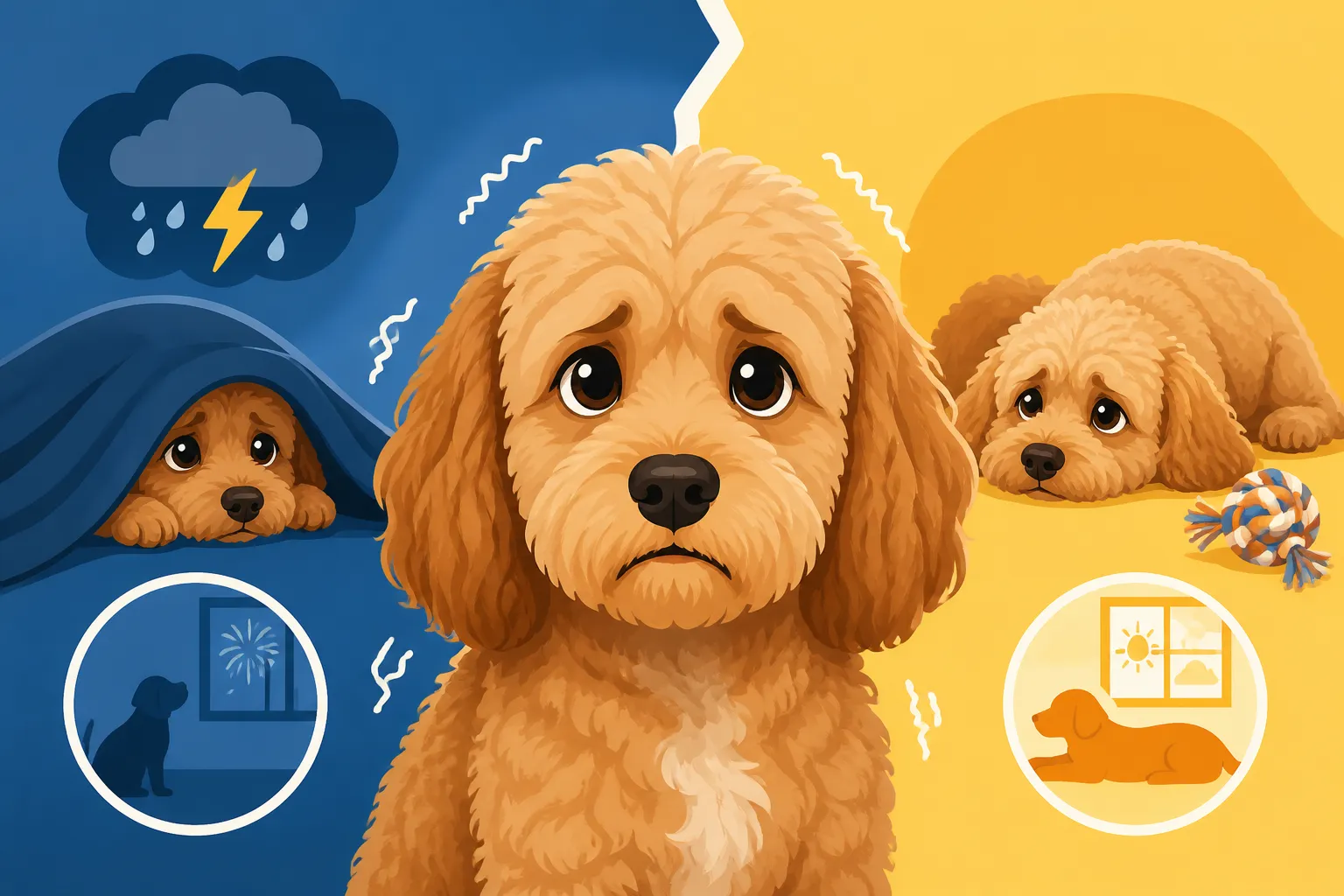
Anxiety in Cockapoos often comes with clear physical symptoms that go beyond typical behavior. You might notice excessive drooling, even when they haven't eaten or exercised. Repetitive pacing, often in a tight circle or along a specific path, is a common sign of a dog trying to burn off nervous energy. Trembling or shaking, even in a warm room, can indicate fear. They might also engage in self-soothing behaviors like excessive licking of their paws or flanks, sometimes to the point of creating hot spots or skin irritation. These physical signs are direct indicators of stress hormones flooding their system.
Other signs can include inappropriate urination or defecation, especially if it happens reliably when left alone, even if they are otherwise house-trained. This isn't about being defiant; it's often a physiological response to extreme stress, where they simply lose control. Hiding, cowering, or attempting to escape the home are also strong indicators of anxiety, as the dog is trying to remove itself from a perceived threat or uncomfortable situation. These actions are clearly distinct from a dog simply looking for a game or attention.
Navigating the Overlap: When Signs Can Be Confusing
Sometimes, the lines can feel a little blurry between a bored Cockapoo and an anxious one. Many behaviors can present similarly on the surface, making it tough for us to figure out what's really going on. It’s important to look beyond the surface behavior and consider the context, intensity, and accompanying body language.
When Chewing Isn't Just Chewing
Chewing is a perfectly normal and necessary dog behavior. Both bored and anxious Cockapoos will chew, but what they chew, how they chew, and when they chew can be very different. A bored Cockapoo might chew a variety of items around the house – shoes, remote controls, kid's toys – almost indiscriminately. The chewing might be slow, exploratory, or even playful, and often happens when there's nothing else stimulating to do. They might eventually give up if the item isn't satisfying or if something more interesting comes along. For these instances, a good, durable chew toy or a puzzle feeder from Amazon could be a game-changer.
An anxious Cockapoo, however, typically engages in much more frantic and focused chewing. They might target exits like doorframes, window sills, or even their crate bars, sometimes causing significant damage. This chewing is often accompanied by other signs of distress like panting, drooling, or whining. It's not about enjoying the chew; it's about trying to escape or self-soothe. The destruction is usually more severe and localized to areas related to their perceived confinement or source of anxiety. If the chewing stops only when you return home, or if it happens every single time they are left alone, it's more likely anxiety. If you suspect anxiety, merely replacing the chewed item with a new toy won't solve the underlying issue.
Barking: A Cry for Engagement or Reassurance?
Barking is another behavior that can be misleading. A bored Cockapoo might bark to get your attention, or to alert you to something mildly interesting outside, or even just to hear the sound of their own voice. This barking might stop if you engage them with a toy or a short play session. It's often sporadic or triggered by specific, non-threatening stimuli. Whether a Cockapoo Barks When Left could point to boredom if it's intermittent and seems aimed at drawing someone out of another room, but it could be anxiety if it's sustained and frantic.
An anxious Cockapoo's barking, on the other hand, often sounds more distressed. It might be a persistent, high-pitched whine mixed with barks, or prolonged howling. This kind of vocalization is usually not responsive to your commands to "be quiet" unless you are physically there to offer comfort. It's a manifestation of their internal panic or loneliness, a desperate plea for reassurance or the return of their perceived security figure (you!). You might notice that this type of barking only occurs when they are truly alone, or when they are exposed to a specific trigger they fear, like thunderstorms. The continuous nature and emotional tone of the bark are key indicators.
Practical Solutions for a Bored Cockapoo
If you've assessed your Cockapoo's behavior and strongly suspect boredom is the culprit, the good news is that this is often more straightforward to address! It's all about enriching their lives and giving those intelligent minds and energetic bodies the outlets they crave.
Enriching Their Environment and Routine
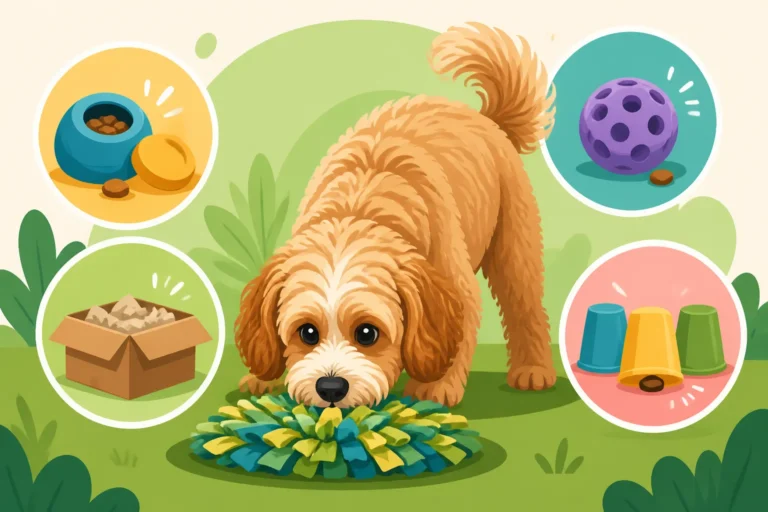
One of the best ways to combat boredom is to make your Cockapoo's daily life more interesting and predictable. This doesn't necessarily mean buying every new toy on the market, but rather thinking about how you can integrate mental stimulation into their routine. Consider puzzle toys, where they have to figure out how to get treats out – these can keep them occupied for surprisingly long stretches. You can find a huge variety of these on Amazon, from simple treat-dispensing balls to more complex sniff mats or hide-and-seek toys. Rotating their toys regularly also helps, so they don't get tired of the same old things. When they encounter an "old" toy after a break, it's almost like a new discovery!
Establishing a consistent daily routine can also help a bored dog. They thrive on knowing what to expect. This means regular mealtimes, potty breaks, and designated play or training sessions. Even if you're out for part of the day, leaving them with an engaging chew like a Kong stuffed with peanut butter or plain yogurt (and frozen for extra challenge!) can make a huge difference. Think about setting up a "safe space" for them too, perhaps a comfortable dog bed in a quiet corner where they can retreat with their enrichment toys without feeling overwhelmed. This helps them learn to self-entertain in a positive way.
Boosting Physical and Mental Stimulation
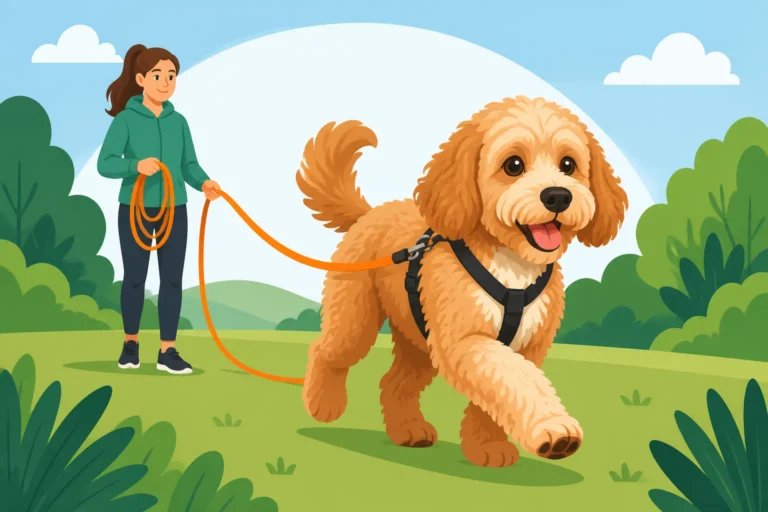
A Cockapoo really does need a good amount of both physical and mental exercise to be truly content. Those delightful Poodle and Cocker genes mean they are often surprisingly athletic and smart. Daily walks are a must, but try to vary your routes to keep things interesting. Let them sniff new smells – this is a huge mental workout for dogs! If you're always walking the same block, it quickly becomes mundane. Exploring a new park or trail, even for a short time, can provide a wealth of new sensory information.
Beyond walks, consider incorporating structured play or training sessions. Ten to fifteen minutes of focused training, teaching new tricks or refining old ones, can be as tiring for their brains as a long walk is for their bodies. Nose work games, where they have to find hidden treats around the house, are fantastic for engaging their natural scenting abilities, a strong trait from their spaniel heritage. Scent Work That Satisfies a Cockapoo can transform a bored dog into a delighted detective. Agility or other dog sports can also be wonderful outlets for their energy, offering both physical challenges and mental puzzles. Even a simple game of fetch in the yard can go a long way in burning off excess energy and providing a positive interaction.
Supporting an Anxious Cockapoo
If you've determined that anxiety, rather than just boredom, is plaguing your Cockapoo, the approach needs to shift from mere enrichment to addressing their underlying emotional state. This often requires patience, consistency, and sometimes, professional help.
Creating a Safe and Predictable World
Anxious Cockapoos desperately need a sense of security and predictability. Their world can feel overwhelming, so your role is to make it as stable and comforting as possible. This starts with a consistent routine – feeding times, potty breaks, walks, and quiet time should all happen around the same schedule each day. Predictability helps lower anxiety by reducing uncertainty. Consider a designated "safe haven" for them, like a crate covered with a blanket in a quiet room, or a cozy bed in a low-traffic area. This gives them a place to retreat to when they feel overwhelmed. Adding calming pheromone diffusers or sprays to this area can also be beneficial for some dogs, creating a more soothing environment.
It's also crucial to avoid inadvertently reinforcing anxious behaviors. While our natural instinct is to comfort a scared dog, sometimes too much fuss and attention during an anxious episode can actually validate their fear and unintentionally strengthen the behavior. Instead, try to remain calm and reassuring, guiding them to their safe space, and waiting for a moment of calm before offering gentle praise or a calm interaction. For Cockapoos struggling with noise sensitivities, Building a Cockapoo's Tolerance for Being Alone often involves creating a consistent, calm environment.
Professional Guidance and Training Approaches
Dealing with anxiety in a Cockapoo can be complex, and it’s perfectly okay, and often necessary, to seek professional help. A certified professional dog trainer or a veterinary behaviorist can help you understand the specific triggers for your dog's anxiety and develop a tailored plan. They can teach you techniques like desensitization and counter-conditioning, which gradually expose your dog to their triggers in a controlled way, while creating positive associations. For instance, if your Cockapoo is anxious about being left alone, they might guide you through very short absences, rewarding calm behavior, and slowly increasing the duration.
Online platforms like BAXTER & Bella offer comprehensive training programs that can be incredibly valuable for owners looking for structured guidance. These types of resources often provide step-by-step instructions, video tutorials, and even access to professional trainers for personalized advice. These programs can cover everything from basic obedience, which builds confidence and a stronger bond, to specific protocols for separation anxiety or fear-based behaviors. For severe cases, your veterinarian might also suggest medication as part of a comprehensive behavior modification plan. Remember, anxiety isn't a choice; it's a deep-seated emotional state, and addressing it often requires a multi-faceted approach involving environmental management, behavior modification, and sometimes, medical support.
| Behavior Trait | More Indicative of Boredom | More Indicative of Anxiety |
|---|---|---|
| Destructive Chewing | Varied objects (shoes, cushions), exploratory, casual, may stop if new stimulus offered. | Focused on exits (doors, windows, crates), frantic, persistent, accompanied by other stress signals. |
| Vocalization | Intermittent barking for attention, whining to solicit play, stops if engaged. | Persistent howling, high-pitched whining, frantic barking, continues even when alone. |
| Pacing | Less common, or slow, exploratory pacing around the house. | Repetitive, fast pacing, often in a tight circuit, accompanied by panting. |
| Attention Seeking | Nudging, dropping toys, nipping playfully, follows constantly, stops if attention is given. | Clinginess, shadows you, but appears tense, seeks physical contact for reassurance rather than play. |
| House Soiling | Infrequent, possibly due to lack of timely potty breaks or exploration. | Consistent when left alone, physiological response to stress, even in house-trained dogs. |
| Energy Level | High energy, restless, looking for something to do, or paradoxically lethargic/apathetic. | Hyper-vigilant, trembling, shaking, or rigid and withdrawn. |
| Body Language | Relaxed posture, wagging tail (even during mischief), curious expression. | Tense muscles, tucked tail, flattened ears, wide eyes, panting, drooling, lip licking. |
| Response to Owner | Eager to engage, happy greeting, easily distracted. | May be overly enthusiastic then withdrawn, easily startled, may not respond to commands due to stress. |
Disclaimer
This article is for general informational purposes only and does not constitute professional advice. Laws, prices and regulations vary by location and change over time. Consult a qualified professional for guidance on your specific situation.