Whether Two Clear Parents Rule Out FN in a Cockapoo
It’s a truly gut-wrenching worry for any prospective Cockapoo parent: bringing home a sweet, bouncy puppy only to discover later that they’re suffering from a severe inherited disease. Familial Nephropathy (FN) is one such condition that understandably causes a lot of anxiety, leading many to wonder if selecting a puppy from two "clear" parents means they can breathe a sigh of relief. This guide will meticulously break down what "clear" truly signifies in genetic testing and whether it offers the ultimate peace of mind against FN in your beloved Cockapoo.
Understanding Familial Nephropathy and Its Impact on Cockapoos
Familial Nephropathy, or FN, is a serious inherited kidney disease that has historically been found in certain lines of Cocker Spaniels, specifically English Cocker Spaniels, but can also manifest in American Cocker Spaniels and, by extension, their Cockapoo offspring. It's not just a general kidney problem; it's a specific, progressive condition that leads to early-onset kidney failure, often with heartbreaking consequences for dogs and their families.
What Familial Nephropathy Does to a Cockapoo
When a Cockapoo is affected by FN, their kidneys don't develop or function correctly from birth. The kidneys, which are vital for filtering waste products from the blood, begin to fail because the tiny filtering units (glomeruli) in the kidneys have structural defects. This means the kidneys struggle to do their job, leading to a build-up of toxins in the body. Initially, you might not notice anything, but as the disease progresses, the symptoms become more pronounced and severe. It's a cruel disease because it robs dogs of their health during what should be their prime years. You can learn more about exactly What Familial Nephropathy Does to a Cockapoo.
The Age Kidney Failure Appears in an Affected Cockapoo
One of the most devastating aspects of FN is its typical age of onset. Unlike kidney issues that might crop up in senior dogs, FN usually manifests in young Cockapoos. Owners often start noticing signs of illness when their dogs are anywhere from six months to two years old. This is an age when they should be full of life, exploring, and playing. Instead, these puppies might become lethargic, lose their appetite, experience excessive thirst and urination, and lose weight rapidly. It's a truly heartbreaking situation, as the disease is relentlessly progressive, and there is no cure. The unfortunate reality is that The Age Kidney Failure Appears in an Affected Cockapoo is often far too young, leaving owners with limited options and immense grief.
The Genetics of Familial Nephropathy: Autosomal Recessive Inheritance
Understanding how FN is passed down through generations is absolutely critical to grasping why genetic testing is so important and what "clear" parents truly mean for your puppy. FN is an autosomal recessive genetic disorder. This might sound like a mouthful, but let's break it down in simple terms.
Decoding Autosomal Recessive Inheritance
Every dog inherits two copies of each gene—one from their mother and one from their father. In the case of an autosomal recessive condition like FN, a dog must inherit two copies of the mutated gene (one from each parent) to actually develop the disease and be "affected."
Here's how the different genetic statuses play out:
- Clear: A dog with two normal copies of the gene. They cannot get the disease, and they cannot pass the mutated gene to their offspring.
- Carrier: A dog with one normal copy and one mutated copy of the gene. They do not develop the disease themselves, as the normal copy is dominant. However, they can pass the mutated gene to their puppies.
- Affected: A dog with two mutated copies of the gene. They will develop the disease.
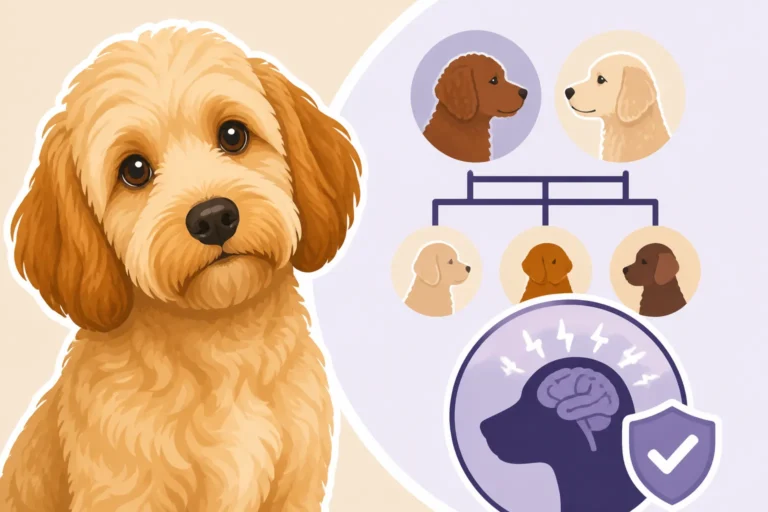
This is why the term "carrier" is so important. A carrier dog appears perfectly healthy, lives a normal life, and shows no symptoms of FN. But if a carrier dog is bred with another carrier dog, there's a significant risk that some of their puppies will be affected. You might be wondering Why Two Carrier Parents Produce an Affected Cockapoo. It boils down to a 25% chance for each puppy to inherit two mutated genes, meaning a quarter of the litter could develop FN. There's also a 50% chance they'll be carriers like their parents, and a 25% chance they'll be clear.
How Two Clear Parents Ensure a Clear Puppy
Now, let's address the core question: Can two clear parents rule out FN in a Cockapoo? The unequivocal answer, based on the science of autosomal recessive inheritance, is yes. If both parent dogs have been DNA tested and are genuinely "clear" of the FN gene mutation, it is genetically impossible for them to produce an affected puppy.
Think of it this way:
- Parent 1 (Clear) has two normal gene copies (let's say N/N).
- Parent 2 (Clear) also has two normal gene copies (N/N).
- Any puppy they produce must inherit one normal copy from each parent, resulting in N/N. Therefore, every single puppy in that litter will also be clear.
This is the beauty and reliability of DNA testing for autosomal recessive disorders. It provides a definitive answer for potential health outcomes related to specific genetic mutations. This is a vital piece of information when considering Whether an F1 Cockapoo Can Be Affected by FN.
Let's illustrate the possibilities with a simple table:
| Parent 1 Genetic Status | Parent 2 Genetic Status | Offspring Genetic Possibilities | Chance of Affected Puppy |
|---|---|---|---|
| Clear (N/N) | Clear (N/N) | 100% Clear (N/N) | 0% |
| Clear (N/N) | Carrier (N/M) | 50% Clear (N/N), 50% Carrier (N/M) | 0% |
| Clear (N/N) | Affected (M/M) | 100% Carrier (N/M) | 0% |
| Carrier (N/M) | Carrier (N/M) | 25% Clear (N/N), 50% Carrier (N/M), 25% Affected (M/M) | 25% |
| Carrier (N/M) | Affected (M/M) | 50% Carrier (N/M), 50% Affected (M/M) | 50% |
| Affected (M/M) | Affected (M/M) | 100% Affected (M/M) | 100% |
(N = Normal gene copy, M = Mutated gene copy)
As you can see, the only scenario where an affected puppy can be born is if at least one parent carries the mutated gene. If both parents are unequivocally clear, the risk of FN in their offspring is completely eliminated.
The Importance of DNA Testing and Verifying "Clear" Status
While the genetic principles are straightforward, the real-world application requires diligence and trust. It's not enough for a breeder to simply say their dogs are clear; you need concrete proof. This is where comprehensive DNA testing comes into play.
What the FN DNA Test Involves
Thankfully, advancements in veterinary genetics mean that a specific DNA test for Familial Nephropathy is readily available. This test typically involves collecting a cheek swab or a blood sample from the parent dogs. The sample is then sent to a specialized veterinary genetics laboratory, which analyzes the dog's DNA for the specific mutation associated with FN. The results will clearly state whether the dog is "Clear," "Carrier," or "Affected." This is often referred to as The FN DNA Test a Cockapoo Breeder Runs.
For any breeder who is serious about the health of their Cockapoos and committed to eradicating preventable genetic diseases from their lines, running this test on all breeding stock is non-negotiable. Without it, they are essentially breeding blind, gambling with the health of future generations.
Asking for and Verifying Certificates
As a prospective puppy buyer, it is absolutely within your right – and indeed, your responsibility – to ask a Cockapoo breeder for proof of their parent dogs' FN DNA test results. A reputable breeder will not only readily provide these certificates but will also be proud to show them off. Don't be shy about Asking a Cockapoo Breeder for the FN Certificate.
When you receive these certificates, don't just glance at them. Take the time to:
- Match the dog's name: Ensure the name on the certificate matches the name of the parent dog you are being shown or discussing.
- Check the microchip/registration number: Cross-reference any identifying numbers on the certificate with the dog itself or its other registration papers.
- Verify the lab: Look for the name of the reputable genetic testing laboratory that performed the test. Well-known labs like Paw Print Genetics or Embark Veterinary are common choices in the US.
- Confirm the "Clear" status: Clearly identify that both parents are stated as "Clear" for Familial Nephropathy.
Unfortunately, in the unregulated world of designer dogs, some less scrupulous breeders might mislead buyers. They might show outdated certificates, certificates for different dogs, or simply claim their dogs are "clear by parentage" without any direct testing. While "clear by parentage" can be legitimate if those parents were genuinely tested clear, it introduces an extra layer of complexity and potential for error or deception. Always prioritize breeders who provide direct, verifiable DNA test results for their breeding stock.
Limitations and Why Diligence Matters
While a clear FN DNA test from both parents is highly reliable for that specific condition, it's important to remember a few things:
- Specific to FN: This test only screens for the known genetic mutation for Familial Nephropathy. It doesn't screen for all kidney diseases or all potential health issues a Cockapoo might face. A Cockapoo can still develop kidney problems later in life from other causes, or inherit other genetic conditions if the parents weren't tested for those specific issues. This is why a broader approach to health screening is essential, including The Kidney and Eye Checks a Cockapoo Needs Yearly.
- Accuracy of Testing: While DNA tests are generally very accurate, human error in sample collection, labeling, or interpretation can theoretically occur, albeit rarely with reputable labs. This reinforces the need to use trusted laboratories and for breeders to be transparent.
- Breeder Integrity: Ultimately, the reliability of a "clear" status rests on the integrity of the breeder. A responsible breeder will not only test but will also be honest about the results and their breeding practices. This is where pet insurance, like plans offered by Healthy Paws, can provide an extra layer of security, helping to cover unexpected illnesses or conditions that might not be detected through genetic screening alone. Even with the best intentions and clear genetic results, sometimes things happen, and a good insurance policy can truly ease the financial burden of veterinary care.
Beyond DNA: Holistic Breeding Practices for a Healthy Cockapoo
While genetic testing for FN is a cornerstone of responsible Cockapoo breeding, it's just one piece of a much larger puzzle. A truly dedicated breeder looks at the whole picture to ensure the health and well-being of their puppies.
Comprehensive Health Screening for Parent Dogs
A responsible Cockapoo breeder will conduct a battery of health tests beyond just FN. Given that Cockapoos are a mix of Cocker Spaniels and Poodles, they can inherit predispositions to various conditions from both parent breeds. These might include:
- Eye Conditions: Progressive Retinal Atrophy (PRA), cataracts, glaucoma.
- Joint Conditions: Hip and elbow dysplasia, patellar luxation.
- Other Genetic Diseases: Phosphofructokinase (PFK) Deficiency, von Willebrand's Disease (vWD), thyroid issues, and certain autoimmune diseases.
A breeder should be able to provide clear certificates for all relevant health screenings for both parent dogs. This holistic approach significantly reduces the risk of inheriting a wide range of debilitating conditions. For instance, understanding Familial Nephropathy and the Kidneys a Cockapoo Can Inherit means knowing it's from the Cocker side, but other issues might stem from the Poodle.
The Breeder's Commitment to Transparency and Puppy Care
A good breeder isn't just a seller of puppies; they are guardians of the breed's health and advocates for responsible pet ownership. They will be transparent about their breeding philosophy, the health history of their lines, and the daily care their puppies receive.
Look for a breeder who:
- Welcomes visitors: They should be happy for you to visit their facility, meet the parent dogs (especially the mother), and see the puppies in their living environment. This helps you gauge the puppies' socialization and the overall cleanliness and care they receive.
- Asks you questions: A responsible breeder will be just as keen to vet you as you are to vet them. They'll ask about your lifestyle, experience with dogs, and living situation to ensure their puppy goes to a suitable home.
- Provides a health guarantee and contract: A detailed contract outlining health guarantees, return policies, and spay/neuter agreements is a sign of a professional and ethical operation. This often includes clauses related to inherited conditions, providing a layer of security.
- Offers lifetime support: They should be a resource for you throughout your dog's life, ready to answer questions and offer guidance.
- Is registered with reputable clubs: While Cockapoos are not universally recognized by major kennel clubs, there are dedicated Cockapoo clubs like the Cockapoo Club of America (CCA) or the American Cockapoo Club (ACC) that promote responsible breeding practices and health testing. Membership can be a good indicator of a breeder's commitment. A well-bred Cockapoo puppy from a conscientious breeder might come with The Five Certificates a Cockapoo Breeder Should Show as proof of their dedication.
Even with meticulous breeding and a healthy start, life with a pet can be unpredictable. That’s why having a robust pet insurance plan is a common recommendation. Companies like Healthy Paws offer comprehensive coverage that can help offset the costs of unexpected accidents or illnesses, giving you peace of mind no matter how carefully your puppy was bred. It’s an investment in your dog's future health and your financial security.
Preparing for the Unexpected: Comprehensive Care and Financial Planning
Even with the best genetic testing and a perfectly clear Cockapoo puppy, life has a way of throwing curveballs. Responsible pet ownership extends beyond choosing a healthy puppy; it includes planning for their ongoing care and any unforeseen medical needs.
Regular Veterinary Check-ups and Proactive Health Management
Bringing home a Cockapoo from two FN-clear parents means you've greatly reduced the risk of that specific disease. However, it doesn't mean your dog is immune to all health issues. Regular veterinary check-ups are paramount throughout your Cockapoo's life. These annual visits allow your vet to monitor your dog's overall health, catch potential problems early, and ensure they are up-to-date on vaccinations and parasite prevention.
During these check-ups, your vet will perform physical exams, listen to their heart and lungs, check their teeth, and discuss their diet and exercise. They might recommend routine bloodwork, especially as your Cockapoo ages, which can help detect issues like diabetes or early signs of other organ dysfunction. For example, The Bloodwork That Catches a Cockapoo's Kidney Disease might be done as a general screening, even if FN is ruled out. Early detection of any condition, even if not genetic, often leads to better outcomes and more manageable treatments.
Financial Preparedness for Veterinary Expenses
The cost of veterinary care can quickly add up, especially for unexpected illnesses or emergencies. While genetic testing helps mitigate some risks, it cannot eliminate all of them. Consider the potential for accidents, other non-genetic illnesses, or age-related conditions that may arise as your Cockapoo grows older.
Many pet owners find great peace of mind in pet insurance. Investing in a policy when your Cockapoo is young and healthy can be a smart financial decision. Companies like Healthy Paws offer various plans that can cover a significant portion of veterinary bills for accidents, illnesses, and even some emergency care. It means you can make medical decisions based on what's best for your dog, rather than being solely driven by cost. Even if your Cockapoo came from impeccable lines with every possible health clearance, unforeseen circumstances can arise, and having insurance acts as a crucial safety net.
Think about how you'd manage if your Cockapoo suddenly needed emergency surgery or long-term medication for an autoimmune condition. These scenarios are not uncommon, and being financially prepared means you can focus on your dog's recovery without added stress.
Conclusion: Peace of Mind Through Responsible Choices
To reiterate, if both Cockapoo parents are genuinely DNA-tested and certified "Clear" for Familial Nephropathy, you can be completely confident that your puppy will not inherit this devastating genetic kidney disease. This is a powerful testament to the advancements in veterinary genetic testing and the importance of choosing a responsible, ethical breeder.
However, "clear" parents are a starting point, not the entire journey. Your diligence in verifying certificates, understanding the breeder's overall health screening protocols, and preparing for your Cockapoo's lifelong health needs through regular vet care and financial planning (perhaps with a trusted pet insurance provider like Healthy Paws) will contribute to a long, happy, and healthy life for your furry companion. By making informed choices, you truly stack the odds in favor of a joyful and worry-free life with your Cockapoo.
Disclaimer
Please remember that this information is for educational purposes only and should not replace professional veterinary advice. Always consult with a qualified veterinarian regarding your Cockapoo's specific health concerns and treatment options.