Whether a Cockapoo Copes With an Empty House
A Cockapoo can learn to spend time alone, but that does not mean every dog will calmly manage a full workday from the start. If your puppy follows you from room to room or your adult dog barks when you leave, it is understandable to worry. This guide explains what affects a Cockapoo’s comfort alone and how to build their independence gradually.
Can a Cockapoo Cope With an Empty House
Many Cockapoos can learn to relax at home by themselves for appropriate stretches. Their Cocker Spaniel and Poodle heritage often gives them a people-oriented, engaged nature, but sociability is not the same as being unable to cope alone. Individual temperament, early experience, age, health, and the way departures are introduced all matter.
Some dogs snooze after a walk while their owner is out. Others need more practice before they can settle, especially if they have rarely been separated from people. A Cockapoo that is comfortable alone in one home may struggle after a move, a change in routine, or a period of illness. It is more helpful to observe your own dog than to assume the breed determines the outcome.
Why some Cockapoos find solitude harder
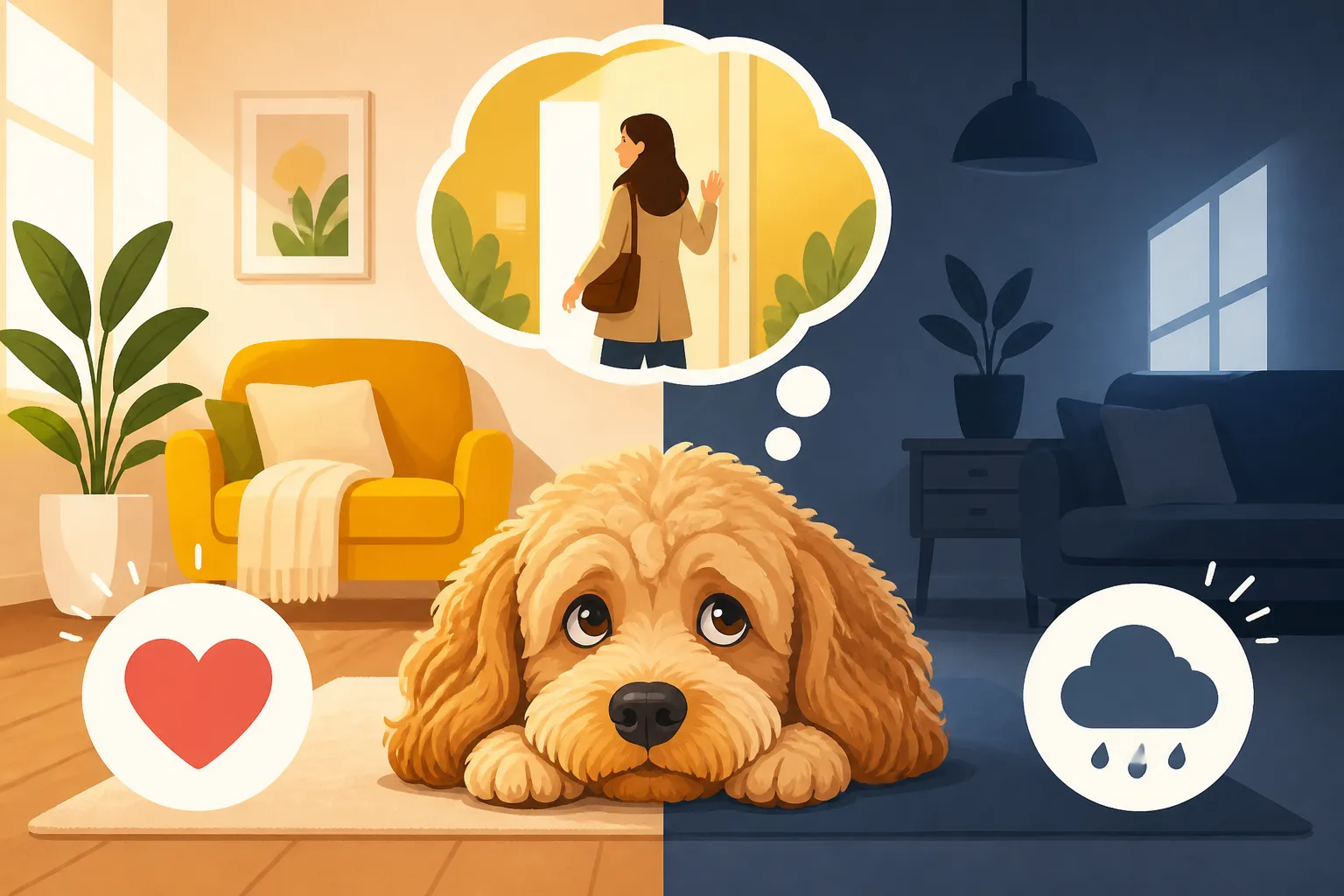
Cockapoos often enjoy company and may be quick to notice when the household routine changes. A dog that has spent most of its early life with someone nearby might find a sudden transition to several hours alone confusing. That does not mean the dog is being stubborn or trying to punish you. Distress can be a genuine emotional response to separation.
There are also ordinary, practical factors. A young puppy may need frequent toilet breaks and may not yet know how to settle. An older dog with pain or changes in hearing or vision may feel less secure. A recently adopted Cockapoo may need time to understand that people leaving the house do come back.
A dog that follows you from kitchen to bathroom is not automatically suffering from separation anxiety. It may simply enjoy being near you, or it may have learned that following often leads to attention. Look at what happens when you actually leave: does the dog rest, or does it pace, vocalize, scratch at exits, or refuse food? For more context, see A Cockapoo That Follows You Room to Room.
How age and routine affect time alone
Puppies usually need a shorter, more carefully planned absence than mature dogs. Their bladder control, confidence, and ability to settle are still developing. A puppy left alone for longer than it can comfortably manage may have accidents or become upset; neither outcome is a useful lesson in independence. Arrange help when needed rather than expecting a new puppy to adapt to a full day alone immediately.
Adult dogs may manage a predictable period at home if they have learned the routine, have had a chance to toilet, and are not left beyond their individual comfort. Even a dog that seems settled should not be expected to wait indefinitely for a toilet break, water, movement, or social contact. A lunch-time visit from a trusted person can make a workday more manageable.
The pattern matters as much as the length. A calm, familiar departure after a walk and breakfast may feel very different from being left suddenly during a noisy renovation or after a long stretch without activity. If your household schedule is changing, build up the new routine in small steps. The Hours a Cockapoo Tolerates Alone offers a closer look at why there is no single number that suits every dog.
Prepare Your Home and Schedule
Before working on alone time, make the situation safe and predictable. Your Cockapoo should have access to water, a comfortable resting place, and a suitable area where they cannot chew dangerous objects or get trapped. Some dogs settle in a room with a gate; others do better with access to a larger dog-safe area. A crate is not automatically the right answer, particularly if the dog panics when confined.
It also helps to plan realistically. If you are away for a long stretch, consider whether a friend, dog walker, or other caregiver can provide a toilet break and company. The goal is not to prove that your Cockapoo can endure a difficult day. It is to arrange a routine the dog can handle while you gradually build confidence.
Set up a comfortable, low-risk space
Choose a space where your dog already relaxes rather than introducing a new confinement arrangement at the same moment you begin leaving. Remove cords, medications, food, small objects, and anything your dog might shred or swallow. Make sure the temperature is comfortable and the dog can lie down without being disturbed by household traffic.
A bed or familiar blanket can be reassuring, but do not leave anything your dog is likely to chew apart and swallow. If you want to try a food puzzle or chew, test it while you are home first. A product that is safe under supervision may not be suitable for unsupervised use if your dog can break it or swallow pieces. When looking for enrichment supplies, you might browse options at Chewy, then choose based on your dog’s chewing habits and safety needs rather than novelty.
Some Cockapoos relax better with quiet background sound; others prefer a calm room without a television or radio. Try one change at a time, then observe your dog. A camera can be useful if you are unsure whether your dog sleeps or spends the absence pacing, but it is not essential. A simple audio recording can also reveal repeated barking or howling that you might not hear from outside.
Build a workable plan for a busy household
If you work outside the home, think through the whole day, not just the moment you walk out. A morning toilet break, an age-appropriate walk or play session, and a short settling period can help, but exercise is not a cure for separation distress. A tired dog can still feel anxious, and overly strenuous activity may leave a puppy overtired rather than relaxed.
For a long absence, arrange a visit from someone your dog knows, or explore suitable care options. A walker or sitter can break up the day, while daycare may suit some dogs but overwhelm others. Consider your Cockapoo’s social style, energy, vaccination status, and comfort around unfamiliar dogs before choosing group care. Whether Daycare Suits a Cockapoo can help you weigh that option.
| Situation | A practical approach | What to watch for |
|---|---|---|
| Young puppy | Keep absences brief and arrange toilet breaks | Accidents, crying, difficulty settling |
| Adult dog new to being alone | Start with short departures and increase gradually | Pacing, barking, scratching, refusal of food |
| Dog left for a long workday | Arrange a trusted visit or other midday support | Restlessness, missed toilet needs, repeated vocalizing |
| Dog with a history of distress | Ask a veterinarian or qualified behavior professional for help | Escalating panic or self-injury |
When you shop for a leash, food puzzle, or other enrichment item, Chewy may be one place to compare choices, but the item itself is only a small part of the plan. It cannot replace companionship when a dog needs a toilet break or help from a professional when fear is severe.
Teach Alone Time in Small Steps
The most reliable starting point is to make separation ordinary without immediately making it long. Practice when you are not rushing to work. If your dog becomes distressed after you close the front door for a few minutes, repeating a much longer absence will not teach calmness. Begin at a level your dog can manage and increase only when the current step is going well.
This gradual approach can feel slow, especially when you have a job and a real schedule to keep. That frustration is understandable. In the meantime, arrange support for absences your dog is not ready to handle, and use practice sessions to build the skill rather than relying on a single long test.
Practice departures without making them dramatic
Start with small, ordinary actions: pick up your keys, put on a coat, or step behind an interior door, then return before your Cockapoo becomes upset. Repeat calmly. Over time, practice brief exits through the outside door. Keep your return low-key; there is no need to ignore your dog for a long time, but a quiet greeting can help departures and arrivals feel less like major events.
Increase the duration in small increments, and vary the practice rather than progressing in a straight line every time. For example, after a short successful absence, try a slightly longer one, then return to an easier duration. If your dog starts barking, panting, scratching, or refusing a food item they normally enjoy, the step may be too difficult. Shorten it next time.
A useful exercise is to encourage your dog to settle on a mat while you move around the room. Walk a few steps away, return, and reward relaxed behavior. Then step into another room briefly. This teaches that being apart inside the home is safe before you move on to leaving the property. The detailed progression in Building a Cockapoo's Tolerance for Being Alone can help you think through those gradual steps.
Use food and enrichment thoughtfully
A stuffed food toy or puzzle can give a relaxed dog something pleasant to do. Introduce it while you are home, so you know your Cockapoo can use it safely and does not become frustrated. Some dogs enjoy food when alone; others are too worried to eat. That difference is useful information, not a reason to keep offering more exciting treats.
Avoid using a food toy to distract a dog while leaving for an absence that is already too long. If the dog finishes the food and then panics, the toy has not solved the underlying problem. Keep enrichment simple and safe, especially for dogs that chew intensely. Chewy can be a convenient place to look for different puzzle styles, but choose one suited to your dog’s size, chewing strength, and experience.
You can also pair calm settling with predictable household cues. Give your dog a comfortable spot, offer an appropriate activity, and practice leaving briefly while the dog is relaxed. The aim is not to create a complicated ritual that must happen perfectly every time. It is to help your dog experience many manageable separations, so the routine becomes familiar rather than alarming.
Recognize Distress and Get Help Early
A Cockapoo that barks once when you leave and then sleeps may be adjusting normally. A dog that remains distressed for much of the absence needs a different response. Because you are not there to see what happens, use observation rather than guessing. A camera, a recording, or a neighbor’s report can help distinguish a brief complaint from a pattern of ongoing distress.
Look for behavior that begins when you prepare to leave or soon after you go. Common signs include persistent barking or howling, pacing, panting when the room is not hot, drooling, trembling, destructive behavior near doors or windows, attempts to escape, and toileting despite being house-trained. A single sign does not establish a diagnosis, but several signs together deserve attention. Signs a Cockapoo Is Anxious Rather Than Bored explains how the patterns can differ.
Understand when barking or damage needs attention
Boredom and distress can overlap, but they are not identical. A bored dog may get into a bin or chew an unattended shoe after some time alone. A distressed dog may focus on exits, vocalize repeatedly, or damage the area around a door soon after the owner leaves. Dogs can also bark in response to hallway noise, people passing a window, or another animal outside.
Try to identify when the behavior starts and what precedes it. If the barking begins as soon as you pick up your keys, separation-related fear may be involved. If it happens mainly when a delivery person walks past, environmental triggers may matter more. A recording helps you see the sequence and share useful details with a professional. You can also read Whether a Cockapoo Barks When Left for more on interpreting that behavior.
Do not punish your dog for damage or a mess discovered after you return. Your Cockapoo will not connect delayed punishment with the earlier behavior in the way you intend, and it may make departures more worrying. Secure the area, clean up calmly, and adjust the plan while you work out what is causing the problem.
Know when to contact a professional
If your dog panics, injures themselves, tries to break through doors, or cannot tolerate even brief separation, contact your veterinarian. A medical issue can affect behavior, and your veterinarian can help assess whether health, medication, or a referral should be part of the plan. A qualified behavior professional can help design gradual training around your dog’s specific triggers and threshold.
Ask for help sooner if the problem is getting worse or interfering with your ability to leave home. You do not have to wait for severe destruction before taking it seriously. Keep notes about departure cues, how long the behavior lasts, whether your dog eats, and what helps them settle. These details are more useful than simply reporting that the dog “hates being alone.”
A second dog is not a guaranteed fix. Some Cockapoos appreciate another dog’s company, but separation distress is often about being away from a particular person, so a canine companion may not change it. Likewise, a dog that is comfortable with family members may still struggle when nobody is home. For a fuller discussion, see Whether a Second Dog Settles a Cockapoo and Whether a Cockapoo Suits a Home That Works Full Time.
A Cockapoo can cope with an empty house when the length of the absence suits that individual dog and alone time has been introduced with care. Set up a safe space, plan support for long days, increase departures gradually, and take signs of distress seriously. Progress is not always linear, but a thoughtful plan is kinder and more effective than expecting your dog to simply get used to being left.
Disclaimer
This article is for general informational purposes only and does not constitute professional advice. Laws, prices and regulations vary by location and change over time. Consult a qualified professional for guidance on your specific situation.