Why Two Carrier Parents Produce an Affected Cockapoo
It’s a heartbreaking reality that many aspiring Cockapoo owners face: you find the perfect puppy, fall in love, and then, despite seemingly healthy parents, your beloved companion develops a serious genetic condition. This isn't just bad luck; it's often a direct result of both parents unknowingly, or sometimes knowingly, carrying a recessive gene for a disease. This guide will walk you through the intricate genetics behind why two seemingly healthy carrier parents can, indeed, produce a Cockapoo puppy affected by a devastating inherited illness.
Unraveling the Genetics: The Basics of Recessive Inheritance
When we talk about inherited diseases in dogs, it can feel like stepping into a complicated science lesson, full of jargon that leaves your head spinning. But understanding the basics of how genes are passed down is absolutely crucial for any Cockapoo owner or prospective buyer. It's not about making you a geneticist overnight, but about empowering you with the knowledge to make informed decisions for your furry family member.
Understanding Genes and Alleles
Think of a dog's genetic makeup as a huge instruction manual, and each page is a gene. These genes dictate everything from coat color and curl type to eye health and kidney function. For most traits, including those linked to inherited diseases, a dog inherits two copies of each gene – one from its mother and one from its father. These copies aren't always identical; they can come in different versions, which we call alleles.
Let's use a simple example to make this clearer. Imagine a gene that determines if a dog has sticky-up ears or floppy ears. There might be an allele for sticky-up ears (let's say 'S') and an allele for floppy ears (let's say 'f'). A dog gets one allele from each parent. So, it could have 'SS' (two sticky-up alleles), 'ff' (two floppy alleles), or 'Sf' (one sticky-up, one floppy). When we're discussing inherited diseases, particularly recessive ones, one allele is typically "normal" or "clear" (meaning it doesn't cause the disease), and the other is the "mutated" or "affected" allele (meaning it can cause the disease under the right circumstances). It’s these subtle differences in alleles that hold the key to understanding why some dogs get sick and others don't, even within the same litter.
The Concept of Carriers vs. Affected Dogs
This is where things get really important for understanding how a seemingly healthy pair of Cockapoo parents can produce a sick puppy. When a disease is recessive, it means a dog needs two copies of the "affected" allele to actually develop the disease.
- Clear Dogs: A "clear" dog has two copies of the "normal" allele. They won't get the disease, and they can't pass the affected allele on to their puppies. They're genetically in the clear.
- Carrier Dogs: A "carrier" dog has one "normal" allele and one "affected" allele. Here's the kicker: carriers themselves are usually perfectly healthy! They don't show any symptoms of the disease because that single "normal" allele is enough to compensate and keep them well. However, they can pass that single "affected" allele on to their offspring. This is why they're often called "silent carriers" – they carry the potential for disease without exhibiting it themselves. It's a huge frustration for owners when they discover their dog is a carrier, as it means they might have unknowingly passed on that risk.
- Affected Dogs: An "affected" dog has inherited two copies of the "affected" allele – one from each parent. Because there's no "normal" allele to counteract it, they will develop the disease. For severe conditions like Familial Nephropathy (FN), this can mean a drastically shortened and painful life, which is a truly devastating outcome for any family. Learning about genetic health can feel overwhelming, but tools like the
FN DNA Test a Cockapoo Breeder Runsexist to help identify these risks.
Why Some Diseases Hide in Healthy Parents
The reason these recessive diseases are so insidious is precisely because carrier parents appear perfectly healthy. There are no outward signs, no limping, no coughing, no obvious red flags that would suggest they are carrying a potentially fatal gene. This makes it incredibly easy for breeders, especially those who don't conduct thorough genetic testing, to accidentally breed two carriers together.
Imagine you have two beautiful Cockapoos, both vibrant, energetic, and seemingly without a care in the world. As far as anyone can tell, they're the picture of health. Without specific genetic testing, there's no way to know if they're quietly carrying a hidden genetic time bomb. This is why relying solely on a parent's physical health or vet check-ups is insufficient. Many genetic diseases don't manifest until later in life, or they simply lurk silently, waiting for the right genetic pairing to express themselves in a puppy. It's a cruel trick of nature, but it's one we can now understand and, thankfully, mitigate with proper screening.
How Two Carriers Can Create an Affected Puppy: The Punnett Square Explained
This is the moment where we connect the dots between those healthy-looking carrier parents and the heartbreaking reality of an affected puppy. It all comes down to the laws of probability and how those two alleles – one normal, one affected – play out when combined. It's not magic; it's just basic Mendelian genetics, and once you see it laid out, it clicks into place.
The 25% Risk: A Roll of the Genetic Dice
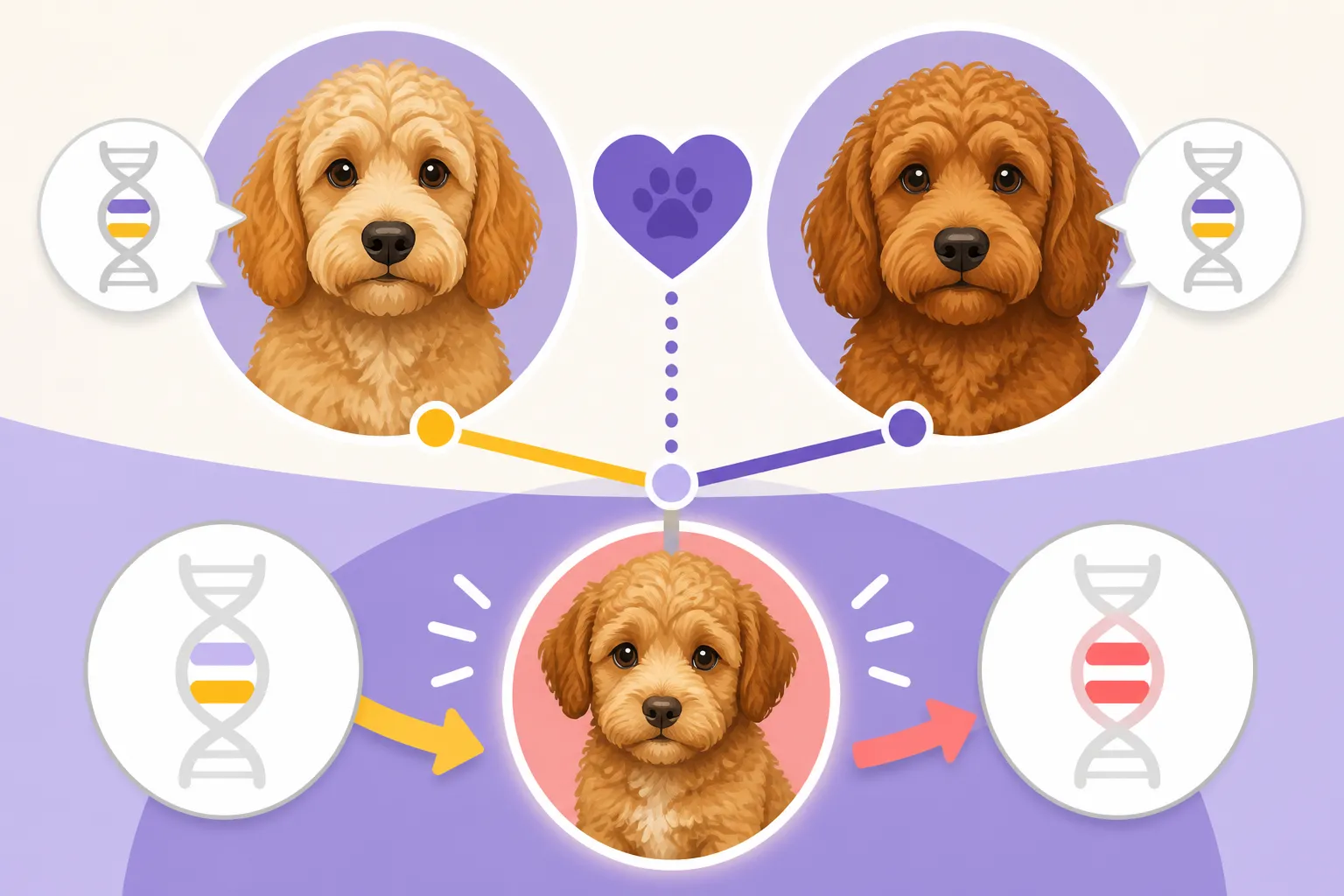
When two carrier dogs are bred together, each parent has a 50/50 chance of passing on either their "normal" allele or their "affected" allele to each puppy. It's like flipping a coin for each allele. Here's how the probabilities stack up for every single puppy in that litter:
- 25% Chance of being "Clear": The puppy could inherit a "normal" allele from the mother and a "normal" allele from the father. This puppy is completely free of the disease gene.
- 50% Chance of being a "Carrier": The puppy could inherit a "normal" allele from one parent and an "affected" allele from the other. Like its parents, this puppy would be healthy but could pass the gene on if bred.
- 25% Chance of being "Affected": This is the devastating outcome. The puppy could inherit the "affected" allele from the mother and the "affected" allele from the father. With two copies of the faulty gene, this puppy will develop the disease.
It's a stark reminder that even though two carrier parents might have a litter of healthy-looking puppies, there's always that one in four chance for each individual puppy to be affected. This means a breeder who doesn't test is essentially playing a genetic lottery with the lives of their puppies. This is also why understanding Whether an F1 Cockapoo Can Be Affected by FN is so important, as even first-generation crosses aren't immune to these risks if parent testing isn't done.
Visualizing Inheritance with a Simple Diagram
To make this concept crystal clear, we often use a tool called a Punnett Square. It’s a simple grid that helps us visualize all the possible genetic combinations when two parents are bred. Let's use 'N' for the normal allele and 'A' for the affected allele. Our carrier parents each have the genetic makeup 'NA'.
Here's how it looks:
| N (from Dad) | A (from Dad) | |
|---|---|---|
| N (from Mom) | NN (Clear) | NA (Carrier) |
| A (from Mom) | NA (Carrier) | AA (Affected) |
As you can see from the table, for every potential puppy, there's one box out of four that results in an "AA" genotype – an affected puppy. This visual representation really brings home the reality of the 25% risk. It’s not just a theoretical number; it’s a tangible possibility for every single life in that litter. When you look at it this way, it becomes abundantly clear why responsible breeders insist on comprehensive genetic testing for their breeding dogs.
Beyond Just One Puppy: Impact on an Entire Litter
While we talk about a 25% chance per puppy, it's important to understand what that can mean for an entire litter. In a litter of four puppies, statistically, you might expect one clear, two carriers, and one affected. However, genetics doesn't always follow perfect statistics in small sample sizes. Just like you can flip a coin four times and get four heads, a litter of four puppies from two carrier parents could theoretically all be affected, or all be clear, or any combination in between. The 25% is the probability for each individual event, not a guarantee of the exact makeup of a litter.
This means a breeder might get lucky with one litter, producing all healthy puppies, and then get hit hard with a subsequent litter where multiple puppies are affected. This inconsistency is precisely why testing is paramount. It removes the guesswork and the devastating potential for an entire family to welcome a puppy destined for a short, difficult life. Knowing the risks and taking preventative steps allows families to prepare, whether that's through careful breeder selection or, in the worst-case scenario, having a good pet insurance plan like those offered by Healthy Paws to help manage unforeseen veterinary costs.
Real-World Implications: Familial Nephropathy (FN) as a Prime Example
One of the most tragically common examples of a recessive genetic disease that can affect Cockapoos, particularly those with American Cocker Spaniel lineage, is Familial Nephropathy (FN). This condition perfectly illustrates the devastating consequences of breeding two carrier parents and why awareness is so incredibly vital for Cockapoo enthusiasts.
What is Familial Nephropathy in Cockapoos?
Familial Nephropathy is an inherited kidney disease that specifically affects the kidneys, causing them to fail prematurely. It’s a nasty one because it’s progressive and, unfortunately, incurable. The kidneys are vital organs responsible for filtering waste products from the blood, maintaining proper fluid balance, and producing hormones. When they don't function correctly due to FN, these toxins build up, leading to a cascade of serious health problems.
While FN can be found in other breeds, its prevalence in American Cocker Spaniels, and thus Cockapoos, makes it a significant concern. It’s a disease that often strikes young dogs, turning what should be their most vibrant years into a battle against a failing body. Understanding What Familial Nephropathy Does to a Cockapoo is key to grasping the gravity of this genetic roulette. It’s not a mild inconvenience; it’s a life-threatening condition that profoundly impacts a puppy’s quality of life and lifespan.
The Silent Threat: How FN Progresses
The heartbreaking aspect of FN is its silent progression. Puppies affected by FN often appear completely healthy for the first few months, sometimes even up to a year or two of age. This makes it incredibly deceptive. Owners bring home a playful, energetic puppy, entirely unaware that a ticking time bomb resides within their pet's tiny body.
Symptoms typically begin to emerge around 6 months to 2 years of age, but sometimes even later. These can include:
- Increased thirst and urination: The kidneys struggle to concentrate urine, leading to dehydration.
- Weight loss: Despite a good appetite, the dog loses weight due to metabolic disturbances.
- Vomiting and diarrhea: Toxins building up in the bloodstream irritate the digestive system.
- Lethargy and weakness: A general feeling of unwellness and lack of energy.
- Poor coat condition: A dull, dry coat can be another subtle sign.
These signs can be vague at first, often mistaken for other, less serious ailments. By the time they become pronounced, the kidney damage is usually extensive. This delayed onset is why The Age Kidney Failure Appears in an Affected Cockapoo can be so frustrating for owners; they might have formed a deep bond with their dog before the devastating diagnosis hits. There's no cure for FN, and treatment focuses on managing symptoms and slowing progression, which can be an emotionally and financially draining journey.
The Heartbreak of an FN Affected Puppy
Imagine bringing home a bundle of joy, full of puppy antics and boundless love. You watch them grow, bond deeply, and then, just as they enter their prime, they start to decline. This is the reality for families with an FN-affected Cockapoo. The journey is often marked by frequent vet visits, specialized diets, medications, and the constant fear of the inevitable.
The emotional toll on families is immense. You want to give your dog the best life possible, but you're battling a disease that cannot be beaten. Financial strain also becomes a significant factor. The costs of diagnostic tests, ongoing veterinary care, prescription foods, and medications can quickly add up. This is where having a robust pet insurance policy, like those from Healthy Paws, can be an absolute lifesaver, helping to alleviate some of the financial burden during such a challenging time. No one ever wants to imagine their vibrant Cockapoo struggling with a condition like this, especially when it could have been prevented through responsible breeding.
The Breeder's Responsibility: Testing and Transparency
This brings us to the critical role of the breeder. A responsible Cockapoo breeder is not just someone who loves puppies; they are custodians of the breed's health and future. Their actions, or inactions, directly impact the lives of every puppy they produce and the families who welcome them home.
The Importance of DNA Health Screening
Genetic health screening is the single most powerful tool a breeder has to prevent the tragedy of inherited diseases like FN. Before any two dogs are ever bred, both prospective parents should undergo a panel of DNA tests relevant to the Cockapoo breed, covering conditions known to affect either Cocker Spaniels or Poodles.
For conditions like Familial Nephropathy, there is a specific DNA test available. This test can accurately identify whether a dog is clear, a carrier, or affected by FN. This is not a "nice to have"; it's a fundamental requirement for ethical breeding. Breeders who skip these tests, perhaps to save money or out of ignorance, are gambling with the health of their puppies and the hearts of future owners. It’s not enough to say the parents "look healthy" or "have never been sick." Many diseases, including Progressive Retinal Atrophy in a Cockapoo, can be carried silently or manifest later in life. Only DNA testing provides a definitive answer about their genetic status regarding recessive conditions.
Deciphering Genetic Test Results
When you're speaking with a potential breeder, they should be able and willing to show you the genetic health certificates for both parent dogs. These aren't just pieces of paper; they are proof of their commitment to breeding healthy puppies.
Here’s what you should expect to see for each relevant genetic disease:
- Clear/Normal: This means the dog does not carry the gene mutation for that specific disease. They have two normal alleles. This is the ideal result for breeding partners.
- Carrier: This means the dog has one normal allele and one mutated allele. As we've discussed, carriers are typically healthy themselves but can pass the mutated gene on. A responsible breeder will never breed two carriers together. They might breed a carrier with a clear dog, ensuring no affected puppies, but knowing that half the litter will be carriers themselves.
- Affected: This means the dog has two copies of the mutated gene and will develop the disease. Dogs testing as affected should absolutely never be used for breeding.
Don't be afraid to ask for these certificates and to ask for clarification. A transparent breeder will appreciate your thoroughness. Reputable labs like Paw Print Genetics or Embark Veterinary provide comprehensive panels for various breeds, including Cockapoos, making it easier for breeders to test. You should feel comfortable Asking a Cockapoo Breeder for the FN Certificate and any other relevant health screenings.
Responsible Breeding Practices for Cockapoos
Beyond just testing, responsible breeding encompasses a holistic approach to canine welfare. It's about combining genetic health with temperament, conformation, and overall well-being.
- Health First: This means DNA testing for all relevant genetic diseases (FN, PRA, PFK deficiency, etc.), as well as OFA or PennHIP clearances for orthopedic conditions like hip and elbow dysplasia, and yearly eye exams by a veterinary ophthalmologist (CAER exams).
- Temperament: Selecting parents with stable, friendly temperaments is crucial, as temperament is also inherited. A well-socialized puppy comes from well-socialized parents.
- Environment: Puppies should be raised in a clean, stimulating home environment, not a kennel. They should have early socialization and handling.
- Transparency and Support: A good breeder is open about their practices, welcomes questions, allows visits (when appropriate), and provides ongoing support to their puppy buyers. They will also have a thorough contract and a health guarantee. They should be passionate about educating buyers on things like Whether an Affected Cockapoo Can Be Treated and what that might entail.
By adhering to these standards, breeders dramatically reduce the risk of producing affected puppies and contribute to the overall health and reputation of the Cockapoo. They are not just selling a pet; they are placing a family member, and that comes with immense responsibility.
What This Means for Prospective Cockapoo Owners
Understanding the genetics behind carrier parents and affected puppies isn't just for breeders. As a prospective Cockapoo owner, this knowledge empowers you to make wise decisions, ask the right questions, and ultimately find a healthy companion who will bring you years of joy.
Questions to Ask Your Breeder
When you're looking for a Cockapoo puppy, your conversation with a breeder should involve much more than just availability and price. This is your opportunity to gauge their commitment to health and responsible breeding. Don't be shy about asking direct questions based on what you've learned:
- "Can I see the genetic health clearances for both parent dogs for conditions like Familial Nephropathy (FN), Progressive Retinal Atrophy (prcd-PRA), and Phosphofructokinase (PFK) Deficiency?" Look for "Clear" results for both parents where possible. If a parent is a "Carrier," ask which conditions, and critically, ensure the other parent is "Clear" for that specific condition.
- "What other health screenings do you perform on your breeding dogs, such as OFA certifications for hips/elbows and yearly ophthalmologist (CAER) exams?"
- "How long have you been breeding Cockapoos, and what steps do you take to ensure the health and temperament of your puppies?"
- "Can you explain your health guarantee and what it covers, especially regarding inherited genetic conditions?"
- "Do you belong to any Cockapoo breed clubs, and what are their breeding standards?"
A good breeder will not only provide these documents but will also be happy to discuss them with you in detail. Any breeder who is evasive, deflects questions, or refuses to provide verifiable health records for both parents should be a huge red flag. Remember, you’re investing in a lifetime companion, and due diligence now can save you immense heartbreak and expense down the road. Understanding Whether a Breeder Must Test Both Cockapoo Parents is a clear indicator of responsible practice.
Mitigating Risk and Understanding Guarantees
Even with the most meticulous breeder, no one can guarantee 100% that a dog will never develop any health issue in its lifetime. Genetics is complex, and environmental factors also play a role. However, by choosing a breeder who performs all recommended health screenings on their breeding stock, you significantly mitigate the risk of bringing home a puppy affected by a known inherited disease.
A responsible breeder should also provide a written health guarantee in their contract. This guarantee typically outlines what happens if your puppy develops a serious genetic condition within a certain timeframe (often 1-2 years). It might offer a replacement puppy or a partial refund. While no amount of money can replace a beloved pet, such a guarantee shows the breeder stands behind the health of their puppies. It’s also crucial to understand that these guarantees rarely cover all veterinary costs associated with treating a sick puppy. This is where pet insurance becomes invaluable. Companies like Healthy Paws offer policies that can cover a significant portion of unexpected vet bills, from accidents to illnesses, including many hereditary conditions as long as they aren't pre-existing before coverage starts. This can be a huge comfort when you’re facing decisions about your pet’s care.
Preparing for the Unexpected: Support and Care
Even if you do everything right, there's always a chance something unexpected could arise. That’s just part of being a pet parent. Preparing for the unexpected isn't about being pessimistic; it's about being responsible and ensuring you can provide the best possible care for your Cockapoo, no matter what.
Having an emergency fund or pet insurance is a wise decision for any dog owner. Setting Money Aside for a Cockapoo's Vet Bills can be a daunting task, but it’s essential. Regular veterinary check-ups, a high-quality diet, and plenty of exercise are foundational to maintaining your Cockapoo's health. Furthermore, knowing How Long an FN Affected Cockapoo Lives can help you prepare for the emotional and practical realities should you ever face such a diagnosis.
Finally, remember that your Cockapoo relies on you for everything. Being informed, asking tough questions, and choosing a breeder who prioritizes health are the best ways to ensure you bring home a happy, healthy puppy who will be a cherished member of your family for many years to come.
Disclaimer
Please remember that this article provides general information and guidance regarding Cockapoo health and genetics. It is not a substitute for professional veterinary advice. Always consult with a qualified veterinarian for any health concerns or before making decisions about your pet's care.