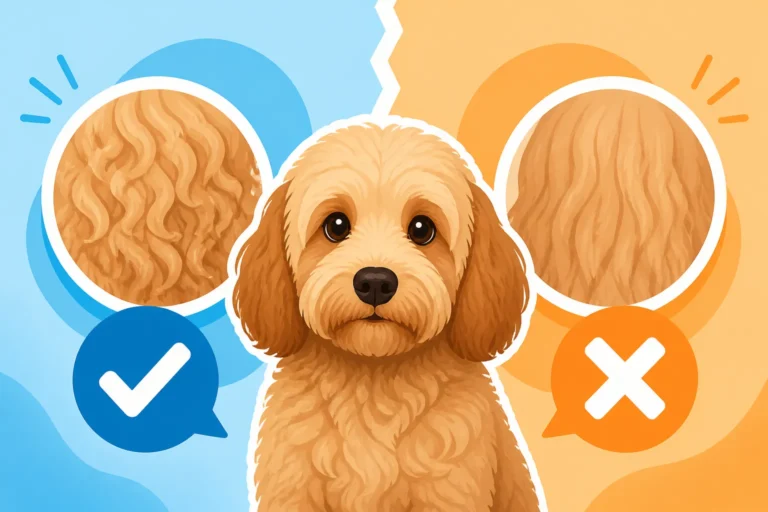
Whether a Standard Poodle Is Used in a Cockapoo
A Standard Poodle can be part of a Cockapoo’s ancestry, but it is not the usual Poodle size used in this cross. Most Cockapoos come from a Cocker Spaniel and a Toy or Miniature Poodle. If you have seen a “Standard Poodle Cockapoo” advertised, the key questions are what the breeder means by that label, how large the parents are, and what health and temperament information they can provide.
Are Standard Poodles Used in Cockapoos
The usual Poodle sizes in a Cockapoo cross
A Cockapoo is a cross between a Cocker Spaniel and a Poodle. In typical breeding, the Poodle is Toy or Miniature, rather than Standard. That choice is largely practical: Toy and Miniature Poodles are closer in size to Cocker Spaniels, making them a more familiar pairing for breeders aiming for a smaller companion dog.
There is no single, universally enforced Cockapoo definition that makes every breeder use the same parent sizes. Breed clubs and breeders may describe generations and size categories differently. So a puppy advertised as a Cockapoo may have a family history that does not fit another breeder’s preferred definition. The label alone will not tell you whether a Standard Poodle appears in the pedigree.
If you are comparing cross types, Which Poodle Size Is Used in a Cockapoo looks at the common pairings, while The Four Cockapoo Sizes explains how size labels are generally used. These are useful starting points, but the parent dogs’ actual measurements and family history matter more than a broad label.
Why a breeder might use a Standard Poodle
A breeder might consider a Standard Poodle to produce larger puppies or to introduce traits from a particular line. But using a Standard Poodle does not guarantee a specific adult size, coat, temperament, or level of shedding. Puppies from the same litter can inherit different combinations of traits, and a crossbreed’s adult build is not reliably predicted by one parent’s label.
The physical pairing also deserves careful attention. Standard Poodles are substantially larger than Toy and Miniature Poodles, and may be much larger than the Cocker Spaniel in a proposed pairing. A responsible breeder should be able to explain how the mating is planned safely, including which dog is the dam, the relative sizes of both parents, and what veterinary guidance is involved. If the breeder can only say “the puppies will be bigger” without discussing the specific dogs, ask more questions.
A Standard Poodle in the pedigree may be several generations back rather than one of the puppy’s parents. Ask for the exact relationship: is the Standard Poodle the sire or dam, a grandparent, or farther back? This distinction can help you understand how much influence that dog may have, though it still cannot predict a puppy’s individual adult size.
What a Standard Poodle Cross May Mean for Size and Looks
Size is a range, not a promise
A Standard Poodle parent can make larger offspring more plausible, but it does not let anyone guarantee a puppy’s adult height or weight. Inheritance is variable, and the Cocker Spaniel side of the family still matters. So do the sizes and builds of earlier generations. A litter may include puppies that mature differently, even when they share the same parents.
Ask the breeder for the adult measurements of both parents and, if available, information about full siblings and close relatives from previous litters. Treat a predicted adult weight as an estimate rather than a promise. If you live in an apartment, have a small car, or need a dog that can be lifted comfortably, plan around a sensible range rather than the smallest puppy in the litter.
The term “Maxi Cockapoo” can be confusing because it is not a precise guarantee that a Standard Poodle was used. A larger Cockapoo may come from larger Miniature Poodle lines, a Standard Poodle in its ancestry, or a combination of family traits. The Maxi Cockapoo offers more context on that size label, and How Big a Maxi Cockapoo Gets can help frame the questions to ask about adult size.
| What to ask | Why it matters |
|---|---|
| Is the Standard Poodle a parent or a more distant ancestor? | Clarifies how directly the dog appears in the puppy’s pedigree |
| How tall and heavy are both parents? | Gives a more useful starting point than size labels alone |
| What sizes have close relatives reached? | Shows some of the range that may occur in the family |
| Which dog is the dam, and how was the pairing planned? | Helps you discuss the practical safety of a size mismatch |
| What adult size range does the breeder expect, and how was it estimated? | Separates a reasoned estimate from a sales promise |
Coat and temperament are not guaranteed by parent size
A Standard Poodle parent does not mean a puppy will have a “more Poodle” coat or personality. Coat texture, curl, furnishings, shedding, energy, and sociability can vary. Even puppies with similar-looking coats can need different levels of brushing and professional grooming as their adult coats develop.
Temperament also comes from more than breed ancestry. Individual temperament, early experiences, socialization, training, and the behavior of both parents all matter. A puppy with a Standard Poodle in its background might be active and quick to learn, but those traits are not automatic, nor does the Poodle side cancel out the Cocker Spaniel side. What a Cockapoo Inherits From Each Parent provides a broader look at how traits from both breeds can show up.
If you are choosing a puppy based on coat expectations, ask what coat information the breeder has gathered and what they can reasonably predict. Be cautious of claims that a particular Poodle size guarantees a low-shedding or allergy-friendly dog. No Cockapoo can be guaranteed not to shed, and a dog’s coat needs can change as it matures.
How to Check a “Standard Poodle Cockapoo” Listing
Verify the pedigree and generation
Start by asking the breeder to describe the puppy’s generations in plain language. A first-generation cross is usually described as a Cocker Spaniel crossed with a Poodle, while later-generation pairings may involve Cockapoo parents or a Cockapoo crossed back to one parent breed. The terms F1, F1b, and multigenerational are useful only when the breeder explains which actual dogs they refer to.
Ask to see information on both parents, not just a photo or a short description of the sire. A breeder should be willing to identify the parents’ breed, size, age, and relevant health screening. If the Standard Poodle is an ancestor rather than a parent, ask how far back it appears and whether the breeder has records to support that account.
Registration papers or a pedigree may help clarify ancestry, but they do not by themselves prove that the parents had appropriate health testing or that the litter was well raised. Whether a Cockapoo Must Trace to AKC Parents explains the distinction between ancestry and registry status. For practical screening questions, see What Each Cockapoo Club Requires of Its Breeders and Whether Club Membership Means a Cockapoo Breeder Tests.
Look beyond the size claim
A “large Cockapoo” or “Standard Poodle Cockapoo” may sound like a clear description, but neither phrase tells you how a particular puppy will turn out. Ask what the breeder has observed in previous litters and whether their estimate is based on adult relatives, parent measurements, or simply the size of one parent.
Also pay attention to how the breeder handles uncertainty. A trustworthy answer might explain that the puppies are expected to be larger than the breeder’s usual Cockapoos, while acknowledging that individual adult size varies. A firm promise that every puppy will reach an exact weight deserves caution, especially when the pups are young.
If you are preparing for a puppy before you know its adult size, buy essentials that can adjust as the dog grows. For example, compare harness sizing and crate dimensions carefully rather than assuming a small puppy will remain small. Chewy can be one place to browse general pet-supply categories, but check each item’s sizing guidance and return terms before ordering. Chewy is also useful to compare options for grooming tools, though a slicker brush or comb should suit the puppy’s developing coat rather than a predicted breed label. For food, ask your veterinarian or breeder what is appropriate for the puppy’s age and growth, then check feeding directions and ingredients; Chewy is one option for reviewing available food formats without treating a listing as individualized nutrition advice.
Is a Standard Poodle Cockapoo the Right Fit
Consider your home and daily routine
A larger Cockapoo may need more room to move, a sturdier setup for walks and travel, and a realistic plan for exercise and training. That does not mean every larger dog needs a yard or that a smaller Cockapoo is automatically easy to manage. A dog’s energy and ability to settle indoors depend on the individual, daily routine, training, and opportunities for activity.
Think through ordinary moments, not just the appealing idea of a bigger puppy. Can you safely lift the dog if it is injured? Will the dog fit comfortably in your car? Can everyone in the household manage walks if the puppy matures toward the higher end of the expected size range? These practical details matter just as much as whether the dog’s ancestry includes a Standard Poodle.
Grooming should also be part of the decision. Cockapoo coats can mat, particularly behind the ears, under the collar, in the armpits, and around the legs. A larger dog may take longer to brush and bathe simply because there is more coat to work through. Ask to see the parents’ coats and discuss the grooming routine the breeder expects, while remembering that a puppy’s coat may change as it grows.
Make the decision with evidence, not the label
If you are drawn to a Standard Poodle cross because you want a bigger Cockapoo, ask for a clear picture of the actual parents and the family’s adult sizes. If what you want is a particular coat or temperament, ask how the breeder evaluates those traits and what remains uncertain. The size of the Poodle parent cannot answer every question about the puppy.
A careful breeder should welcome thoughtful questions and give you time to consider the answers. Be wary of pressure to place a deposit before you understand the pedigree, the health screening, or the expected range of adult size. What a Cockapoo Asks of a First Time Owner can help you weigh the everyday commitment, while Whether a Standard Poodle Is Used in a Cockapoo is best answered by looking at the individual dog’s documented parentage rather than relying on an advertisement’s wording.
In short, a Standard Poodle can appear in a Cockapoo’s ancestry, but Toy and Miniature Poodles are the more usual choices. If a breeder says a Standard Poodle was used, ask whether it is a parent or a distant ancestor, how the mating was planned, and what evidence supports the breeder’s expectations for the puppies. Those details will tell you far more than the label alone.
Disclaimer
This article is for general informational purposes only and does not constitute professional advice. Laws, prices and regulations vary by location and change over time. Consult a qualified professional for guidance on your specific situation.