A Cockapoo That Goes Deaf on a Trail
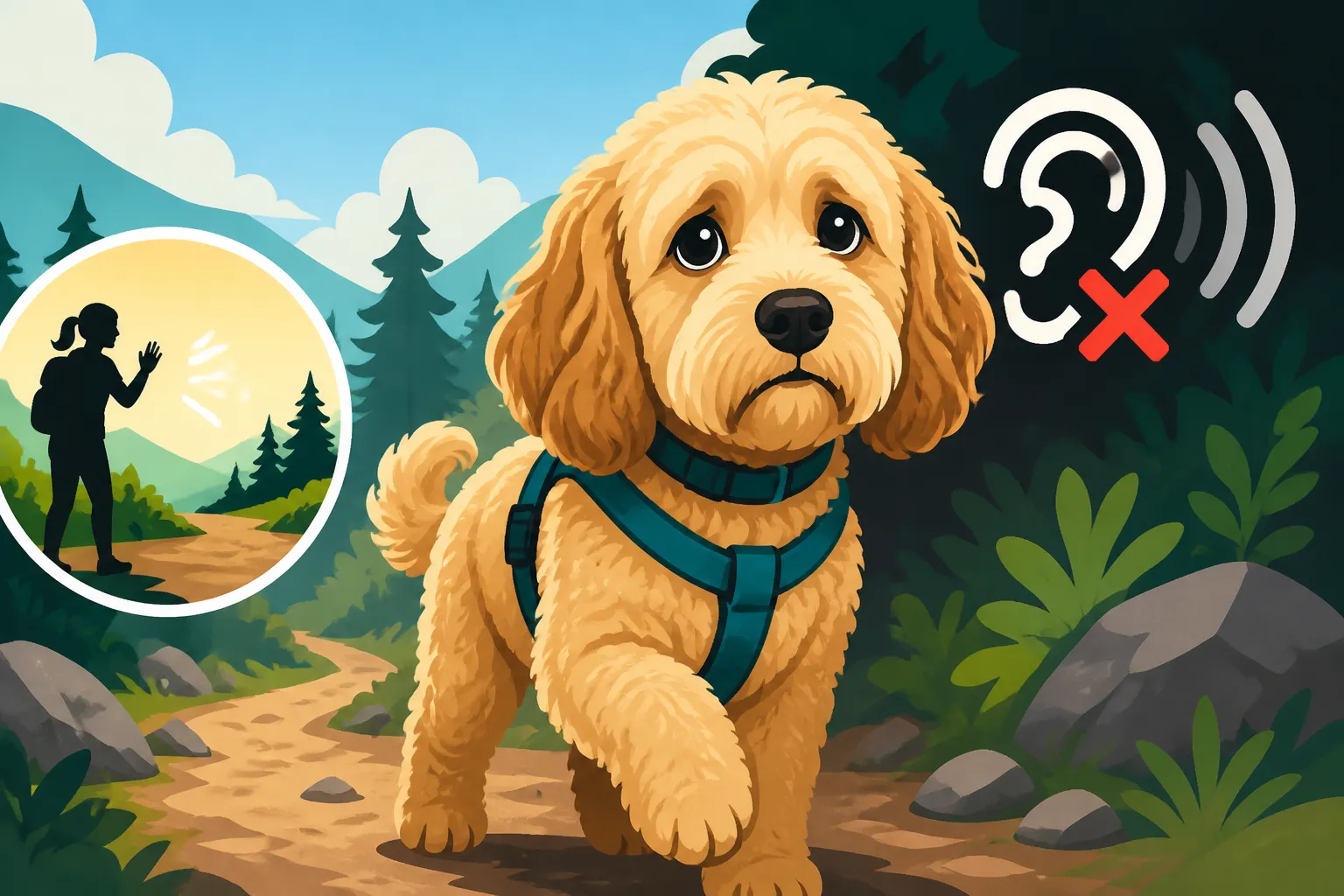
It's one of the most frustrating, heart-stopping moments a Cockapoo owner can experience: you're out on a beautiful trail, enjoying the freedom of a supposedly off-leash walk, when suddenly your beloved companion catches a scent, spots a squirrel, or just decides to explore beyond your sight. You call their name, you whistle, you shout, and… nothing. They've gone completely "deaf" to your pleas, disappearing into the undergrowth or bolting down the path, leaving you in a panic. This guide is here to unravel why this happens and arm you with the strategies, tools, and understanding you need to build a reliable recall, even in the most distracting outdoor environments.
Understanding the Cockapoo's Instincts on a Trail
Before we can even begin to tackle the "deaf on the trail" phenomenon, it's crucial to understand the very DNA that makes a Cockapoo who they are. They're a charming blend, for sure, but that blend brings with it a cocktail of instincts that can either be a joy or a challenge, especially when faced with the irresistible allure of a trail.
The Cocker Spaniel's Hunting Heritage
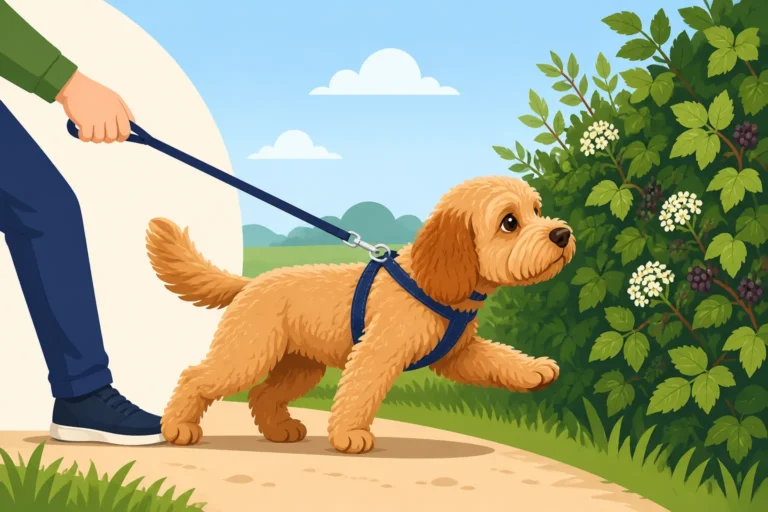
Let's start with the Cocker Spaniel side of your Cockapoo. Both American and English Cocker Spaniels were originally bred as gun dogs, specifically designed to "flush" game birds from dense cover so a hunter could shoot them. This means they possess an incredibly strong prey drive and a nose that's practically glued to the ground, eager to pick up the faintest scent. When your Cockapoo is out on a trail, their ancestral programming kicks in. That rustle in the leaves, that faint whiff of rabbit, that darting shadow – these aren't just minor distractions; they are incredibly powerful motivators that override almost everything else.
Imagine being in the middle of a vital conversation, but someone just rang the fire alarm. Your Cockapoo's brain on a scent is much the same. The environment is rich with stimuli that are far more rewarding and intrinsically motivating than your voice calling their name. This is why you might see your Cockapoo quartering the yard, moving back and forth in a methodical pattern, a natural behavior for a flushing dog looking for game. The Flushing Drive Still Alive in a Cockapoo explains this instinct further.
The Poodle's Intelligence and Independent Streak
Then there's the Poodle half. Poodles are renowned for their intelligence, agility, and often, a surprising amount of independence. While they are highly trainable and eager to please in a structured environment, that intelligence also means they are perfectly capable of making their own decisions if they perceive a better option. They aren't just blindly following instinct; they're actively assessing the situation. "Should I listen to Mom, or should I investigate that really interesting smell/sound/sight?" A Poodle's heritage also includes retrieving from water, so they can be quite bold and adventurous, sometimes to their detriment on an unfamiliar trail.
This combination can create a dog that is both eager to please and highly self-motivated. They might understand "come" perfectly in your living room, but the Poodle's smarts kick in outdoors, thinking, "I know what 'come' means, but look at that! I'll just check this out quickly and then I'll come." This isn't defiance; it's a prioritization of environmental rewards over your command, often driven by centuries of breeding for specific working tasks.
The Blended Personality on the Trail
So, when these two halves combine in your Cockapoo, you get a dog that is often incredibly smart, highly scent-driven, energetic, and sometimes, a little too independent for their own good on a trail. They love adventure, they love to explore, and their noses are powerful tools for discovery. This makes them wonderful companions for hiking, but it also means their recall can be severely tested.
The trail environment offers a smorgasbord of sensory input – new smells, sounds of rustling critters, interesting textures, and vast open spaces. For a Cockapoo, this is like a giant amusement park. They are living their best life, fully immersed in their natural instincts. Expecting them to ignore all of that simply because you say their name, especially if you haven't diligently trained and proofed their recall in increasingly challenging environments, is setting them up to fail, and yourself up for a panic attack.
Why Cockapoos Seem to Go "Deaf" Outdoors
It's not that your Cockapoo genuinely goes deaf; it's that the world outside becomes so overwhelmingly compelling that your voice simply fades into the background noise. It's a common struggle for owners of scent-driven, curious breeds, and understanding the root causes is the first step toward overcoming it.
Sensory Overload and Distraction
Imagine trying to concentrate on a quiet conversation while a parade marches past, complete with blaring trumpets, drums, and flashing lights. That's a bit like what a trail is for your Cockapoo. Every rustle in the leaves could be a rabbit. Every tree trunk is a bulletin board of interesting dog pee-mail. Every distant bark is a potential playmate. Their senses are bombarded.
Their powerful noses pick up thousands of times more scent information than ours do. A trail is a complex tapestry of smells: deer, squirrels, other dogs, hikers, decaying leaves, blooming flowers. Each scent tells a story, and your Cockapoo is driven to read every single page of that story. When their nose is engaged, it's incredibly difficult for them to disengage and redirect their attention back to you. They literally get lost in their olfactory world, and your voice, no matter how urgent, becomes a faint, unimportant whisper compared to the siren call of a fresh deer track.
Lack of Reinforcement in High-Value Environments
One of the biggest reasons a recall fails is that it hasn't been consistently reinforced in increasingly distracting environments. Many owners practice recall in their quiet backyard or living room, where the dog has no real reason not to come. The reward (a treat, praise) is the most exciting thing happening.
However, when you take that same dog to a trail teeming with wildlife and novel smells, your usual treat or "good boy!" pales in comparison to the thrill of the chase or the joy of sniffing a really good patch of moss. Your Cockapoo has essentially learned that "come" means "stop what you're doing for a mediocre reward," when the trail offers "continue what you're doing for an amazing reward." To counter this, your recall must be associated with something incredibly high-value, something that can compete with a squirrel or a fresh scent. This means using their absolute favorite treats, toys, or even a short, enthusiastic game of tug when they return.
Distance and Environmental Factors
Distance plays a huge role in recall effectiveness. The further your Cockapoo gets from you, the harder it is for them to hear you, especially if there's wind, running water, or other ambient noise. Also, the visual connection breaks down; if they disappear behind a bend or into dense brush, they might not even realize you're calling until they re-emerge.
Furthermore, some environments are simply too risky for off-leash freedom, regardless of how good your dog's recall usually is. A trail bordering a busy road, an area known for aggressive wildlife, or a trail with deep ravines all present hazards where a failed recall could have severe consequences. It's not just about your dog's training; it's about the environment itself. Being realistic about where and when you allow your Cockapoo off-leash is a crucial aspect of responsible ownership, especially given their instincts. For some, a long line is the safest option in many outdoor settings, as discussed in Working a Cockapoo on a Long Line.
Strategies for Building a Bombproof Recall
Building a recall that stands up to the excitement of a trail isn't a quick fix; it's a journey of consistent training, patience, and making yourself the most exciting thing in your dog's world.
Starting Strong with Foundation Training
The foundation of a reliable recall begins at home, in a low-distraction environment. Start by teaching the "come" command using high-value treats and enthusiastic praise. Make it a party every single time your Cockapoo comes to you. Don't just give a treat and send them away; hold them gently for a moment, offer more praise, and maybe even a quick belly rub. You want them to associate coming back to you with the most incredible positive experience imaginable.
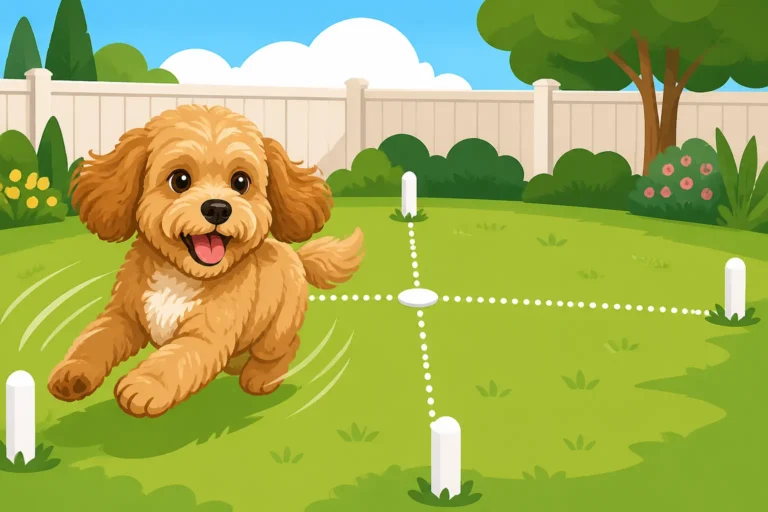
Practice in different rooms of your house, then in your fenced backyard. Use varying distances. Initially, don't just call them when you need them; call them randomly for a treat, then release them to go back to what they were doing. This prevents them from associating "come" only with the end of fun. A great resource for structured training, even for puppies, can be found with programs like BAXTER & Bella, which offer comprehensive online guidance that can help establish these critical early behaviors. Remember, consistency is key, and every interaction is a teaching opportunity.
Progressive Proofing in Distracting Environments
Once your Cockapoo has a solid recall indoors and in your backyard, it's time to slowly introduce distractions. This is called "proofing." Start with mild distractions in a controlled environment, like a quiet park with few people or other dogs, and gradually increase the level of distraction. Always use a long line during this phase to ensure safety and prevent your dog from practicing ignoring you.
For example, start with a 10-foot long line, call your dog, reward them lavishly, then increase to 20, 30, or even 50 feet. Practice recall when other dogs are at a distance, then when they're closer, if appropriate. Teaching a Cockapoo to Check In on a Walk is another crucial skill to develop alongside recall, as it encourages them to periodically glance back at you, even when exploring. The goal is to build up their resilience to distractions, ensuring they choose to come back to you no matter what exciting things are happening around them. Never set them up to fail by letting them off-leash in a high-distraction environment before they're ready.
Making Yourself More Exciting Than the Environment
This is arguably the most challenging but most crucial part of building a bombproof recall. You need to be more interesting, more fun, and more rewarding than any squirrel, scent, or distant dog. This doesn't mean you need to wear a clown suit, but it does mean being animated and using rewards that your Cockapoo absolutely adores.
Carry a pouch full of their absolute favorite, high-value treats – think cheese, cooked chicken, hot dogs, not just dry kibble. Some dogs are more motivated by a favorite squeaky toy or a quick game of tug. Experiment to find out what truly gets your Cockapoo's tail wagging. When you call them, make your voice upbeat and exciting. When they come, throw a mini-party: lavish praise, enthusiastic petting, and a jackpot of treats. Sometimes, literally dropping to one knee and opening your arms can be an inviting posture that encourages them to rush back. The more consistently you make coming to you a spectacularly rewarding experience, the more likely they are to choose you over a distraction.
Tools and Aids for Off-Leash Safety
Even with the best training, some tools can significantly enhance safety and aid in building a reliable recall in challenging environments. These aren't crutches, but rather extensions of your training and safety net.
The Importance of a Long Line
A long line is an indispensable training tool for building recall and providing off-leash freedom in a controlled manner. It's essentially a very long leash (typically 15 to 50 feet) that allows your Cockapoo to explore, sniff, and run while still being physically connected to you. This means you can prevent them from practicing ignoring your recall by gently reeling them in if they don't respond. It allows you to practice in more distracting environments safely.
When using a long line, ensure it's comfortable for you to hold or wear, and that it doesn't tangle easily. A biothane long line from a retailer like Amazon can be a great choice as it's durable and easy to clean. Always attach it to a harness, not directly to their collar, to avoid neck injury if they hit the end of the line. How Long a Long Line a Cockapoo Needs is a useful guide for choosing the right length. It provides invaluable practice for both you and your dog, allowing them to experience increasing freedom while still under your control. This is especially vital when exploring areas where Whether a Cockapoo Should Be Off Leash in Woods is a question.
Whistles and Other Auditory Cues
A whistle can be a powerful tool for recall, especially on a trail. Unlike your voice, which can vary in tone and volume, a whistle produces a consistent sound that carries further and cuts through ambient noise more effectively. It also lacks the emotional baggage that your voice might carry (e.g., frustration when your dog ignores you).
To introduce a whistle, pair it consistently with high-value rewards. Blow the whistle (a simple, consistent short blast is often best), immediately follow with a treat, then repeat. Do this many times in a low-distraction environment. Once your Cockapoo associates the whistle with something fantastic, start using it for recall, always following with a reward, even if they were already coming. Whether a Whistle Works on a Cockapoo delves into the benefits of this training method. This consistent pairing helps create a strong conditioned response, making the whistle a reliable backup to your verbal command, particularly useful if your dog is out of earshot for a verbal cue.
GPS Trackers and Safety Gear
For those moments when even the best training or a long line isn't enough, technology can provide an extra layer of peace of mind. GPS trackers, often worn on your Cockapoo's collar, can help you locate them if they do manage to bolt or get lost. While they shouldn't replace training, they can be a lifesaver in an emergency.
Consider devices that are lightweight, waterproof, and have a good battery life. Many are available through online retailers like Amazon. Beyond trackers, ensuring your Cockapoo wears a comfortable, well-fitting harness (rather than just a collar) makes it easier to secure them if you need to grab them quickly. A bright-colored bandana or vest can also increase their visibility, especially in dense foliage or during hunting season. Whether a Cockapoo Needs a GPS Collar offers more insights into this technology. These tools are safety nets, not substitutes for training, but they can offer critical support when your Cockapoo decides to fully embrace their inner explorer.
Managing Expectations and Realistic Trail Practices
Even the most dedicated training might not result in a 100% bombproof recall in every single scenario, and that's okay. Responsible ownership also means understanding your dog's limits and adapting your behavior accordingly.
Knowing Your Individual Dog's Limits
Every Cockapoo is an individual. Some might inherit a stronger prey drive from their Cocker side, making them more prone to chasing squirrels or deer. Others might be more Poodle-like, easily distracted but quick to return once they've satisfied their curiosity. It's important to be honest with yourself about your specific dog's temperament and training level.
Ask yourself: How strong is their drive to chase? How well do they respond to your voice in mildly distracting environments? Do they have a history of bolting or ignoring you when a high-value distraction appears? If your Cockapoo consistently struggles with recall even after diligent training, it might be safer to keep them on a long line in certain environments, or only allow off-leash time in securely fenced areas. It's not a failure; it's a realistic assessment of what's best for your dog's safety and your peace of mind.
Choosing Appropriate Environments
Not all trails are created equal when it comes to off-leash safety. Some are incredibly busy with other dogs, people, bikes, and wildlife, while others are secluded and quiet. Make conscious choices about where and when you allow your Cockapoo off-leash. Start with quieter, less stimulating trails and gradually introduce more complex environments as their recall improves.
Avoid trails near busy roads or areas with known hazards. If you know a particular trail is teeming with squirrels or deer, consider keeping your Cockapoo on a long line or even a standard leash, especially during peak wildlife activity times. Respect local leash laws and signage; they are often in place for good reasons, protecting both your dog and the local wildlife. Remember, a Cockapoo's instincts to pursue Whether a Cockapoo Ignores You Once It Scents Something can be incredibly strong, making certain environments inherently risky for off-leash freedom.
Backup Plans for When Things Go Awry
Even with the best training and preparation, accidents can happen. Your Cockapoo might slip their collar, or a sudden, unexpected distraction might cause them to bolt. Having a backup plan in place can significantly reduce panic and improve the chances of a safe reunion.
Make sure your Cockapoo always wears up-to-date identification tags with your current phone number. Consider microchipping them and registering the chip with a reliable database. Familiarize yourself with local animal control procedures in case your dog goes missing. Carry treats and a whistle even when you think you won't need them. Teach your dog to "check in" periodically during walks, even if not called. This habit of glancing back at you can be a subtle but powerful safeguard. Training services like BAXTER & Bella often emphasize consistent connection with your dog, which can be invaluable in unexpected situations. The reality is, dogs are animals, and sometimes instinct takes over. Being prepared for those rare but possible moments is the hallmark of a truly responsible owner.
| Recall Training Stage | Environment Type | Recommended Gear | Reward Strategy | Goal |
|---|---|---|---|---|
| Foundation | Indoors, quiet backyard | Regular leash, treats | High-value treats, enthusiastic praise | Build strong positive association with "come" |
| Early Proofing | Quiet park, open field | Long line (15-30 ft) | Jackpot treats, quick play | Introduce mild distractions, build consistency |
| Intermediate | Moderately busy park, hiking trails | Long line (30-50 ft), whistle | Varied high-value treats/toys | Increase distraction level, ensure response |
| Advanced | Busy trails, off-leash dog parks | Whistle, GPS tracker | Consistently exciting rewards | Achieve reliable recall in diverse settings |
| Ongoing Reinforcement | Everywhere, always | Treats, praise, affection | Unpredictable high-value rewards | Maintain strong recall, prevent complacency |
Disclaimer
This article is for general informational purposes only and does not constitute professional advice. Laws, prices and regulations vary by location and change over time. Consult a qualified professional for guidance on your specific situation.