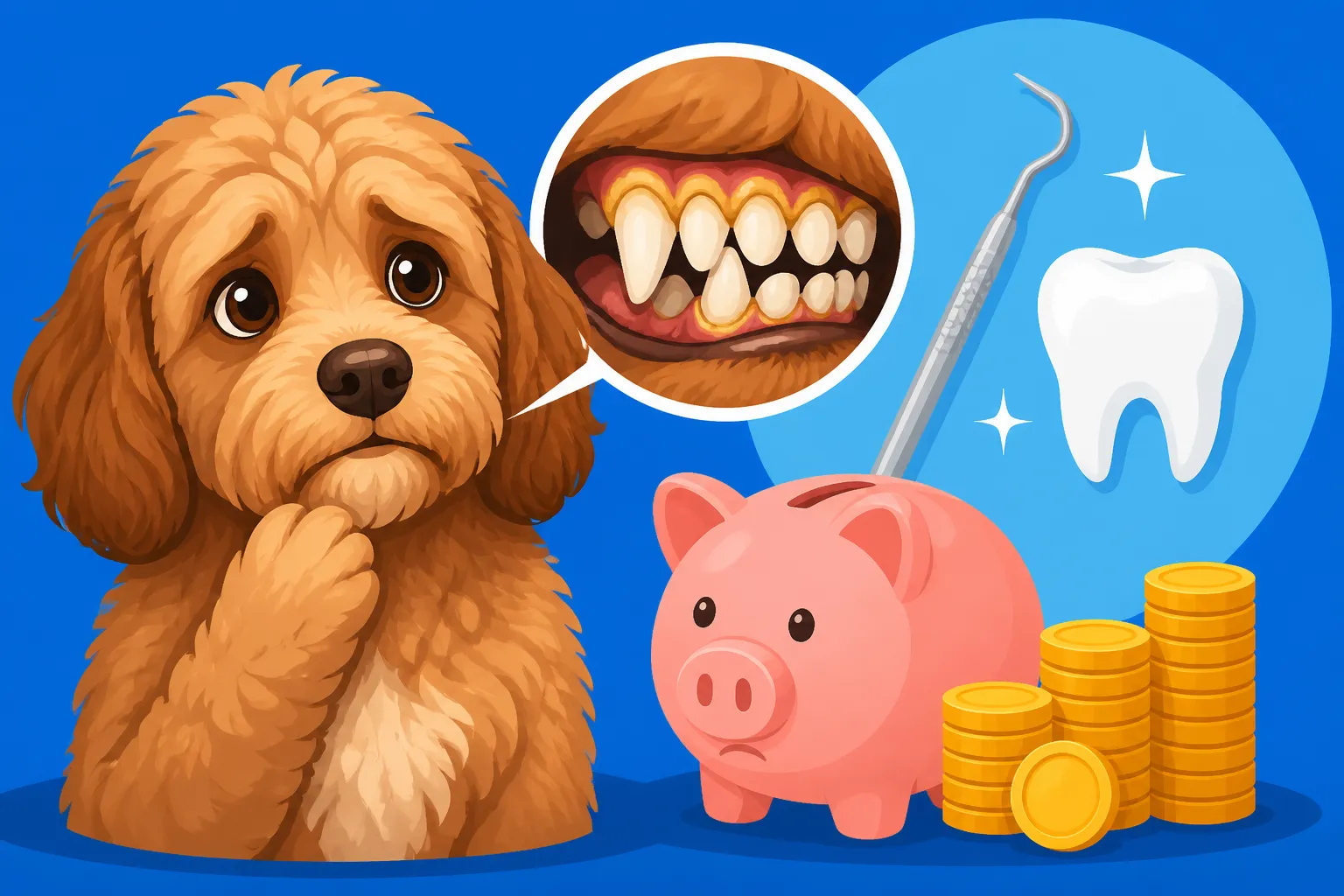
What Scaling a Cockapoo’s Crowded Teeth Costs
Oh, the joy of a Cockapoo's goofy smile! It’s one of the things we adore about them. But for many Cockapoo owners, that adorable grin can hide a common and often frustrating problem: crowded teeth. You might notice them packed tightly, maybe even a little crooked, and you know what that means – potential dental issues down the line. And with dental issues often come the worries about a vet bill for scaling. It's a real concern, and you're not alone in wondering just how much it costs to get those little pearly whites professionally cleaned and cared for. This guide is all about demystifying the cost of scaling your Cockapoo’s crowded teeth, breaking down why it’s needed, what’s involved, and how you can manage your furry friend's oral health without breaking the bank.
Why Your Cockapoo's Crowded Teeth Are a Dental Disaster Waiting to Happen
It’s truly disheartening to think that our beloved Cockapoos might be suffering from a silent pain, or are at higher risk for health problems, all because of their teeth. You might have already noticed some tell-tale signs: that less-than-fresh breath when they give you a loving lick, or perhaps a yellowish-brown crust starting to form on their canines. These crowded teeth aren't just a quirky feature; they’re a significant health concern that, if left unaddressed, can lead to serious discomfort and even systemic illness.
The genetic lottery plays a big part here. Cockapoos are a wonderful mix of two fantastic breeds, the Cocker Spaniel and the Poodle. While this blend often results in a delightful personality and that irresistible teddy bear look, it can also lead to a mismatch in jaw size and tooth count. Your Cockapoo might inherit the smaller, more compact jaw of a Poodle (especially the Miniature or Toy varieties often used in Cockapoo breeding) but with the full set of teeth typically found in a Cocker Spaniel. Imagine trying to fit too many books onto a small shelf – things get jammed, overlap, and create tight spaces. This isn't a reflection on your care; it's just one of those quirks that can come with mixed breeds.
These tightly packed teeth create a perfect storm for plaque and tartar accumulation. When teeth overlap or are squished together, they form tiny nooks and crannies that are incredibly difficult, if not impossible, to clean effectively with regular brushing. Food particles and bacteria readily get trapped in these areas, forming a sticky film called plaque. Within days, this plaque hardens into tartar, that crusty, unsightly deposit that adheres stubbornly to the tooth surface, both above and, crucially, below the gumline. Once tartar has formed, no amount of home brushing, dental chews, or special diets will remove it; only a professional scaling can do the job.
The real danger lurks beneath the gumline. Tartar and bacteria trapped there cause inflammation of the gums, known as gingivitis. You might notice your Cockapoo’s gums looking red or swollen, and they might even bleed when you try to brush them. If gingivitis progresses, it turns into periodontal disease, a much more serious condition where the supporting structures of the teeth (the bone and ligaments) begin to break down. This can lead to painful infections, loose teeth, tooth loss, and severe discomfort for your dog.
Beyond the mouth, the bacteria associated with severe periodontal disease can enter your Cockapoo's bloodstream, potentially affecting vital organs like the heart, kidneys, and liver. It's a stark reminder that oral health is intrinsically linked to overall systemic health. Your dog might be experiencing constant pain or discomfort but, being the stoic creatures they are, won't always show obvious signs until the problem is quite advanced. They might become reluctant to chew their favorite toy, drop kibble when eating, or show changes in their appetite or behavior. Addressing these issues early on is paramount for their long-term well-being and quality of life. For more on specific dental challenges, you might want to read Dental Disease in a Small Cockapoo's Mouth.
Deconstructing the Cost: What's Included in a Professional Scaling
When you see the estimate for a professional dental cleaning, your eyes might widen. It often looks like a significant investment, and many owners are surprised by the numbers. But it’s important to understand that a "simple cleaning" for your Cockapoo is actually a sophisticated medical procedure, far more involved than your own routine dental check-up, and it requires a highly skilled veterinary team.
First and foremost, your Cockapoo will need pre-anesthetic bloodwork and a thorough physical exam. This isn't an optional add-on; it's a crucial safety step. Before any anesthetic is administered, your vet needs to ensure your dog's internal organs, particularly their kidneys and liver, are functioning properly and can safely metabolize the anesthetic drugs. A comprehensive physical exam helps identify any underlying health issues that might complicate anesthesia. This is especially vital for a breed like the Cockapoo, which can have predispositions to certain inherited conditions. For instance, understanding your dog’s kidney health is key before any procedure. The Bloodwork That Catches a Cockapoo's Kidney Disease
The biggest cost component is often anesthesia and continuous monitoring. Unlike humans, dogs won't simply open wide and sit still for a dental cleaning, especially when sensitive gums or painful teeth are involved. General anesthesia is essential to allow the veterinary team to perform a thorough cleaning, which includes working below the gumline, without causing stress or pain to your dog. During the procedure, a dedicated veterinary technician meticulously monitors your Cockapoo's vital signs – heart rate, respiration, blood pressure, oxygen saturation, and body temperature – to ensure their safety and stability throughout. This level of care and vigilance requires specialized equipment and trained personnel, contributing significantly to the overall cost.
Full mouth dental X-rays are another non-negotiable part of a truly comprehensive dental cleaning. Just as with human dentistry, a large percentage of dental disease in dogs occurs below the gumline, invisible to the naked eye. Without X-rays, your vet is literally working blind. X-rays reveal hidden problems such as root abscesses, bone loss around the tooth roots, unerupted teeth, or even fractured roots. Identifying these issues is critical for effective treatment and preventing future pain. A proper cleaning without X-rays is like fixing a leaky roof but ignoring the rotting joists beneath.
Once your Cockapoo is safely under anesthesia and X-rays have been taken, the actual scaling and polishing begins. The veterinary team uses specialized ultrasonic scalers, similar to those used by human dentists, to meticulously remove plaque and tartar from every tooth surface, both above and, crucially, below the gumline. Hand scalers might be used for fine detailing. After all the tartar is removed, the teeth are polished with a special paste. This step is vital because scaling can create microscopic etches on the tooth surface, and polishing smooths these out, making it much harder for new plaque to adhere.
Finally, if the X-rays and oral exam reveal severely damaged or diseased teeth, extractions and other additional procedures may be necessary. This is where costs can really climb, as extractions involve more time under anesthesia, local anesthetic injections to block pain, and sometimes surgical closure of the gum. Complex extractions, such as those for multi-rooted teeth or teeth with significant bone loss, take more skill and time. Occasionally, other advanced procedures like root canals or restorative work might be recommended, though these are less common for routine dental issues. Post-procedure pain management medications and, if necessary, antibiotics to combat infection are typically prescribed and included in the overall cost to ensure your Cockapoo's comfort during recovery.
Factors That Influence the Price Tag of Your Cockapoo's Dental Care
The cost of a professional dental scaling for your Cockapoo isn't one-size-fits-all, and you'll find quite a range when you start calling around. Several factors contribute to the final bill, and understanding them can help you budget and make informed decisions.
First, geographic location plays a huge role. Veterinary costs, much like human medical costs, vary significantly depending on where you live. A state-of-the-art animal hospital in a bustling city like Los Angeles or New York will almost certainly have higher prices than a smaller, independent clinic in a rural town in Kansas. Overhead costs like rent, staff wages, and even utility bills simply differ from region to region, and these are reflected in service prices.
The veterinary clinic's overhead and facilities also contribute to pricing. A clinic that has invested in advanced diagnostic equipment, such as digital dental X-ray machines, modern anesthetic monitoring devices, and perhaps even a board-certified veterinary dentist on staff, will naturally have higher prices. While these might seem like added expenses, they often translate to a higher standard of care, greater safety, and more thorough diagnostics, which can be invaluable for your Cockapoo's long-term health. A larger, more established practice might have different pricing structures than a brand-new, smaller clinic.
Perhaps the most significant variable is the severity of your Cockapoo's dental disease. This is where early intervention truly saves money. A young Cockapoo with minimal plaque buildup might only need a straightforward cleaning. However, an older Cockapoo with advanced periodontal disease, multiple loose teeth, gum recession, and potential bone loss will require a much more intensive and time-consuming procedure. This could involve multiple extractions, gum flaps, and longer anesthesia time, all of which substantially increase the cost. Waiting until the problem is severe almost always leads to a higher bill. It's why annual check-ups are so important, as your vet can help you understand when a cleaning might be needed, even before problems become obvious. You can see how costs can really climb if dental issues are ignored, which is why preventive care is key, especially as they get older. Whether a Teacup Cockapoo Needs Yearly Dentals
While Cockapoos come in various sizes – from Teacup to Maxi – your Cockapoo's size can have a low to moderate impact on anesthesia costs. Smaller dogs, particularly those in the Teacup and Toy categories, can sometimes require more precise anesthetic protocols and more intensive monitoring due to their faster metabolisms and smaller body mass. Conversely, a larger Maxi Cockapoo might require a greater volume of anesthetic drugs. However, generally, the severity of the dental disease and the length of the procedure are bigger cost drivers than size alone.
Pre-existing health conditions are another crucial consideration. If your Cockapoo has other health concerns, such as a heart murmur, kidney disease, diabetes, or an autoimmune disorder, the anesthetic protocol may need to be adjusted, and additional pre-operative tests or consultations with specialists might be required to minimize risks. These extra precautions, while essential for your dog's safety, will add to the overall cost. For example, if your Cockapoo has kidney concerns, special care is needed. Kidney Failure in an Old Cockapoo
You might come across advertisements for "anesthesia-free dental cleanings." While these can seem like a more affordable and less risky option, most veterinary dental specialists strongly advise against them. Without anesthesia, it's simply impossible to perform a thorough cleaning below the gumline, where the most damaging bacteria reside, or to take dental X-rays. Dogs also find these procedures incredibly stressful and potentially painful, and it’s usually just a cosmetic scraping of the visible tartar, missing the underlying, serious problems. It offers a false sense of security and often delays necessary, proper veterinary dental care.
Finally, pet insurance can be a literal lifesaver for unexpected veterinary bills, including those for dental care. While most pet insurance policies, such as those offered by Healthy Paws, typically exclude routine dental cleanings, they often provide coverage for dental accidents and illnesses. This means if your Cockapoo develops periodontal disease that requires extractions, root canals, or treatment for an abscess, your insurance can significantly help offset those substantial costs. It’s always wise to thoroughly review different policies and their specific dental illness coverage when considering insurance for your Cockapoo.
Here's a breakdown of how different factors might influence your dental scaling bill:
| Factor | Impact on Cost | Explanation |
|---|---|---|
| Geographic Location | High | Costs vary greatly between urban and rural areas, and different regions. |
| Severity of Disease | Very High | More plaque, tartar, extractions, or advanced disease means more time, materials, and procedures. |
| Pre-Anesthetic Workup | Moderate | Blood tests and exams are non-negotiable for safety but add to the initial bill. |
| Anesthesia/Monitoring | High | This is a major component, requiring trained staff and specialized equipment. |
| Dental X-rays | Moderate | Essential for detecting hidden issues below the gumline; often a separate charge. |
| Extractions/Add-ons | Variable (can be very high) | Removing teeth, root canals, or other complex procedures significantly increase the total. |
| Clinic Facilities | Moderate | High-tech equipment, specialty vets, and advanced care often come with higher price points. |
| Cockapoo Size | Low to Moderate | Smaller dogs might require slightly different anesthetic protocols, but overall impact is less than disease severity. |
Proactive Dental Care: Saving Your Cockapoo's Smile (and Your Wallet)
The good news amidst all this talk of crowded teeth and scaling costs is that you have a tremendous amount of power to influence your Cockapoo's oral health – and, by extension, your veterinary bills – through proactive care. The best way to reduce the cost of professional scaling for your Cockapoo is to minimize the need for complex procedures in the first place. This boils down to a consistent, diligent home care routine.
The gold standard for at-home dental care is daily brushing. Yes, daily! While it might sound like a chore, even a few minutes each day can make a world of difference. Use a pet-specific toothpaste (human toothpaste is toxic to dogs!) and a soft-bristled brush that fits comfortably in your Cockapoo’s mouth. The key is consistency and starting early. If you introduce brushing when they're puppies, it becomes a normal part of their routine. Make it a positive experience with praise and treats, and they’ll often come to tolerate, or even enjoy, it. Think of it as investing time now to save money and discomfort later. Learning about early training is helpful. The First Week With a Cockapoo Puppy
Beyond brushing, certain dental chews and toys can be beneficial. While they are not a substitute for brushing, some products are designed to help mechanically scrape away soft plaque from the tooth surface as your Cockapoo chews. Look for veterinary-approved products that are appropriate for your dog's size and chewing intensity. Always supervise your Cockapoo when they're enjoying a dental chew to prevent choking or accidental ingestion of large pieces. Online retailers like Chewy offer a vast selection of these products, often with helpful reviews and subscription options that can keep you stocked up.
Another option to discuss with your veterinarian is a prescription dental diet. These specialized kibbles are formulated with a unique texture or special additives that help reduce plaque and tartar accumulation. Their larger size and fibrous texture encourage chewing, which can help clean the teeth. They can be a valuable tool, especially for Cockapoos who are particularly prone to rapid plaque buildup or those who resist brushing.
Regular visits to your veterinarian for annual check-ups are also crucial for dental health. During these exams, your vet will perform an oral assessment, looking for signs of plaque, tartar, gingivitis, and any other abnormalities. They can spot early signs of trouble and advise you on when a professional cleaning might be necessary, often before the issues become severe and more costly to treat. Don't wait until the bad breath is so overwhelming that you can't stand it anymore; early detection truly is key. These yearly checks are important for overall health, not just teeth. The Kidney and Eye Checks a Cockapoo Needs Yearly
Some Cockapoo owners find that feeding a high-quality, fresh food diet, such as those offered by services like Ollie, can contribute to better overall health, including supporting stronger teeth and healthier gums. While these diets aren't designed as direct tooth cleaners, good nutrition can play a role in maintaining oral hygiene. Always consult with your veterinarian before making significant changes to your Cockapoo's diet to ensure it's balanced and appropriate for their specific needs.
Finally, empower yourself by recognizing the warning signs of dental pain or disease. Be on the lookout for:
- Persistent bad breath (halitosis)
- Red, swollen, or bleeding gums
- Yellow, brown, or green tartar buildup on the teeth
- Loose or missing teeth
- Excessive drooling
- Pawing at the mouth or rubbing their face
- Reluctance to chew on hard toys or eat certain foods
- Changes in eating habits, such as dropping food
- Irritability or changes in temperament, possibly due to pain
By being proactive with home care, seeking regular veterinary check-ups, and being vigilant for any signs of trouble, you can often significantly delay the need for extensive, costly professional cleanings for your Cockapoo's crowded teeth. When a professional cleaning is eventually needed, these preventive measures will likely mean a less complex procedure, which translates to a lower cost and a faster recovery for your beloved companion. It’s a worthwhile investment in their comfort, health, and the longevity of those adorable smiles, and contributes to the overall happiness of your companion through their entire life. The Full Cost of Sixteen Years With a Cockapoo
Disclaimer
This article is for general informational purposes only and does not constitute professional advice. Laws, prices and regulations vary by location and change over time. Consult a qualified professional for guidance on your specific situation.